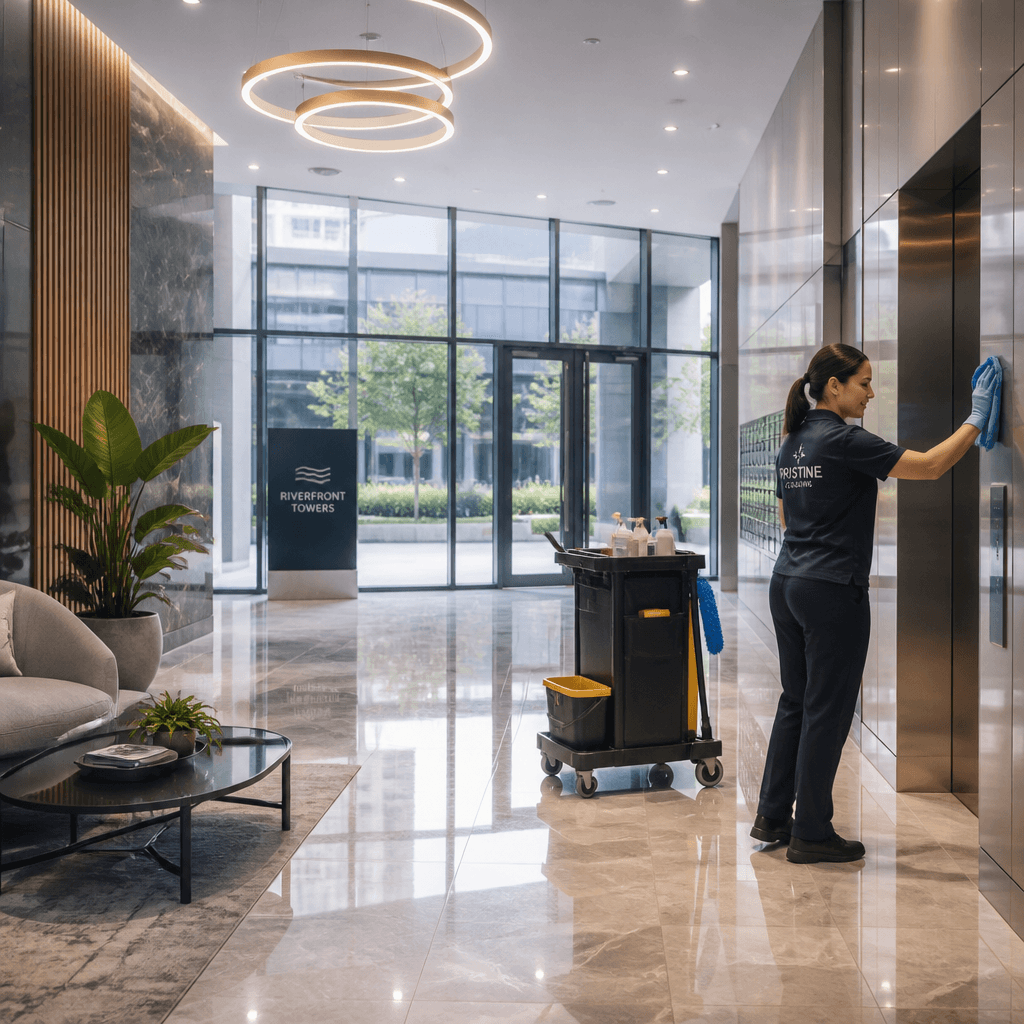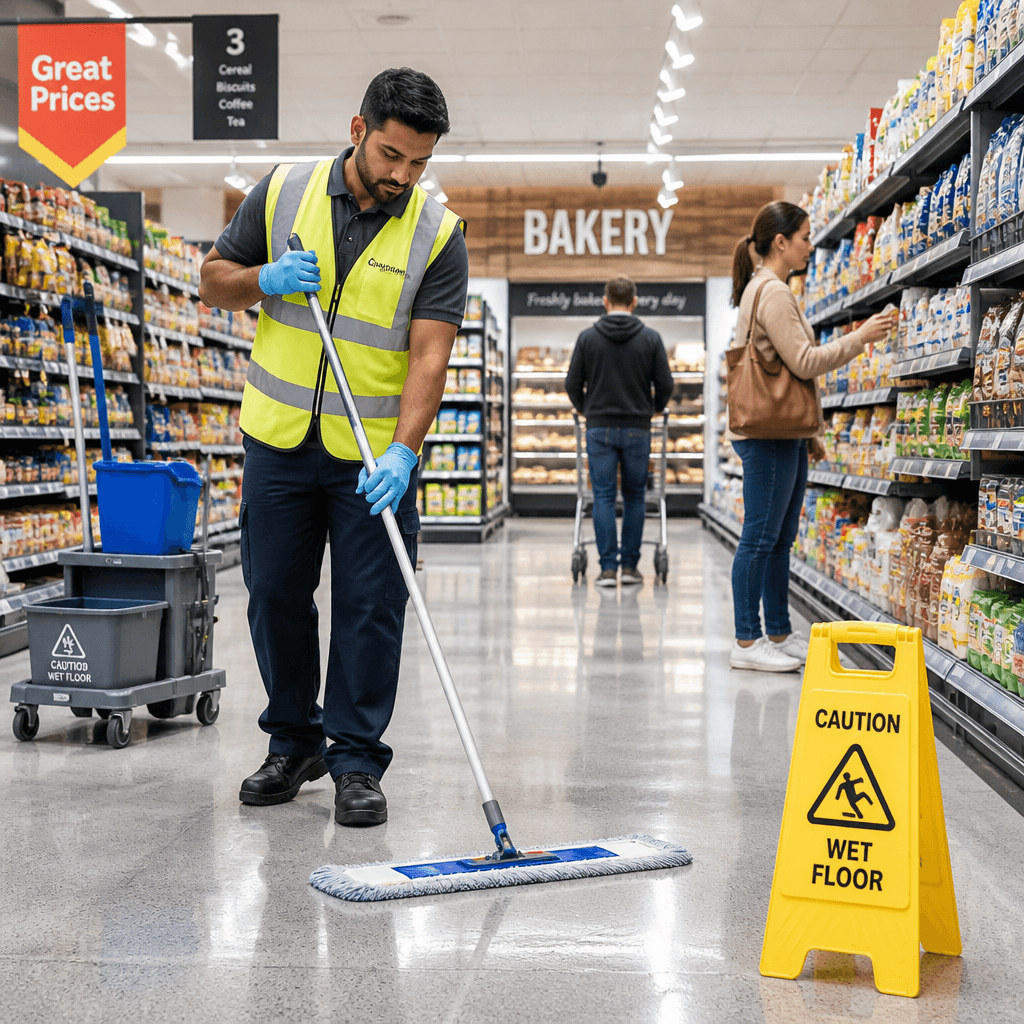

The average Melbourne office worker loses 8.7 sick days per year, and a significant portion of those absences trace directly back to the workplace environment.
Desks, door handles, and shared kitchen surfaces harbour bacteria counts that rival public restrooms, yet most businesses underinvest in the cleaning protocols that would actually address this. If you manage a commercial property or run a business in Melbourne or surrounding suburbs such as Narre Warren, Berwick, Cranbourne and so on, the connection between office cleaning Melbourne standards and your team’s output is not theoretical. It is measurable, and the numbers consistently favour businesses that treat professional cleaning as an operational expense rather than an optional luxury.
Table of Contents
- Quick Takeaways
- The Science Behind Workplace Illness and Dirty Offices
- High-Touch Surfaces That Drive Sick Days in Melbourne Offices
- How Cleaning Frequency Directly Affects Productivity
- Cleaning Approaches Compared: DIY, Ad Hoc, and Scheduled Professional Cleaning
- What a Professional Office Cleaning Schedule Actually Looks Like
- Melbourne-Specific Considerations for Office Cleaning
- The Real Cost of Doing Nothing About Office Hygiene
- Frequently Asked Questions
- References
Quick Takeaways
| Key Insight | Explanation |
|---|---|
| Keyboards carry up to 400 times more bacteria than a toilet seat | Shared office equipment is a primary vector for illness transmission, not personal hygiene alone |
| Regular professional cleaning reduces absenteeism by up to 46% | According to workplace health research, consistent sanitisation directly lowers infection rates among staff |
| Cluttered, dirty workspaces reduce cognitive performance | Studies from Princeton University show visual noise from disorder increases cognitive load and reduces focus |
| Melbourne’s open-plan office trend increases cross-contamination risk | High-density seating common in Melbourne CBD offices means one sick employee can affect dozens within hours |
| Scheduled cleaning outperforms reactive cleaning every time | Waiting until surfaces look dirty means bacteria populations have already reached harmful thresholds |
| Specialist cleaners use hospital-grade products unavailable to office staff | Consumer-grade sprays used by employees do not achieve the same pathogen kill rates as commercial-grade disinfectants |
| Clean environments correlate with stronger employer brand in Melbourne | In a competitive hiring market, workplace presentation affects talent retention and candidate perception |
The Science Behind Workplace Illness and Dirty Offices
Illness in the workplace does not spread primarily through the air. The data consistently shows that surface contact transmission is responsible for the majority of common viral and bacterial infections that circulate through offices. A contaminated surface, touched repeatedly across a workday by multiple employees, becomes an efficient distribution network for pathogens.
Research published in the American Journal of Infection Control found that a single contaminated surface in an office can spread a virus to 40 to 60 percent of other surfaces and workers within four hours. In a typical Melbourne CBD open-plan office, that translates to a very large number of exposure events before most businesses would even consider calling a cleaner.
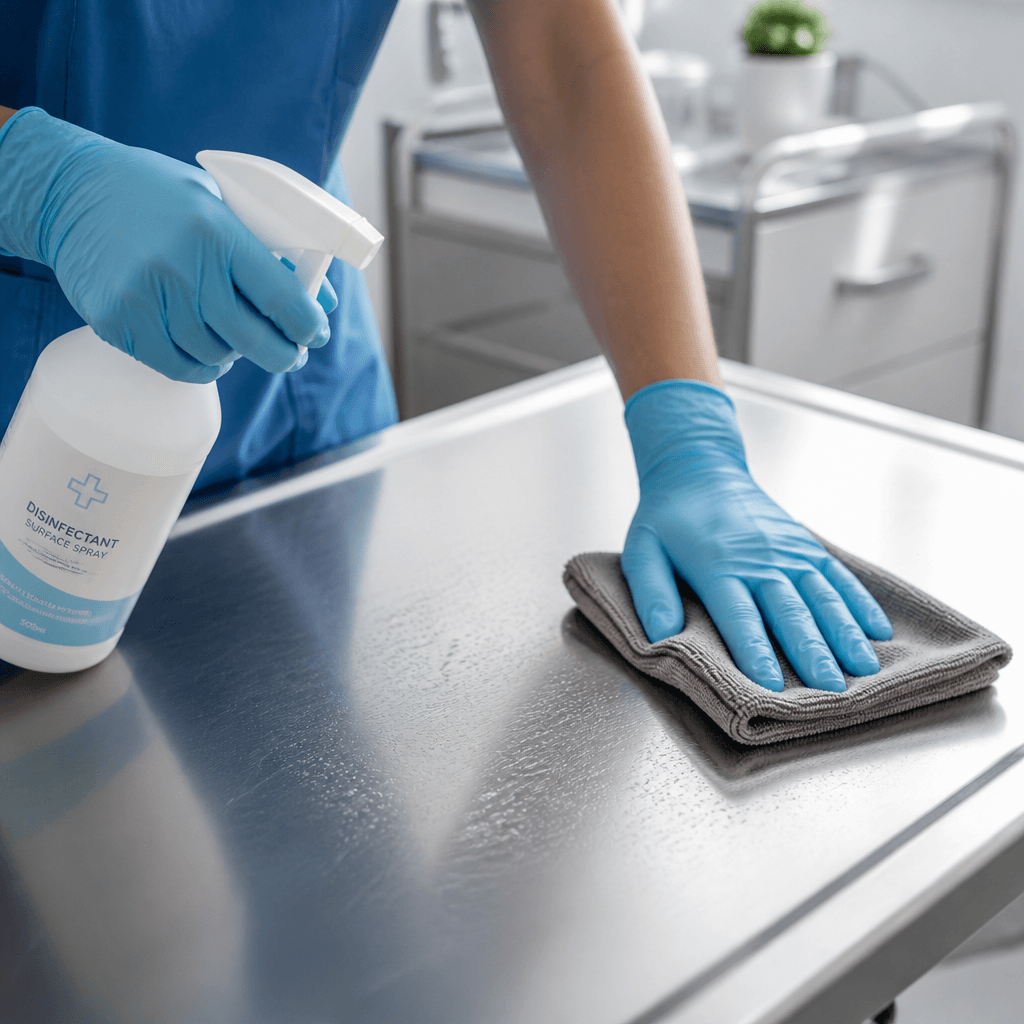
The relationship between cleaning and illness is not just about visible dirt. Biofilm, the invisible layer of bacterial colonies that forms on desk surfaces, phone handsets, and communal equipment, requires targeted cleaning agents and proper technique to eliminate. An employee wiping down their desk with a dry cloth does nothing to address this. Professional office cleaning services apply the right products to the right surfaces at the right frequency, which is the only approach that consistently interrupts transmission cycles.
“The workplace is one of the most overlooked vectors for infectious disease transmission. Consistent, professional surface sanitisation is among the highest-return investments a business can make in workforce health.” – Occupational Health and Safety research consensus, Safe Work Australia
High-Touch Surfaces That Drive Sick Days in Melbourne Offices
Not all office surfaces carry the same contamination risk. In practice, the highest-risk zones are the ones employees interact with most frequently and the ones most commonly overlooked in informal cleaning routines.
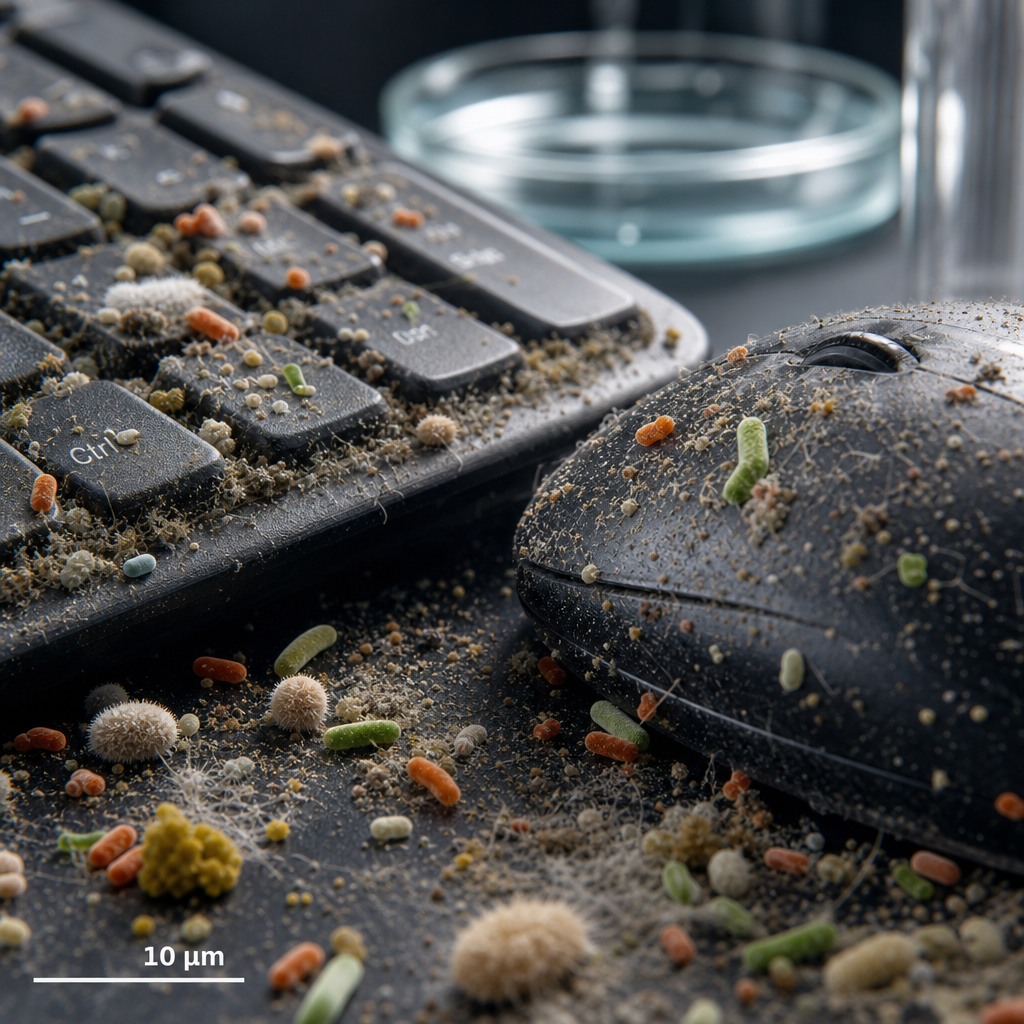
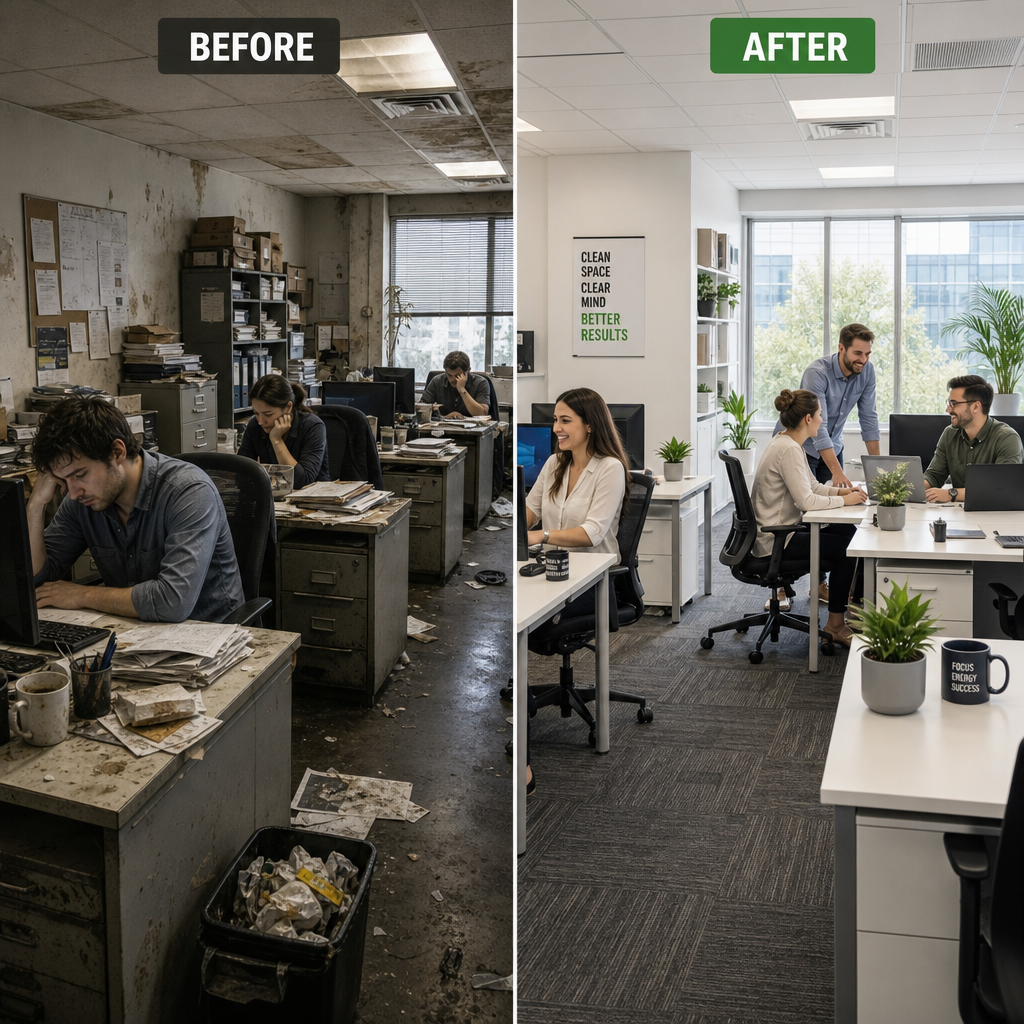
The Worst Offenders in a Typical Melbourne Office
Keyboard surfaces average 3,295 bacteria per square inch. Phone handsets exceed 25,000 bacteria per square inch. Break room coffee machine buttons and microwave door handles routinely test as among the most contaminated surfaces in any office environment, yet they rarely appear on a cleaning checklist unless a professional schedule is in place.
Door handles and lift buttons in multi-tenant Melbourne CBD buildings are touched by hundreds of people daily and are often cleaned only when a building manager organises a scheduled service. Elevator buttons in particular show contamination levels comparable to public transport handrails.
Desks Are Not as Safe as They Look
A common mistake is assuming that because a desk looks tidy, it is hygienically safe. Bacteria and viruses are not visible to the naked eye. A desk that has not been properly disinfected in a week can carry active viral particles from a symptomatic or asymptomatic colleague who sat nearby. This is especially relevant in hot-desking environments, which are now standard in many Melbourne businesses post-2020.
Pro tip: Ask your cleaning provider to document which surfaces are disinfected at each visit, not just which areas are vacuumed or mopped. Surface-level cleaning and sanitisation are different processes with different outcomes for staff health.
How Cleaning Frequency Directly Affects Productivity
There are two distinct mechanisms through which office cleanliness affects productivity. The first is the direct mechanism: fewer sick days mean more working days, more output, and lower costs associated with temporary staff, missed deadlines, and reduced team capacity. The second is less obvious but equally significant.
The Cognitive Load of a Dirty Workspace
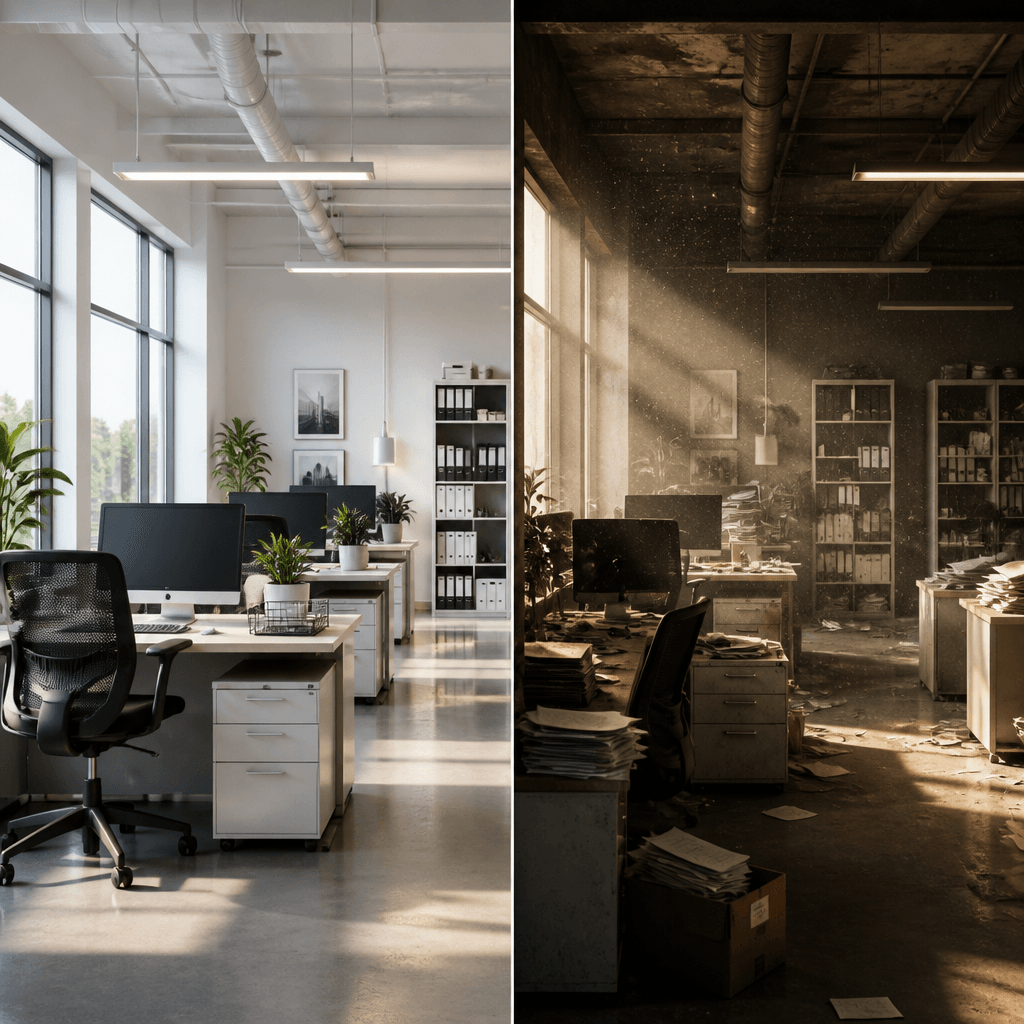
Princeton University Neuroscience Institute research demonstrated that physical clutter and visual disorder compete for cognitive attention, reducing the brain’s ability to focus and process information. A dirty, cluttered office is not just unpleasant. It actively degrades the quality of work being produced in it.
Employees working in consistently clean, well-maintained environments report higher job satisfaction and report feeling that their employer values their wellbeing. This matters in Melbourne’s competitive labour market, where staff retention is a real operational concern for businesses of all sizes.
Presenteeism: The Hidden Productivity Killer
Presenteeism, the phenomenon of employees attending work while unwell, costs Australian businesses significantly more than absenteeism in lost productivity terms. According to Medibank Private research, presenteeism costs Australian businesses approximately 25.7 billion dollars annually. When workplaces are cleaned properly and consistently, the frequency of mild illness that drives presenteeism decreases.
An employee who avoids catching a common cold because high-touch surfaces were properly sanitised that week is an employee who shows up fully functional rather than operating at 60 percent capacity for three days before finally taking a sick day.
Pro tip: If your Melbourne office runs a hot-desking model, ensure your cleaning schedule includes full desk sanitisation between users, not just at the end of the day. This single protocol change can meaningfully reduce transmission events in environments where multiple people share the same physical workspace.
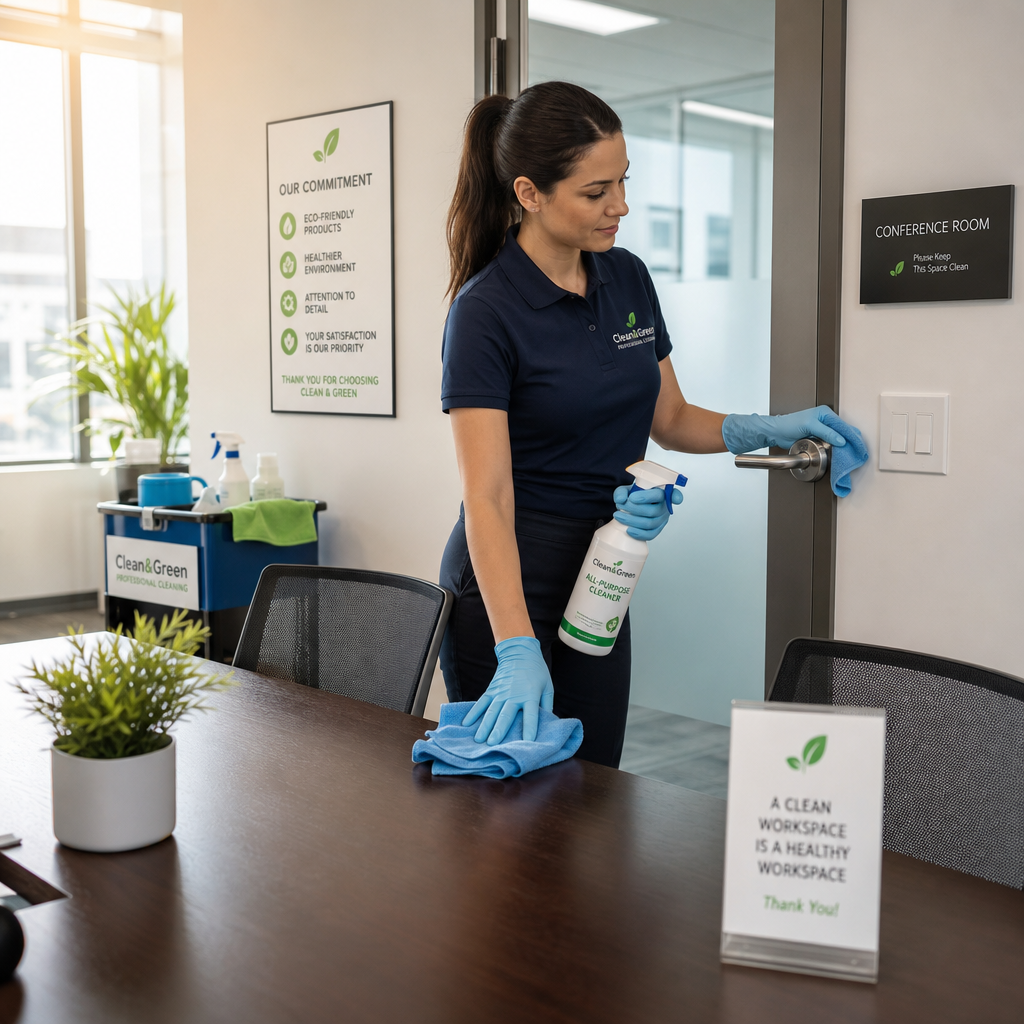
Cleaning Approaches Compared: DIY, Ad Hoc, and Scheduled Professional Cleaning
There are three cleaning models most Melbourne businesses operate under, and the differences in outcomes between them are substantial. Understanding what each actually delivers helps property managers and business owners make an informed decision rather than defaulting to the cheapest apparent option.
| Approach | What It Delivers | Key Limitation |
|---|---|---|
| DIY Staff Cleaning | Basic surface tidying, rubbish removal, visual tidiness | No commercial-grade disinfectants, no trained technique, high inconsistency, staff time wasted on non-core tasks |
| Ad Hoc / On-Call Cleaning | Reactive response when spaces look dirty or after a reported illness | Contamination is already widespread before cleaning occurs, no preventative benefit, unreliable scheduling |
| Scheduled Professional Cleaning (e.g., Vibrant Property Services) | Systematic, trained, documented cleaning with hospital-grade products on a defined schedule | Upfront cost higher than DIY, but net cost is lower when absenteeism savings are calculated |
The comparison is not particularly close. DIY cleaning performed by office staff is the single most common approach among small Melbourne businesses and the one most strongly correlated with recurring illness cycles through the winter months. It creates the illusion of a clean workplace while leaving the actual sources of transmission entirely unaddressed.
What a Professional Office Cleaning Schedule Actually Looks Like
A well-designed office cleaning schedule is not a single daily clean. It is a layered program of tasks performed at different frequencies, targeted at different risk levels. Businesses that work with experienced providers like Vibrant Property Services for their commercial cleaning needs get a structured plan rather than a generic clean-everything-once approach.
Daily Tasks: The Foundation
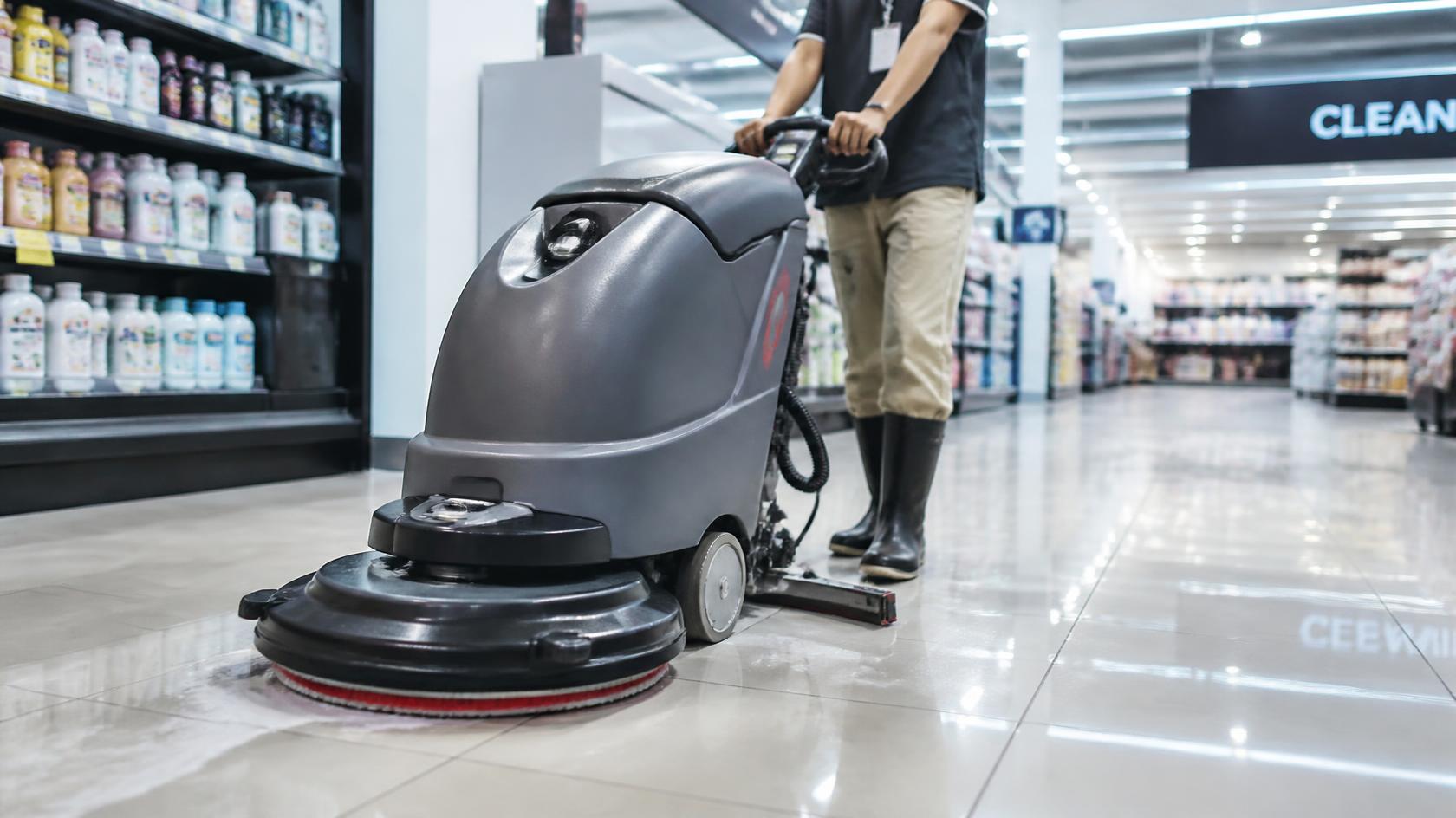
Daily tasks cover the highest-risk, highest-frequency touchpoints. This includes disinfecting door handles, light switches, shared equipment surfaces, kitchen benches, bathroom fixtures, and desk surfaces in hot-desking environments. Rubbish removal and floor vacuuming or mopping also fall here.
Weekly Tasks: The Supporting Layer
Weekly tasks target areas that accumulate contamination more slowly but still require regular attention. This includes thorough kitchen appliance cleaning, window ledges, communal area furniture, meeting room equipment, and entry area disinfection. In Melbourne offices with carpeted floors, weekly vacuuming with commercial-grade equipment removes allergens that trigger respiratory symptoms in sensitive staff members.
Monthly and Periodic Deep Cleans
Monthly deep cleaning addresses areas that cannot be practically covered in daily or weekly visits. Tile and grout cleaning in bathrooms and kitchens, high-pressure cleaning of entry areas, window cleaning, and hard floor restoration all fall into this category. These are the services most businesses neglect longest and the ones with the most visible impact on workplace presentation and air quality.
Vibrant Property Services offers tile and grout restoration as part of their commercial offering precisely because this is an area most office cleaning contracts overlook, and it is a significant source of bacterial accumulation in high-traffic bathroom and kitchen areas.
Melbourne-Specific Considerations for Office Cleaning
Melbourne’s climate creates specific cleaning challenges that differ from warmer Australian cities. The cooler, damper months between April and September create ideal conditions for mould growth in poorly ventilated office spaces, particularly in older buildings across the inner suburbs and CBD fringe.
Melbourne’s pollen season, typically running from October through December, creates a secondary issue for office air quality. Staff with hay fever or asthma are significantly affected by pollen tracked in through entry areas and distributed through HVAC systems. Regular cleaning of entry zones and attention to flooring near building entrances meaningfully reduces pollen load inside the workspace.
The density of Melbourne’s commercial districts also matters. Businesses in Southbank, Docklands, the CBD, and inner-east suburbs like Richmond and South Yarra operate in high-footfall environments where external contamination is introduced constantly. A cleaning schedule designed for a suburban standalone office building is not appropriate for a high-traffic CBD tenancy, and any credible commercial cleaning provider should be adjusting their approach accordingly.
Vibrant Property Services has operated across Melbourne and its surrounding suburbs for over 15 years, which means their teams understand the specific demands of different building types and locations rather than applying a one-size approach across all commercial clients.
The Real Cost of Doing Nothing About Office Hygiene
The cost of professional office cleaning is straightforward to calculate. The cost of not investing in it is harder to see on a spreadsheet, which is exactly why it gets underestimated consistently.
A single employee sick day in a professional services role costs the business an average of 578 dollars when you account for lost output, management overhead, and partial cost cover. For a 20-person Melbourne office experiencing the national average of 8.7 sick days per employee per year, that represents over 100,000 dollars in lost productivity annually. Research suggesting professional cleaning can reduce absenteeism by up to 46 percent implies potential savings of 46,000 dollars or more for that same business, against a professional cleaning contract that would cost a fraction of that figure.
The argument for professional office cleaning is not about hygiene preferences. It is a straightforward cost-benefit calculation that most Melbourne businesses are getting wrong because they are only looking at the cost line, not both sides of the ledger.
For property managers overseeing multiple tenancies or facilities managers responsible for larger Melbourne commercial properties, the scale of both the problem and the savings opportunity is proportionally larger. Working with an established provider that offers consistent, documented cleaning across multiple sites, as Vibrant Property Services does for warehouses, schools, childcare centres, and commercial offices across Melbourne, removes the coordination overhead and delivers verifiable outcomes.
Frequently Asked Questions
How often should a Melbourne office be professionally cleaned?
For most Melbourne offices with 10 or more staff, daily or five-days-per-week professional cleaning is the baseline for meaningful health outcomes. Smaller offices or low-traffic environments may achieve adequate results with three visits per week, provided high-touch surfaces are addressed at every visit. The frequency question should always be answered based on actual occupancy and usage patterns, not budget first.
What is the difference between commercial office cleaning and standard residential cleaning?
Commercial office cleaning uses hospital-grade disinfectants approved for commercial use, follows documented hygiene protocols, and addresses high-volume surfaces that standard residential cleaning products and methods are not designed to handle. Residential cleaners are trained for home environments with different contamination profiles and different regulatory requirements. Using residential cleaners for a commercial office is a false economy that delivers residential-grade outcomes in a commercial-risk environment.
Can professional cleaning actually reduce sick days, or is that just a marketing claim?
The research supports the claim. The American Journal of Infection Control, Safe Work Australia data, and workplace health studies consistently show that regular professional sanitisation of high-touch surfaces reduces the incidence of common viral and bacterial infections in office environments. The reduction in absenteeism cited in occupational health literature ranges from 20 to 46 percent depending on baseline conditions and cleaning frequency. This is not a marketing position. It is a documented public health outcome.
What should I look for when choosing an office cleaning company in Melbourne?
Look for a provider with demonstrated commercial experience in environments comparable to yours, not just general residential cleaning. Verify they use hospital-grade or commercially approved disinfectants. Ask for a documented cleaning schedule so you can confirm what is being done at each visit. Check whether they service your specific type of facility. A company like Vibrant Property Services that cleans medical facilities and childcare centres in addition to standard offices is operating at a hygiene standard significantly above the minimum required for general office environments.
How does office cleanliness affect staff morale and retention in Melbourne?
In Melbourne’s competitive labour market, workplace environment is a real factor in both candidate assessment and employee retention decisions. Staff who work in visibly maintained, hygienic environments report higher job satisfaction scores and perceive their employer as one that values their wellbeing. The inverse is also true: consistently dirty or poorly maintained workplaces contribute to disengagement and are cited in exit interviews. Clean offices are not just a health investment. They are an employer brand investment.
Does Vibrant Property Services offer one-off office cleans or only ongoing contracts?
Vibrant Property Services provides tailored cleaning solutions for Melbourne businesses, which can include scheduled ongoing contracts as well as specialised one-off services such as builder’s cleans, end-of-lease cleans, and periodic deep cleans. For businesses wanting to establish a baseline hygiene standard before transitioning to a regular schedule, a thorough initial deep clean is the recommended starting point. Contact their team directly to discuss the right structure for your specific premises and usage.
If you manage a commercial property or office in Melbourne, we would like to hear what cleaning challenges have had the biggest impact on your team’s health and output.
References
- Safe Work Australia: national workplace health, safety, and absenteeism data for Australian employers
- Statista: workplace productivity and absenteeism statistics for Australian and global business environments
- Forbes: research and business analysis on the financial impact of employee absenteeism and workplace wellbeing investments
- Australian Government Department of Health: infection prevention guidelines and surface contamination research relevant to commercial environments
- McKinsey and Company: workforce productivity research including the measurable costs of presenteeism and employee health outcomes