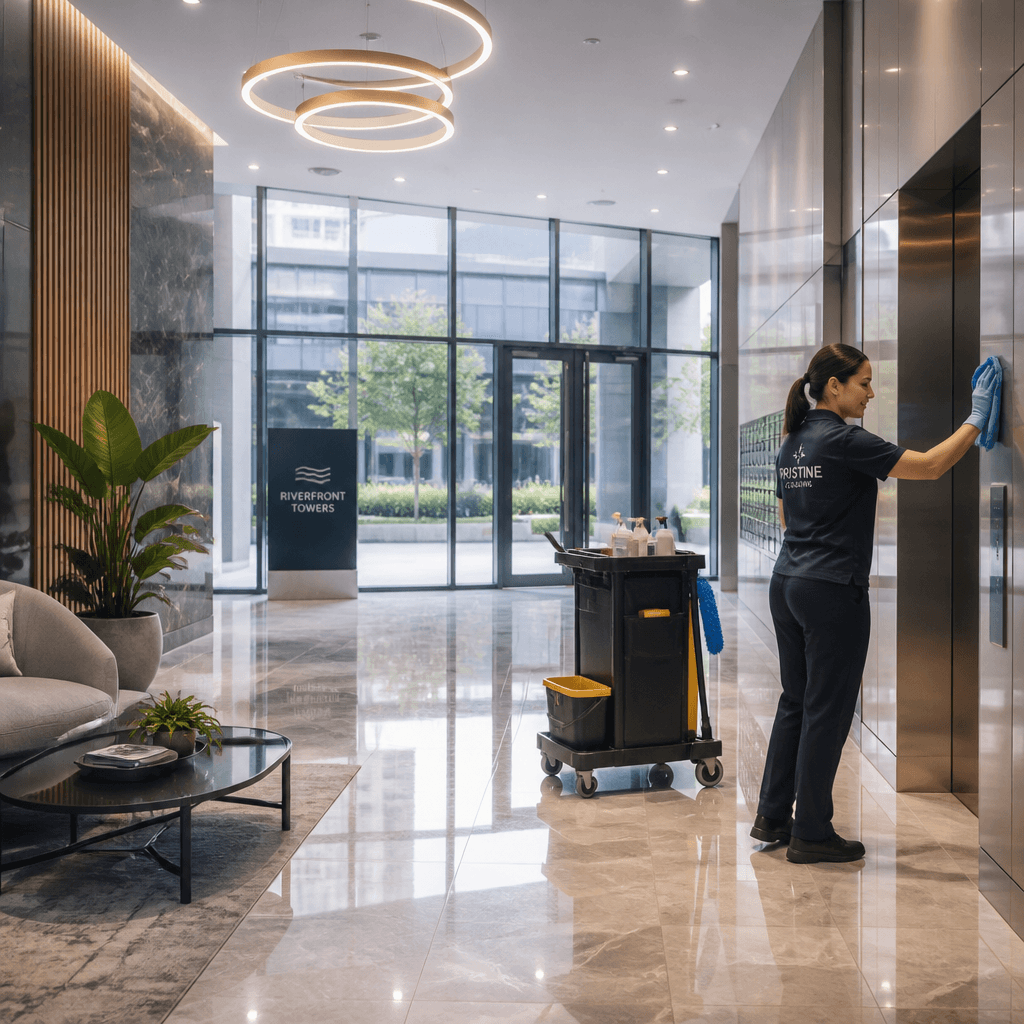

A dirty retail floor does not just look bad. It creates a slip hazard, risks a WorkSafe Victoria notice, and pushes customers out the door faster than any competitor ever could. Retail store cleaning in Melbourne carries obligations that most general commercial cleaning simply does not, especially when your store trades during peak hours and every disruption costs you sales. Whether you manage a supermarket, a large-format retailer, or a boutique shop on a busy strip, the question is not whether to clean during trading hours but how to do it without compromising safety, compliance, or the customer experience. This guide covers exactly that.
Table of Contents
- Why Retail Cleaning Is Different From General Commercial Cleaning
- Compliance Obligations Every Melbourne Retailer Must Know
- Cleaning During Business Hours: What Works and What Causes Problems
- Supermarket Cleaning Services: Higher Stakes, Stricter Standards
- Zone-by-Zone Cleaning Priorities for Retail Stores
- Scheduling Approach Comparison
- Frequently Asked Questions
- References
Why Retail Cleaning Is Different From General Commercial Cleaning
Office cleaning happens at 6 am when nobody is watching. Retail cleaning happens in full view of paying customers, often during your highest-traffic hours. That changes every decision, from which cleaning products you deploy on the floor, to how your cleaners communicate with shoppers moving through the aisle, to whether you mop the entire floor at once or work in deliberate sections.
Retail floors take abuse in a way office floors simply do not. A busy Melbourne supermarket might process thousands of customer visits on a Saturday. Trolley wheels drag in grit. Refrigeration units create condensation puddles. Produce drops. Packaging gets torn. Every one of those events is a potential slip hazard and a visible mark against your store’s presentation. A reactive approach to these incidents is never enough on its own.
The most overlooked difference is regulatory. In Melbourne, retail cleaning has compliance dimensions that purely aesthetic cleaning does not: shopping centre leases impose minimum cleaning standards on tenants, WorkSafe Victoria OHS obligations require slip hazard management on retail floors, and for food retail (supermarkets, bakeries, food halls, delis), FSANZ food safety standards impose a regulatory compliance requirement on cleaning that non-food retail does not carry. Ignoring these dimensions does not just create risk. It creates documented liability.
Pro tip: When briefing any new cleaning provider on your retail premises, give them a copy of your shopping centre lease’s cleaning annexure and your food safety plan, not just a list of tasks. Those documents define your actual compliance floor, not theirs.
Compliance Obligations Every Melbourne Retailer Must Know
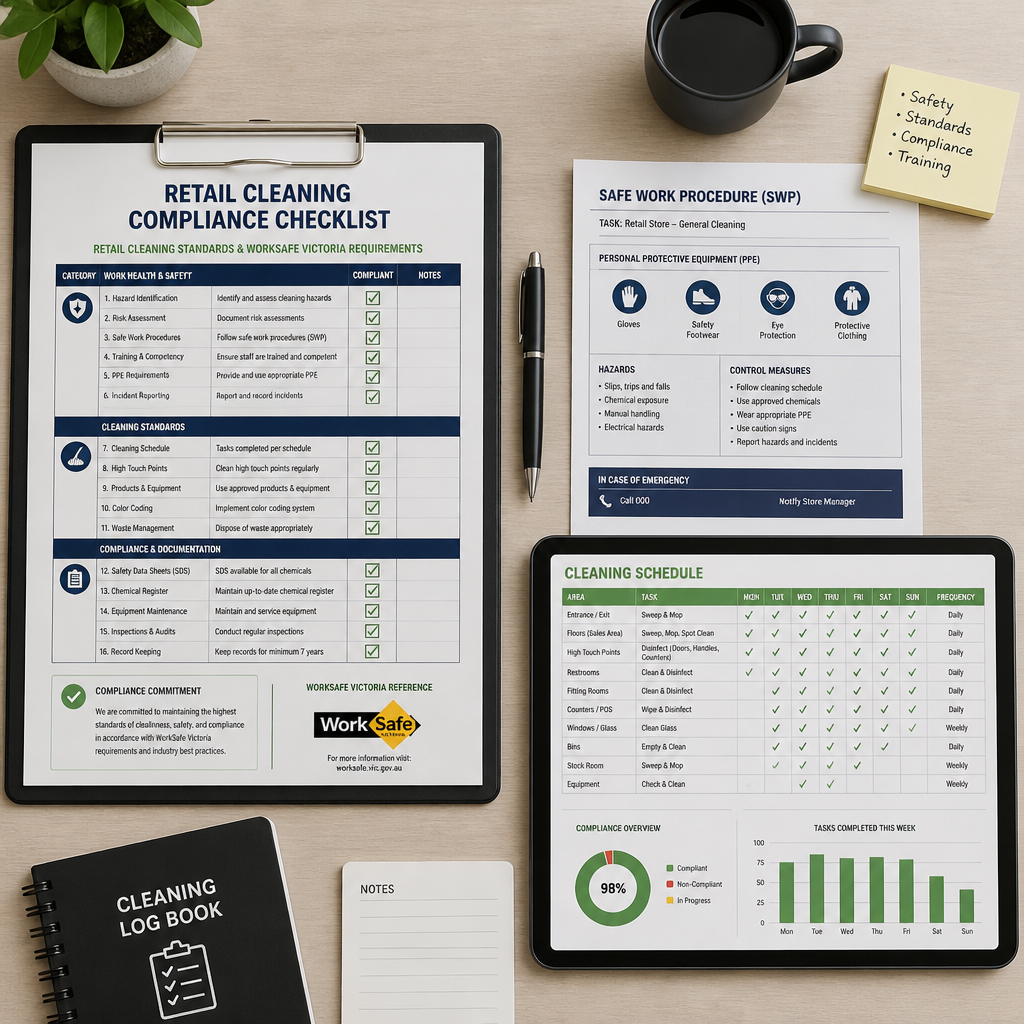
There are three distinct compliance layers that apply to Melbourne retail cleaning, and most businesses focus on only one of them. Missing any one creates exposure.
WorkSafe Victoria and Slip Hazard Management
The most common WorkSafe-relevant cleaning failure in Melbourne retail stores is the vinyl floor that has lost its non-slip floor finish through neglect of a strip and seal program. A vinyl floor without a current floor finish coating is a slip hazard in wet conditions. The floor finish serves two purposes: presentation (sheen) and safety (non-slip properties). When the finish wears, both are lost.
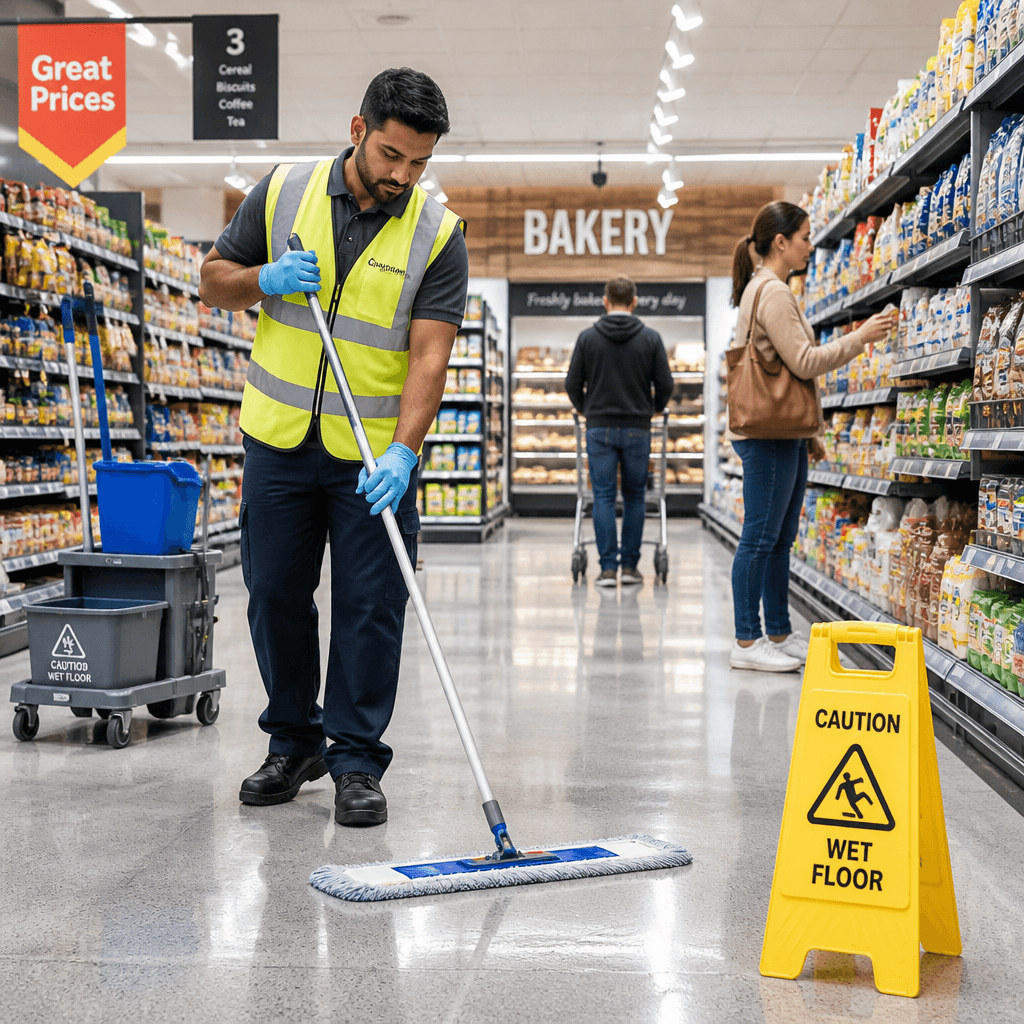
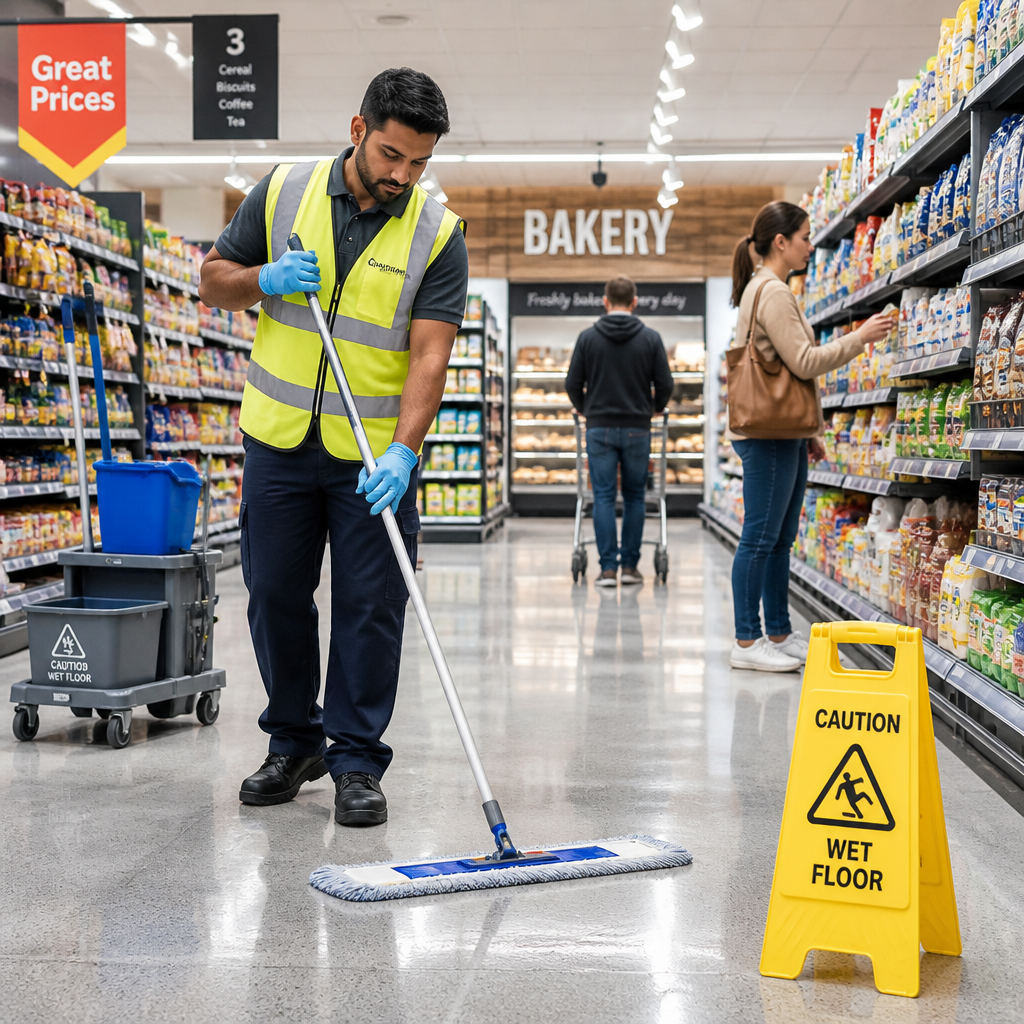
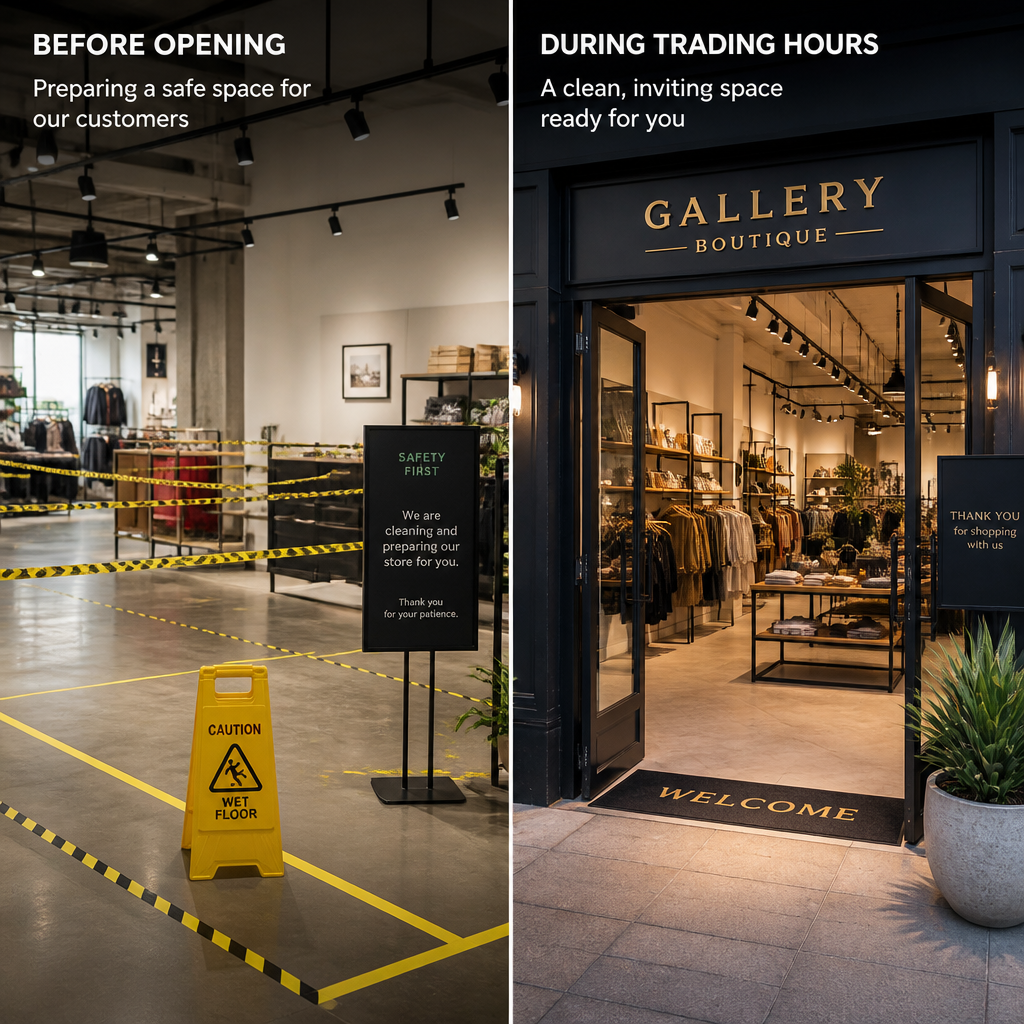
Under WHS Regulations, employers must display AS 1319-compliant signs where hazards exist. During any in-hours wet floor work, this is non-negotiable. Wet floors, overpolished surfaces, and cluttered walkways are common retail hazards. Use wet floor signs, clean in sections, keep a safe customer path open, and allow proper drying time.
FSANZ Food Safety Obligations for Supermarkets
For food retail components such as supermarket food departments, bakery counters, and deli sections, all products used in food preparation and storage areas must be APVMA-registered food-contact-safe. Standard commercial retail floor cleaners are not food-contact-safe and cannot be used on surfaces in food preparation areas without creating an FSANZ 3.2.2 compliance risk.
This is a point that catches many Melbourne retailers when they switch cleaning providers. The cheaper quote often uses a standard commercial floor product across the entire store, including food zones. That creates a compliance exposure that far outweighs any saving on the cleaning contract.
Chemical Safety and Safety Data Sheets
Cleaning has WHS implications because it involves chemicals, manual handling, and slip risk. Even if cleaning is contracted out, the business still needs safe systems. Chemical safety and SDS: if hazardous chemicals are used, keep the Safety Data Sheets available, store products safely, and train staff on correct dilution, contact time, and PPE. Labels matter. Do not decant into unlabelled bottles.
A clean floor that was mopped with the wrong product is not a safe floor. In food retail, using a non-food-contact-safe cleaner on a prep surface is a compliance failure regardless of how spotless it looks.
Cleaning During Business Hours: What Works and What Causes Problems
The default position of most professional retail cleaners is to avoid trading hours where possible. Retail cleaning services are typically scheduled after trading hours or during early morning before opening to avoid disrupting customers and staff. The majority of retail clients schedule their cleaning outside of business hours, with early morning cleaning completed before doors open so the shop is fresh and ready for the first customer of the day.
But that model does not cover everything a busy retail environment throws at you. Supermarkets, high-traffic convenience stores, and large-format retailers trade for twelve or more hours at a stretch. Waiting until close is not an option for spill management, floor maintenance, or restroom cleaning. The question becomes how to structure in-hours cleaning so it does not create more problems than it solves.
What In-Hours Cleaning Should and Should Not Cover
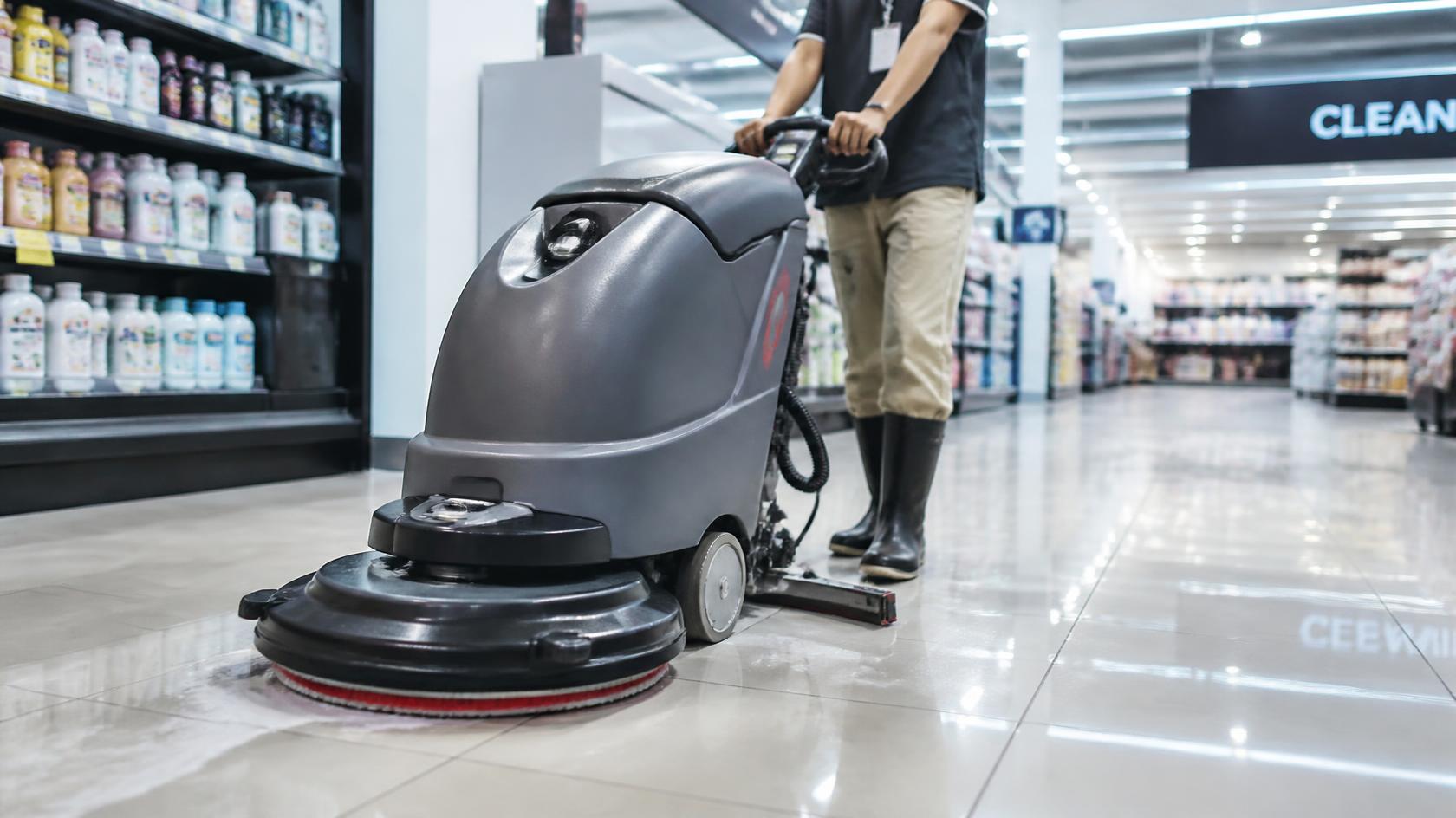
In-hours cleaning should be limited to reactive and maintenance tasks: spill response, restroom checks and replenishment, spot mopping of entry areas in wet weather, and high-touch surface disinfection at checkout zones. These tasks can be completed with minimal footprint and cleared quickly.
What should not happen during trading hours is full floor mopping across open aisles, strip and seal operations, any work involving strong chemical odours, or any task that requires blocking customer movement paths for more than a few minutes. These belong to scheduled out-of-hours programming.
Spills need same-day attention as a necessity, and emergency commercial cleaning gets things back on track quickly without disrupting customers. A clean retail store entices customers to stay longer and spend more, and a spotless retail environment directly impacts the bottom line.
Pro tip: Assign a named staff member on each shift as the spill response contact. Give them a small spill kit and a protocol for calling in the commercial cleaner for anything beyond a standard wet-floor incident. Most commercial cleaning contracts can include a rapid-response callout provision for exactly this purpose.
Managing Customer-Facing Cleaning Without Disrupting Sales
Visible cleaning during trade is a double-edged signal to customers. Done well, a cleaner moving purposefully through the store with the right equipment reinforces the message that the store is professionally maintained. Done poorly, it suggests the store cannot keep up with its own operations. The difference comes down to training and communication.
In-hours cleaners in retail should be trained to make eye contact, step aside, and acknowledge customers, not work around them with head down. Wet floor cones must be set up before any mopping begins and removed the moment the floor is dry. Section-by-section work keeps the store’s traffic flow intact.
Supermarket Cleaning Services: Higher Stakes, Stricter Standards
Supermarket cleaning sits in a category of its own within retail. The combination of food handling, high daily foot traffic, refrigeration condensation, produce waste, and continuous customer flow means the cleaning challenges are structurally different from any dry-goods retailer.
Frequency Requirements for Supermarket Environments
A supermarket environment typically requires cleaning interventions multiple times throughout the trading day, not just once at close. Refrigeration units need daily attention for condensation. Produce sections generate floor contamination continuously. Checkout zones accumulate touch-point contamination at a rate that makes end-of-day disinfection insufficient on its own.
Most retail units benefit from a daily cleaning routine covering floors, till points, and customer-facing areas, with a full professional deep clean on a weekly or fortnightly basis depending on footfall. Condensation or spillage around chilled and refrigerated display units can build up quickly and become a slip hazard.
At minimum, complete a daily clean across customer zones, toilets, and staff areas, with weekly detail work and scheduled deep cleans. Increase frequency when foot traffic is higher, during promotions, and in wet weather.
Checkout and High-Touch Surface Protocols
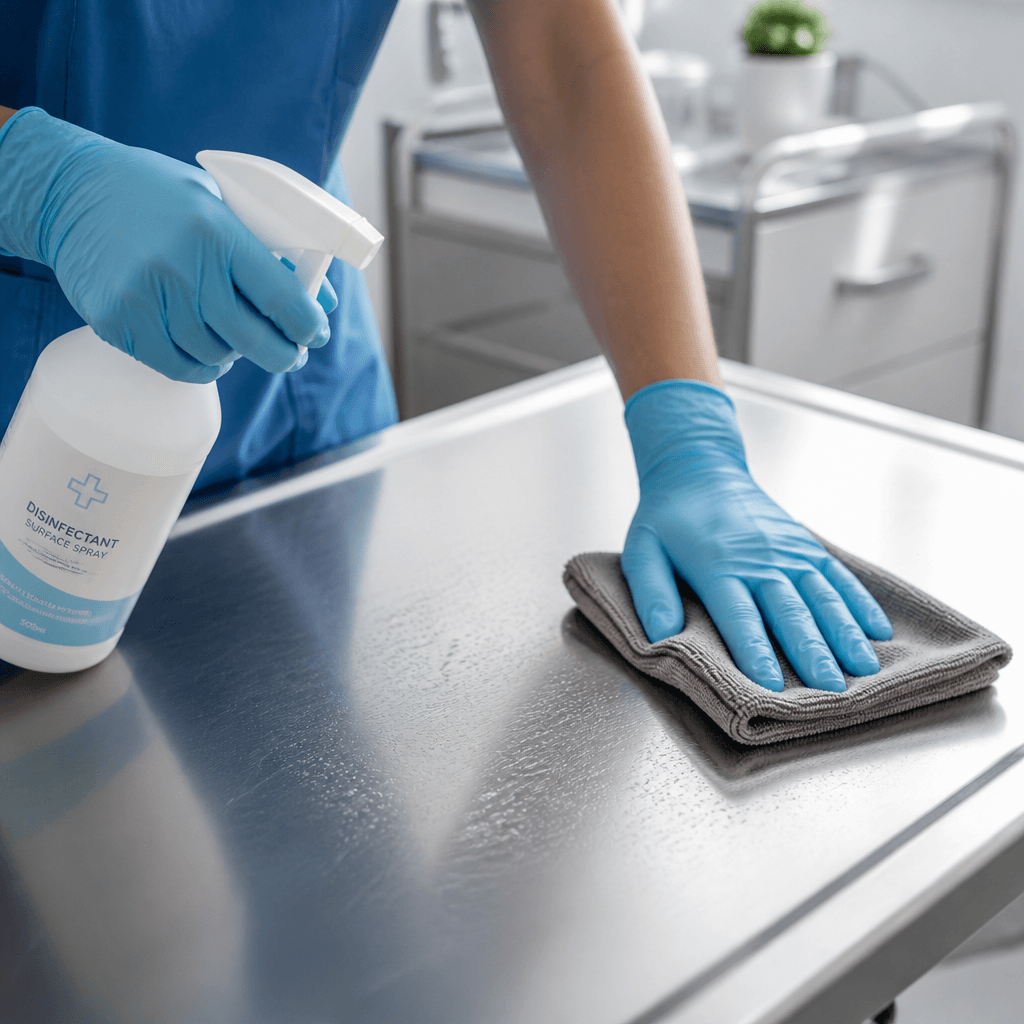
Checkout areas, EFTPOS terminals, door handles, fitting room hardware, rails, shared pens, and staff shared devices are surfaces that see constant contact and should be cleaned more often. In a supermarket context, this extends to trolley handles and self-checkout screens, which carry contamination loads that standard hourly wiping does not adequately address during peak trade.
The distinction between cleaning and disinfecting matters here. Cleaning removes dirt and reduces germs using detergent and water. Disinfecting uses a product designed to kill germs and is most appropriate when risk is higher, such as illness exposure, bodily fluids, or visible contamination. Running a disinfectant across every surface every hour is not the answer. A structured protocol with clear trigger rules delivers better outcomes and avoids overexposing surfaces to harsh chemistry.
Zone-by-Zone Cleaning Priorities for Retail Stores
Every retail store has zones with different cleaning requirements, different regulatory exposures, and different customer-visibility stakes. Treating the entire store as a single uniform cleaning task is how standards slip in the areas that matter most.
Sales Floor and Entry
The entry zone is where customers form their first impression and where wet-weather contamination is worst. It needs daily attention and reactive spot cleaning throughout the day. The broader sales floor needs daily sweeping and mopping, with quarterly strip and seal for vinyl surfaces to maintain the non-slip finish required under WorkSafe Victoria obligations.
Restrooms and Staff Areas
Restrooms need scheduled checks during trading hours, not just end-of-day cleaning. A restroom that degrades during a busy Saturday afternoon reflects on the entire store. Staff areas, break rooms, and stockrooms are often deprioritised in retail cleaning scopes, which creates both hygiene issues and staff wellbeing problems.
Weekly professional stockroom cleaning covers: floor sweep and mop; shelving wipe-down; all packaging waste removed; bins emptied; and any spills or damage reported.
Food Preparation and Deli Zones
These zones require APVMA-registered food-contact-safe products at every cleaning interval. They need their own dedicated equipment, separate from the general floor cleaning kit, to prevent cross-contamination. This is not a best-practice suggestion. It is a food safety compliance requirement.
Scheduling Approach Comparison
Choosing the right scheduling model for your store depends on your trading hours, floor area, and the regulatory environment that applies to your retail category. The table below compares the three main approaches used by Melbourne retailers.
| Approach | Best Suited For | Key Limitation |
|---|---|---|
| After-hours only (evening or early morning close/open cleaning) | Boutique retailers, pharmacies, specialty stores with defined opening hours | Does not address mid-day spills, restroom degradation, or high-touch surface contamination during trade |
| Split shift model (early morning full clean + in-hours maintenance visits) | Supermarkets, large-format retailers, food-adjacent retail with long trading windows | Requires trained in-hours cleaners and clear protocols to avoid disrupting customer flow |
| Continuous presence (dedicated cleaner on-site during full trading hours) | High-traffic shopping centre anchors, large supermarkets, venues with significant food handling | Highest cost model; requires supervision and structured task schedules to remain effective rather than reactive-only |
For most Melbourne supermarkets and mid-to-large retail stores, the split shift model delivers the best balance of compliance coverage and cost. The early morning full clean sets the standard. The in-hours maintenance visits protect it. Out-of-hours deep cleaning on a weekly or monthly cadence resets surfaces that daily cleaning cannot adequately address.
Retail cleaning requires a team that is reliable, discreet, and thorough, someone who understands that an unmade display or dirty floor can cost you a sale. That reliability does not come from the cheapest quote. It comes from a provider with documented protocols, trained staff, and accountability structures that survive staff turnover.
Pro tip: Ask any cleaning provider tendering for your retail contract to show you their Safe Work Method Statement for in-hours floor cleaning. If they do not have one specific to retail, that tells you everything about how they will manage a wet-floor incident in front of your customers.
Vibrant Property Services has delivered commercial cleaning solutions across Melbourne’s retail, supermarket, and mixed-use environments for over 15 years. Their supermarket and retail cleaning programs are structured around your trading hours, your compliance obligations, and the specific zones your store requires, not a generic checklist written for a different business. Facilities managers looking to consolidate cleaning contracts can also bundle window cleaning and high-pressure cleaning of entry areas and loading docks into a single managed program.
Frequently Asked Questions
Can a retail store be professionally cleaned during trading hours without disrupting customers?
Yes, but it requires a specific approach. In-hours cleaning should focus on reactive spill response, restroom maintenance, and high-touch surface disinfection. Full floor mopping, strip and seal operations, and any task requiring extended aisle closures belong outside trading hours. Trained commercial cleaners working in retail during trade know how to move through a live store without obstructing customers or creating additional hazards.
What are the WorkSafe Victoria obligations for retail floor cleaning in Melbourne?
Under the Occupational Health and Safety Act 2004 (Vic), retail employers must maintain a working environment that is safe and free from risks to health. For floors, this means managing slip hazards through proper cleaning frequency, appropriate floor finish maintenance on vinyl surfaces, the use of AS 1319-compliant wet floor signs during any wet work, and ensuring staff are not exposed to hazardous chemicals without adequate PPE and training. These obligations apply whether your cleaning is done in-house or contracted out.
Do supermarket cleaning services require different products from standard commercial cleaning?
Yes. Any surface in a food preparation or food storage area, including deli counters, bakery benches, and produce zones, must be cleaned with APVMA-registered food-contact-safe products. Standard commercial floor cleaners and degreasers used in non-food retail are not suitable for these areas and their use creates an FSANZ 3.2.2 compliance risk. A professional supermarket cleaning provider will carry and deploy separate product lines for food and non-food zones.
How often should a Melbourne supermarket schedule deep cleaning versus routine maintenance cleaning?
Daily routine cleaning of sales floor, checkout areas, restrooms, and high-touch surfaces is the minimum. A full professional deep clean, covering hard floor restoration, refrigeration unit cleaning, shelving wipe-down, and stockroom reset, should be scheduled weekly or fortnightly depending on foot traffic and store size. Quarterly strip and seal of vinyl floors is both a presentation requirement and an OHS compliance requirement for maintaining non-slip surface properties.
What should I look for in a commercial cleaning during business hours provider for my retail store?
Look for documented retail-specific training, a Safe Work Method Statement for in-hours floor cleaning, evidence of APVMA-compliant product use in food zones (if applicable), public liability insurance, and a clear escalation protocol for incidents. Avoid providers who offer a single standard commercial cleaning scope across all their clients. Retail environments have specific compliance requirements that a generic cleaning program does not address. Ask for references from comparable retail clients and check whether their cleaners have police checks if they will be on-site during trading hours.
Is commercial cleaning during business hours more expensive than after-hours cleaning?
In-hours cleaning for routine maintenance tasks is typically comparable in cost to after-hours work when structured as a maintenance visit rather than a full clean. The cost variable is staffing: in-hours cleaners in retail need specific training in customer-facing environments and retail compliance, which can attract a modest premium over standard after-hours rates. That cost is justified by the liability exposure of an unmanaged spill or a restroom that degrades during trade.
Have you dealt with a tricky cleaning situation during business hours in your Melbourne retail store? Share what worked, or what did not, in the comments below.
References
- Melbourne retail store cleaning guide covering compliance zones, floor finish requirements, and FSANZ obligations
- Commercial cleaning checklist for retail stores including WHS chemical safety and slip control guidance
- Shop cleaning service overview for Melbourne retailers covering scheduling models and compliance documentation
- Retail cleaning services in Melbourne covering trading hour scheduling and high-touch surface maintenance
- Retail cleaning checklist guide covering daily and deep cleaning frequency for high-footfall stores