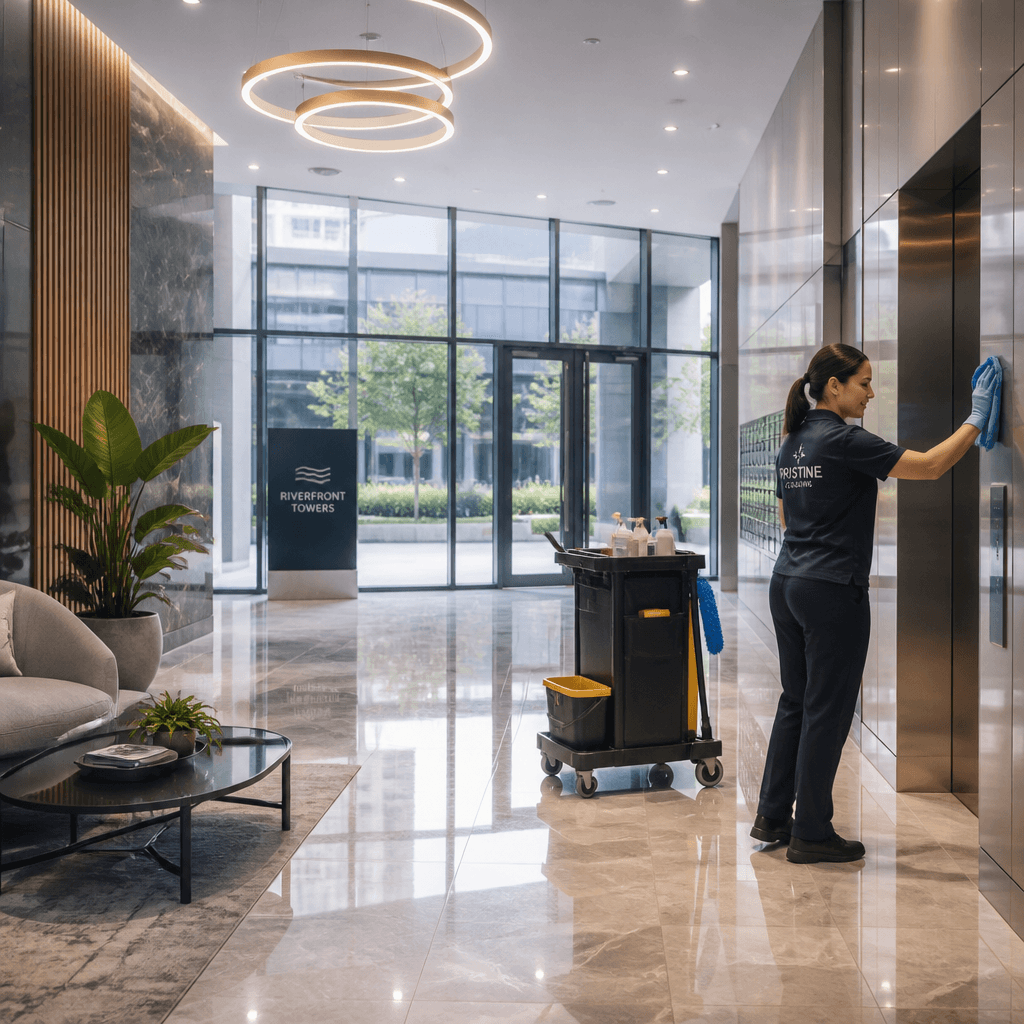

Welcome to the Window Cleaning Guide for Melbourne property managers, where we delve into the essentials of maintaining clean windows in commercial buildings.
Dirty windows are one of the most visible signs of a poorly managed building, yet window cleaning is one of the most under-scheduled items on a commercial property maintenance plan. If you manage a commercial building in Melbourne, whether it is a CBD office tower, a suburban medical centre, or a retail strip, your windows are part of your building’s first impression, your tenants’ work environment, and, above a certain height, a serious workplace safety obligation. This guide cuts through the generic advice and gives you what you actually need to know about window cleaning Melbourne for commercial properties, from setting the right cleaning frequency to reading a contractor’s compliance credentials before you sign anything.
Table of Contents
- Why Commercial Window Cleaning Is Not Optional
- How Often Should Commercial Windows Be Cleaned in Melbourne?
- Access Methods Explained: Ladders, EWPs, and Rope Access
- Compliance and Liability: What Property Managers Are Responsible For
- What to Expect on Pricing for Commercial Window Cleaning in Melbourne
- Comparing Cleaning Approaches: Scheduled Program vs. Ad Hoc vs. In-House
- How to Vet a Window Cleaning Contractor Before Signing a Contract
- Frequently Asked Questions
- References
Why Commercial Window Cleaning Is Not Optional
A clean building exterior signals management quality. When prospective tenants, clients, or customers approach a building with streaked, dust-caked, or mineral-stained glass, the implicit message is that the rest of the building is equally neglected. For property managers under pressure to retain tenants and maintain asset value, that is an avoidable risk.
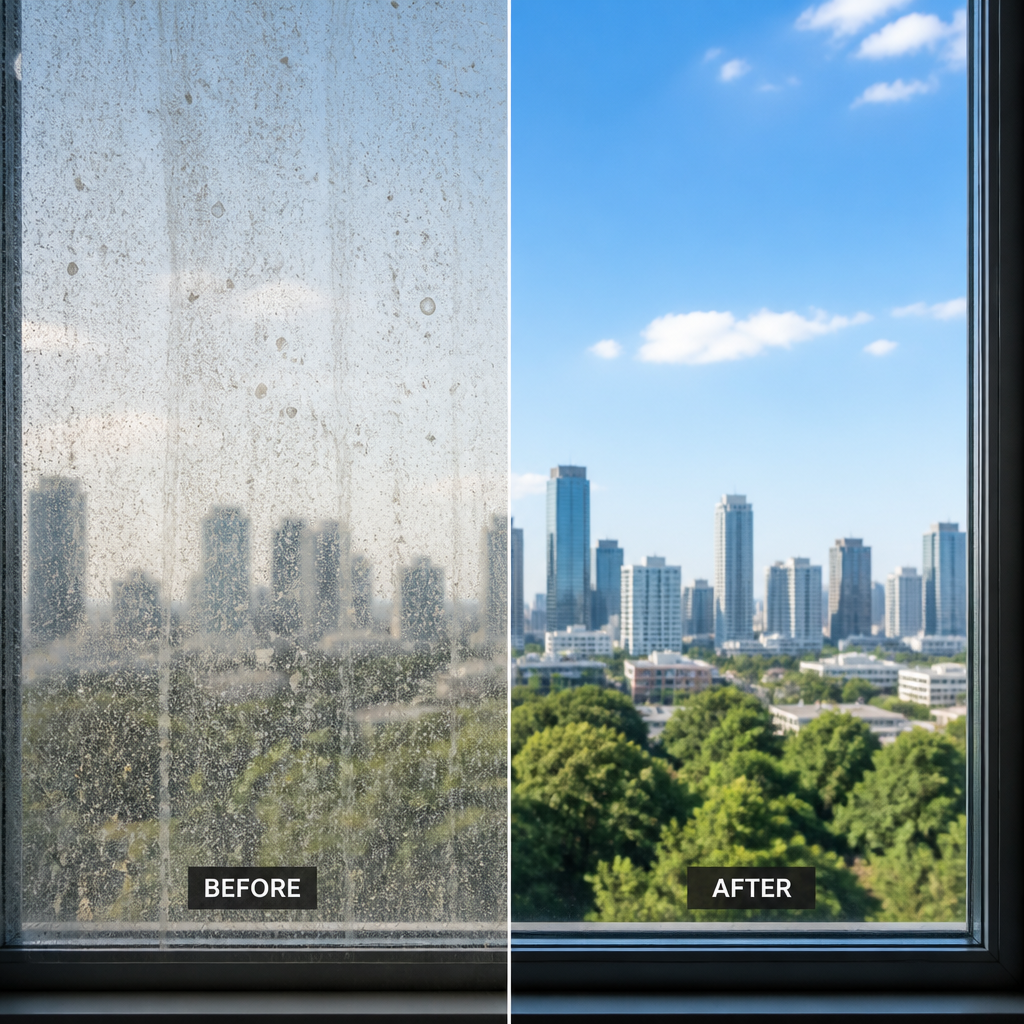
The practical damage is also real. Dirt, hard water minerals, traffic pollution, and UV exposure do not just sit on the surface of glass. Over time, they etch into it. Windows left uncleaned for extended periods develop permanent staining that no amount of cleaning will fully reverse, sometimes requiring costly glass restoration or replacement. Regular cleaning is cheaper than remediation by a significant margin.
For buildings in sectors like healthcare, childcare, and aged care, which make up a large part of Vibrant Property Services’ client base, clean windows also contribute to infection control and regulatory presentation standards. A medical centre with grimy windows is not just unattractive; it raises questions about hygiene throughout the facility. Clean glass is part of maintaining the professional standards those environments demand.
How Often Should Commercial Windows Be Cleaned in Melbourne?
The right cleaning frequency depends on your building type, its location, and who uses it. There is no universal answer, but there are clear industry benchmarks that Melbourne property managers should use as starting points.
Frequency by Building Type
Retail shopfronts in high-foot-traffic areas typically need monthly cleaning at minimum. Restaurants and cafes benefit from fortnightly external cleans because grease, condensation, and food odours attract more surface contamination. Office buildings generally operate well on a quarterly schedule, though those situated on busy arterial roads in Melbourne’s inner suburbs, where diesel particulate and road dust are constant, may need a six-to-eight-week cycle. Industrial facilities and warehouses can generally manage with a biannual clean.
For high-rise commercial office buildings in the Melbourne CBD and inner-suburban areas, the accepted industry minimum is a biannual external program, with April and October being the standard timing. The April clean removes summer’s accumulated dust, traffic pollution, and UV-baked grime before cooler months, while October addresses the winter’s buildup before summer heat bakes it further into the glass.
Buildings on Melbourne’s coast-adjacent zones or those exposed to construction sites nearby may need more frequent scheduling. Salt-laden air and concrete dust are aggressive and can cause mineral deposits or pitting far faster than standard urban grime.
Interior vs. Exterior Cleaning Schedules
Interior windows in office environments accumulate fingerprints, dust, and airborne contaminants from HVAC systems. A common mistake is scheduling exterior cleans religiously while ignoring interiors for years. In practice, interior window cleaning should be included at least twice a year in any commercial office, and more frequently in food-service, medical, or high-contact environments. Aligning interior and exterior cleaning visits reduces access costs and avoids the awkward situation where sparkling exterior glass highlights grimy internal surfaces.
Access Methods Explained: Ladders, EWPs, and Rope Access
The access method used determines cost, scheduling lead time, and the compliance obligations your contractor must meet. Property managers who do not understand the difference end up either overpaying for unnecessary equipment or, worse, unknowingly engaging a contractor who is cutting corners on safety.
Ground-Level and Low-Rise Cleaning
For single-storey and low two-storey buildings, most window cleaning is done from ground level using extension poles with water-fed brush systems, or from ladders for slightly higher reaches. This is the lowest-cost access method and does not trigger the more complex safety obligations of working at heights. That said, even at this level, the contractor should carry public liability insurance and have staff trained in safe work practices.
Elevated Work Platforms
For buildings between two and roughly ten storeys, Elevated Work Platforms (EWPs), including boom lifts and scissor lifts, are often the most practical solution. EWPs require operators with a High Risk Work Licence in Victoria and need clear vehicle access paths around the building perimeter. Property managers should factor in notification to tenants and the establishment of ground exclusion zones during EWP work. If your building has underground car park entries, narrow setbacks, or neighbouring structures that block access, EWPs may not be viable, making rope access the next option.
Rope Access for Mid-Rise and High-Rise Buildings
For buildings above roughly five storeys, rope access is the standard method. Technicians descend the facade using rope access systems attached to certified anchor points on the roof. This method is highly flexible and can access complex facade geometries that EWPs cannot reach. The key compliance requirement here is IRATA certification (Industrial Rope Access Trade Association) for all technicians performing the work. Anchor points on the building also require periodic certification. As a property manager, it is your job to confirm that both requirements are met before work begins, not just to assume the contractor has handled it.
Pro tip: Before any contractor accesses your roof anchor points, ask to see the anchor point certification date. Uncertified anchor points create liability for you as the building manager under Victorian OHS legislation, regardless of what the contractor’s own documents say.
Compliance and Liability: What Property Managers Are Responsible For
This is the section most property managers skip, and it is the most important one. Under the Occupational Health and Safety Act 2004 (Vic), a building manager or owner who engages a window cleaning contractor is classified as a Person Conducting a Business or Undertaking (PCBU) with shared responsibility for the safety of the contractor’s workers on your premises.
In practical terms, this means three things you must confirm before any commercial window cleaning work starts at your building. First, anchor points on your roof must be certified and current. Second, adequate notice must be given to building occupants before rope access or EWP work begins. Third, ground exclusion zones must be established to protect pedestrians and vehicles below the work area.
Failing to meet these obligations does not just expose your workers to risk; it exposes you to regulatory action by WorkSafe Victoria. Property managers who simply hand over access without checking compliance documentation are operating on the assumption that nothing will go wrong, and that is not a risk management strategy.
A contractor who is underpriced relative to the market has almost certainly made a compliance shortcut somewhere. The most common shortcuts are uninsured rope access work, uncertified anchor points, or technicians without IRATA certification. Any one of these creates significant liability for the building manager who engaged them.
Beyond OHS, property managers should confirm that any window cleaning contractor carries a minimum of $10 million in public liability insurance before they set foot on the property. Damage to glass, facade elements, or injury to a third party during cleaning operations can be extraordinarily costly. Do not take the contractor’s word for it; ask for a certificate of currency, not just a verbal assurance.
What to Expect on Pricing for Commercial Window Cleaning in Melbourne
Pricing for commercial window cleaning in Melbourne varies considerably based on building height, facade complexity, access method required, and whether you are booking a one-off visit or an ongoing scheduled program. Understanding these ranges helps you evaluate quotes accurately and spot outliers that should raise questions.
Low-Rise and Mid-Rise Commercial Buildings
For low-rise commercial buildings, shopfronts, and single-storey offices, pricing is typically calculated per visit based on the number of windows, their size, and access difficulty. Larger or more complex properties, especially those requiring boom lift access, can expect to pay anywhere from around $500 up to $1,500 or more per visit depending on the access methods required.
Mid-rise buildings of five to fifteen storeys using rope access typically cost in the range of $800 to $3,500 per visit, while high-rise towers from sixteen to thirty storeys generally range from $2,500 to $8,000 per visit. These are all-inclusive per-visit figures reflecting professional commercial cleaning in metropolitan Melbourne. One-off bookings typically cost noticeably more than equivalent visits booked as part of a scheduled biannual or quarterly program, so committing to a service agreement genuinely reduces your per-visit cost.
Why Low Quotes Are a Warning Sign
A quote that comes in well below the market range for your building type deserves scrutiny, not celebration. The most common ways a contractor achieves unusually low pricing are by skipping insurance, using uncertified anchor points, or sending workers without proper IRATA credentials. None of these savings benefit you as the property manager. They all transfer risk directly onto you. Always request a fixed price after a proper site assessment, not a rough per-hour estimate, which frequently balloons once the crew is on site.
Pro tip: Ask every contractor for a fixed-price quote after a physical site inspection, not a ballpark figure over the phone. Credible Melbourne commercial window cleaning companies will not quote accurately without seeing the facade, the access points, and the ground conditions around the building.
Comparing Cleaning Approaches: Scheduled Program vs. Ad Hoc vs. In-House
Most property managers eventually settle into one of three operational approaches for window cleaning. Each has genuine trade-offs worth understanding rather than defaulting to whatever feels easiest to arrange.
| Approach | Best Suited For | Key Trade-Offs |
|---|---|---|
| Scheduled Program with a Commercial Contractor | Mid-rise and high-rise offices, medical centres, aged care, childcare, and any building where presentation standards are non-negotiable | Lower per-visit cost than ad hoc, contractor manages compliance and scheduling, ensures consistent presentation. Requires a service agreement and some lead time for scheduling changes. |
| Ad Hoc Bookings | Low-rise retail or small offices where cleaning need is seasonal or irregular | Flexible with no contract commitment, but higher per-visit pricing, less priority scheduling, and risk of inconsistent standards between different crews. |
| In-House Cleaning Staff | Ground-level or interior-only windows in buildings with on-site maintenance teams | Low incremental cost for simple ground-level windows, but entirely unsuitable for any above-ground exterior work due to OHS obligations. Creates significant liability if staff are used for heights work without proper training and certification. |
For most commercial buildings in Melbourne with any significant exterior glass above ground level, a scheduled program with a properly credentialed commercial contractor is the right call. It reduces your administrative burden, keeps compliance documentation current, and gives your building a predictable maintenance rhythm that tenants and owners can rely on.
How to Vet a Window Cleaning Contractor Before Signing a Contract
There is no shortage of window cleaning operators in Melbourne advertising commercial services. The difference between a credible provider and a liability risk is not always obvious from a website or a phone call. Here is what to check before committing to any contractor for your building.
Documentation to Request Upfront
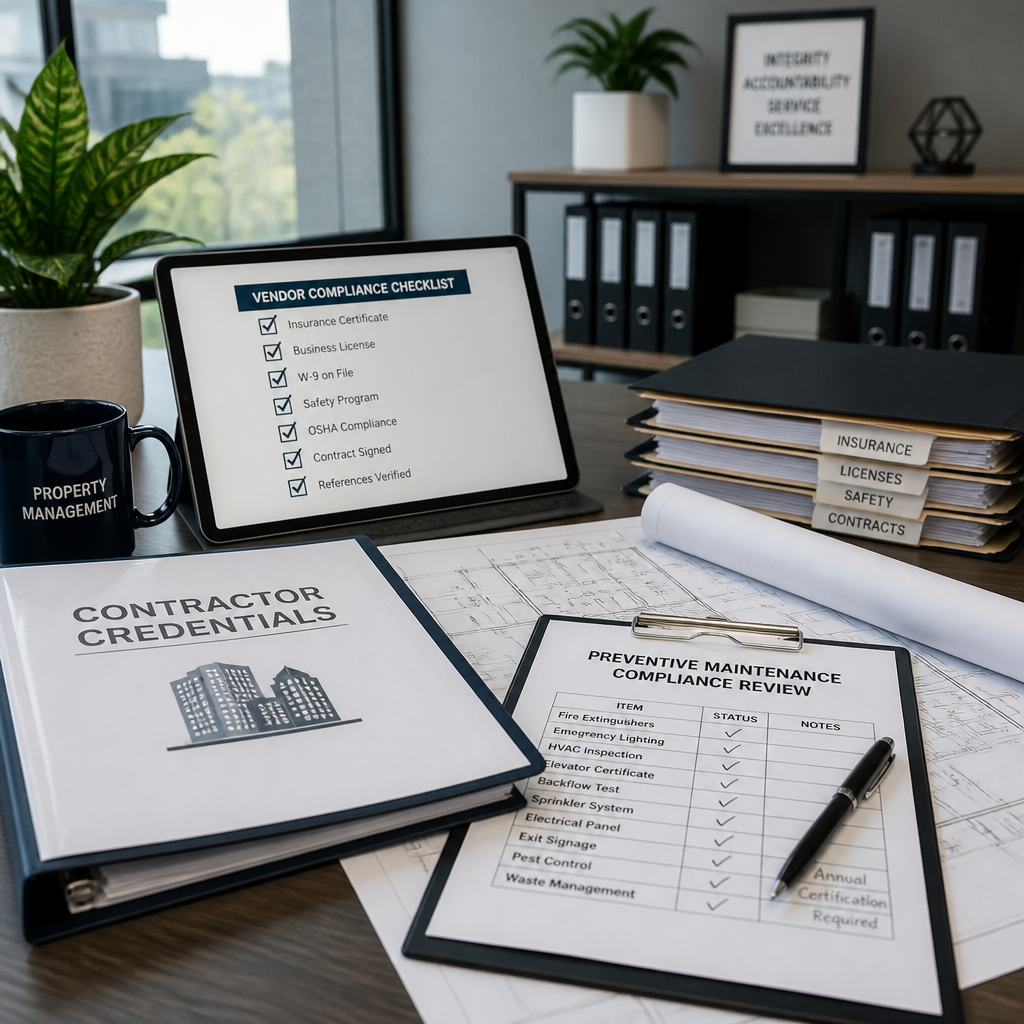
Ask for a current certificate of currency for public liability insurance, with a minimum of $10 million coverage. Ask for IRATA certification cards for any technician performing rope access work at your building. Confirm that your building’s anchor points are within their certification period or that the contractor will arrange independent anchor point certification as part of the job. Ask for a Safe Work Method Statement (SWMS) specific to your building, not a generic document. Any contractor unwilling to provide these documents before work begins is not worth engaging, regardless of their pricing.
What Good Scheduling Communication Looks Like
A professional commercial window cleaning company will provide clear scheduling windows, communicate changes proactively, and give you adequate notice before any EWP or rope access work so you can inform tenants and arrange exclusion zones. If a contractor is vague about scheduling, consistently arrives without notice, or cannot provide a written program for recurring visits, that is a red flag. Poor communication at the scheduling stage usually reflects poor communication throughout the relationship.
Sector Experience Matters More Than You Think
General window cleaning experience and commercial window cleaning experience are different things. A contractor who primarily does residential work may not understand the compliance requirements for a medical centre, the infection control protocols expected in a childcare environment, or the access restrictions that apply during school hours in an educational facility. Vibrant Property Services, for instance, works across healthcare, aged care, childcare, education, and commercial offices, which means the team understands that different environments require different approaches, not just the same squeegee technique applied everywhere.
When evaluating contractors, ask specifically about their experience in your building type. A credible answer will reference specific environments and specific compliance considerations. A vague answer about “cleaning all kinds of buildings” tells you nothing useful.
Frequently Asked Questions
How often should commercial windows be cleaned in Melbourne?
The right frequency depends on your building type and location. Office buildings generally do well on a quarterly schedule, while retail shopfronts typically need monthly cleaning. High-rise commercial buildings in the Melbourne CBD should have at minimum a biannual external cleaning program, ideally timed around April and October to address seasonal buildup. Buildings near busy roads, construction sites, or the coast may need more frequent cleaning due to higher environmental contamination.
What compliance obligations does a property manager have when hiring a window cleaning contractor?
Under the Occupational Health and Safety Act 2004 (Vic), property managers are classified as PCBUs with shared responsibility for the safety of contractor workers on their premises. This means you must ensure that roof anchor points are certified, that building occupants receive adequate notice before rope access or EWP work begins, and that ground exclusion zones are established before work starts. You should also confirm the contractor carries a minimum of $10 million in public liability insurance and holds current IRATA certification for any rope access technicians.
What is the difference between rope access and EWP window cleaning?
Elevated Work Platforms (EWPs) are boom lifts or scissor lifts used for buildings typically up to around ten storeys, where vehicle access around the building perimeter is available. Rope access involves IRATA-certified technicians descending from roof anchor points and is used for mid-rise to high-rise buildings or those with complex facades that EWPs cannot easily reach. Rope access is more flexible for unusual facade geometries but requires more specific certification both from the technicians and from the building’s anchor point infrastructure.
Why does regular window cleaning prevent long-term glass damage?
Dirt, hard water minerals, traffic pollution, and UV exposure do not simply sit on the glass surface. Over time they chemically etch into it, causing permanent staining that standard cleaning cannot remove. Windows that go without cleaning for extended periods often develop mineral deposits or pitting that require specialist glass restoration treatments, which cost significantly more than a routine cleaning program. Regular cleaning breaks the cycle before contamination reaches the etching stage.
Is it safe to use in-house staff to clean commercial building windows?
For ground-level interior windows, in-house staff can manage basic maintenance cleaning without triggering significant compliance issues. However, any exterior window cleaning above ground level is a working-at-heights task under Victorian OHS legislation and requires properly trained and certified personnel. Using untrained in-house staff for above-ground window cleaning creates serious liability for the building owner and manager. Any significant exterior window cleaning on a commercial building should be contracted to a licensed and insured specialist.
How do I compare quotes from commercial window cleaning companies in Melbourne?
Always obtain quotes based on a site inspection rather than a phone estimate. Compare quotes on a like-for-like basis by confirming what is included: interior vs. exterior, all facade levels, and whether the price covers any access equipment hire. Check that each quote references the specific access method for your building. Then verify compliance credentials independently. The cheapest quote is rarely the best value when it lacks proper insurance, IRATA certification, or a site-specific Safe Work Method Statement.
What sectors benefit most from scheduled commercial window cleaning programs in Melbourne?
Healthcare facilities, aged care centres, childcare centres, schools, retail buildings, and corporate office buildings all benefit significantly from scheduled programs. In healthcare and aged care, clean windows are part of maintaining infection control and regulatory presentation standards. In retail and corporate offices, they directly affect how clients and tenants perceive the building. Any sector where third parties regularly visit or inspect the premises has a strong case for a scheduled commercial window cleaning program rather than ad hoc bookings.
Have you recently changed how you schedule window cleaning for your commercial property? Share what has worked or what has not in your experience, as your insights can help other Melbourne property managers make better decisions.
References
- High-rise office window cleaning Melbourne: compliance, frequency, and pricing guidance
- Complete guide to commercial window cleaning in Melbourne: costs, benefits, and what to expect
- How often Melbourne businesses should schedule window cleaning by building type
- Commercial window cleaning Melbourne: frequency, insurance, and environmental standards
- Commercial window cleaning safety standards and IRATA certification requirements in Australia