
You’ve just finished a renovation or new build in Melbourne and the tradespeople have packed up and left. What remains is a property coated in construction dust, paint overspray, silicone smears, grout haze, and filthy glass. Most homeowners underestimate how specialised the cleanup is at this stage. A standard mop-and-bucket approach does not cut it, and hiring the wrong team means discovering scratched glass or damaged grout weeks later when it’s too late to fix. Understanding what builders cleaning Melbourne actually covers, how it differs from routine residential cleaning, and where window cleaning, high-pressure washing, and tile and grout restoration fit into the picture will save you time, money, and frustration.
Table of Contents
- Quick Takeaways
- What Is a Builder’s Clean and What Does It Include?
- The Three Stages of a Builder’s Clean
- Window Cleaning in Melbourne: Why DIY Usually Fails
- High-Pressure Cleaning in Melbourne: Surfaces, Limits, and Results
- Tile and Grout Cleaning: The Step Most Homeowners Skip
- Comparison: Builder’s Clean vs. High-Pressure Wash vs. Standard Residential Clean
- How to Choose the Right Cleaning Team in Melbourne
- Frequently Asked Questions
- References
Quick Takeaways
| Key Insight | Explanation |
|---|---|
| A builder’s clean is not a deep clean | It is a specialised post-construction service covering construction residues, silicone smears, grout haze, plaster dust, and paint spots that standard cleaning crews are not equipped to handle. |
| Window cleaning after construction requires specialist tools | Construction dust and adhesive residues bond to glass. Removing them without scratching requires professional-grade squeegees, purified water systems, and specific chemical solutions. |
| High-pressure cleaning is surface-specific | Concrete driveways, pavers, and paths respond well to high-pressure washing. Painted render or soft sandstone can be damaged by the same pressure settings. Always confirm the pressure rating before work starts. |
| Tile and grout cleaning is not optional after a build | Grout haze left behind after tiling can harden within days. Once it sets, surface scrubbing will not remove it. Specialised cleaning with targeted solutions is required. |
| Sequence matters | High-pressure cleaning of exterior surfaces should happen before interior tile and grout work. Window cleaning is typically last, after all dusty trades have finished. |
| Experienced Melbourne teams know local conditions | Melbourne’s weather creates specific challenges: mould and mildew build quickly on south-facing exterior surfaces, and mineral deposits from hard tap water affect glass and tile appearance over time. |
| Cutting corners on post-build cleaning creates lasting damage | Paint overspray on glass scratches during removal if the wrong technique is used. Grout haze hardened into tiles can require mechanical removal that damages the tile surface permanently. |
What Is a Builder’s Clean and What Does It Include?
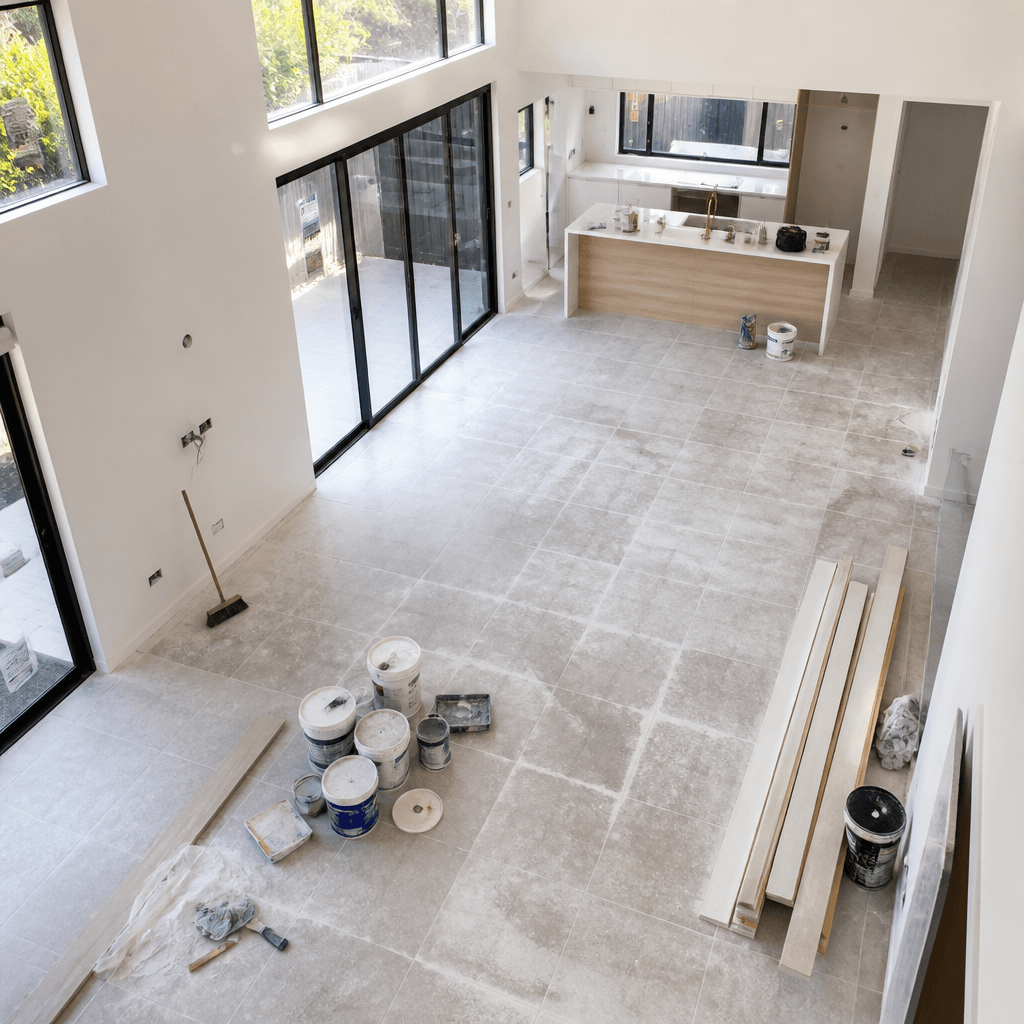
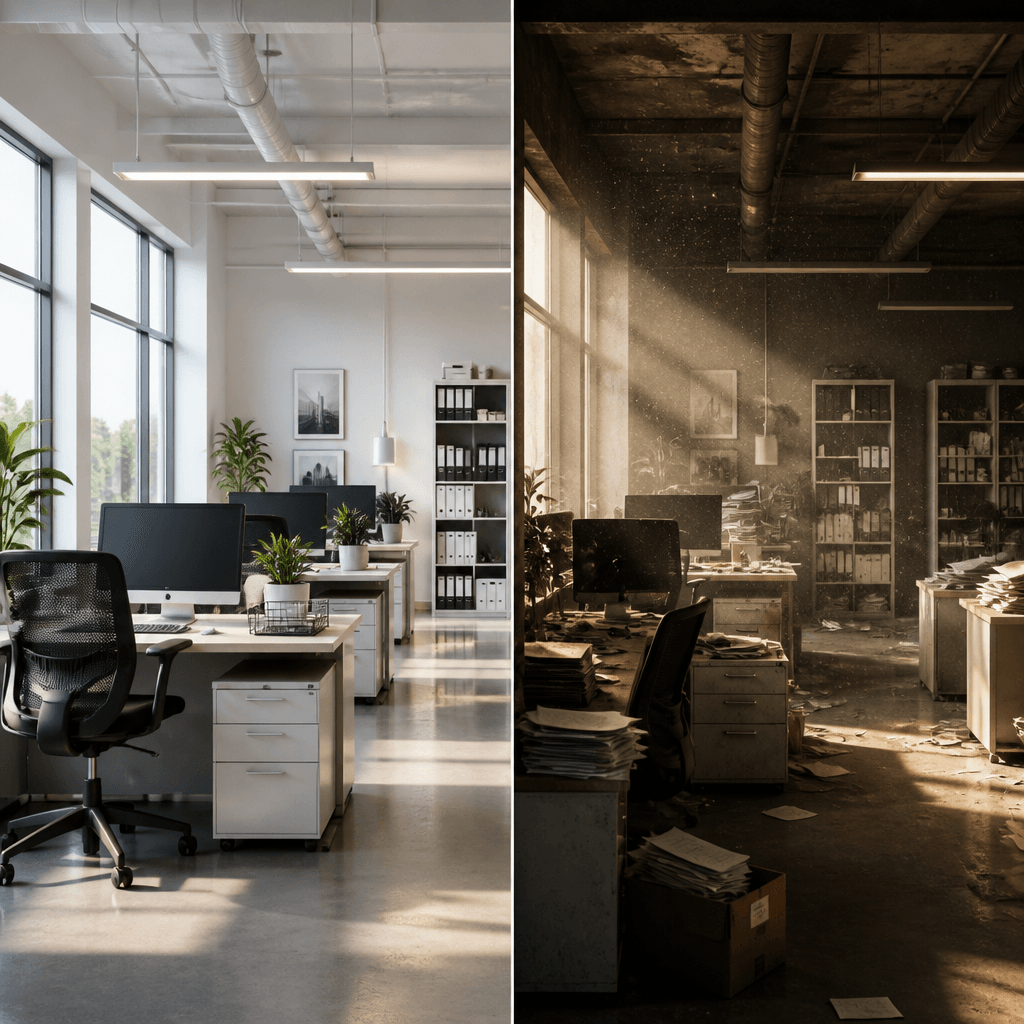
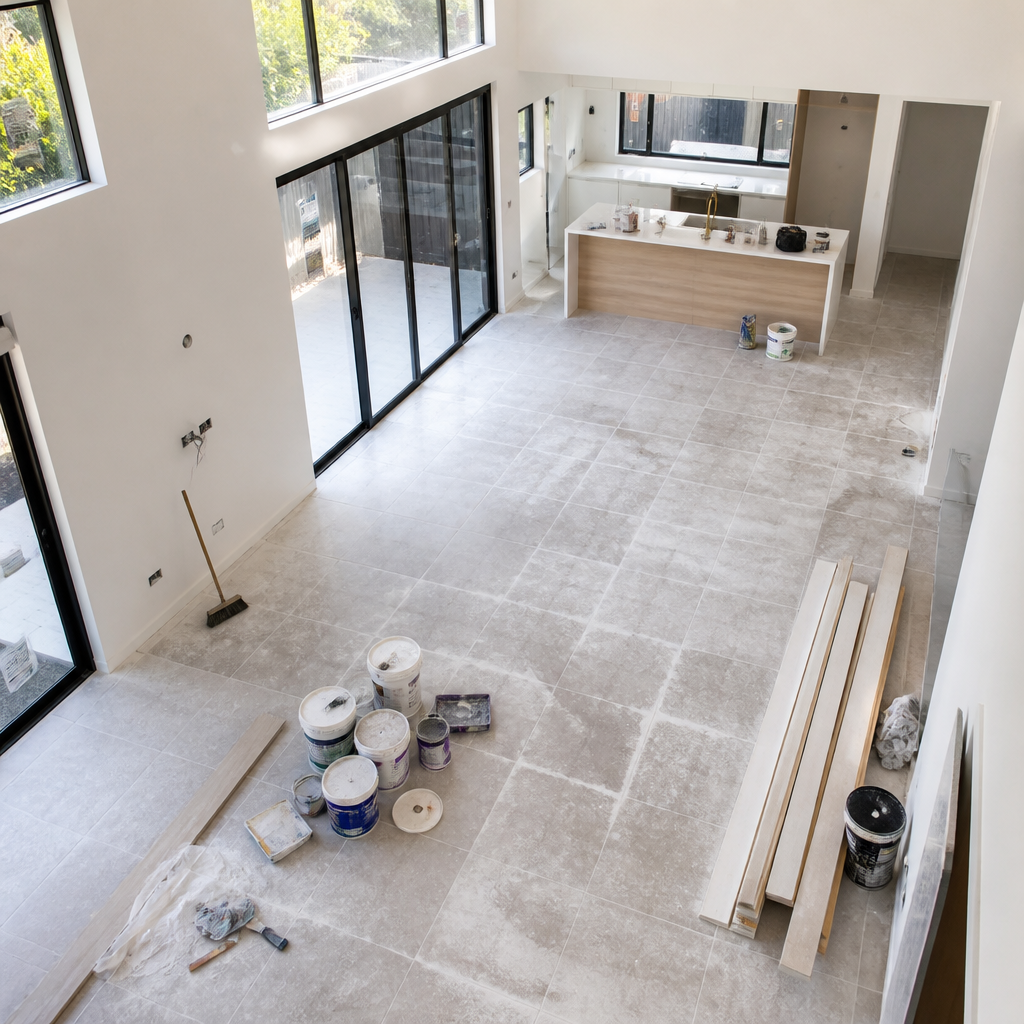
A builder’s clean is a post-construction or post-renovation cleaning service designed to transform a worksite into a liveable or presentable property. It is fundamentally different from an end-of-lease clean or a regular house clean. The contamination left behind by construction trades, including silicone residue, plaster dust, tile adhesive, paint overspray, concrete splatter, and sawdust, requires specific products, tools, and techniques that a standard cleaning crew does not carry.
In Melbourne, builders cleaning is typically requested at one of three points: during the construction phase (to keep the site presentable for inspections), at practical completion before handover, or after a renovation when the homeowner is moving back in. Each of these moments has different requirements, and a professional team should adapt the scope accordingly rather than applying a generic checklist.
What a thorough builder’s clean covers in a residential context includes removal of plaster dust from all surfaces, cleaning of kitchen cabinetry inside and out (including removing protective film), cleaning of all glass and window frames, removing adhesive stickers from appliances and fixtures, cleaning bathrooms to remove grout haze and silicone smears from tiles, sanitising all wet areas, wiping down skirtings and architraves, and vacuuming and mopping all floor surfaces. Paint spots on hard floors and splashes on light fittings are also standard scope items.
Pro tip: Before booking a builder’s clean, walk through the property and photograph any pre-existing damage, scratches on glass, or chipped tiles. This protects you if a dispute arises later about what the cleaning team may or may not have caused.
The Three Stages of a Builder’s Clean
Most professional builders cleaning teams in Melbourne approach post-construction cleaning in three distinct stages. Understanding these stages helps you schedule cleaning around your build schedule and avoid the common mistake of booking a final clean before the site is actually ready for it.
Stage One: Initial or Rough Clean
This is the first pass, typically done while trades are still finishing work on site. The goal is to remove bulk debris, excess materials, cardboard packaging, and construction waste so the site is safe and accessible. It is not a detailed clean and it should not be billed as one. Some builders include this in their contract; many do not.
Stage Two: Construction Phase Clean
As work nears completion, a more detailed clean removes dust and grime that has accumulated on surfaces, frames, and fixtures. This stage is particularly important before floor coverings go down, as construction dust trapped under new flooring creates long-term problems. It also creates a clean baseline for the final inspection clean.
Stage Three: Final or Handover Clean
This is the definitive builder’s clean that makes the property move-in ready. It covers every surface in detail, including all the specialist work listed above: glass cleaning, grout haze removal, adhesive residue removal from all fixtures, and full sanitisation of bathrooms and kitchens. This is the stage where experience makes a visible difference. A team that has done hundreds of post-build cleans in Melbourne knows exactly where dust hides (inside downlights, in exhaust fan grilles, behind pivot door hinges) and will find it. A general cleaning team will not.
Pro tip: Book your final handover clean only after all trades have genuinely finished. A common mistake is scheduling too early, then having the plasterer or tiler return and leave fresh dust across a freshly cleaned surface. Coordinate with your builder on a firm last-trade date before locking in the cleaning appointment.
Window Cleaning in Melbourne: Why DIY Usually Fails
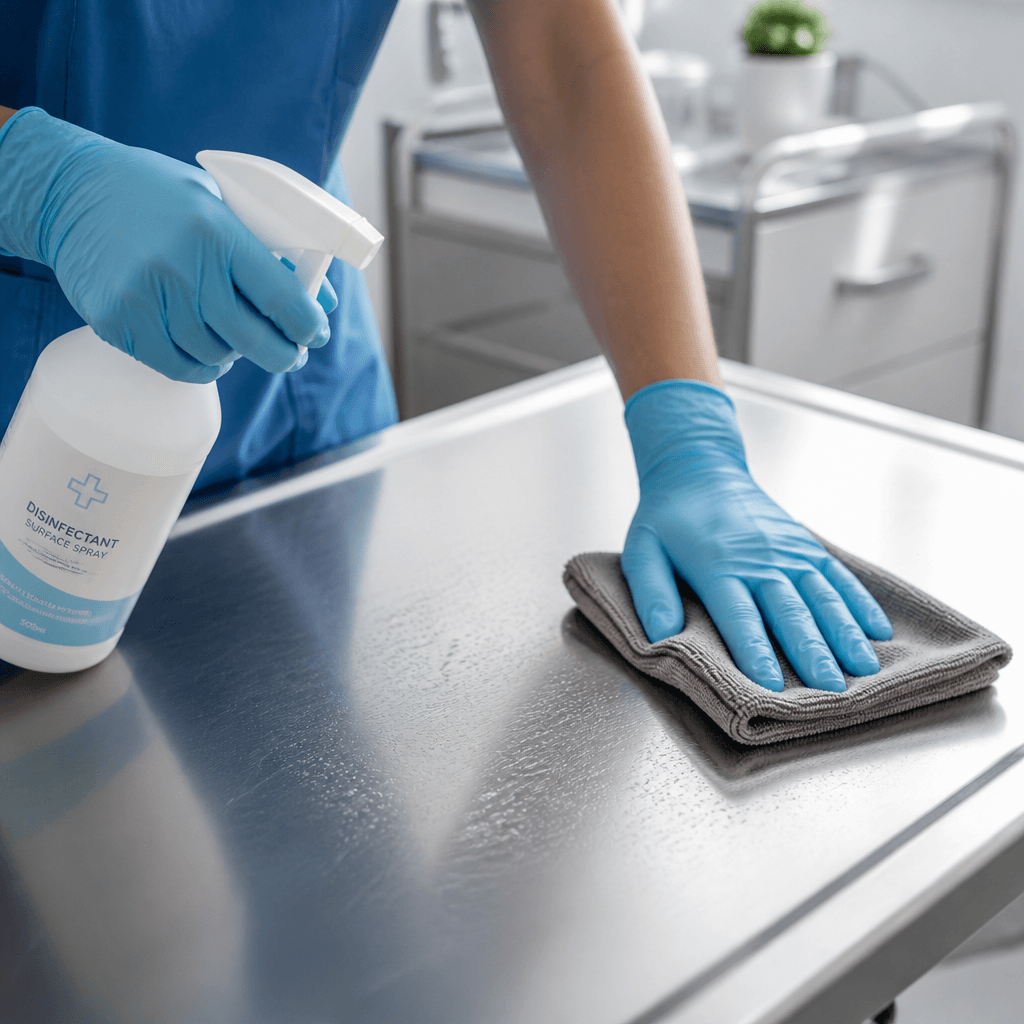
Window cleaning after a build is one of the most visible outcomes of the entire post-construction process, and it is also one of the most commonly botched when homeowners attempt it themselves. The problem is not effort. The problem is technique and the wrong tools.
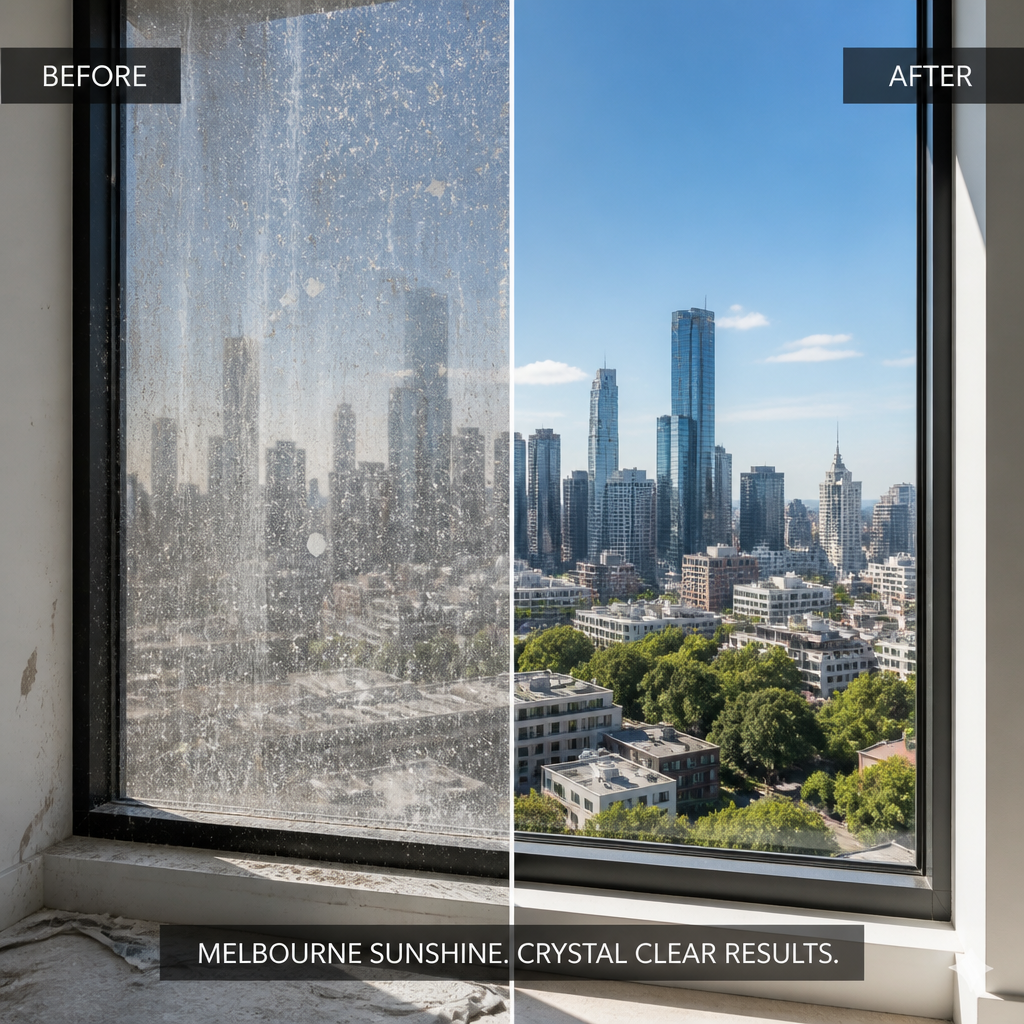
After construction, glass accumulates layers of fine silica dust, paint mist, hard water mineral deposits, and adhesive residue from protective films. Each of these requires a different removal approach. Using a standard household window spray and a microfibre cloth on post-build glass is likely to grind abrasive particles into the surface, causing hairline scratches that become visible once the sun hits the glass at an angle.
What Professional Window Cleaning in Melbourne Actually Uses
Professional window cleaning Melbourne services use purified or deionised water systems that eliminate the mineral deposits responsible for streaking. They use professional-grade rubber squeegees with fresh blades, and specific chemical solutions formulated to lift construction contamination without scratching. For multi-storey properties, rope access or elevated work platform techniques are used. This is regulated work in Victoria and should only be performed by trained and insured operatives.
The standard result from a proper professional clean is glass that is streak-free, clear, and free of residue when viewed in direct sunlight. If you can see a haze or streaks after the cleaner has left, that is a sign of either hard water mineral deposits not fully removed, or squeegee blades that were overdue for replacement.
Rain does not clean windows. In Melbourne, rain water picks up airborne dust and deposits minerals on glass as it evaporates, often leaving surfaces dirtier than before. Regular professional cleaning is the only way to maintain genuinely clear glass.
How Often Should Melbourne Homeowners Schedule Window Cleaning?
For most residential properties in Melbourne, a professional window clean twice a year keeps glass in good condition and prevents mineral build-up from becoming deeply embedded. Properties facing busy roads, near construction zones, or with north-facing glass exposed to extended sun benefit from quarterly cleaning. After any construction or renovation work, a dedicated post-build window clean should always be treated as a separate, scheduled task, not an add-on to a general clean.
High-Pressure Cleaning in Melbourne: Surfaces, Limits, and Results
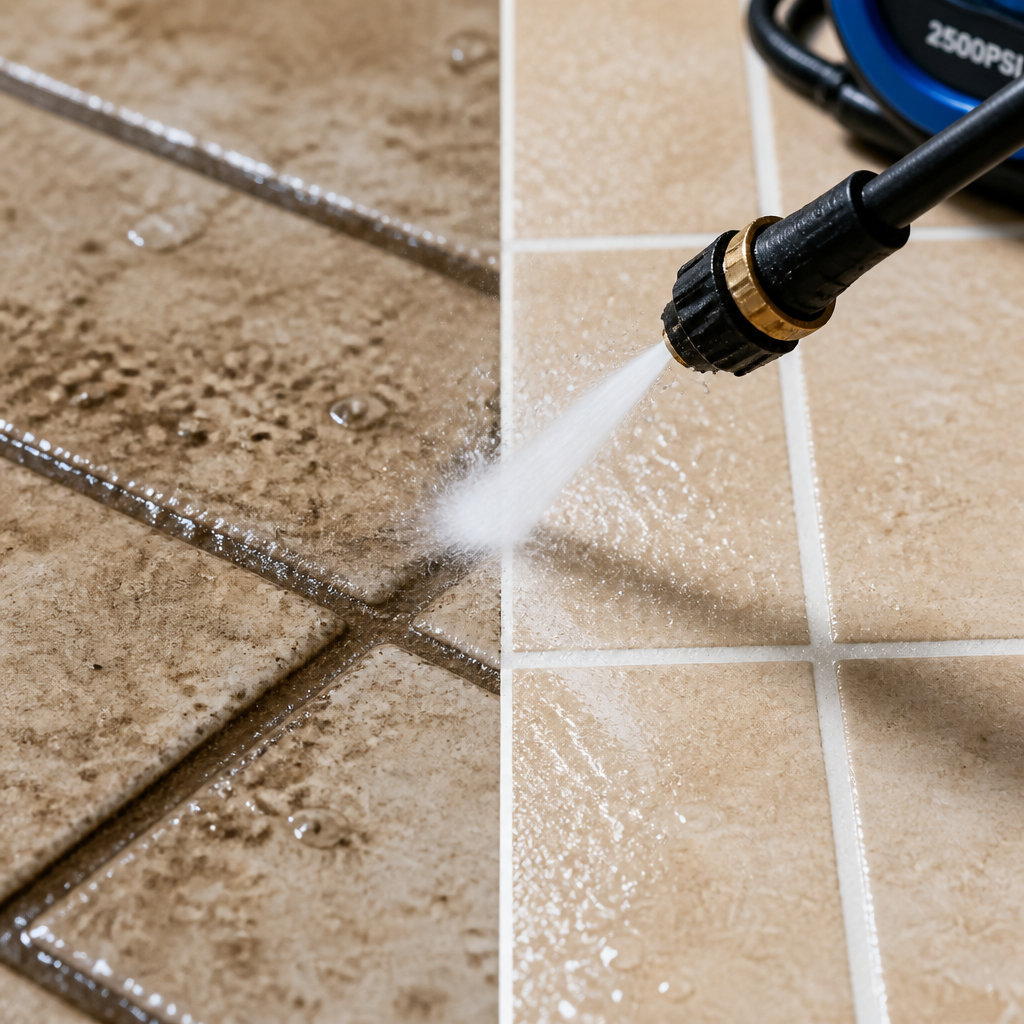
High-pressure cleaning is one of the most satisfying cleaning results you can get. A driveway or path that looks permanently stained can be restored to near-original condition in a matter of hours. But the process is more nuanced than pointing a pressure washer at a dirty surface and pulling the trigger. The wrong pressure setting on the wrong surface causes damage that is expensive or impossible to reverse.
In Melbourne, high pressure cleaning is most commonly used on concrete driveways, brick paving, path surfaces, pool surrounds, retaining walls, fences, exterior cladding, and rubbish bin areas. These surfaces accumulate moss, mould, lichen, oil stains, grease, and general grime that routine hosing cannot shift.
Surfaces Where High-Pressure Cleaning Works Well
Concrete and cement-based pavers handle high pressure well, particularly when a pre-treatment foam or degreaser is applied before washing. This combination loosens oil stains and organic growth at the root, so the pressure wash carries it away cleanly rather than just blasting the surface. Brick pathways and sandstock brick fences also respond well, but softer bricks require a lower pressure setting to avoid eroding the face of the brick.
Surfaces Where High-Pressure Washing Can Cause Damage
Painted render is a common casualty of incorrect high-pressure cleaning. The paint layer can be blasted off if the nozzle is held too close or the pressure is set too high. Grouted tile surfaces on external areas also require care. The same equipment that cleans a concrete slab beautifully can blow out grout lines if not calibrated correctly. Soft sandstone pavers and limestone tiles are particularly vulnerable and require either a very low pressure setting or a different cleaning method entirely.
A professional high-pressure cleaning team will assess the surface before starting, confirm the pressure and nozzle type, and adjust the cleaning solution to match the contamination type. If a team arrives and starts blasting without assessment, that is a warning sign.
What to Expect from a Professional High-Pressure Clean in Melbourne
For a standard residential driveway in Melbourne, a professional high-pressure clean typically takes between one and three hours depending on the size and level of contamination. A pre-treatment stage with a cleaning solution is applied, allowed to dwell, and then pressure washed off. The result is a significant visible improvement. Old oil stains may lighten but not disappear entirely without a dedicated degreaser treatment. Honest professionals will tell you this upfront rather than promising a perfect outcome on a heavily stained surface.
Tile and Grout Cleaning: The Step Most Homeowners Skip
Tile and grout cleaning is where many Melbourne homeowners discover a problem they did not know existed. Tiles look clean on the surface. Grout does not. Over time, grout lines absorb dirt, cooking grease, mould spores, and cleaning product residue, and no amount of regular mopping makes any visible difference. The grout lines continue to darken until the floor looks permanently dirty regardless of how often it is cleaned.
After a build or renovation, there is an additional problem: grout haze. When tiles are laid and grouted, a thin film of grout residue spreads across the tile face. Installers usually wipe it down, but a fine haze almost always remains. If it is not removed promptly with the correct chemical solution, it cures hard onto the tile surface and creates a dull, cloudy appearance that DIY scrubbing will not fix.
How Professional Tile and Grout Cleaning Works
Professional tile and grout cleaning Melbourne services use a combination of specialised alkaline or acidic cleaning solutions (matched to the tile and grout type) and high-temperature steam or rotary extraction equipment. The process first breaks down the contamination chemically, then removes it mechanically. This is fundamentally different from consumer-grade tile cleaners, which are designed for surface maintenance, not deep remediation.
The result of a professional tile and grout clean is grout lines that return to close to their original colour, rather than the uniform grey-to-black they tend to reach over years of use. Sealing the grout after cleaning is strongly recommended. Sealed grout repels liquid and staining agents, making regular cleaning effective again and extending the time between professional treatments significantly.
When to Book Tile and Grout Cleaning
For post-build situations, book tile and grout cleaning as part of your final builder’s clean scope, specifically to address grout haze before it fully cures. For existing homes, a professional deep clean is warranted when regular mopping no longer produces a visibly clean result, when grout lines have discoloured beyond what spot-cleaning achieves, or before a property sale when presentation matters. Properties in Melbourne with bathrooms or kitchens that see heavy use typically benefit from a professional tile and grout treatment every one to two years.
Comparison: Builder’s Clean vs. High-Pressure Wash vs. Standard Residential Clean
| Service Type | Best Used For | Key Limitations |
|---|---|---|
| Builder’s Clean | Post-construction or post-renovation properties; handover-ready presentation; removing construction-specific residues (plaster, silicone, adhesives, paint overspray, grout haze) | Does not restore heavily stained exterior surfaces; not a substitute for high-pressure cleaning on driveways and paths; requires specialist products and experience |
| High-Pressure Cleaning | Exterior concrete driveways, pavers, paths, pool surrounds, fences, bin areas; removing moss, lichen, oil stains, and deep grime from hard outdoor surfaces | Not suitable for all surfaces (painted render, soft stone, some tiles); does not replace interior cleaning; oil stains may require additional degreaser treatment; requires correct pressure calibration per surface |
| Standard Residential Clean | Routine maintenance cleaning of occupied homes; general dusting, vacuuming, kitchen and bathroom surface cleaning, mopping | Not equipped to handle construction residues, grout haze, or exterior surface contamination; does not include window cleaning with purified water systems or tile and grout deep treatment; not appropriate for post-build situations |
How to Choose the Right Cleaning Team in Melbourne
The Melbourne cleaning market is crowded, and the gap in quality between an experienced specialist and a general cleaner operating outside their skill set is significant. When you are dealing with post-build glass, new tiles, or expensive pavers, the risk of surface damage from the wrong technique is real. Here is what to look for and what to avoid.
What to Ask Before Booking
Ask specifically whether the team has experience with the exact service you need. A company that does builders cleaning in Melbourne regularly will understand grout haze, protective film removal, and construction-specific contamination without you needing to explain it. Ask about their equipment: do they use purified water systems for windows? Do they have commercial-grade pressure washers with adjustable nozzles and variable PSI settings? A team that cannot answer these questions specifically is likely not the right fit for specialist work.
Ask also about insurance. Accidental damage during cleaning, particularly to glass and tiles, does happen. Any professional team operating in Melbourne should carry public liability insurance. This protects you if something goes wrong, and any team unwilling to confirm coverage is a team to avoid.
What to Watch For During the Job
A professional team doing a builder’s clean will work methodically from top to bottom, cleaning ceilings and walls before floors, and leaving window cleaning until after all dusty interior work is complete. If you see a team mopping floors before wiping down dusty surfaces above, that is a sign they are following a general clean protocol rather than a post-build one.
For high-pressure cleaning, the team should inspect surfaces before starting and discuss any concerns about surface type or staining with you. For tile and grout work, they should apply cleaning solution and allow dwell time before any mechanical cleaning. If a team rushes straight to the mechanical stage without pre-treatment, the result will be inferior.
Vibrant Property Services brings over 15 years of experience to residential and commercial cleaning across Melbourne and its surrounding suburbs, including builders cleaning, window cleaning, high-pressure cleaning, and tile and grout restoration. Their teams are trained specifically in post-construction cleaning protocols, meaning they understand the sequence, the products, and the surfaces, rather than applying a one-size residential routine to a specialist problem.
Pro tip: When comparing quotes for builders cleaning or high-pressure cleaning in Melbourne, look closely at what is included rather than comparing headline prices. A quote that excludes window cleaning or grout haze removal is not comparable to one that includes it. Request a written scope of works so you know exactly what each team will and will not cover.
Frequently Asked Questions
How long does a builder’s clean take for a typical Melbourne home?
For a standard three to four bedroom Melbourne home after a renovation, a thorough builder’s clean typically takes a team of two to three people a full day. A larger new build or one with particularly heavy construction residue may take longer. Any quote that promises a complete post-build clean of a full home in two to three hours should be treated with caution, as that timeline does not allow for the detail required on glass, tiles, and fixtures.
Can I combine builder’s cleaning and high-pressure cleaning in the same booking?
Yes, and in most cases it makes sense to do so. A combined booking means a single team manages the sequencing correctly: exterior high-pressure cleaning of driveways and paths first, followed by interior post-build cleaning, and then final window cleaning last. Booking these separately with different companies creates coordination problems and risks one team’s work being undone by the next.
Will high-pressure cleaning remove oil stains from my driveway completely?
High-pressure cleaning significantly reduces the visibility of oil stains on concrete, but old or deeply embedded oil stains rarely disappear entirely from pressure washing alone. A pre-treatment with a commercial degreaser left to dwell before pressure washing produces a much better result. Fresh oil stains treated quickly respond better than stains that have been sitting for months or years. Be realistic about expectations on heavily stained driveways, and ask your cleaning team what outcome is achievable before work begins.
How often should I have my windows professionally cleaned in Melbourne?
Twice a year is a practical baseline for most Melbourne residential properties. Homes near busy roads, industrial areas, or in areas with heavy tree coverage may benefit from quarterly cleaning. After any renovation or construction work, always schedule a dedicated post-build window clean regardless of when the last regular clean was done, as construction contamination is in a different category from routine dust and grime.
What is grout haze and why does it matter after new tiling?
Grout haze is a thin film of grout residue that settles on the face of new tiles during the tiling process. Tilers typically wipe tiles down after grouting, but a fine haze almost always remains. If not treated with the correct chemical solution within a short window after installation, it cures hard and creates a permanent cloudy appearance on the tile surface. Once fully cured, mechanical removal is required, which risks scratching the tile. This is why tile and grout cleaning should be scheduled as part of the builder’s clean, not left until the homeowner notices a problem months later.
Is tile sealing worth doing after a professional tile and grout clean?
Sealing grout after a professional clean is consistently worth the additional cost. Sealed grout repels water, cooking grease, and staining agents, which means regular mopping with a household cleaner remains effective between professional treatments. Unsealed grout reabsorbs contamination quickly after cleaning and returns to a discoloured state within months of heavy use. The sealing process adds relatively little to the overall cost and significantly extends the clean result.
Have you recently gone through a builder’s clean, high-pressure wash, or tile and grout restoration in Melbourne? Share what worked well and what you wish you had known beforehand.
References
- BuildClean Melbourne: Professional post-construction and builder’s cleaning services explained
- Airtasker Melbourne: What to expect from high-pressure cleaning services on common surfaces
- Electrodry Melbourne: Tile and grout cleaning methods, solutions, and surface safety guidance
- Fantastic Cleaners Melbourne: Residential window cleaning process and streak-free results guide