
Most Melbourne businesses treat commercial cleaning as an afterthought, booking whatever is cheapest and available. That approach almost always results in missed cleans, over-serviced areas, and invoices that do not match actual needs. A properly designed cleaning schedule Melbourne businesses can rely on requires understanding how each facility operates, not just how often it needs a mop. Vibrant Property Services has spent over 15 years building schedules that account for trading hours, occupancy patterns, compliance requirements, and budget. This article explains exactly how that process works.
Table of Contents
- Why Generic Cleaning Schedules Fail Melbourne Businesses
- The Vibrant Site Assessment Process
- Sector-Specific Scheduling Approaches
- Flexible Commercial Cleaning in Melbourne: What It Actually Means
- Comparison: Three Cleaning Schedule Models
- How Vibrant Handles Compliance and Audit Trails
- Tailored Cleaning Services Melbourne: Industries That Need Custom Plans Most
- Frequently Asked Questions
- References
Why Generic Cleaning Schedules Fail Melbourne Businesses
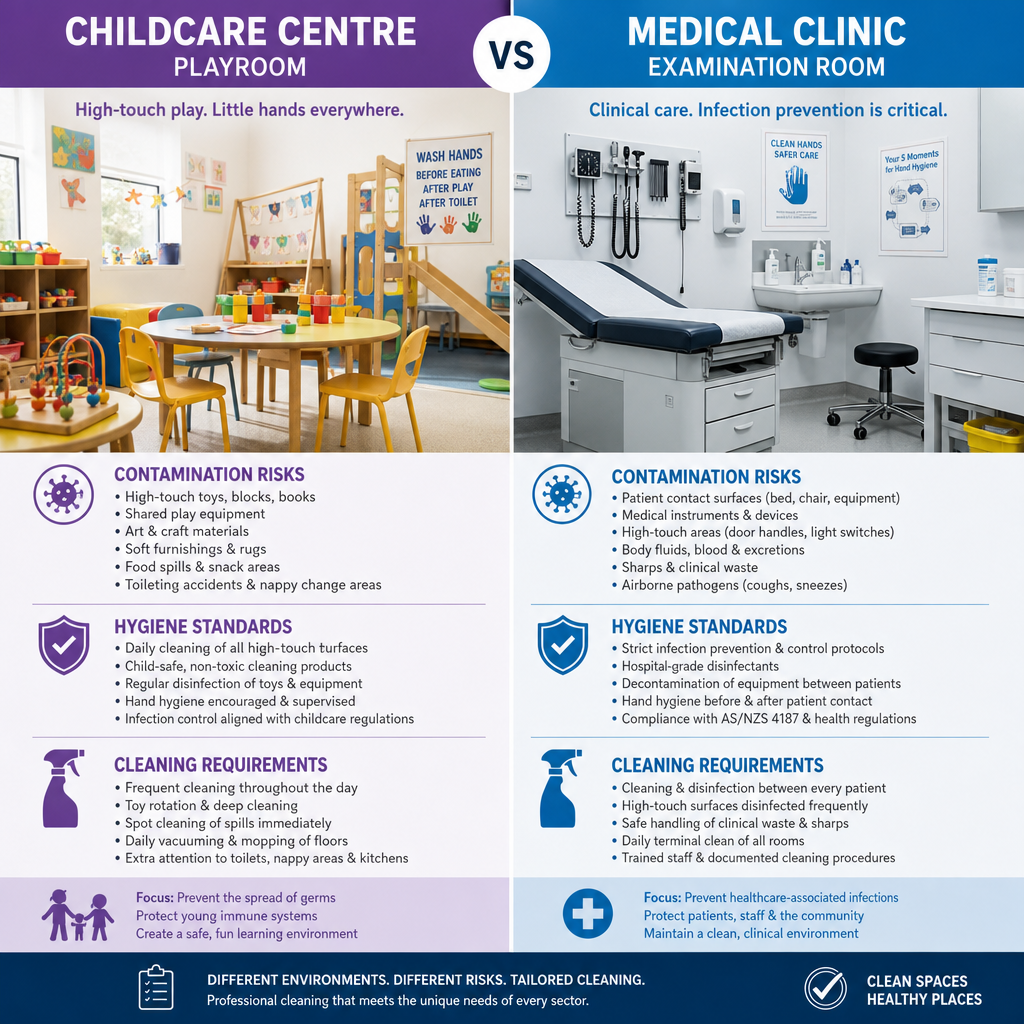
A generic cleaning schedule assumes all spaces are roughly equivalent in footfall, contamination risk, and regulatory pressure. They are not. A childcare centre accumulates biological hazards by mid-morning that require a fundamentally different response than an office floor that sees light traffic until noon.
The data consistently shows that reactive cleaning costs more over time. According to research from the International Sanitary Supply Association, facilities that run unplanned or poorly timed cleaning programs spend up to 30 percent more annually than those operating on structured, site-specific schedules. The variance is not marginal. It compounds across labour, chemical waste, and equipment wear.
A common mistake is treating square meterage as the primary variable when designing a schedule. In practice, cleaning frequency should be driven by usage intensity, not floor area. A 200-square-metre medical waiting room needs more frequent attention than a 1,000-square-metre low-traffic warehouse. Vibrant Property Services builds every plan around usage data, not floor plans alone.
The Vibrant Site Assessment Process
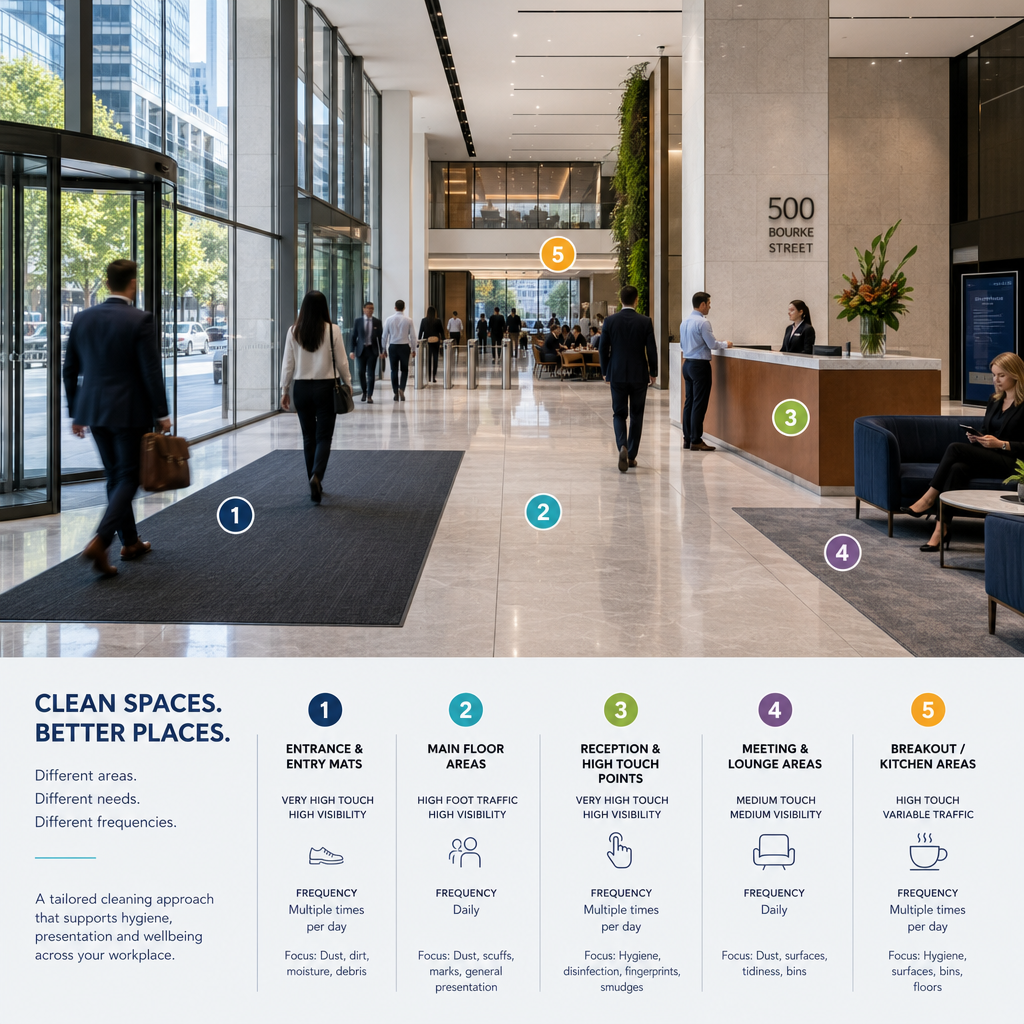
Before any schedule is proposed, Vibrant conducts a structured on-site assessment. This is not a sales walk-through. It is a working audit that maps traffic flow, identifies high-touch surface clusters, flags compliance-sensitive zones, and documents access constraints.
What the Assessment Covers
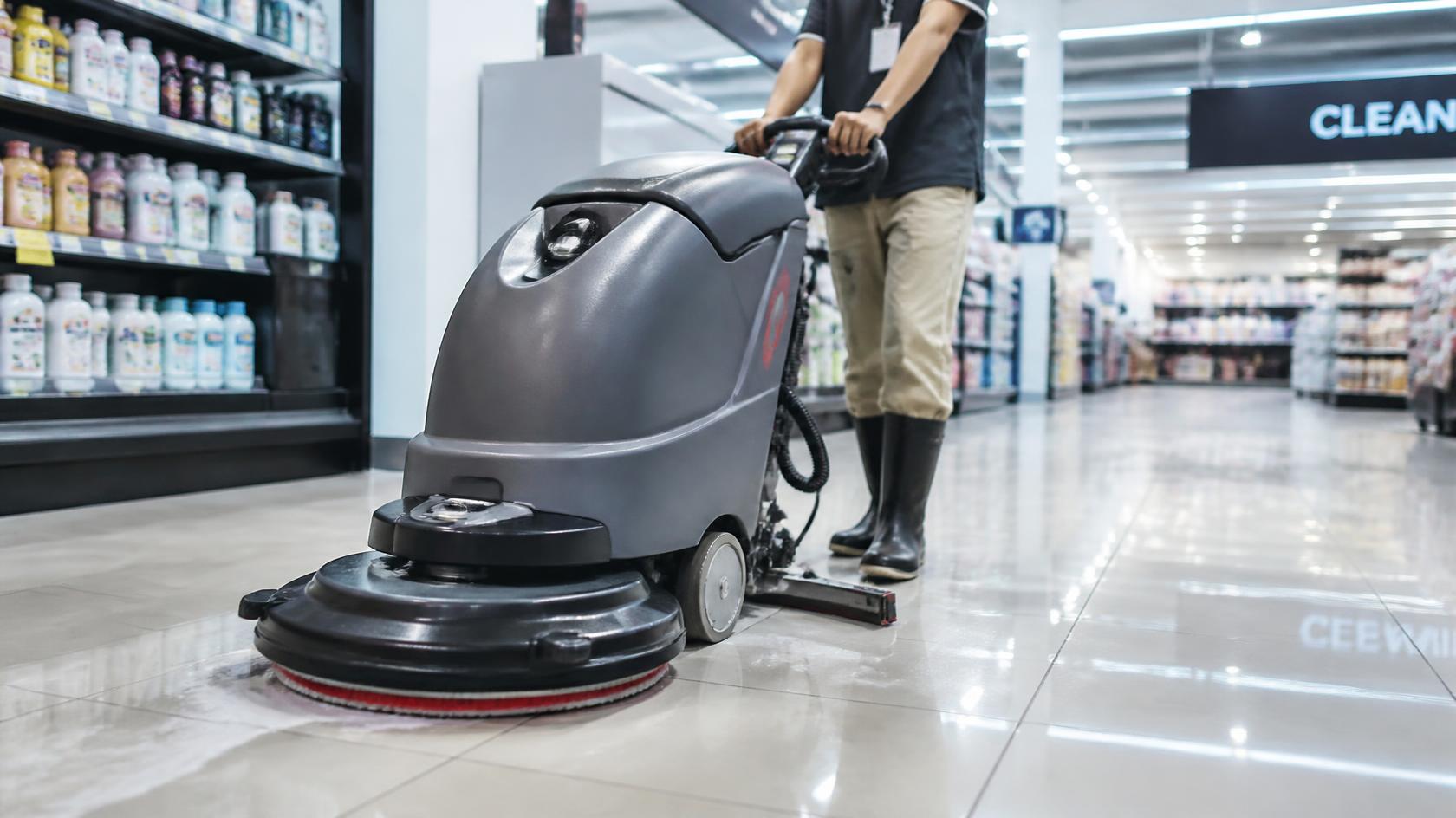
The assessment records peak occupancy windows, shift change times, delivery schedules, and any periods where cleaning would disrupt operations. For a Melbourne hotel, that means understanding housekeeping overlaps with guest check-out. For a supermarket, it means working around restocking rotations and early-morning trade.
The output is a site profile document that feeds directly into the draft schedule. Nothing is assumed. Every constraint is documented before a single hour of cleaning is scoped.
Pro tip: Ask any cleaning provider to share the site profile they used to build your schedule. If they cannot produce one, the schedule was not built for your facility. It was copied from a template.
Access and Security Integration
Melbourne commercial properties often have layered access controls, alarm systems tied to specific time windows, and security protocols that affect after-hours cleaning. Vibrant maps these constraints at assessment stage, ensuring no schedule requires access that the facility cannot provide without operational disruption.
Sector-Specific Scheduling Approaches
Vibrant Property Services operates across a wide range of Melbourne sectors, and the scheduling logic differs significantly between them. What works for a school is actively wrong for an aged care facility, and vice versa.
Childcare Centres
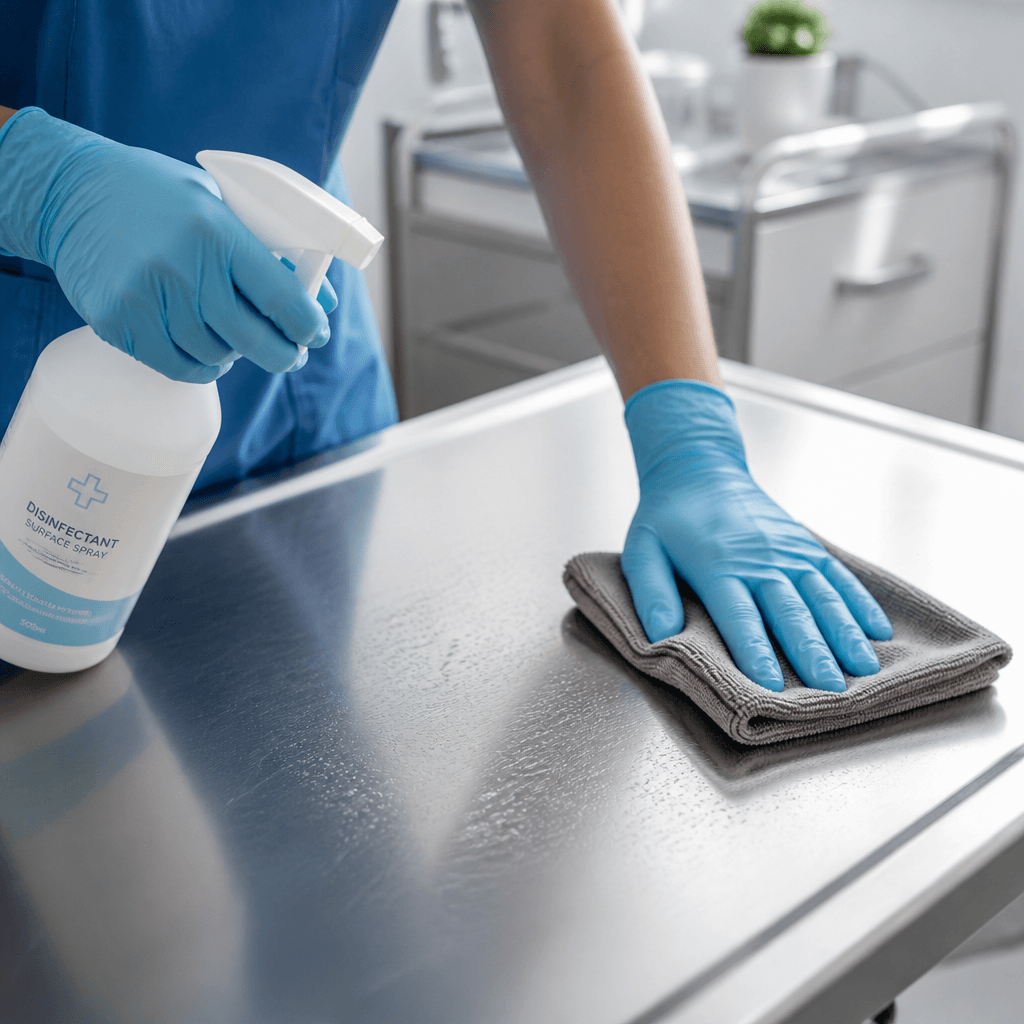
Childcare environments require minimum twice-daily surface disinfection of contact points, with full floor cleans after session end. Vibrant schedules these around drop-off and pick-up windows, ensuring no cleaning activity overlaps with children present. This is not optional. Victorian childcare licensing standards require documented cleaning protocols as part of service approval conditions.
Medical Facilities and Aged Care
These environments carry the highest contamination risk and the strictest compliance requirements. Vibrant applies colour-coded microfibre systems in these settings to prevent cross-contamination between zones, a practice aligned with the Australian Government’s infection control guidelines for healthcare settings. Schedules for these facilities run seven days a week with no exceptions, regardless of public holidays.
Commercial Offices and Warehouses
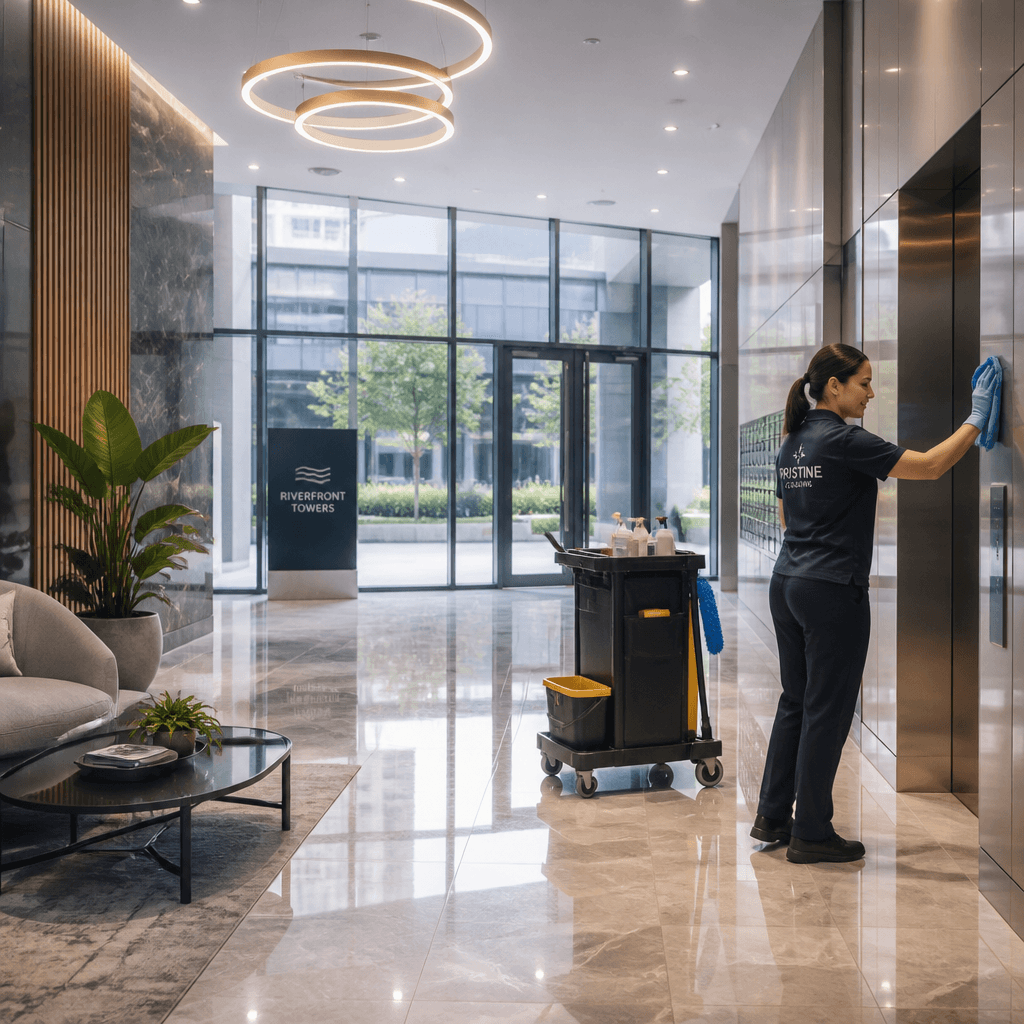
Office environments in Melbourne’s CBD typically peak in footfall between 8am and 6pm, making after-hours cleaning the most practical window. Warehouses, by contrast, may operate 24-hour shifts with narrow maintenance windows. Vibrant schedules warehouse cleans around shift rotations rather than fixed time blocks, which reduces operational interference significantly.
Retail and Hospitality
Supermarkets and hotels have the most variable cleaning demands in the portfolio. A hotel room must be turned around within a checkout-to-checkin window that can be as tight as two hours. Vibrant staffs these accounts with a flexible roster that scales with occupancy, not a fixed headcount regardless of how busy the property is.
Flexible Commercial Cleaning in Melbourne: What It Actually Means
Flexible commercial cleaning Melbourne businesses need is not the same as informal or uncommitted service. Flexibility in this context means the schedule adapts to genuine changes in your operation without requiring you to renegotiate a contract from scratch.
“The best cleaning schedule is the one that still works after your business changes for the third time in a year.” Vibrant Property Services operations brief, internal client communication protocol.
Vibrant builds review points into every schedule at 90-day intervals. At each review, the service frequency, task scope, and visit timing are assessed against actual usage data collected by on-site supervisors. If a client’s team has grown by 40 percent since the schedule was set, the schedule changes to reflect that. If seasonal trading drops occupancy, the visit frequency adjusts accordingly.
This is structurally different from competitors who lock clients into 12-month fixed schedules with penalty clauses for reductions. A fixed schedule that does not reflect your actual operations wastes budget on over-servicing some areas while leaving others inadequately covered.
Pro tip: Before signing any commercial cleaning contract in Melbourne, ask specifically what the review mechanism is. If the answer is “contact us anytime,” that is not a mechanism. That is a customer service line. A real review process has defined intervals and documented outputs.
Comparison: Three Cleaning Schedule Models
Not all scheduling approaches deliver equivalent results. The table below compares the three most common models used by commercial cleaning providers in Melbourne, including how Vibrant’s approach differs from generic alternatives.
| Schedule Model | How It Works | Best Suited For |
|---|---|---|
| Fixed Template Schedule | Provider applies a pre-built schedule based on square meterage and broad industry category. No site assessment. Reviewed only on client complaint. | Low-complexity single-room offices with predictable usage. Poor fit for any multi-zone or regulated environment. |
| Reactive On-Request Cleaning | Client calls when cleaning is needed. No standing schedule. Availability varies. No compliance documentation generated. | Ad hoc residential or small business use. Entirely unsuitable for childcare, medical, or hospitality sectors. |
| Vibrant Site-Profiled Schedule | Full site assessment generates a usage-based schedule with defined task frequencies, zone priorities, and 90-day review points. Compliance documentation included as standard. | All regulated sectors, multi-site businesses, hospitality, and any facility where cleaning is a compliance requirement, not just a preference. |
How Vibrant Handles Compliance and Audit Trails
For businesses operating in regulated sectors, a cleaning schedule is also a compliance document. It is not enough to clean well. You need to prove that cleaning occurred, when it occurred, what tasks were completed, and who performed them.
Vibrant generates job completion records for every visit. These records log the date, time, tasks completed, and supervising team member. For childcare and aged care clients, these records are formatted to align with the documentation requirements of the relevant Victorian regulatory bodies, reducing the administrative burden on facility managers during audits.
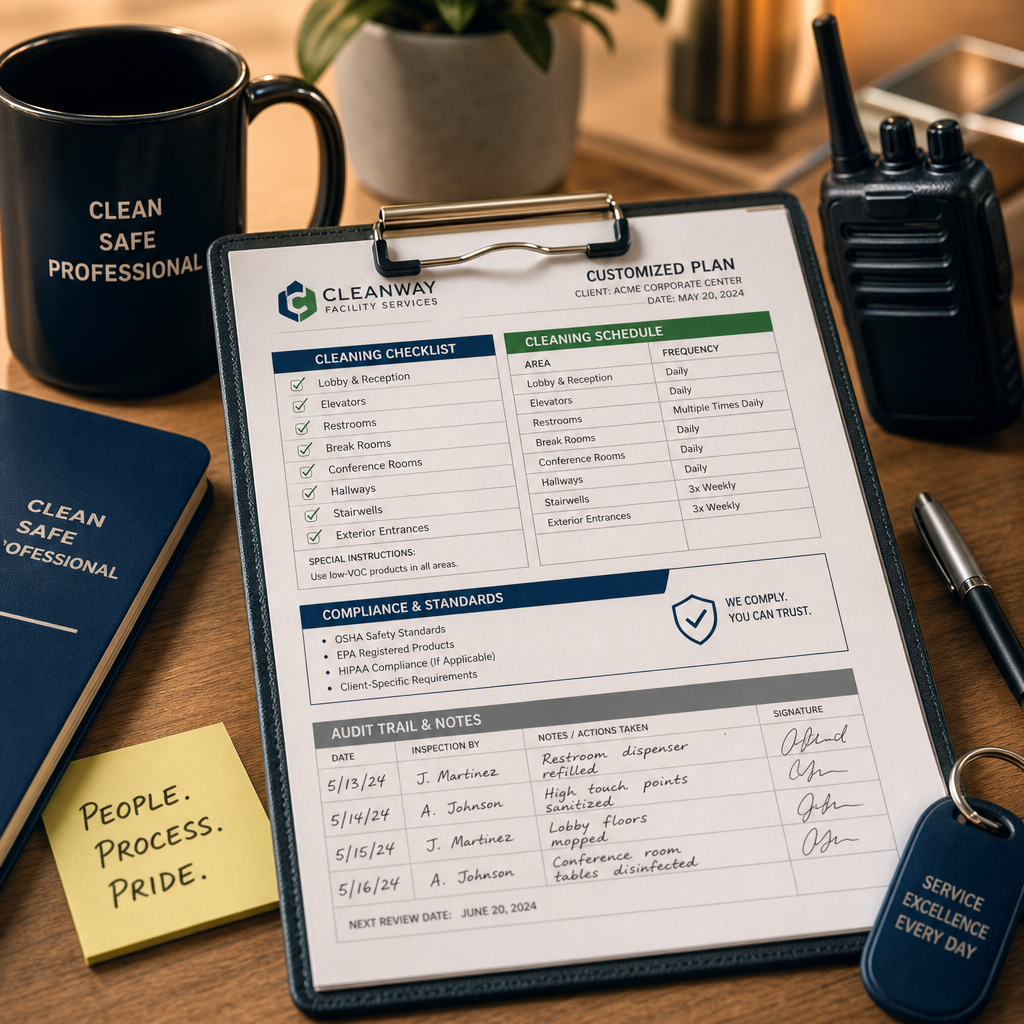
A common mistake facility managers make is assuming their cleaning provider handles compliance documentation automatically. Most do not. Confirm in writing, before you sign, that the provider will generate records in a format acceptable to your regulator. Vibrant’s onboarding process includes a specific compliance documentation briefing for this reason.
Tailored Cleaning Services Melbourne: Industries That Need Custom Plans Most
Tailored cleaning services Melbourne providers like Vibrant offer are most critical in sectors where a cleaning failure creates downstream consequences beyond an untidy space. In most commercial offices, a missed clean is an inconvenience. In a medical practice or a school, it can be a regulatory breach or a health incident.
Schools and Educational Facilities
Victorian schools face inspection cycles that include cleaning standards assessments. Vibrant designs school cleaning schedules around the academic calendar, intensifying service during term time and conducting deep cleans during school holidays when access is unrestricted. Builder’s cleaning after renovation or construction works is also part of the scope for schools undergoing upgrade projects.
Builder’s Cleans and Post-Construction
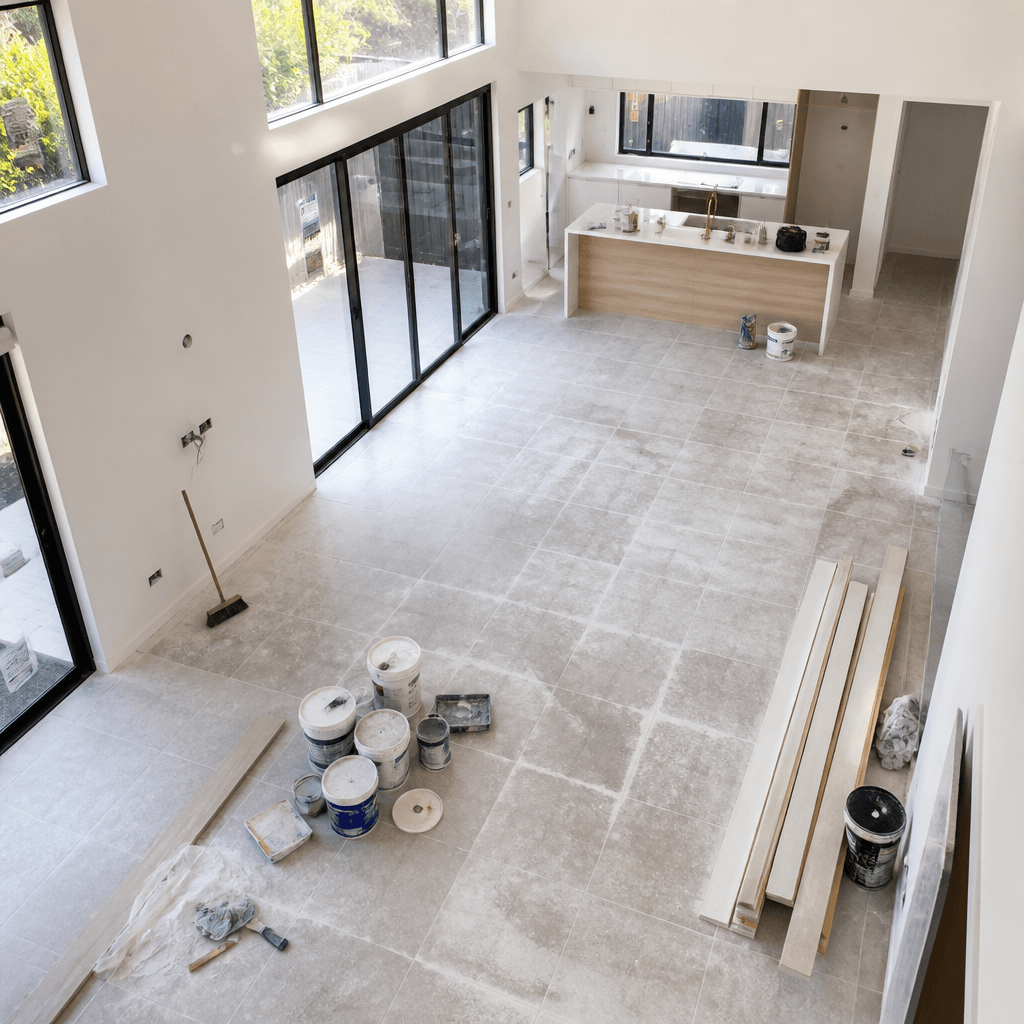
Builder’s cleaning is one of the most underestimated services in terms of scheduling complexity. Construction timelines shift constantly. Vibrant’s approach is to maintain direct communication with the site manager and build a cleaning schedule that adjusts to practical completion dates rather than original programme dates. Waiting for a builder to confirm a fixed handover date before scheduling a clean almost always causes delays.
High-Pressure Cleaning and Tile Restoration
These are periodic services rather than recurring cleans, but they still require scheduling around operational constraints. A high-pressure clean of a Melbourne restaurant forecourt cannot happen during trading hours or immediately before a health inspection if the area needs drying time. Vibrant integrates these periodic services into the master cleaning schedule so they do not conflict with recurring visits or operational windows.
Frequently Asked Questions
How does Vibrant Property Services create a cleaning schedule for a new client?
The process starts with a structured on-site assessment that maps the facility’s usage patterns, access constraints, compliance requirements, and peak occupancy windows. This site profile feeds into a draft schedule that is reviewed with the client before any work begins. The schedule is not a template. It is built from the assessment data collected at that specific property.
Can the cleaning schedule be adjusted after it starts?
Yes, and Vibrant expects it to change. Every schedule includes a formal 90-day review point where frequency, task scope, and visit timing are assessed against actual usage data. Changes to your operation, such as team growth, seasonal trading shifts, or a new tenancy, are reflected in the schedule at the next review or sooner if the change is significant.
What sectors does Vibrant Property Services serve in Melbourne?
Vibrant services childcare centres, aged care facilities, schools, hotels, warehouses, supermarkets, medical environments, commercial offices, and post-construction sites across Melbourne and surrounding suburbs. Each sector receives a schedule designed around its specific compliance requirements and operational patterns, not a generic commercial cleaning plan.
Does Vibrant provide compliance documentation for regulated industries?
Yes. For clients in regulated sectors including childcare, aged care, and medical facilities, Vibrant generates job completion records that log date, time, tasks completed, and supervising team member. These records are formatted to align with the documentation requirements of relevant Victorian regulatory bodies, which simplifies the audit process for facility managers.
How is Vibrant Property Services different from other Melbourne cleaning companies?
The primary difference is the site assessment process and the structured 90-day review mechanism. Many Melbourne cleaning providers apply fixed templates or reactive scheduling. Vibrant builds every schedule from a documented site profile and reviews it at defined intervals using real usage data. The result is a schedule that stays accurate to your operation rather than drifting out of alignment as your business changes.
What is the minimum contract term for commercial cleaning with Vibrant?
Contract terms vary by service type and facility requirements. Unlike providers who use long fixed-term contracts with penalty clauses for reductions, Vibrant structures agreements to allow schedule adjustments without requiring full renegotiation. The specifics are discussed during the initial consultation and site assessment, so clients understand exactly what flexibility they have before committing.
Does Vibrant Property Services handle one-off cleaning jobs as well as ongoing schedules?
Yes. Services like builder’s cleaning, high-pressure cleaning, window cleaning, and tile and grout restoration are available as standalone engagements. Even for one-off jobs, Vibrant coordinates scheduling around your operational constraints rather than booking a fixed time slot that suits the cleaner’s route.
If you manage a commercial property or facility in Melbourne, we would like to hear what scheduling challenges you have encountered with previous cleaning providers. Share your experience in the comments below.
References
- Safe Work Australia: workplace health and hygiene standards relevant to commercial cleaning environments
- Australian Government Department of Health: infection control guidelines for healthcare and aged care settings
- Statista: commercial cleaning industry market data and facility management statistics
- Forbes: business operations and facilities management cost analysis for service-based industries
- ACECQA: national quality standards and documentation requirements for childcare facility operators in Australia