
Most Melbourne property managers waste money every year choosing the wrong cleaning method for the wrong surface. A concrete warehouse floor cleaned by hand when high pressure cleaning Melbourne would do the same job in one-fifth of the time is not a small inefficiency. It is a recurring cost. The reverse is equally true: blasting a delicate sandstone pathway with a pressure washer at 3,000 PSI strips the surface finish and triggers expensive repairs. This guide takes a direct, practical look at both methods so you can make the right call for your specific property, surface type, and budget.
Table of Contents
- Quick Takeaways
- What Is High Pressure Cleaning and How Does It Work?
- What Is Manual Scrubbing and Where Does It Fit?
- Key Differences: Surfaces, Results, and Realistic Expectations
- Side-by-Side Comparison: High Pressure Cleaning vs. Manual Scrubbing vs. Combined Approach
- When to Choose Pressure Washing for Your Melbourne Property
- When Manual Scrubbing Is the Better Option
- Cost and Time Breakdown for Melbourne Properties
- Professional Service vs. DIY: What the Numbers Actually Say
- Frequently Asked Questions
- References
Quick Takeaways
Key Insight | Explanation |
|---|---|
High pressure cleaning is 4 to 6 times faster on hard outdoor surfaces | A 200 sqm concrete driveway that takes two workers 4 hours to scrub manually can be pressure washed in under an hour by a single operator using commercial-grade equipment. |
Manual scrubbing is safer on porous or soft surfaces | Sandstone, aged brick, and sealed tiles risk surface erosion or sealant stripping when exposed to pressures above 1,500 PSI. Hand scrubbing with the right chemical dwell time is the lower-risk option. |
Water usage is not always lower with pressure washing | Commercial cold-water pressure washers use 8 to 15 litres per minute. Manual scrubbing with a bucket uses less total water but requires more labour hours and chemical input. |
Tile and grout restoration almost always requires a combination of both methods | Grout lines need chemical pre-treatment and hand-brush agitation before steam or pressure extraction delivers a full clean. Pressure alone pushes contaminants deeper into grout pores. |
Melbourne’s weather cycle creates unique pressure cleaning windows | Post-winter cleaning in September and October is peak demand for commercial driveways, loading docks, and outdoor retail areas after months of moss, mould, and organic buildup from wet weather. |
Commercial sites require documented cleaning records | Facilities like aged care centres and childcare centres operating under Victorian health regulations need written evidence of cleaning methods used, frequency, and chemical types. Professional cleaning companies provide this documentation. |
DIY pressure washing causes more damage claims than professional jobs | According to industry repair data, the majority of concrete, render, and tile surface damage attributable to cleaning equipment comes from incorrect nozzle selection and excessive pressure applied by untrained operators. |
What Is High Pressure Cleaning and How Does It Work?
High pressure cleaning uses a motorised pump to force water through a narrow nozzle at pressures ranging from 1,000 PSI for residential light-duty work up to 4,000 PSI or more for industrial applications like warehouse floors and loading docks. The cleaning action comes from mechanical force rather than chemical saturation alone, which is what makes it so effective on dense, non-porous surfaces where grime is bonded to the substrate rather than sitting on top of it.
In practice, the nozzle angle matters as much as the pressure setting. A 0-degree nozzle concentrates force on a single point and is useful for stripping paint or removing stubborn adhesive residue. A 40-degree fan nozzle distributes pressure across a wider surface area and is the standard choice for general concrete, brick, and paving cleaning. Using the wrong nozzle on the wrong surface is where most damage occurs.
Professional-grade cold and hot water pressure washing systems also allow operators to inject detergents directly into the water stream, which improves results on oil stains, biological growth like algae and lichen, and food residue on commercial kitchen surrounds. This detergent injection capability is one of the key differences between professional high pressure cleaning in Melbourne and a consumer-grade machine purchased from a hardware store.
What Is Manual Scrubbing and Where Does It Fit?
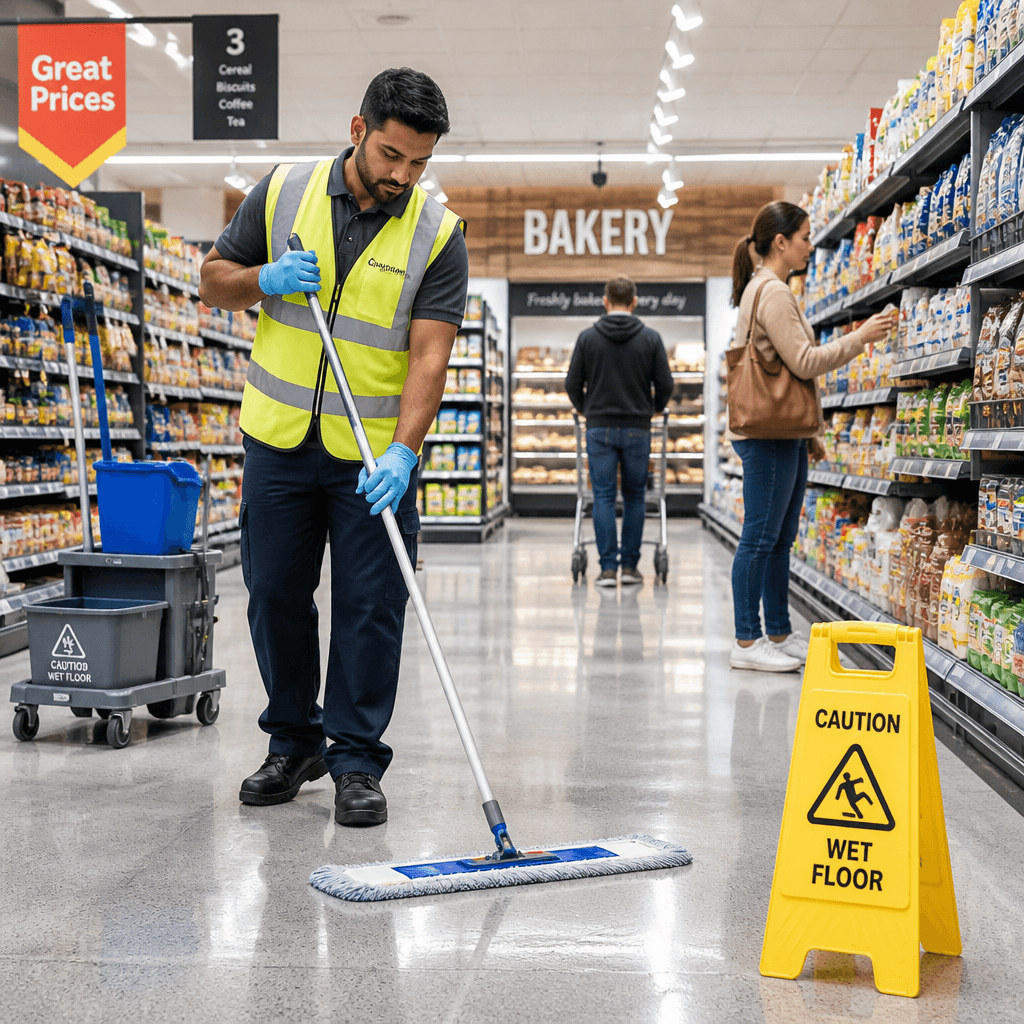
Manual scrubbing is exactly what it sounds like: physical agitation of a surface using brushes, mops, sponges, or pads, combined with cleaning agents and water. It is slower than pressure washing on large open areas but offers a level of controlled, targeted cleaning that no pressure washer replicates on intricate or sensitive surfaces.
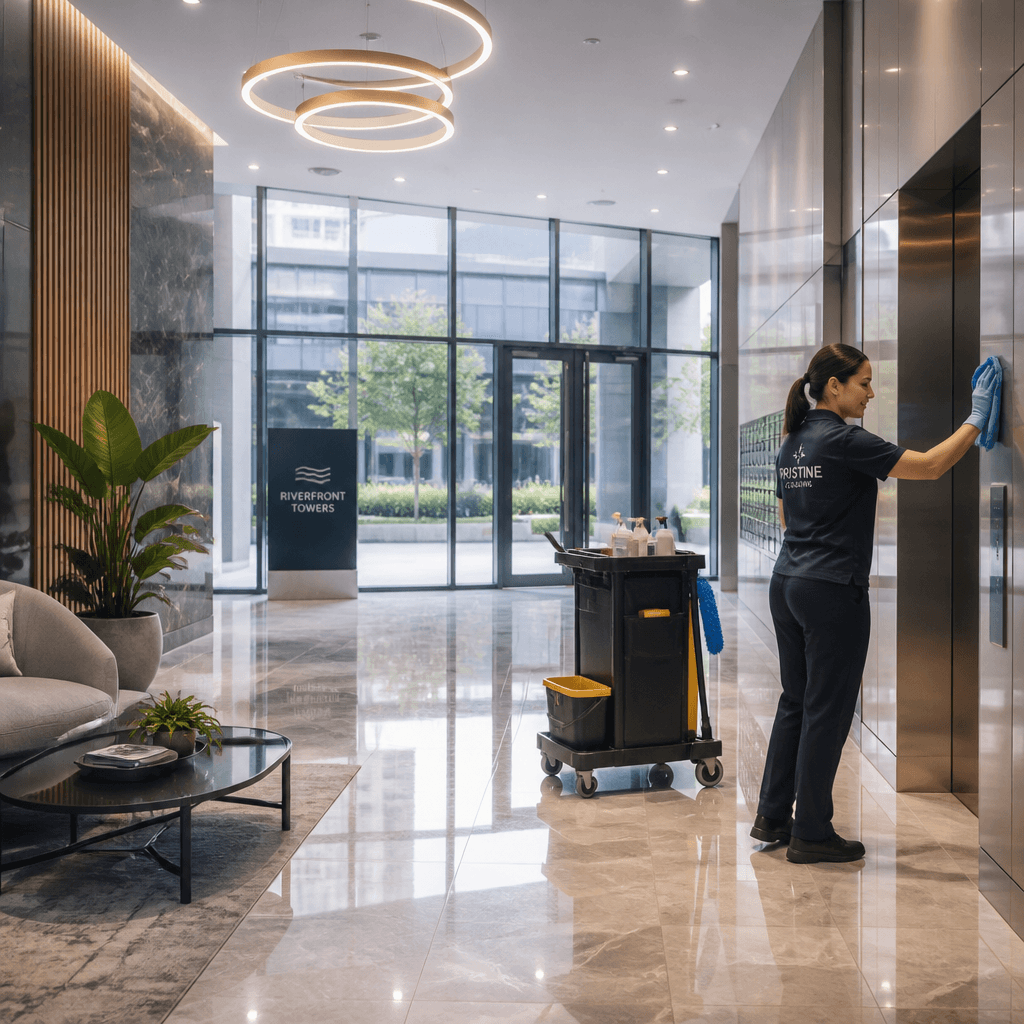
Where manual scrubbing genuinely outperforms pressure washing is in environments where water ingress is a risk, where surfaces cannot tolerate impact force, or where the cleaning target is localised. A childcare centre bathroom floor, a medical facility corridor, or a hotel lobby with polished stone tiles all require manual cleaning with specific pH-neutral or hospital-grade chemicals. Pointing a pressure washer at those surfaces would be inappropriate and potentially dangerous given water spread into adjacent areas.
Chemical dwell time is the part of manual scrubbing most people underestimate. Applying a degreaser or mould treatment and allowing it to sit for 5 to 15 minutes before scrubbing is what does the actual work. The physical scrubbing action then removes loosened contaminants. Skipping dwell time and scrubbing immediately is a common mistake that produces mediocre results and wastes chemical product.
Pro tip: For tile and grout in commercial kitchens or food preparation areas, apply an alkaline degreaser at the recommended dilution rate, allow a 10-minute dwell, then scrub with a stiff-bristle grout brush before rinsing. This sequence consistently outperforms pressure washing alone in grout lines narrower than 5mm.
Key Differences: Surfaces, Results, and Realistic Expectations
The most important variable in choosing between these two methods is surface type. Getting this wrong does not just mean a poor cleaning result. It can mean permanent surface damage that requires resurfacing or replacement. Here is how the decision breaks down by surface category across typical Melbourne commercial and residential properties.
Concrete, Asphalt, and Brick Pavers
These are the surfaces where high pressure cleaning dominates. Concrete driveways, asphalt parking lots, and clay or concrete brick paving can handle pressures of 2,000 to 3,500 PSI without surface damage when the nozzle is kept at a consistent distance of 15 to 30 centimetres. Manual scrubbing on these surfaces is viable but impractical at scale. A 500 sqm loading dock cleaned by hand would require hours of work, significant physical labour, and still would not achieve the same depth of clean as a commercial pressure washer.
Sandstone, Limestone, and Rendered Walls
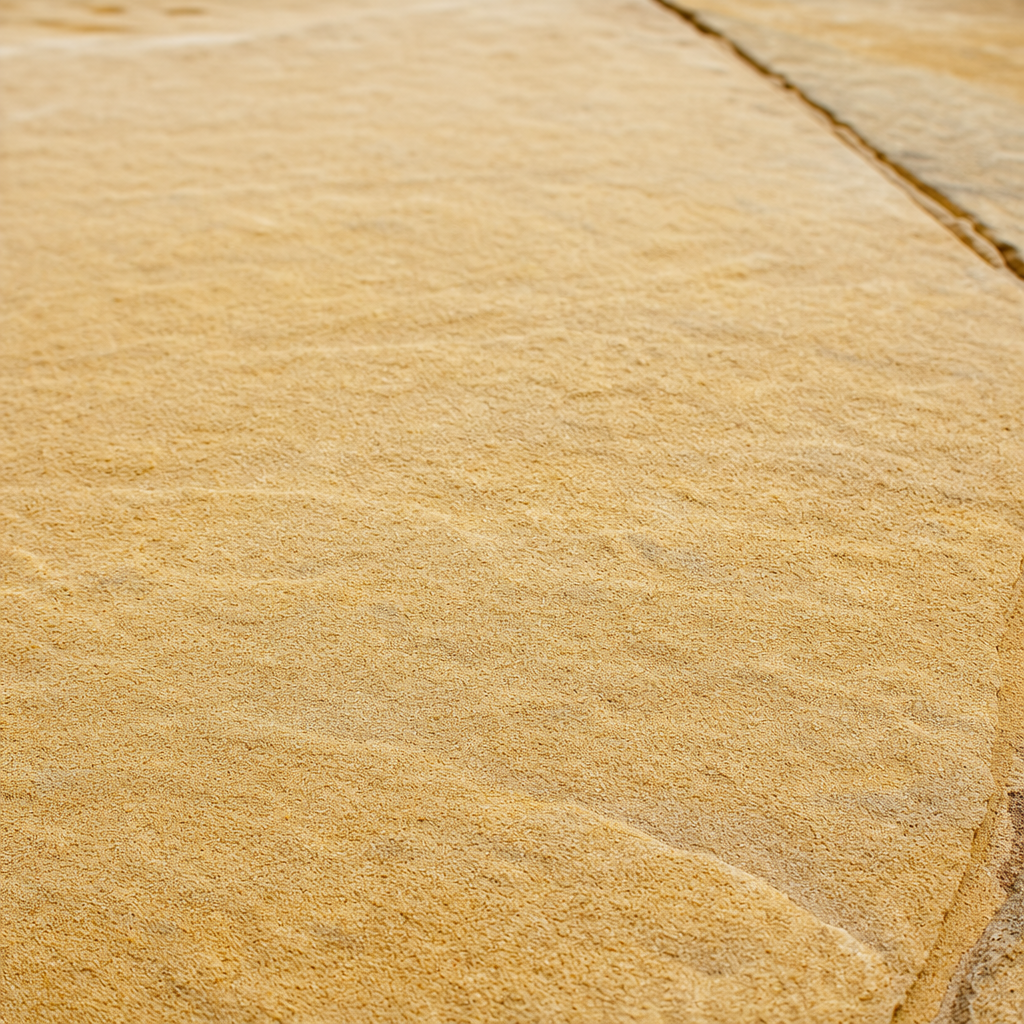
Soft natural stone and render surfaces require pressures below 1,000 PSI or manual cleaning entirely. Sandstone is particularly vulnerable because its surface is composed of loosely bonded sand particles. Even moderate pressure washing can erode the surface finish and leave a rough, pitted texture that accelerates future soiling. Limestone is similarly soft and responds poorly to direct high-pressure application. For these surfaces, gentle hand washing with appropriate stone-safe cleaners is the correct approach.
Grout Lines and Tile Surfaces
Tile and grout restoration is a specialist category that almost always benefits from a combined approach. Chemical pre-treatment loosens organic growth and embedded grease. Hand agitation with a brush works the cleaning agent into the grout matrix. Then, a low-pressure rinse or steam extraction removes the loosened material. Using high pressure alone on grout forces contaminants further into porous grout if the pre-treatment step is skipped.
“The most common error we see on commercial tile jobs is operators using high pressure as a shortcut to skip chemical pre-treatment. You end up with a surface that looks cleaner but has the same biological contamination embedded 2mm deeper than before.” Source: Cleaning Industry Association of Australia technical guidance documentation.
Side-by-Side Comparison: High Pressure Cleaning vs. Manual Scrubbing vs. Combined Approach
For Melbourne property managers evaluating their options across different site types, the table below provides a direct comparison across the factors that matter most in a commercial or residential context.
Factor | High Pressure Cleaning | Manual Scrubbing | Combined Approach |
|---|---|---|---|
Best Surface Types | Concrete, asphalt, brick pavers, tiled outdoor areas, warehouse floors | Polished stone, grout lines, rendered walls, interior floors, sensitive finishes | Tile and grout restoration, heavily soiled commercial kitchens, aged outdoor paving |
Speed on Large Areas (200+ sqm) | Fast. 200 sqm in 45 to 90 minutes with commercial equipment | Slow. 200 sqm requires 3 to 6 labour hours | Moderate. Pre-treatment adds time but total result quality justifies it |
Risk of Surface Damage | Moderate to high if operator lacks experience or uses wrong nozzle | Low. Controlled pressure limits impact damage risk | Low to moderate. Managed by chemical selection and low-pressure rinse |
Effectiveness on Embedded Organic Growth | High on open surfaces. Lower in grout or recessed areas | High when correct chemical and dwell time applied | Highest overall. Chemical + agitation + rinse removes embedded contamination |
Water Usage | 8 to 15 litres per minute continuous flow | Lower total volume but harder to quantify accurately | Moderate. Pre-treatment reduces total rinse water needed |
Suitability for Regulated Environments (Childcare, Aged Care, Medical) | Not appropriate for interior or sensitive regulated spaces | Yes, with documented hospital-grade or TGA-listed chemicals | Exterior areas only for pressure component. Interior always manual |
Typical Melbourne Commercial Cost (Professional Service) | $0.20 to $0.60 per sqm depending on surface condition | $0.50 to $1.50 per sqm depending on surface type and labour requirements | $0.60 to $1.80 per sqm for full combined treatment |
When to Choose Pressure Washing for Your Melbourne Property
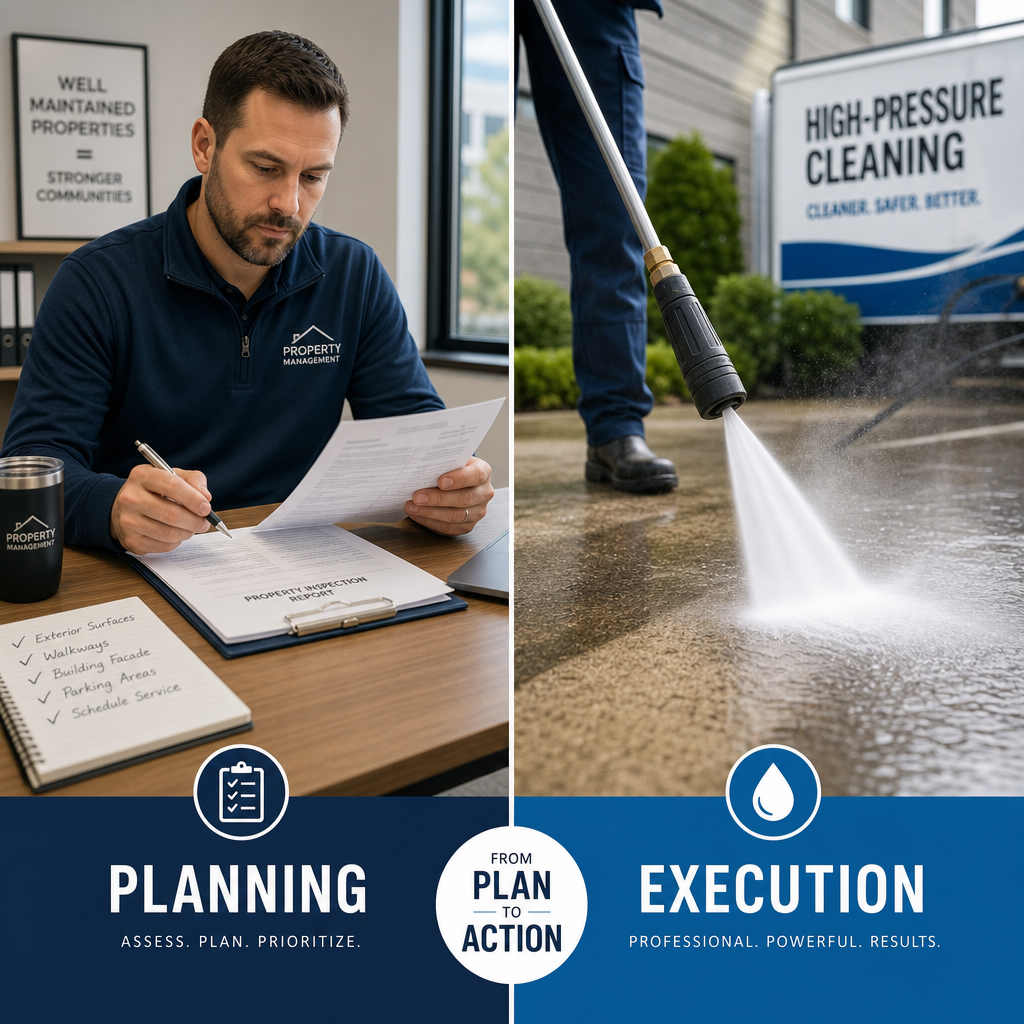
High pressure cleaning is the correct choice when you are dealing with a large surface area, a hard non-porous substrate, outdoor environmental contamination, and a need for rapid turnaround. These four conditions are frequently present at the same time across Melbourne commercial properties.
Post-Construction Cleaning on Concrete Surfaces
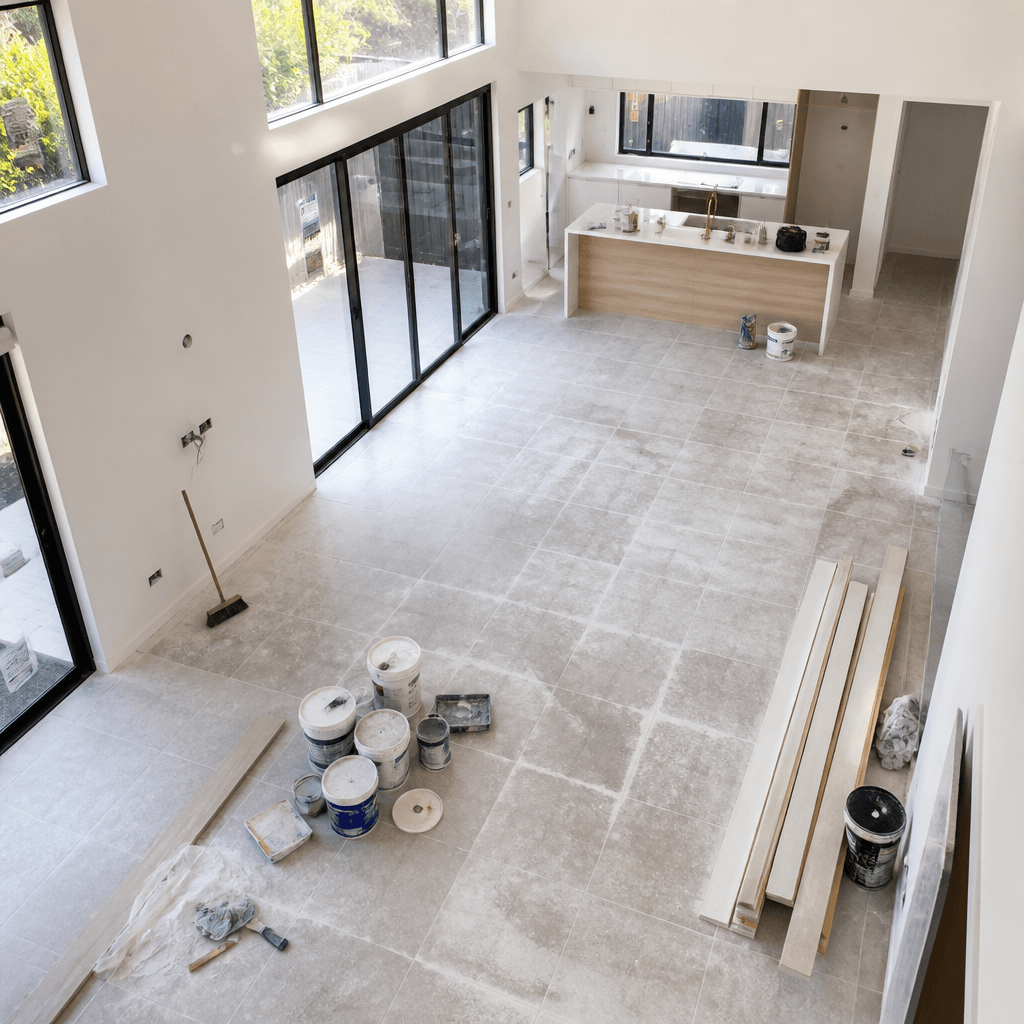
Builder’s cleaning almost always involves concrete driveways, pathways, and surrounding hardscaping that accumulates concrete splatter, adhesive residue, and construction debris. Manual scrubbing of concrete splatter is genuinely ineffective without chemical acid washing, which carries its own hazards. A commercial pressure washer removes this category of contamination cleanly and quickly, particularly when paired with a surface cleaner attachment that prevents streaking on flat concrete.
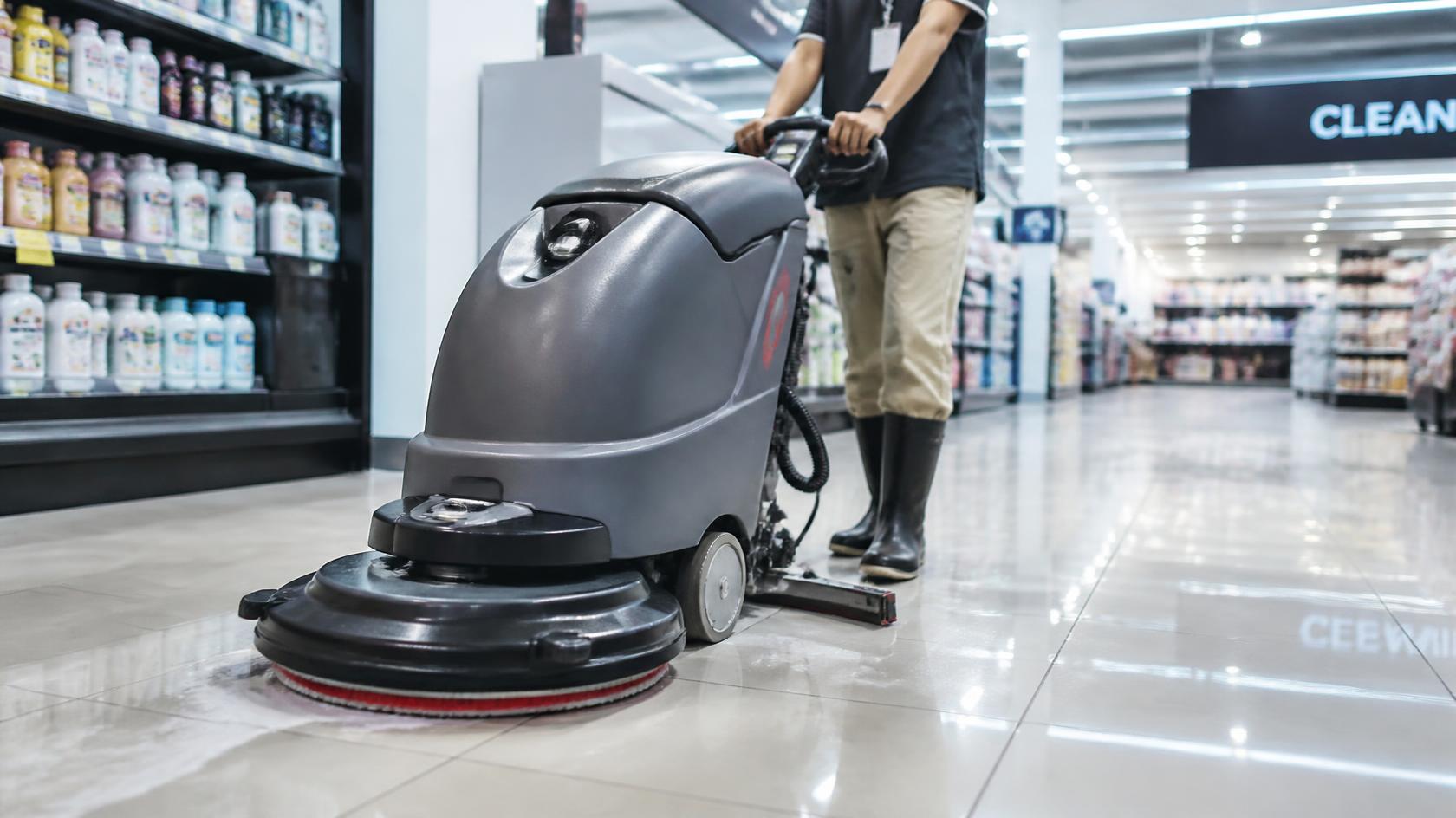
Loading Docks, Car Parks, and Warehouse Floors
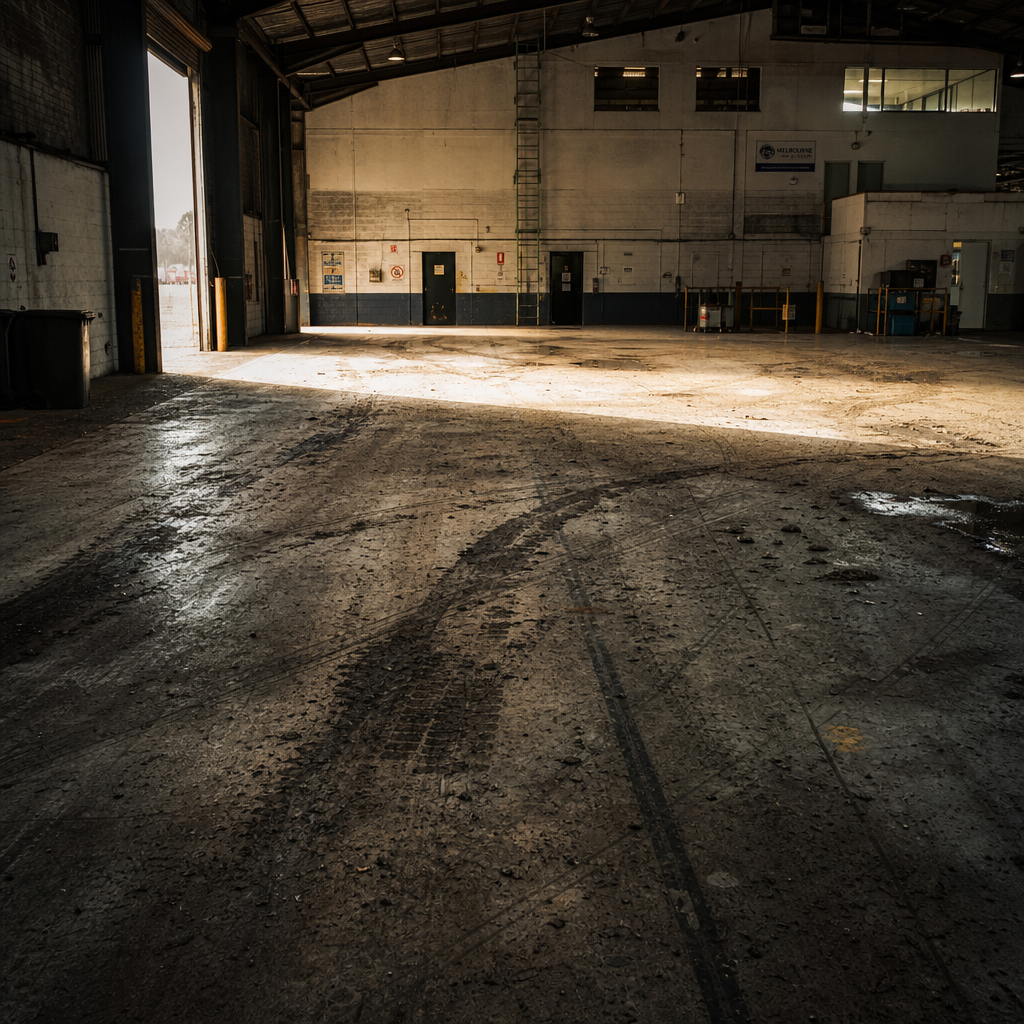
High-traffic commercial hard surfaces accumulate tyre rubber, oil, fuel spills, and compacted dirt that no amount of manual scrubbing will remove efficiently. Melbourne warehouses, supermarkets, and industrial facilities with this profile benefit from scheduled high pressure cleaning every 3 to 6 months depending on traffic volume. The ROI is clear: a professionally cleaned loading dock is safer, more presentable to clients and suppliers, and compliant with workplace hygiene standards under Victorian OHS requirements.
Exterior Building Facades and Window Surrounds
Brick facades and painted render exteriors accumulate biological growth, pollution staining, and spider web buildup across Melbourne’s wet winters. Low to moderate pressure washing (1,200 to 1,800 PSI) with appropriate detergent is effective on most painted or sealed brick surfaces. Always test a small inconspicuous area first and confirm the render type before applying any pressure to an older building facade.
Pro tip: For Melbourne properties with exposed aggregate concrete paths or driveways, use a rotating surface cleaner attachment rather than a direct wand nozzle. The rotating head maintains a consistent cleaning distance across the entire surface, which eliminates the stripes and uneven cleaning patterns that direct wand application leaves behind.
When Manual Scrubbing Is the Better Option
Manual scrubbing is not the inferior option. It is the correct option in specific circumstances, and applying pressure washing in those circumstances creates more problems than it solves.
Interior Floors in Regulated Facilities
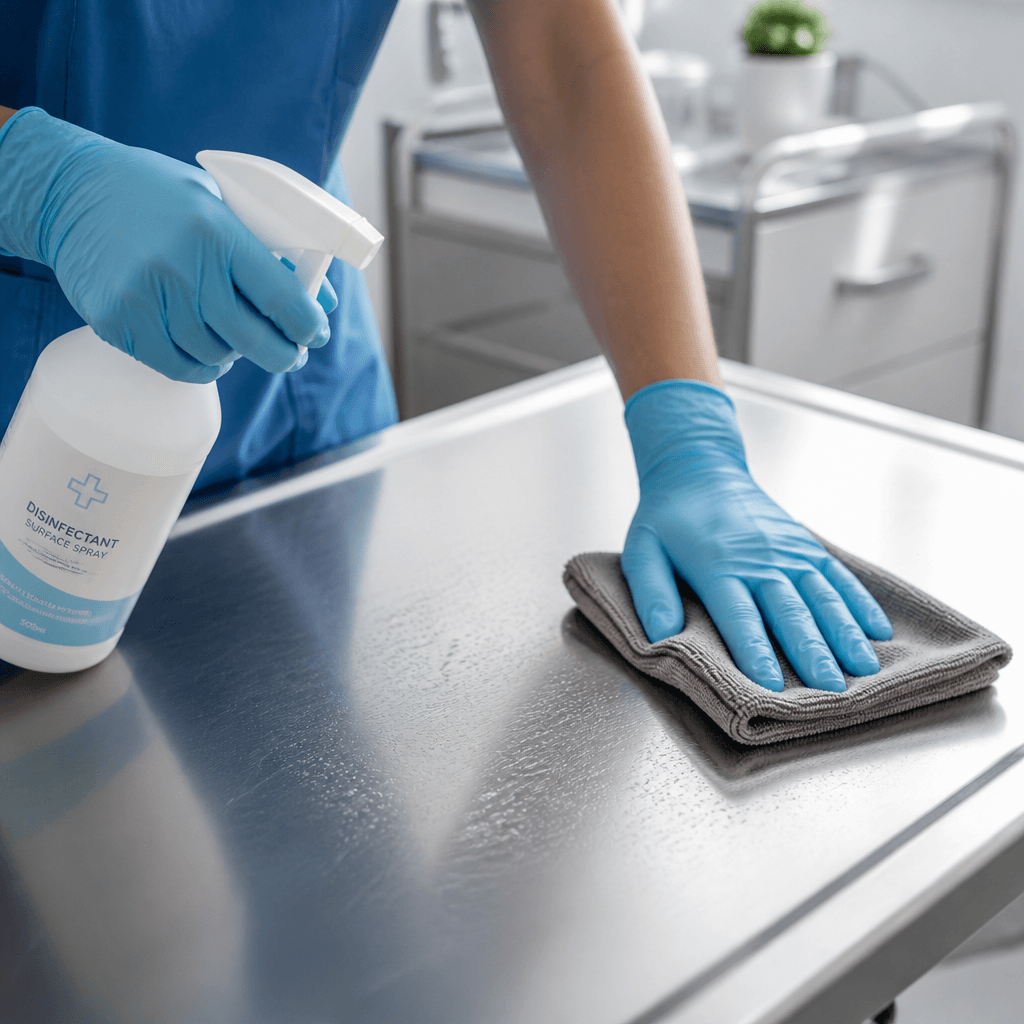
Childcare centres, aged care facilities, and medical environments in Melbourne operate under strict hygiene frameworks that require specific chemical types and application methods. These environments need TGA-listed disinfectants applied with controlled methods. Manual mopping and scrubbing with documented chemical dilutions is the only appropriate approach. Pressure washing interior floors in these settings would cause water damage, force pathogens into wall cavities, and create slip hazards.
Polished Concrete, Marble, and Sealed Stone
A sealed or polished surface is only as durable as its top coat. High pressure application strips sealants from polished concrete and can etch the surface of marble or limestone. Manual cleaning with a pH-neutral cleaner and a soft mop preserves the surface finish and extends the life of the sealant significantly. For Melbourne hotels, office lobbies, and upscale residential properties with these surfaces, manual cleaning is not optional. It is the professionally responsible choice.
Localised Stain Treatment
When the job is a specific stain rather than a whole-surface clean, manual spot treatment is more precise and more cost-effective. A coffee spill on a grout line, a rust stain on a wall tile, or a mould patch in a bathroom corner all respond better to targeted chemical application and hand agitation than to a pressure washer that affects the entire surrounding area.
Cost and Time Breakdown for Melbourne Properties
Cost is often what drives the decision between methods, but the calculation needs to account for more than just the hourly rate. Surface damage repair, re-cleaning due to poor results, and regulatory non-compliance all carry real financial consequences that an upfront cost comparison misses.
For a standard Melbourne commercial property with a 300 sqm concrete car park and driveway area, professional high pressure cleaning typically costs between $180 and $280 for a single service, depending on surface condition and accessibility. Manual scrubbing the same area would cost significantly more in labour time and still deliver an inferior result on bonded grime and organic growth.
For a 100 sqm tiled commercial kitchen floor requiring grout restoration, the combined approach is appropriate and typically costs $300 to $600 per service when performed by a specialist cleaning team. Attempting this with pressure washing alone risks tile grout damage and produces incomplete results that require re-treatment.
The data consistently shows that properties on scheduled professional cleaning programs spend less on reactive cleaning and surface repairs than those relying on infrequent DIY or ad-hoc professional jobs. A quarterly high pressure cleaning program for a Melbourne warehouse or supermarket loading area is significantly more cost-effective over a 12-month period than two reactive deep cleans following inspection failures.
Professional Service vs. DIY: What the Numbers Actually Say
Consumer pressure washers available from Melbourne hardware retailers typically operate at 1,400 to 1,800 PSI with flow rates of 5 to 7 litres per minute. Professional commercial equipment operates at 2,500 to 4,000 PSI with 10 to 20 litres per minute flow. The gap in cleaning power is significant, particularly on compacted grime, oil stains, and biological growth that requires sustained high-pressure force to dislodge.
Beyond equipment capability, operator knowledge is where most DIY pressure washing projects go wrong. Common mistakes include holding the nozzle too close to rendered or tiled surfaces, using a zero-degree nozzle on areas that require a fan spray, failing to pre-treat surfaces with detergent before applying pressure, and not using appropriate personal protective equipment when working with cleaning chemicals.
For regulated commercial environments including aged care, childcare, and medical facilities, DIY cleaning is not viable regardless of equipment quality. These environments require documented cleaning schedules, verified chemical types, and trained operators who understand infection control requirements. Vibrant Property Services works across all of these sectors in Melbourne and provides the compliance documentation these facilities need to meet their regulatory obligations.
For residential Melbourne homeowners with a simple concrete driveway in good condition, a quality consumer-grade pressure washer with a surface cleaner attachment is a reasonable option for light maintenance cleaning. But for post-construction cleaning, commercial properties, or any surface requiring chemical pre-treatment and specialist knowledge, professional high pressure cleaning in Melbourne delivers a demonstrably better result at a reasonable cost differential.
Frequently Asked Questions
Is high pressure cleaning safe for all outdoor surfaces in Melbourne?
No. High pressure cleaning is safe and effective on concrete, brick, asphalt, and dense stone pavers. It is not appropriate for sandstone, limestone, soft render, aged terracotta, or any surface with a protective sealant or coating that would be stripped by high-force water impact. A professional operator will assess the surface type before selecting pressure settings and nozzle types.
How often should commercial properties in Melbourne schedule high pressure cleaning?
Most commercial properties benefit from professional high pressure cleaning every 3 to 6 months for high-traffic areas like car parks, loading docks, and entrance paths. Properties in areas with high organic growth, such as those near vegetation or with shaded concrete surfaces, may require quarterly cleaning to prevent moss and algae buildup. Retail and hospitality properties may require more frequent service based on foot traffic and presentation standards.
Can pressure washing remove oil stains from concrete driveways and parking areas?
Pressure washing alone removes surface-level oil contamination but rarely eliminates deep-set oil stains that have penetrated concrete. The effective approach is a two-step process: apply a commercial alkaline degreaser to the stained area, allow adequate dwell time of 10 to 20 minutes, then apply high pressure to lift the emulsified oil from the pores. Single-pass pressure washing without pre-treatment leaves the majority of the stain behind.
What is the difference between cold water and hot water pressure washing for Melbourne commercial properties?
Cold water pressure washing is effective for general dirt, grime, mould, and organic growth removal on outdoor hard surfaces. Hot water pressure washing, which heats water to 60 to 90 degrees Celsius, is significantly more effective on grease, oil, and fat contamination common in commercial kitchen surrounds, food processing areas, and automotive workshops. The heat accelerates the breakdown of hydrocarbon-based contaminants and reduces the amount of detergent required to achieve a clean result.
Do I need a professional cleaner for my Melbourne childcare or aged care facility, or can I use in-house staff?
Regulatory requirements for childcare centres under the National Quality Framework and aged care facilities under the Aged Care Quality Standards specify that cleaning must use appropriate infection-control chemicals applied correctly and that records must be maintained. In practice, professional cleaning services are the most reliable way to meet these requirements because they provide trained staff, documented procedures, and MSDS-compliant chemical management. Using untrained in-house staff increases the risk of compliance failures during inspections.
What is tile and grout restoration and when does a Melbourne property need it?
Tile and grout restoration refers to the process of returning stained, discoloured, or contaminated grout and tile surfaces to a clean, sealed condition using a combination of chemical treatment, mechanical agitation, and surface sealing. Melbourne properties typically need this service when routine mopping has failed to maintain grout colour, when biological growth is present in grout lines, or when a property is being prepared for sale, lease, or a compliance inspection. It is distinct from standard cleaning and requires specialist knowledge of grout porosity, chemical compatibility, and sealing products.
Have you recently dealt with a cleaning method decision on your Melbourne property? Share what worked for you or what you wish you had known before choosing between pressure washing and manual scrubbing.