
Meeting Guest Expectations by using commercial cleaning experts
A single negative review mentioning dirty bathrooms or stained linen can cost a Melbourne hotel dozens of future bookings. Research from TripAdvisor consistently shows that cleanliness is the top factor guests cite when rating their stay, outranking price, location, and service. Yet many hospitality venues in Melbourne still treat hotel cleaning Melbourne as an afterthought, cycling through unreliable contractors who cannot maintain the standards guests now expect. This article explains what high-performing hospitality cleaning actually looks like, what separates competent providers from average ones, and how Melbourne hotel and accommodation operators can protect their reputation by getting this right.
Table of Contents
- Quick Takeaways
- Why Cleanliness Defines Hotel Reputation in Melbourne
- What Hospitality Cleaning Actually Covers
- Room Turnover Cleaning vs. Deep Cleaning: Knowing the Difference
- Common Mistakes Hospitality Venues Make With Their Cleaning Contracts
- Comparison of Cleaning Approaches for Hospitality Venues
- What to Look For in a Hospitality Cleaning Provider in Melbourne
- Specialized Areas That Demand Extra Attention
- Frequently Asked Questions
- References
Quick Takeaways
| Key Insight | Explanation |
|---|---|
| Cleanliness drives reviews more than price | Guests on platforms like Google and Booking.com rank cleanliness as the number one factor in their star rating, making it a direct revenue driver, not just a hygiene issue. |
| Room turnover cleaning and deep cleaning are not interchangeable | Turnover cleans prepare a room for the next guest quickly. Deep cleans address grout, upholstery, air vents, and behind furniture, and must be scheduled separately on a regular cycle. |
| Inconsistency is more damaging than a single lapse | Guests tolerate the occasional imperfection. What kills ratings is unpredictable quality, where one room is spotless and the next is not. Consistency requires documented checklists and supervision. |
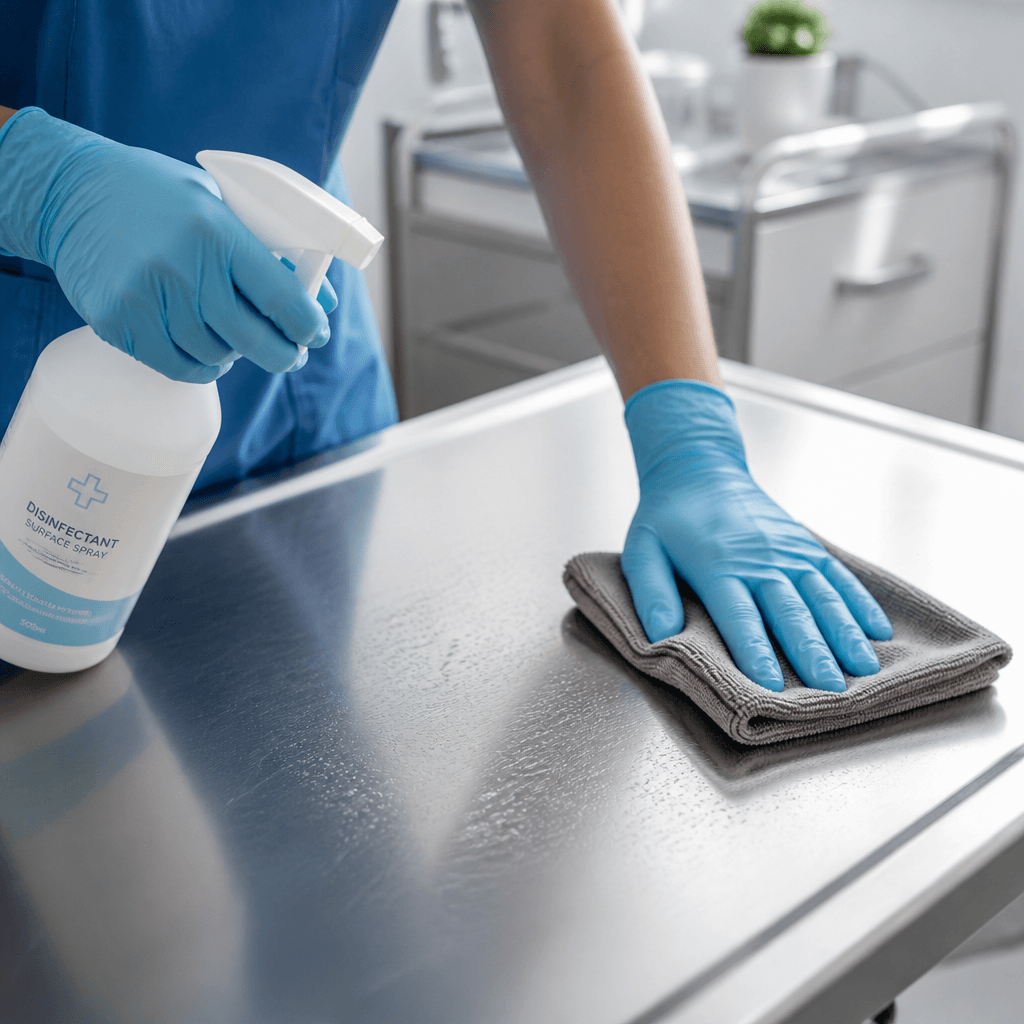
| High-touch surfaces need more than a wipe-down | Remote controls, light switches, door handles, and phones carry the highest bacterial load. These require hospital-grade disinfectant applied with correct dwell times, not a quick cloth pass. |
| Commercial cleaning contracts should include scope documentation | A signed scope of works protects both the venue and the cleaning provider. Verbal agreements about what is included almost always lead to disputes and service gaps. |
| Odour control is a separate discipline from surface cleaning | A room can look clean and still smell stale. Effective hospitality cleaning includes air treatment, fabric deodorising, and drain maintenance as distinct tasks. |
| Tile and grout condition signals overall hygiene to guests | Darkened grout in bathrooms is one of the most common guest complaints in Melbourne accommodation reviews. Periodic grout restoration is not cosmetic, it is a hygiene and perception issue. |
Why Cleanliness Defines Hotel Reputation in Melbourne
Melbourne’s hospitality market is competitive. The city draws domestic travellers, international visitors, and corporate guests year-round, and accommodation options have expanded significantly over the past decade with the rise of short-stay apartments and boutique hotels. In that environment, online reviews have become the primary decision-making tool for travellers, and cleanliness scores are weighted heavily in algorithm-driven ranking systems on major booking platforms.
According to Statista, over 80 percent of travellers consult online reviews before booking accommodation. Of the negative reviews that reference the physical condition of a property, the majority mention cleanliness specifically. That is not anecdotal. It is a documented pattern that Melbourne hotel operators cannot afford to dismiss.
“Cleanliness is the single highest-weighted attribute in guest satisfaction scores globally, consistently outperforming location and value in post-stay survey data.” – J.D. Power Hotel Guest Satisfaction Study
The practical consequence is straightforward. Poor hospitality cleaning Melbourne venues deliver translates directly into lower review scores, which translates into lower search ranking on booking platforms, which reduces occupancy rates. The financial damage compounds quickly. A venue that invests properly in professional cleaning is not spending on overhead. It is protecting its revenue pipeline.
What Hospitality Cleaning Actually Covers
A common mistake operators make is assuming that hospitality cleaning is simply an expanded version of residential cleaning. It is not. The scope, frequency, chemical requirements, and compliance obligations are categorically different.
Guest Rooms
Every guest room requires a defined sequence of tasks performed to a consistent standard regardless of which staff member completes them. This includes linen changeover, bathroom sanitisation using correct disinfectant concentrations, dusting of all surfaces including skirting boards and light fittings, vacuuming, and inspection of high-touch points. The sequence matters because skipping steps creates cross-contamination risk.
Bathrooms and Wet Areas
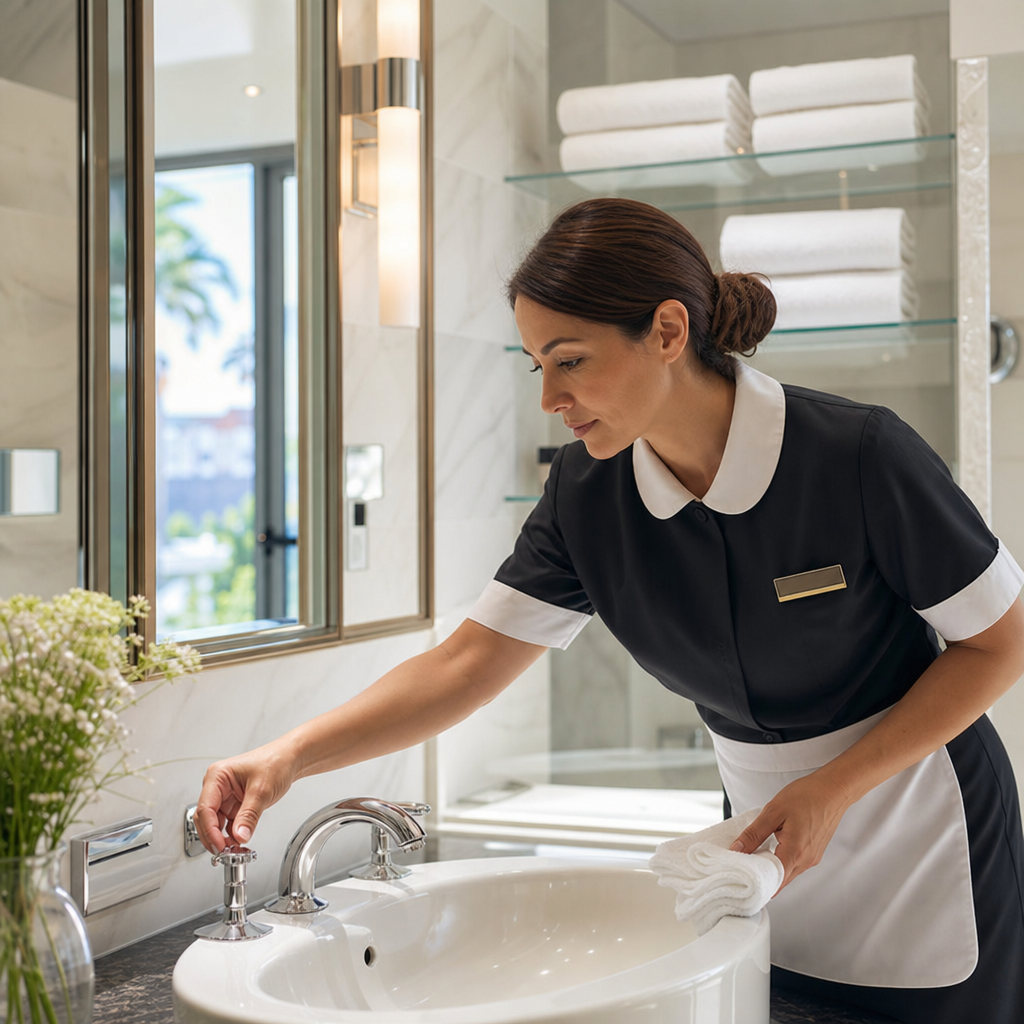
Bathrooms are where most guest complaints originate. Tile and grout condition, limescale on tapware, soap scum on shower screens, and toilet hygiene are all visible indicators that guests use to assess the overall cleanliness of the property. In practice, a bathroom that is wiped down without proper dwell time for disinfectants is not actually sanitised. It looks clean but is not.
Common Areas, Lobbies, and Corridors
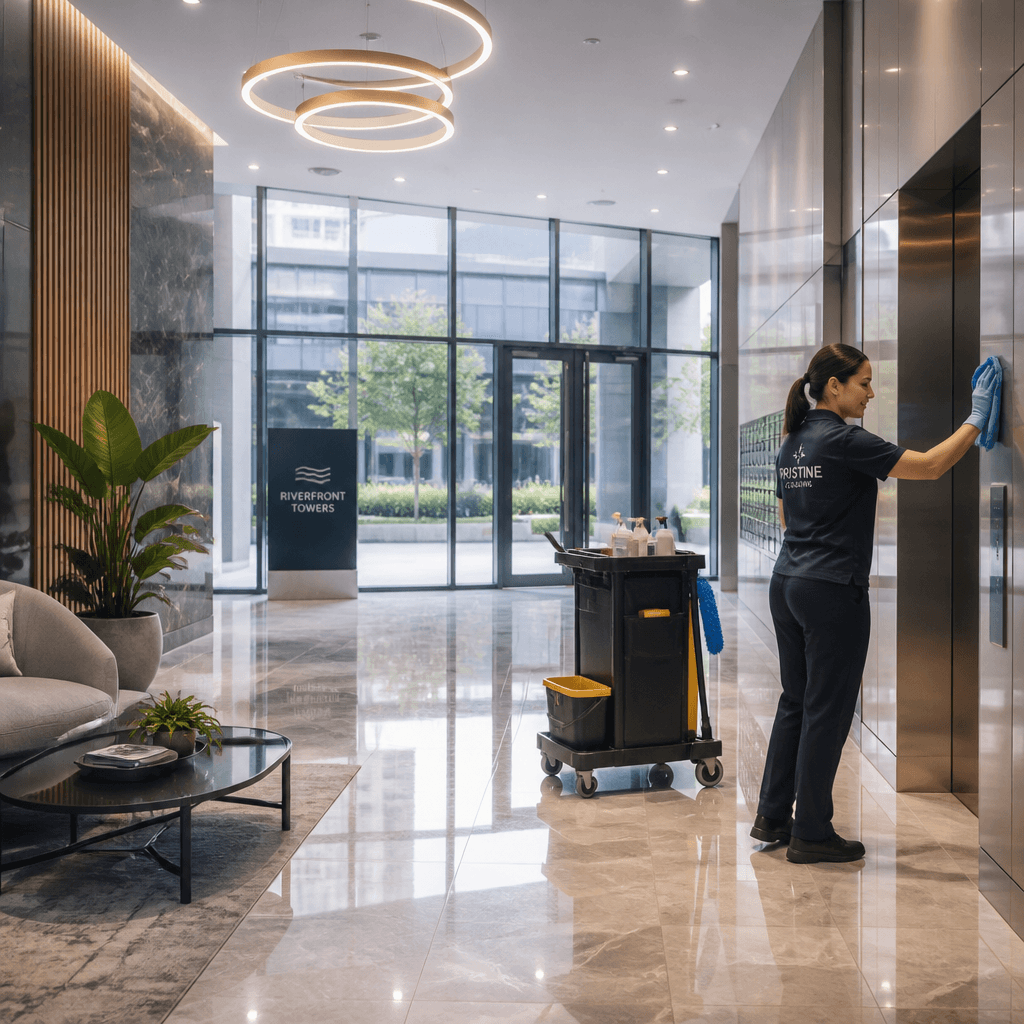
High foot traffic areas need cleaning at a frequency that most venues underestimate. Lobbies in particular form the first physical impression of the property. Lifts, stairwells, and corridors accumulate dirt rapidly and require scheduled cleaning throughout the day, not just overnight.
Food and Beverage Areas
Restaurants, bars, and breakfast areas within hotels carry specific hygiene obligations under Victorian food safety regulations. Cleaning in these areas must be performed by staff who understand food-safe chemical use, surface contact times, and the difference between cleaning and sanitising. This is non-negotiable and non-delegatable to general cleaning staff without proper training.
Pro tip: Request a written cleaning schedule from any prospective provider that lists each area, the cleaning method, the chemical product used, and the frequency. If a provider cannot produce this document, they are not operating to a professional standard.
Room Turnover Cleaning vs. Deep Cleaning: Knowing the Difference
These two tasks are often conflated in hospitality cleaning contracts, which is one of the most expensive mistakes a Melbourne hotel operator can make. They serve different purposes, require different time allocations, and should be scheduled independently.
What Room Turnover Cleaning Covers
Turnover cleaning prepares a room for the next guest. It is time-pressured, typically performed between checkout and the next check-in window, and focused on presentation and surface hygiene. A competent turnover clean addresses linen, bathroom sanitisation, rubbish removal, vacuum, and a visual check of all surfaces. It does not address grout, behind furniture, air vents, or deep fabric cleaning.
What Deep Cleaning Covers
Deep cleaning is scheduled at intervals, typically monthly or quarterly depending on occupancy rates, and addresses the accumulated grime that turnover cleans cannot reach. This includes mattress sanitisation, upholstery cleaning, tile and grout restoration in bathrooms, air conditioning filter cleaning, and behind and beneath all furniture. Skipping regular deep cleans is a false economy. The cost of remediation after years of neglect far exceeds the cost of scheduled maintenance.
Vibrant Property Services delivers both turnover and deep cleaning services for Melbourne hospitality venues, with documented checklists for each service type so operators can verify exactly what was completed on each visit. This is the operational accountability that protects both the property’s reputation and the working relationship between venue and cleaning provider.
Common Mistakes Hospitality Venues Make With Their Cleaning Contracts
After 15 years of working across Melbourne’s commercial and hospitality cleaning sector, the same errors appear repeatedly. Understanding them is the fastest way to avoid them.
Choosing on Price Alone
The cheapest quote almost always means reduced cleaning time per room, lower-quality chemicals, and less experienced staff. In hospitality, the downstream cost of a low-quality cleaning contract is measured in negative reviews and lost bookings. That cost consistently exceeds whatever was saved on the contract price.
No Defined Scope of Works
A cleaning agreement that lists only the rooms to be cleaned without specifying what tasks are included in each room is not a contract. It is an invitation for ambiguity. Operators should insist on a detailed scope of works that lists every task, every area, every chemical type, and every frequency.
Ignoring Supervision and Quality Control
Even experienced cleaning staff perform inconsistently without a quality control process. The best hospitality cleaning providers use room inspection checklists, supervisor sign-off procedures, and client feedback loops. Providers who rely solely on the cleaner’s judgment and no oversight structure will deliver inconsistent results.
Treating All Areas the Same
A suite that generated $400 per night requires a different cleaning standard and time allocation than a standard twin room. Operators who apply a flat cleaning rate across all room types will find that premium rooms are underserviced and guest satisfaction in those categories suffers disproportionately.
Pro tip: Schedule a quarterly service review with your cleaning provider that includes a physical walkthrough of representative rooms. Review the checklist compliance data and discuss any areas where standards slipped. This meeting is the most effective quality control tool available and takes less than an hour.
Comparison of Cleaning Approaches for Hospitality Venues
| Approach | Best Suited For | Key Limitations |
|---|---|---|
| In-House Cleaning Team | Large hotels with consistent high occupancy and dedicated HR capacity to manage cleaning staff directly | High overhead including wages, super, training, equipment, and chemicals. Sick leave and staff turnover create immediate service gaps. Compliance management falls entirely on the venue. |
| Contracted Commercial Cleaning Provider | Most Melbourne hotels, boutique properties, serviced apartments, and function venues that need consistent, scalable, professionally managed cleaning | Requires careful provider selection. A poor contract or underspecified scope leads to inconsistent outcomes. The venue must actively manage the relationship and hold the provider accountable. |
| Casual or Ad-Hoc Cleaning Staff | Very small bed and breakfast operations or short-stay properties with very low room counts and the owner personally managing quality | No consistency, no documented standards, no compliance oversight, no professional accountability. Not scalable and not suitable for any property with more than a handful of rooms. |
What to Look For in a Hospitality Cleaning Provider in Melbourne
Not all commercial cleaning hospitality sector providers in Melbourne operate at the same level. The difference between a provider who maintains consistent standards and one who does not comes down to a handful of specific capabilities.
Documented Systems and Checklists
A professional provider can show you their cleaning checklist for each room type and each area of your property before the contract begins. If a provider cannot produce written documentation of their process, their quality is dependent entirely on individual staff performance, which is inherently inconsistent.
Industry-Specific Experience
Hospitality cleaning is meaningfully different from office cleaning or retail cleaning. A provider who primarily services office buildings will not automatically transfer their capabilities to a hotel environment. Ask specifically about hospitality clients in their existing portfolio and request references from those clients.
Trained and Screened Staff
Hotel cleaning staff operate in guest rooms and access personal belongings and sensitive areas of a property. Every staff member should have a verified Working With Adults check or equivalent background screening, and should receive induction training specific to hospitality environments before working on a hotel site.
Chemical and Equipment Standards
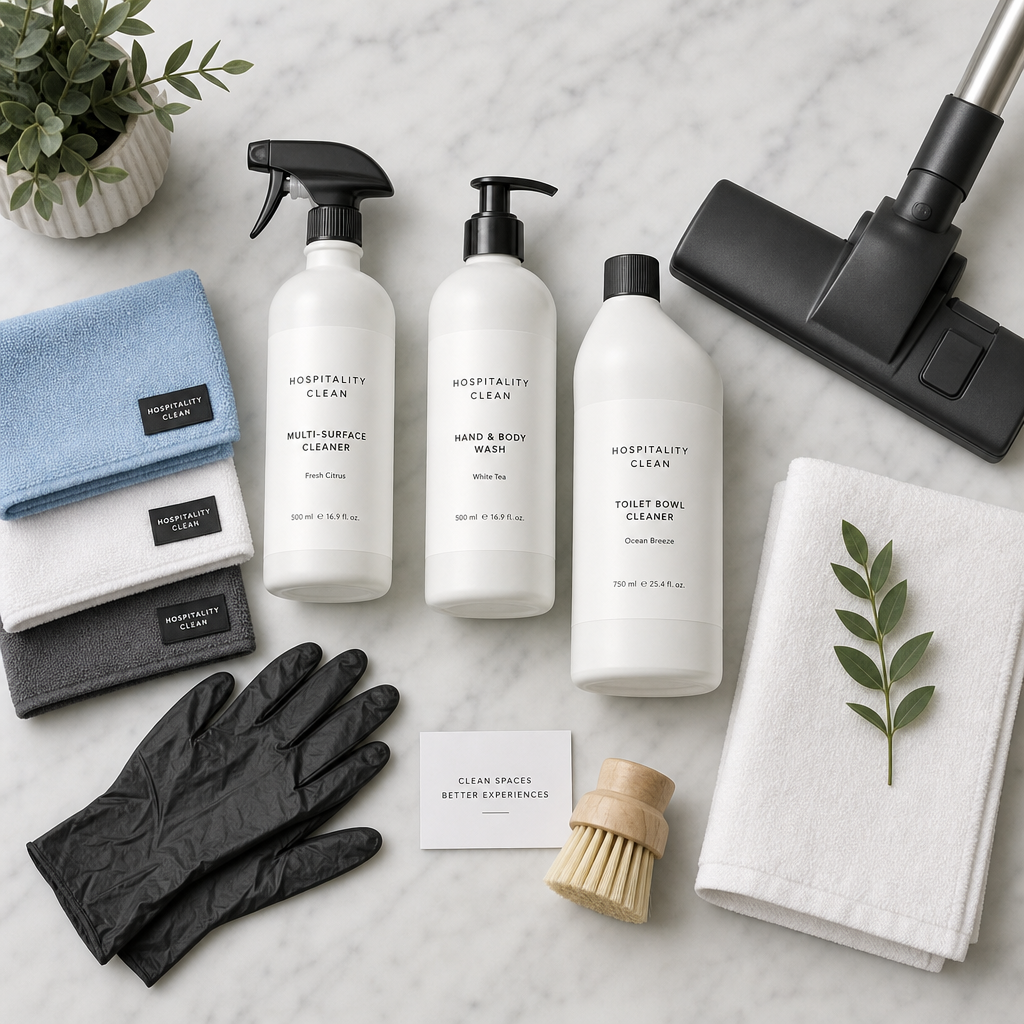
The cleaning chemicals used in hospitality environments must be appropriate for each surface type and must meet the disinfection requirements for guest-facing areas. A provider using the same all-purpose product across every surface in a hotel is not operating to a professional standard. Ask to see their chemical register and their Safety Data Sheets.
Vibrant Property Services brings over 15 years of Melbourne-based commercial cleaning experience across hospitality, medical, and education environments. Their approach to hotel cleaning Melbourne includes documented checklists, trained and screened staff, and a client communication process that addresses issues before they appear in guest reviews.
Specialized Areas That Demand Extra Attention
Every Melbourne hospitality venue has areas that require specialised cleaning methods beyond standard room or common area servicing. Operators who treat these areas as standard cleaning tasks will see them become the source of persistent complaints and hygiene failures.
High-Pressure Cleaning for External Areas
Hotel car parks, loading docks, outdoor dining areas, and entrance paths accumulate oil, gum, biological matter, and general grime that standard mopping cannot address. High-pressure cleaning at appropriate intervals maintains the external presentation of the property and removes slip hazards from hard surface areas.
Window Cleaning
For hotels with city or bay views, window condition directly affects the guest experience and the perceived value of the room. Streak-free, clear windows require professional equipment and technique. Internal and external window cleaning should be scheduled at regular intervals, with more frequent attention to ground-floor and lobby windows.
Tile and Grout Restoration
Bathroom tile grout in hotel properties darkens and becomes porous over time regardless of how frequently it is wiped down. Periodic tile and grout restoration using professional extraction and resealing methods restores the appearance and hygiene of bathroom surfaces in a way that daily cleaning cannot achieve. This service is particularly relevant to Melbourne properties that are more than five years old and have not had grout restoration performed.
Childcare and Family Facilities Within Hotels
Family-focused hotels and resorts that include kids’ clubs, play areas, or childcare facilities face an additional layer of hygiene requirements. These spaces must be cleaned to standards equivalent to stand-alone childcare facilities, which means non-toxic, child-safe chemicals, more frequent sanitisation of play equipment and surfaces, and documentation that satisfies regulatory compliance requirements.
Frequently Asked Questions
How often should a Melbourne hotel schedule deep cleaning of guest rooms?
Deep cleaning frequency depends on occupancy rates and room type. For high-occupancy properties, monthly deep cleans are the minimum effective standard. Suites and premium rooms, which are inspected more closely by guests paying higher rates, should receive deep cleaning every two to four weeks. Budget properties with lower occupancy can extend this to quarterly, but only if turnover cleans are performed to a rigorous documented standard.
What is the difference between cleaning and sanitising in a hotel context?
Cleaning removes visible dirt and debris from surfaces. Sanitising reduces the bacterial load on a surface to a safe level using approved disinfectant products applied with a sufficient dwell time. Most surfaces in hotel guest rooms and bathrooms require both steps performed in sequence. Cleaning without sanitising leaves pathogens on surfaces. Sanitising without cleaning first means the disinfectant cannot penetrate the surface effectively because dirt and organic matter block it.
What should a hospitality cleaning contract include to protect the venue?
A complete hospitality cleaning contract should include a detailed scope of works listing every area and every task, the cleaning frequency for each area, the chemical products to be used, the staff screening and training requirements, the quality control process including how issues are reported and resolved, and the escalation process if standards are not met. Verbal agreements on any of these points are not enforceable and will lead to service gaps.
Can one commercial cleaning provider service both rooms and food and beverage areas?
Yes, but only if the provider has demonstrable experience and trained staff for food service environments specifically. Food and beverage area cleaning in a hotel is governed by Victorian food safety regulations and requires different chemical products, contact times, and techniques compared to guest room cleaning. A provider who services both areas should be able to show you their food-safe cleaning procedures separately from their general room cleaning documentation.
How does hotel cleaning Melbourne differ from standard commercial office cleaning?
Office cleaning operates on a largely fixed schedule, often overnight or early morning, with consistent and predictable spaces. Hotel cleaning must respond to real-time occupancy changes, variable checkout and check-in windows, guest privacy requirements, and a much higher standard of presentation because the cleaned space is also the guest’s personal accommodation. The compliance requirements, chemical standards, and staff training needs are materially different. A provider who only has office cleaning experience will struggle to deliver consistently in a hospitality environment.
What role does tile and grout condition play in hotel hygiene compliance?
Degraded grout is porous and harbours bacteria, mould, and mildew that surface cleaning cannot address. In a Victorian hospitality context, visible mould or biological growth in bathroom grout can constitute a hygiene compliance issue. Beyond compliance, it is consistently cited in negative guest reviews as a marker of poor property maintenance. Tile and grout restoration is not cosmetic. It restores a sealed, cleanable surface that can be effectively sanitised with routine cleaning methods.
If you manage a Melbourne hotel or hospitality venue and have found a cleaning approach that has made a measurable difference to your guest satisfaction scores, share your experience so others in the industry can learn from what actually works on the ground.
References
- Statista data on traveller behaviour and online review influence in accommodation booking decisions
- Forbes coverage of hospitality industry guest satisfaction trends and the financial impact of cleanliness ratings
- Victorian Department of Health guidelines on cleaning and infection control standards in commercial environments
- Food Standards Australia New Zealand standards relevant to cleaning and sanitising in food service environments within hospitality venues
- Safe Work Australia guidance on hazardous chemicals and safe cleaning practices in commercial workplaces