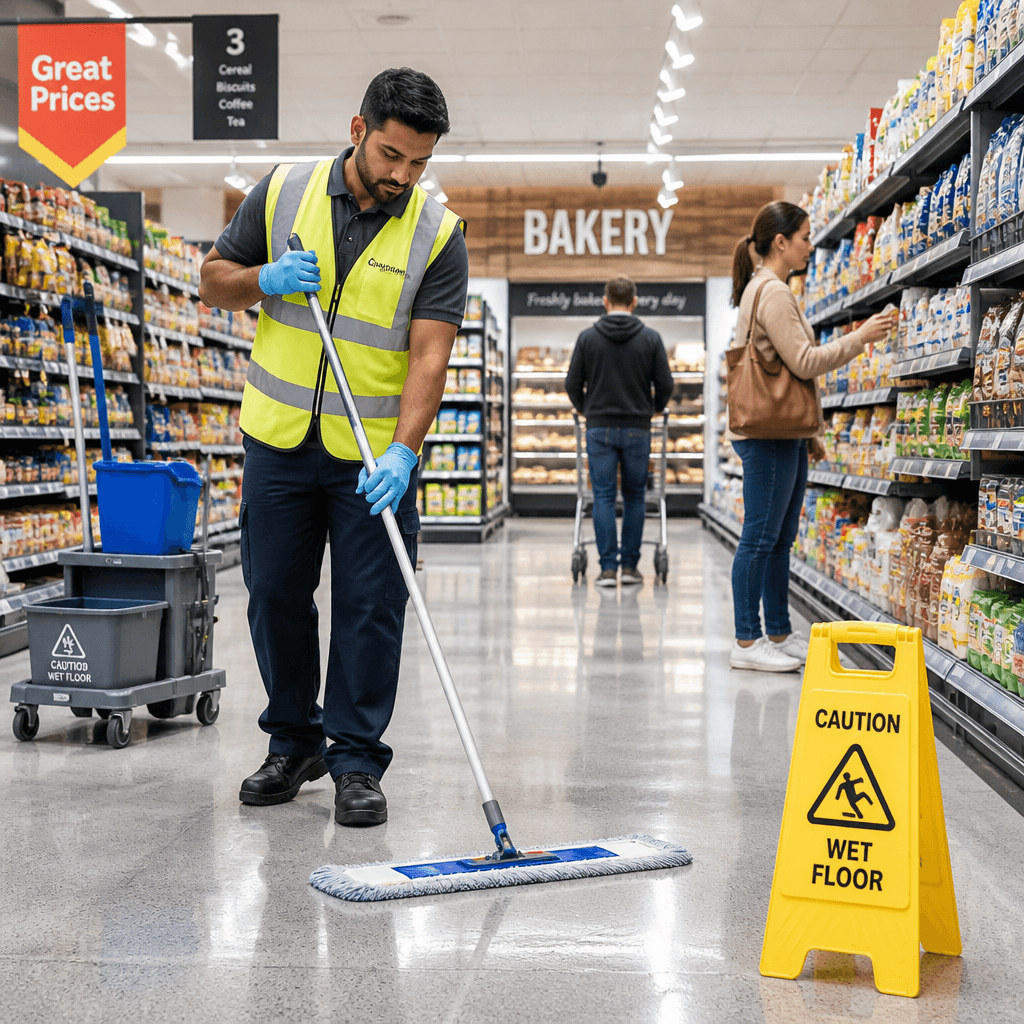

Healthcare-associated infections (HAIs) affect approximately 165,000 patients in Australian hospitals and medical facilities each year, according to the Australian Commission on Safety and Quality in Health Care. For medical centre managers in Melbourne, that statistic is not a policy document abstraction. It is a daily operational responsibility. Medical centre cleaning Melbourne is not simply about appearances. It is about maintaining clinical-grade infection control that protects patients, staff, and the facility’s regulatory standing. Get it wrong and you face not just complaints, but potential liability, failed audits, and real harm to vulnerable people.
Table of Contents
- Quick Takeaways
- Why Medical Centre Cleaning Is Different From Standard Commercial Cleaning
- Infection Control Standards That Apply to Melbourne Medical Facilities
- High-Risk Zones Inside a Medical Centre and How They Must Be Cleaned
- Approved Disinfectants, Products, and Cleaning Protocols
- Comparing Cleaning Approaches: What Works in Medical Environments
- What to Look for When Choosing a Healthcare Cleaning Provider in Melbourne
- Common Mistakes in Medical Centre Cleaning That Create Infection Risk
- Frequently Asked Questions
- References
Quick Takeaways
| Key Insight | Explanation |
|---|---|
| Color-coded microfibre cloths are non-negotiable | Using the same cloth across zones transfers pathogens. Clinical settings require a strict color system: red for bathrooms, blue for general areas, green for food prep, yellow for clinical zones. |
| TGA-listed disinfectants only | Only Therapeutic Goods Administration-listed disinfectants meet the required efficacy standard for healthcare environments. Consumer-grade products do not qualify. |
| Frequency matters as much as method | High-touch surfaces in waiting rooms and consultation areas must be disinfected multiple times per day, not just at close of business. |
| Staff training is a clinical requirement | Cleaners working in medical environments must understand body substance precautions, PPE use, and waste stream separation. This is not optional. |
| Documentation protects the facility | Cleaning logs, product usage records, and incident reports are auditable. Facilities without them fail accreditation checks. |
| Spore-forming bacteria require specific agents | Standard quaternary ammonium compounds do not kill Clostridium difficile spores. Sodium hypochlorite solution at the correct concentration is required. |
| Air and surface contamination are linked | Dry mopping and improper sweeping disperse airborne pathogens. Damp mopping with the correct technique is the only acceptable method in clinical areas. |
Why Medical Centre Cleaning Is Different From Standard Commercial Cleaning
A general office cleaning team can do a solid job vacuuming floors, wiping down desks, and sanitising bathrooms. That same team, applying the same methods in a GP clinic or specialist medical centre, creates a genuine infection risk. The difference is not about effort. It is about protocol, product selection, and the understanding that surfaces in medical settings carry pathogens that are actively dangerous to immunocompromised patients.
Healthcare cleaning Melbourne operates under a fundamentally different risk model. When a patient with an open wound sits in a waiting room chair, or a child with a respiratory infection touches a reception counter, the contamination left behind is not simply unpleasant. It is transmissible. The cleaning approach must reflect that reality.
In practice, the gap between commercial and clinical cleaning shows up in three specific ways: the products used, the sequence of tasks, and the behaviour of cleaning staff around patients and clinical waste. Vibrant Property Services, with over 15 years of experience across Melbourne medical facilities, sees this gap exposed most often when a facility switches from a generalist provider to a specialist one and immediately identifies deficiencies in the previous program.
Pro tip: Never assume a cleaning company with healthcare clients automatically has a clinical protocol. Ask for their written infection control procedure and their staff training records before signing any contract.
Infection Control Standards That Apply to Melbourne Medical Facilities
Medical centres operating in Victoria are bound by multiple overlapping frameworks. The Australian Guidelines for the Prevention and Control of Infection in Healthcare, published by the National Health and Medical Research Council (NHMRC), set the national baseline. The Australian Commission on Safety and Quality in Health Care (ACSQHC) National Standards add an accreditation layer. For GP clinics specifically, the Royal Australian College of General Practitioners (RACGP) Standards for General Practices are the primary operational reference.
These frameworks are specific. They require that environmental cleaning be carried out using validated products at validated concentrations, that cleaning frequency be documented, and that staff competency be demonstrable. A cleaning provider that cannot align their service to these standards is not appropriate for a healthcare environment, regardless of how competitive their pricing is.
What Standard 3 of the NSQHS Standards Requires From Facility Managers
Standard 3 of the National Safety and Quality Health Service (NSQHS) Standards addresses preventing and controlling healthcare-associated infections. Within this standard, environmental cleaning is explicitly addressed. Facilities must have a documented cleaning program, must monitor cleaning performance against defined criteria, and must act on audit findings.
In practical terms, this means your cleaning provider needs to supply more than a service. They need to supply verifiable compliance. Cleaning schedules, sign-off sheets, product safety data sheets, and staff training records must all be available on request. During an accreditation audit, the facility manager is responsible for demonstrating this evidence.
“Environmental cleaning is a fundamental component of infection prevention and control programs. Inadequate cleaning of the healthcare environment contributes to the transmission of healthcare-associated pathogens.” – Australian Guidelines for the Prevention and Control of Infection in Healthcare, NHMRC
High-Risk Zones Inside a Medical Centre and How They Must Be Cleaned
Not all areas of a medical centre carry the same contamination risk. The cleaning protocol must be tiered to reflect those risk levels. Applying the same method to a staff kitchenette and a procedure room is a compliance failure, not just a best-practice shortcoming.
Waiting Rooms and Reception Areas
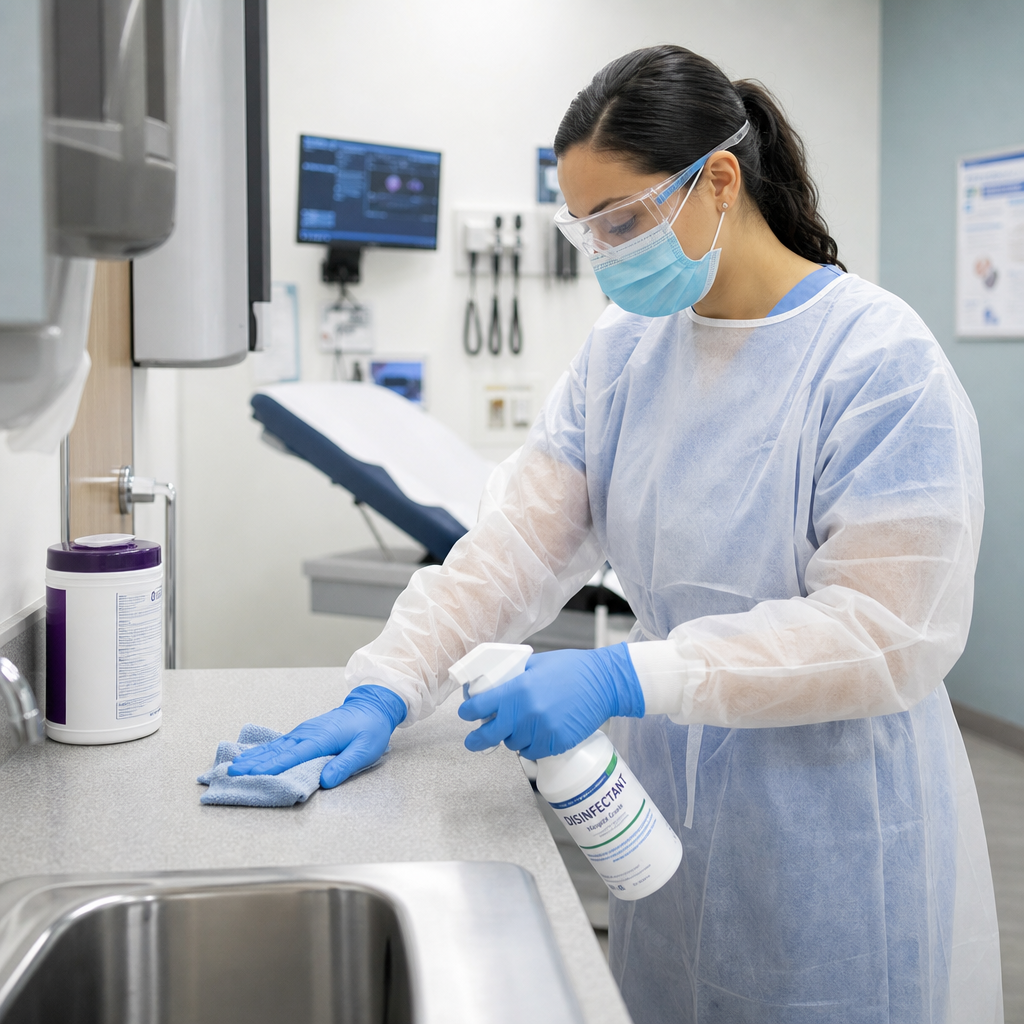
Waiting rooms are counter-intuitively among the highest-risk areas in a general practice. Patients arrive symptomatic, sit in shared seating, touch magazines, hand over Medicare cards, and interact with surfaces that are then touched by the next patient. High-touch points including door handles, EFTPOS terminals, pens, and armrests must be disinfected at minimum every two hours during operating hours, not just at the end of the day.
Reception desks should be wiped down with a TGA-listed disinfectant between patient interactions where practical, and the floor in the waiting room must be damp mopped rather than dry swept to avoid resuspending settled pathogens.
Consultation Rooms and Procedure Areas
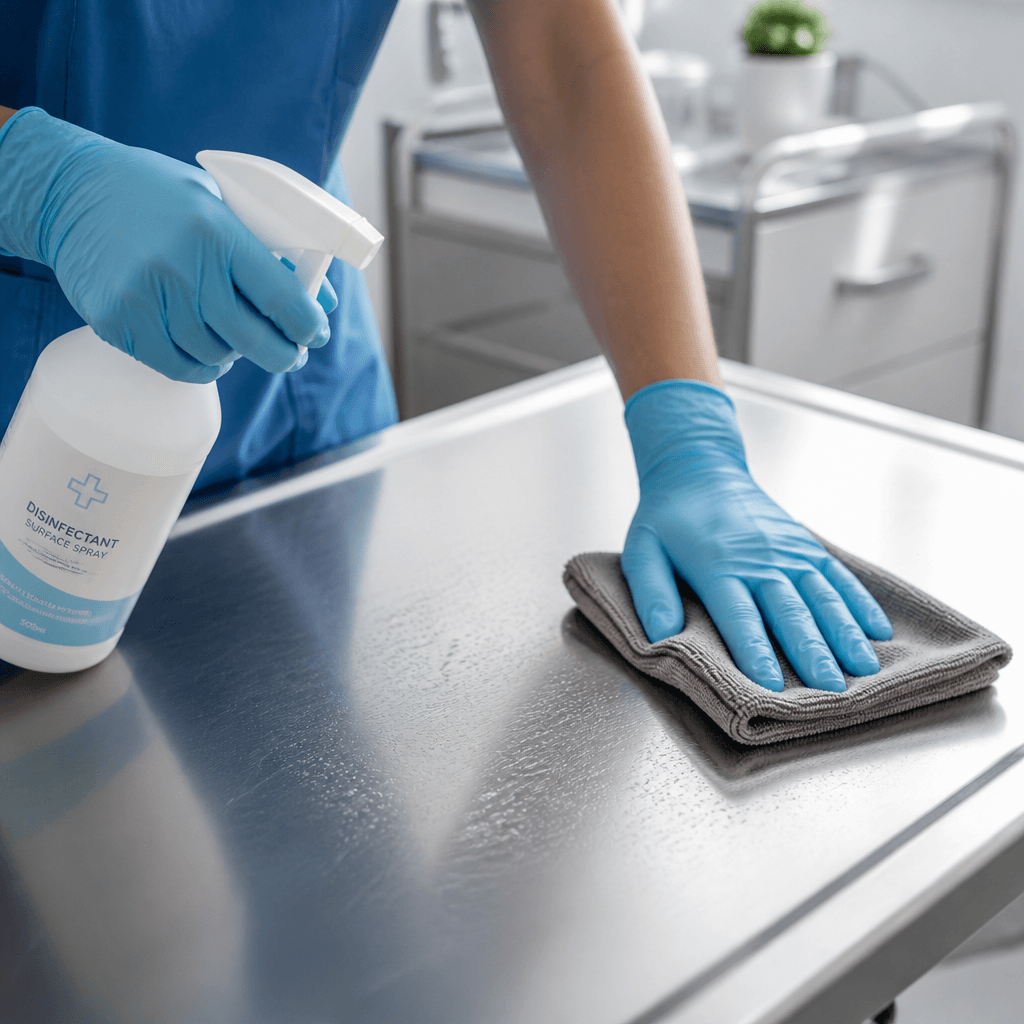
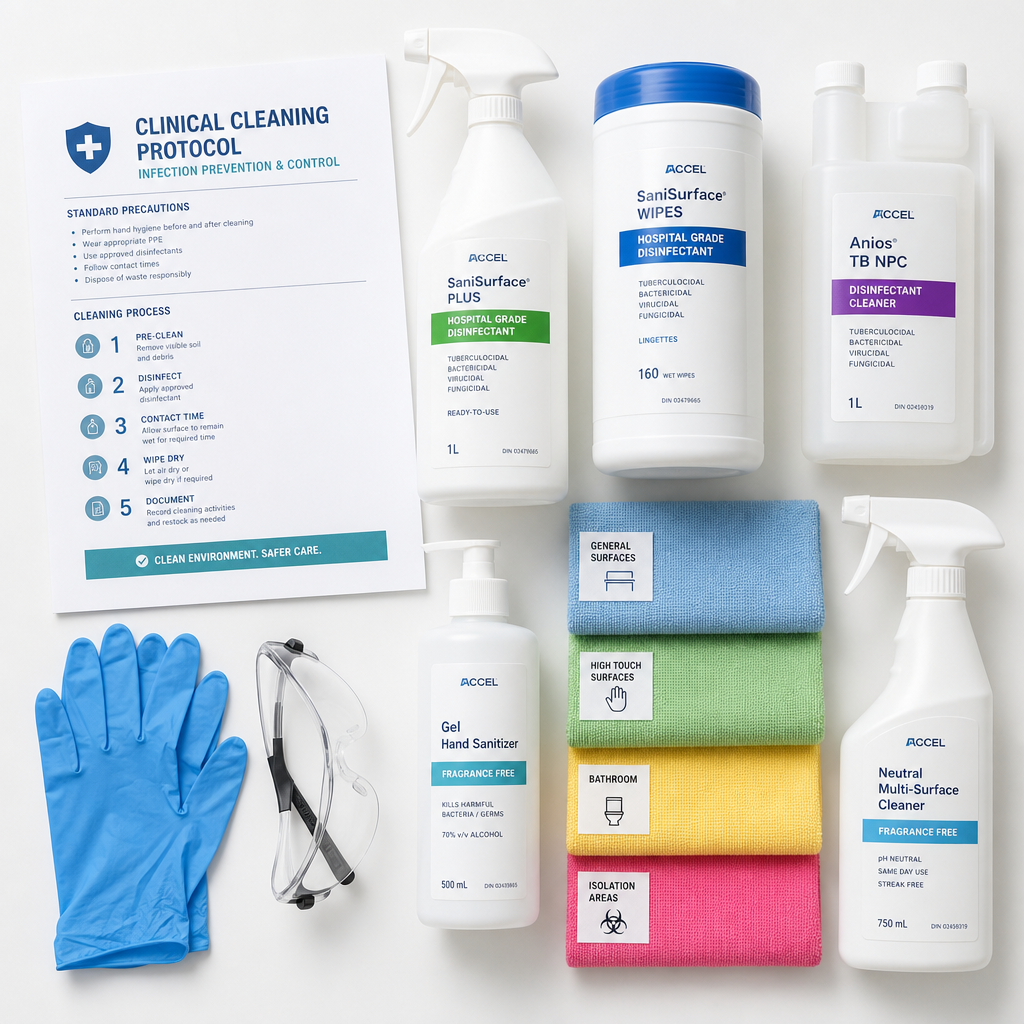
Consultation rooms require a terminal clean between each patient. This means the examination table covering is changed and the vinyl surface disinfected, all contact surfaces including the practitioner’s desk and keyboard are wiped, and the floor is damp mopped. Procedure rooms that involve any minor surgical work require an even more rigorous protocol, often including the use of a two-step clean-then-disinfect method to ensure organic matter does not inactivate the disinfectant.
Bathrooms and Specimen Handling Areas
Medical centre bathrooms are used by unwell patients and must be treated as high-contamination zones. Sodium hypochlorite-based products are appropriate here. Any area used for specimen collection or handling has additional requirements around waste stream management and disposal of contaminated materials according to the relevant Victorian Environmental Protection Authority (EPA) guidelines.
Approved Disinfectants, Products, and Cleaning Protocols
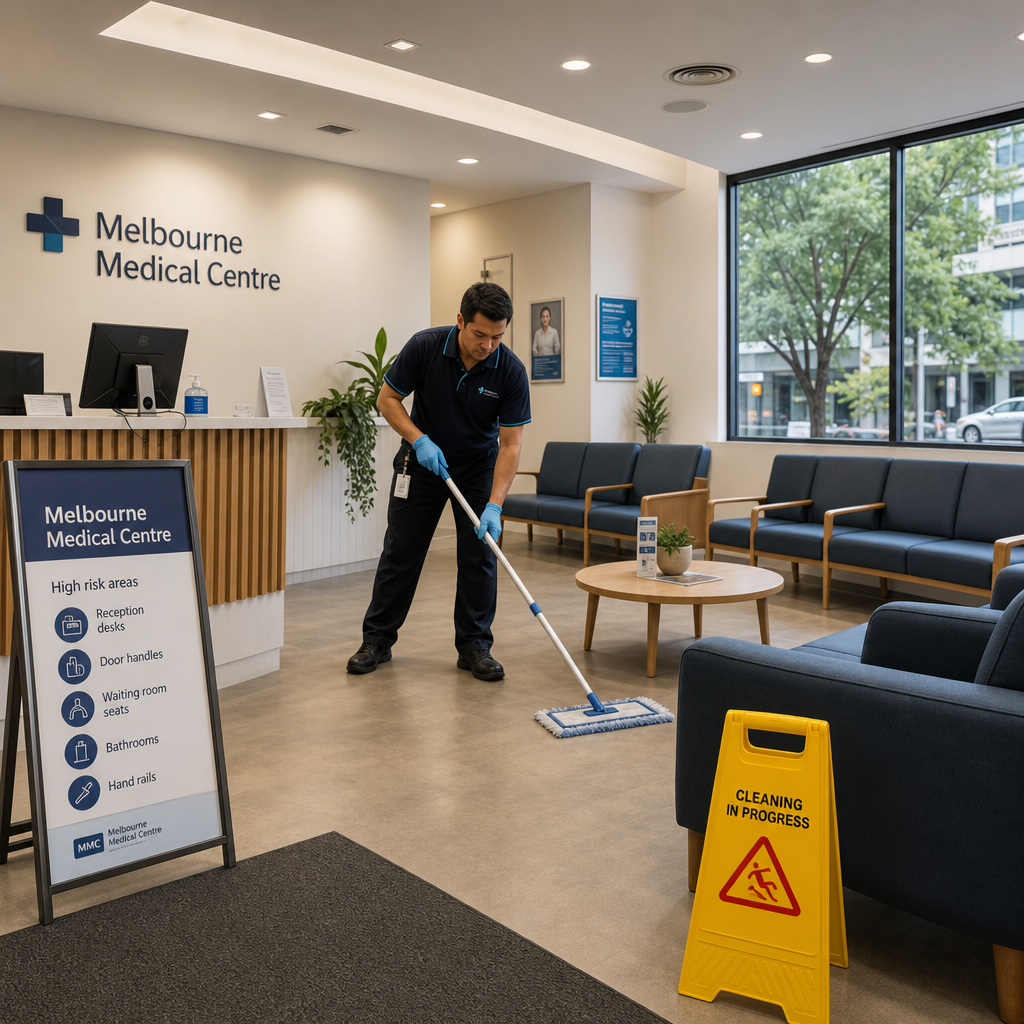
Product selection is not a purchasing decision. It is a clinical decision. The infection control cleaning standard requires that disinfectants used in healthcare environments be TGA-listed and demonstrate efficacy against the specific organisms of concern. For a general medical centre in Melbourne, this typically means products with demonstrated efficacy against enveloped and non-enveloped viruses, gram-positive and gram-negative bacteria, and in many cases, mycobacteria.
Common product categories used in medical environments include quaternary ammonium compound (QAC) disinfectants, chlorine-based solutions (sodium hypochlorite), hydrogen peroxide-based disinfectants, and accelerated hydrogen peroxide products. Each has a different spectrum of activity, different material compatibility, and different contact time requirements. A cleaner who does not know the required contact time for their disinfectant is not performing infection control. They are performing theatrical cleaning.
The Two-Stage Cleaning Method
A critical but frequently skipped step is the two-stage process: clean first with a detergent to remove organic load, then disinfect. Many products marketed as combined detergent-disinfectants can only achieve their stated efficacy on a visibly clean surface. When organic matter such as blood, mucus, or body fluids is present, it acts as a physical barrier that inactivates the disinfectant. This is why the two-stage approach remains the standard in procedure rooms and clinical areas.
Pro tip: Always check the product’s technical data sheet for required contact time. Most TGA-listed disinfectants require the surface to remain visibly wet for 30 seconds to 10 minutes depending on the organism. Wiping dry immediately after application renders the product ineffective.
Comparing Cleaning Approaches: What Works in Medical Environments
There is ongoing debate in the healthcare cleaning sector about which approach delivers the best infection control outcomes. Below is a direct comparison of the three most commonly used approaches in Melbourne medical centres.
| Cleaning Approach | Best Application | Key Limitation |
|---|---|---|
| Traditional Mop and Bucket with QAC Disinfectant | General floor cleaning in low-risk areas like waiting rooms and corridors | Bucket water becomes contaminated quickly, spreading pathogens if not changed between zones. Solution concentration degrades with use. |
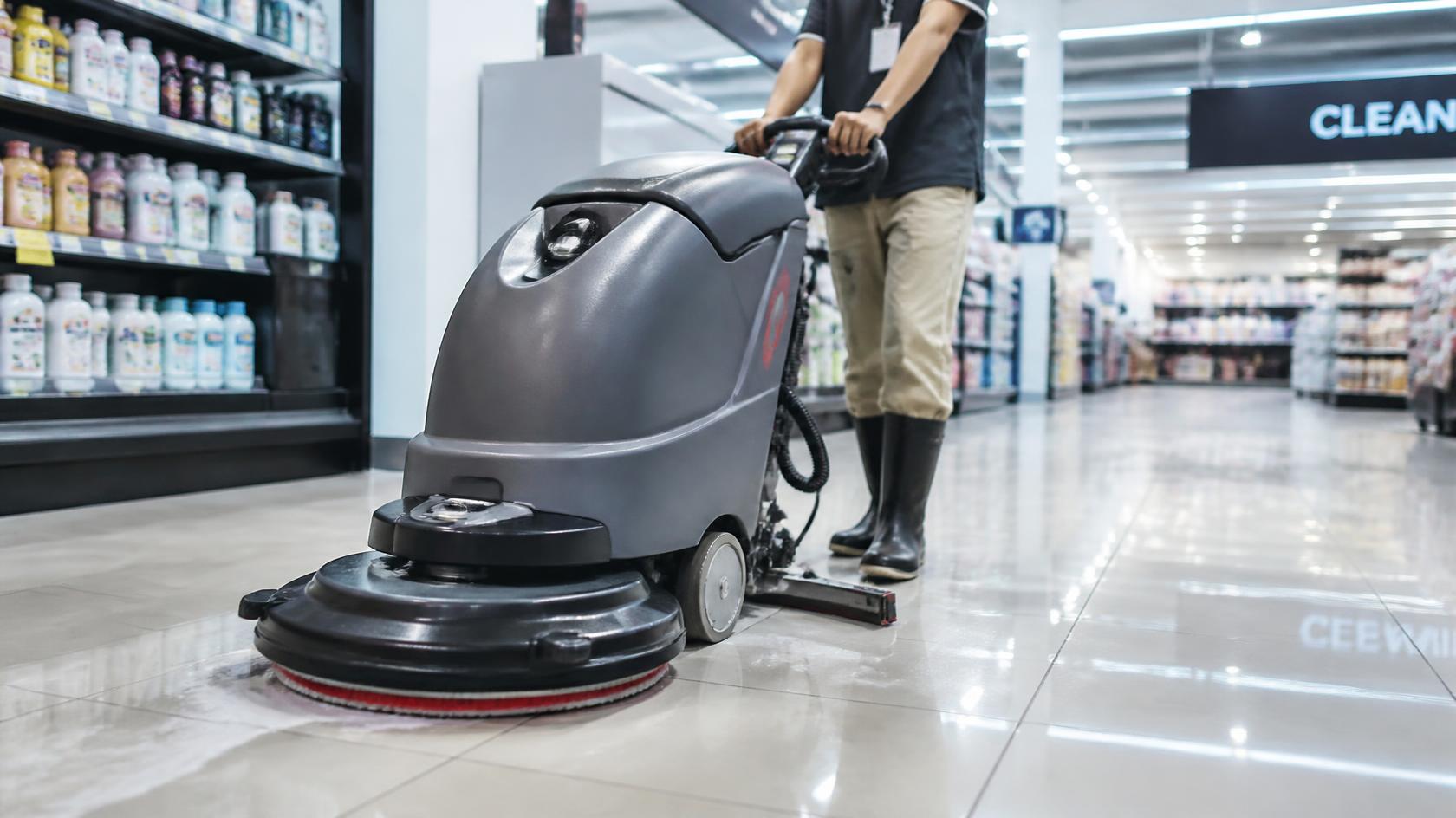
| Microfibre Flat Mop System with Single-Use Pads | Consultation rooms, procedure areas, and any zone where cross-contamination risk is high | Higher consumable cost. Requires rigorous laundering protocol to maintain efficacy of reusable pads. Staff training essential. |
| Electrostatic Spraying with Accelerated Hydrogen Peroxide | Terminal cleans after infectious patient episodes, high-risk procedure rooms, outbreak response | Not a substitute for manual cleaning. Must follow a thorough physical clean. Equipment cost is significant. Best used as a supplemental layer. |
The data consistently shows that microfibre systems with appropriate laundering protocols outperform traditional mop-and-bucket methods in bacterial removal rates. A 2012 study published in the American Journal of Infection Control found that microfibre mops removed 98.9% of bacteria from floors compared to 68% removal with a cotton string mop using the same disinfectant.
What to Look for When Choosing a Healthcare Cleaning Provider in Melbourne
Most commercial cleaning companies will tell you they can handle medical environments. Far fewer can actually demonstrate they have the systems, training, and products to do so compliantly. When evaluating providers for healthcare cleaning Melbourne, the following criteria separate genuine specialists from generalists who have added “medical” to their website.
Documented Infection Control Procedures
A credible provider will have a written infection control cleaning procedure that references the NHMRC guidelines and NSQHS Standards. This document should specify product types, concentrations, contact times, zone-by-zone protocols, and waste disposal procedures. If a provider cannot produce this document, the conversation should end there.
Staff Training and Competency Records
Cleaning staff in medical environments should have completed training in infection prevention, body substance precautions, correct PPE use, and sharps handling. Competency should be documented and refreshed regularly. Ask specifically whether the cleaners assigned to your facility have completed this training, not just whether the company offers it to staff generally.
Insurance, Compliance, and Audit Support
Providers working in healthcare settings should carry public liability insurance appropriate to the risk environment and should be able to support your facility during accreditation audits by supplying cleaning logs, product records, and staff training documentation. Vibrant Property Services provides exactly this level of documentation support to Melbourne medical clients, understanding that the facility manager is ultimately accountable and needs a provider who functions as a genuine compliance partner.
A common mistake is selecting a provider purely on price without requesting a site-specific cleaning specification. A quote that is not attached to a documented scope of works is not a compliant healthcare cleaning agreement. It is just a number on a page.
Common Mistakes in Medical Centre Cleaning That Create Infection Risk
After 15 years working across Melbourne’s healthcare facilities, the same errors appear repeatedly. These are not obscure edge cases. They are systemic failures that create genuine infection risk and compliance exposure for facility managers.
Using the Wrong Dilution Ratio
Disinfectants are formulated to work at a specific concentration. Too weak and they do not achieve the stated kill rate. Too strong and they may damage surfaces, leave harmful residue, or create an occupational health risk for staff and patients. In practice, this error almost always happens with chlorine-based products that are mixed by hand rather than dispensed through a controlled dilution station. Controlled dispensing systems eliminate this variable and are strongly recommended for any medical centre with a daily cleaning program.
Cleaning in the Wrong Direction
Clinical cleaning must always progress from the cleanest areas to the dirtiest, and from high surfaces to low surfaces. Cleaning the floor before the bench tops, or cleaning the bathroom before the reception desk, moves contamination into clean areas. This is basic hygiene logic but is violated constantly when staff are not specifically trained for medical environments.
Inadequate Dwell Time on Disinfectants
This is the single most common and most consequential error across Melbourne’s medical cleaning sector. Staff spray a surface, immediately wipe it, and move on. The disinfectant has had zero effective contact time and has achieved essentially nothing beyond removing visible soil. Every staff member cleaning a medical environment must know the required dwell time for every product they use, and must be supervised until that behaviour is consistent.
Pro tip: Build dwell time into your cleaning workflow by training staff to apply disinfectant to one surface, move to an adjacent surface to clean it, then return to wipe the first surface. This simple sequencing approach ensures adequate contact time without slowing down the overall schedule.
Frequently Asked Questions
How often should a medical centre in Melbourne be professionally cleaned?
At minimum, medical centres require a full clean at the end of every operating day. High-touch surfaces in waiting areas and consultation rooms require attention multiple times throughout the day. Facilities that operate across extended hours or see high patient volumes may require an additional mid-day clean. The specific frequency should be documented in a written cleaning schedule that matches your facility’s operating pattern and risk level.
What disinfectants are approved for use in medical centres?
Only TGA-listed disinfectants are appropriate for use in medical environments. These include sodium hypochlorite solutions, quaternary ammonium compounds, accelerated hydrogen peroxide products, and certain alcohol-based products for specific applications. The product must be used at the manufacturer’s specified concentration and contact time to achieve its stated efficacy. Consumer-grade disinfectants sold in supermarkets do not meet this standard.
Do cleaning staff need specific qualifications to work in medical centres?
There is no single mandatory national qualification, but staff cleaning medical environments must be trained in infection prevention principles, body substance precautions, PPE use, and waste management. Many reputable providers put their healthcare cleaning staff through structured induction programs aligned to the NHMRC guidelines. Facility managers should request evidence of this training rather than taking a provider’s word for it.
What is the difference between cleaning, sanitising, and disinfecting?
Cleaning physically removes visible soil and organic matter using detergent and mechanical action. Sanitising reduces the microbial load to a level considered safe for general use. Disinfecting destroys or inactivates specific pathogenic microorganisms on a surface. In medical centres, disinfection is the required standard for clinical contact surfaces. Sanitising alone is insufficient in healthcare environments and should not be confused with compliant infection control cleaning.
Can a general commercial cleaning company handle medical centre cleaning?
A general commercial cleaning company without specific healthcare protocols, trained staff, and TGA-listed products should not be cleaning medical centres. The risk is not theoretical. Generalist cleaners applying standard commercial methods in clinical environments leave pathogens on surfaces, fail to meet NSQHS Standard 3 requirements, and expose the facility to accreditation failure. Medical centre cleaning requires a provider who understands and can document their infection control methodology.
How should a medical centre handle a cleaning response after an infectious patient visit?
An enhanced clean should be triggered immediately after any confirmed or suspected infectious patient has occupied a space. This includes removing and replacing disposable surface covers, cleaning all contact surfaces with a detergent, then disinfecting with a TGA-listed product at the appropriate concentration and dwell time. If a high-risk organism such as C. difficile or norovirus is involved, a chlorine-based disinfectant at 1000ppm available chlorine is the recommended standard. The area should not be used again until the clean is complete and documented.
What documentation should a medical centre keep regarding its cleaning program?
Facilities should retain daily cleaning sign-off sheets, product safety data sheets for all chemicals used, staff training records, audit results, and any incident reports related to cleaning failures. These records are reviewed during NSQHS accreditation audits and must be available on request. A minimum 12-month retention period is standard practice, though many facilities retain records for longer given the potential for retrospective infection investigations.
Have you recently reviewed your medical centre’s cleaning protocols, or identified a gap your current provider is not addressing? Share your experience below so others in the Melbourne healthcare property management community can learn from it.
References
- Australian Government NHMRC: national guidelines on infection prevention and control in healthcare settings
- Australian Commission on Safety and Quality in Health Care: NSQHS Standards and infection control requirements for accredited facilities
- Royal Australian College of General Practitioners: standards and infection control guidelines for general practice facilities
- Victorian Environment Protection Authority: clinical and infectious waste management requirements for healthcare facilities
- Statista: healthcare-associated infection rates and environmental cleaning industry data