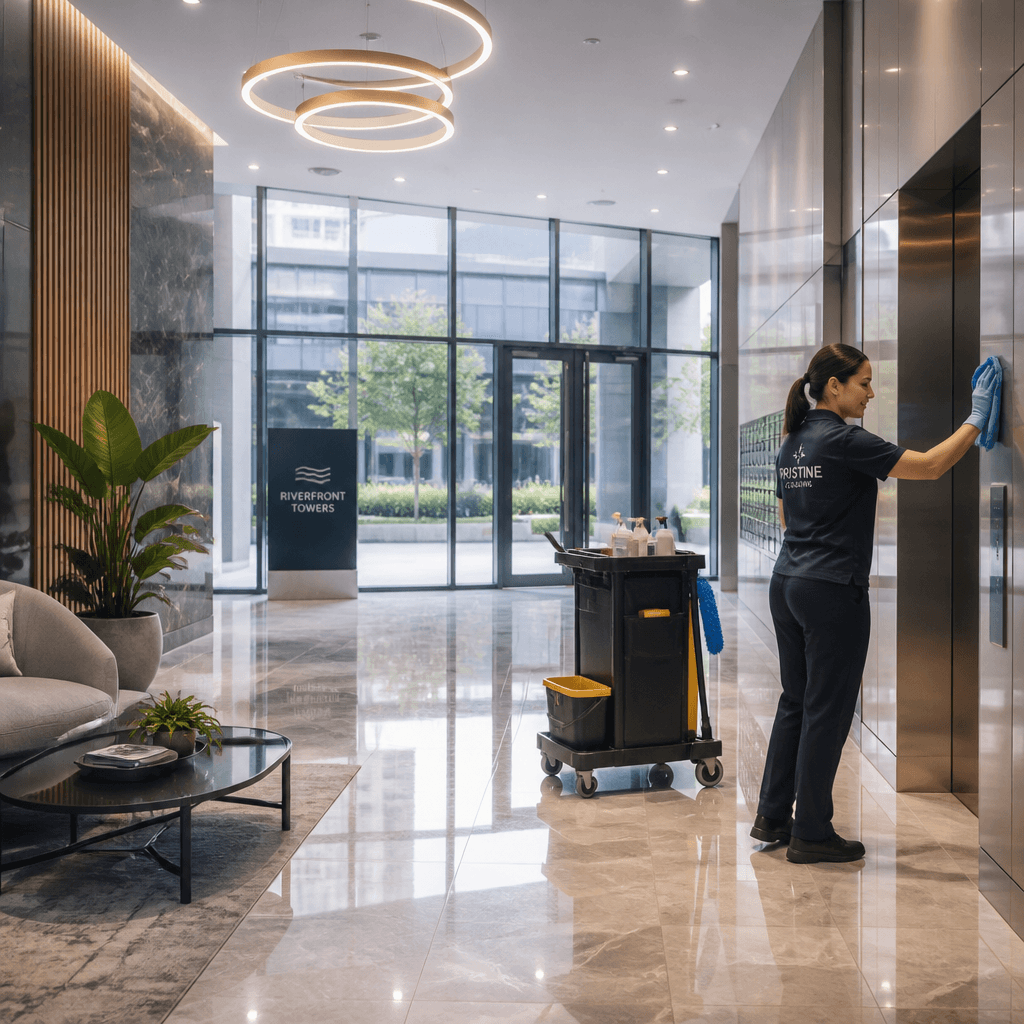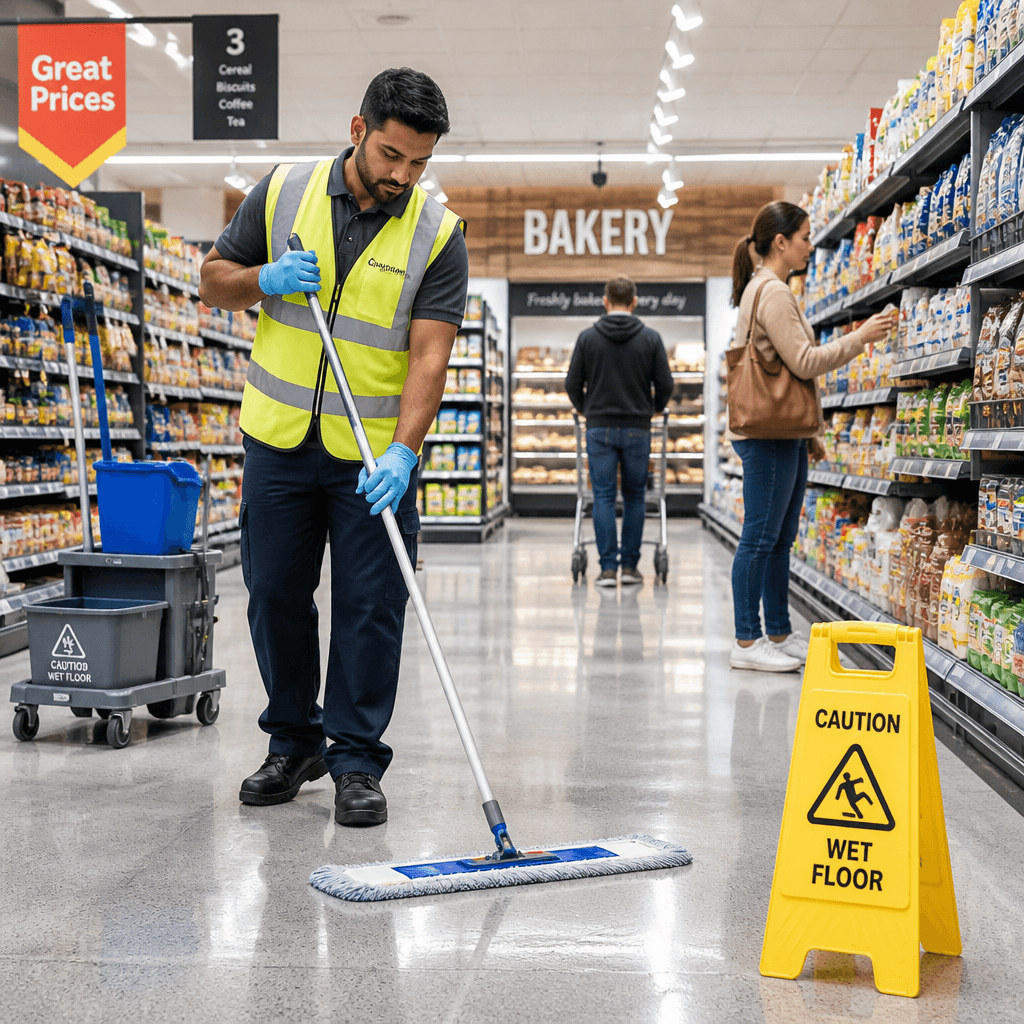

A supermarket floor sees thousands of footsteps daily. A retail store during peak season handles hundreds of customers per hour. Yet many Melbourne business owners treat cleaning as an afterthought rather than a core safety and compliance function. The result is predictable: slip incidents, failed health inspections, and customers who simply do not return. Retail cleaning Melbourne is not just about appearances. It directly affects liability, regulatory compliance, and revenue. This guide breaks down what high-traffic commercial cleaning actually requires in practice, based on over 15 years of on-the-ground experience across Melbourne’s retail and supermarket sectors.
Table of Contents
- Quick Takeaways
- Why Retail Cleaning Melbourne Is Different From Regular Commercial Cleaning
- Supermarket Cleaning Melbourne: The Non-Negotiables
- High-Traffic Commercial Cleaning: Scheduling and Frequency That Actually Works
- Compliance and Safety Standards for Melbourne Retailers
- Comparing Retail Cleaning Approaches: What the Options Actually Deliver
- What a Professional Retail Cleaning Service Should Include
- Frequently Asked Questions
- References
Quick Takeaways
| Key Insight | Explanation |
|---|---|
| High-traffic floors require minimum twice-daily wet mopping | Supermarket and retail floors accumulate grease, dust, and spillage rapidly. A single daily clean is not sufficient to prevent slip hazards in a busy Melbourne store. |
| Entrance matting zones need targeted attention every 90 minutes during peak periods | Entrance areas trap moisture, dirt, and debris brought in from outside. Neglecting these zones is the most common cause of tracked contamination throughout a store. |
| Refrigerated section floors are a specific high-risk zone | Condensation from refrigeration units creates persistent moisture on floors directly below them. These areas need dedicated dry and wet treatment, not just inclusion in a general floor sweep. |
| Restrooms must be cleaned on a documented, time-stamped schedule | WorkSafe Victoria and local council health inspectors specifically look for cleaning logs. Undocumented restroom cleaning is treated as non-compliance regardless of actual cleanliness. |
| Grout and tile restoration is a safety issue, not just cosmetic | Degraded grout in retail and supermarket tile floors harbors bacteria and creates uneven walking surfaces. Tile and grout restoration eliminates both risks simultaneously. |
| End-of-trade deep cleaning must cover display fixtures and shelving, not just floors | Product residue on shelving accumulates allergens and pests. A cleaning service that only addresses floors is leaving a significant hygiene gap in your facility. |
| Window and facade cleaning directly affects customer perception and safety | Research consistently shows that store exterior cleanliness is one of the top three factors influencing a customer’s first impression. Dirty facades also obscure emergency exit signage. |
Why Retail Cleaning Melbourne Is Different From Regular Commercial Cleaning
Cleaning an office suite and cleaning a supermarket are fundamentally different operations. An office deals with predictable traffic patterns, limited food contamination, and relatively stable surface conditions. A supermarket or retail store deals with unpredictable spills, constant foot traffic across multiple surface types, perishable goods, public restrooms, and loading dock areas. Each of these zones has a distinct risk profile.
Retail cleaning Melbourne must account for the full spectrum of these risks simultaneously. A cleaning provider that treats a supermarket like a scaled-up office clean will leave gaps that cause real problems: pest infestations in shelving units, grease buildup in refrigeration zones, and slip hazards in entrance areas during Melbourne’s wet winter months.
In practice, the difference comes down to zone-specific protocols rather than a single cleaning routine applied across the whole store. Professional retail cleaners segment the facility into zones, each with its own frequency, chemical specification, and documented completion record.
Supermarket Cleaning Melbourne: The Non-Negotiables
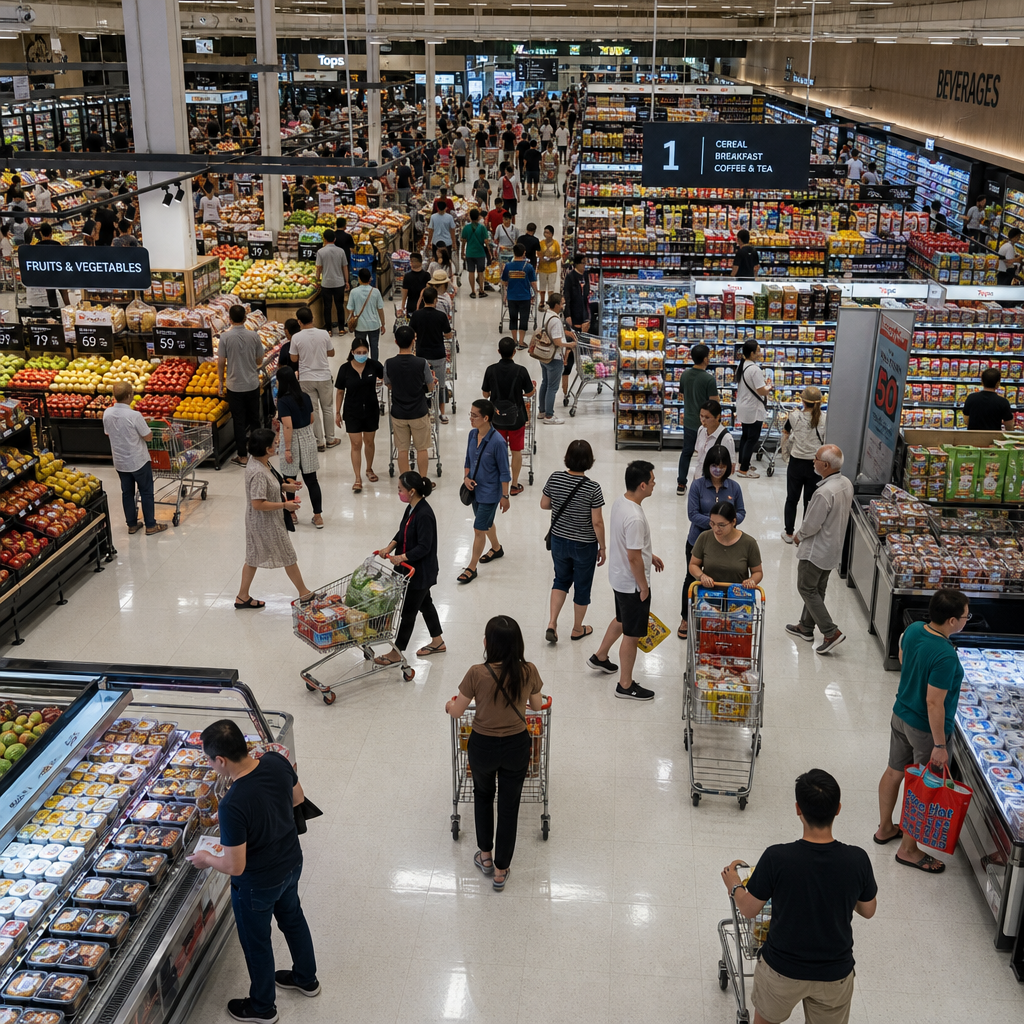
Supermarket cleaning Melbourne sits at the intersection of food safety regulation, public liability, and customer experience. Getting any one of these wrong has real financial consequences. A single food safety non-compliance notice from the local council can shut down food handling areas. A single slip incident that results in a WorkSafe claim can cost a Melbourne retailer tens of thousands of dollars in legal and compensation expenses.
Floor Zones That Demand Specific Treatment
The produce section floor is consistently the highest-risk area in any supermarket. Organic material from fresh fruit and vegetables breaks down quickly, creating invisible slip hazards. This zone needs a degreasing wet mop at minimum every two hours during trading, and a full sanitising treatment after close.
Refrigeration aisles require a dry microfibre pass before any wet treatment. Applying a wet mop directly to a condensation-affected floor spreads moisture rather than removing it. This is a common mistake that actually increases slip risk rather than reducing it.
Checkouts and High-Contact Surfaces
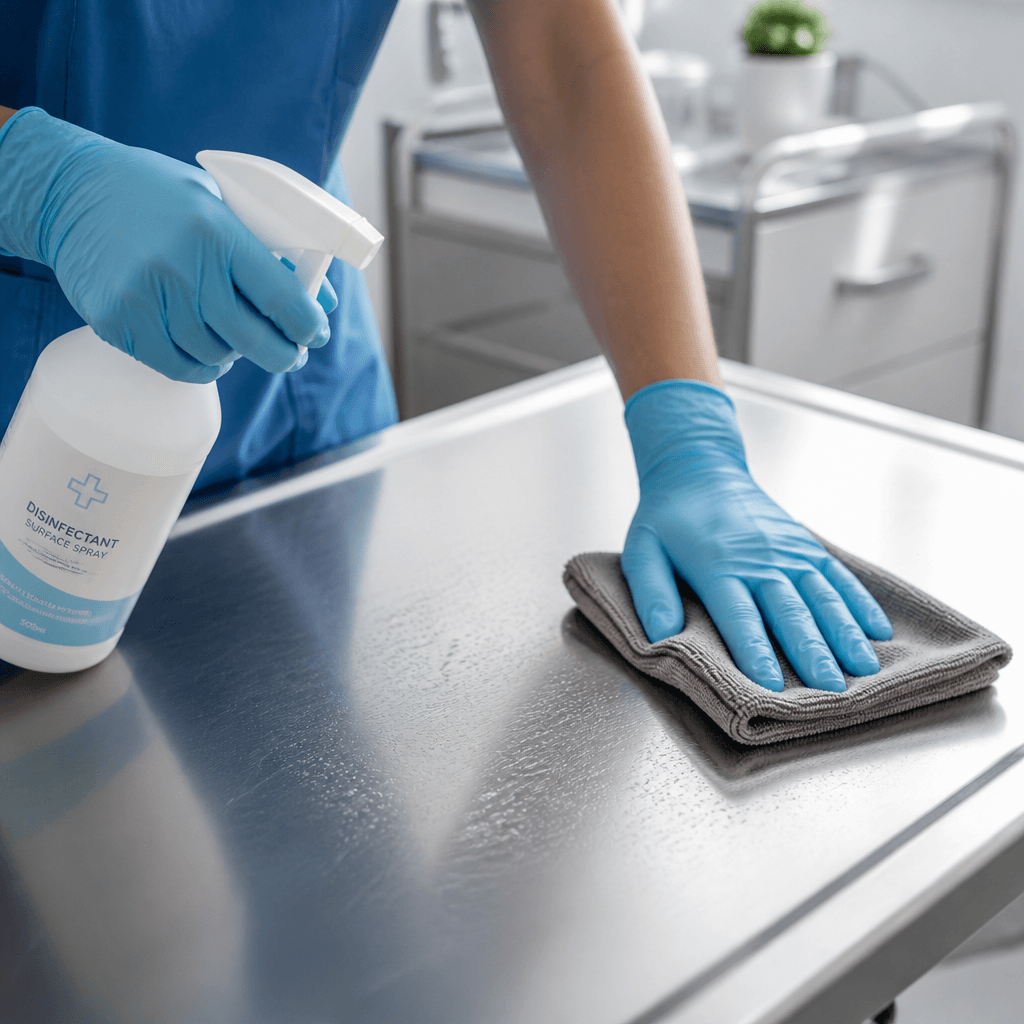
Checkout counters, self-service kiosks, and payment terminals are touched by every customer. These surfaces require disinfectant treatment with documented dwell times, not a quick surface wipe. A TGA-listed disinfectant applied with adequate dwell time is the standard, not a general-purpose spray and wipe.
Trolley bays and basket storage areas also accumulate contamination that spreads into the store. These are frequently overlooked in supermarket cleaning schedules, yet they are among the first things a health inspector will check.
Loading Docks and Back-of-House Areas
Back-of-house areas are not customer-facing, but they are where pest activity originates. Organic debris in loading dock drains, compactor areas, and coolroom floors creates conditions that attract rodents and cockroaches. A professional supermarket cleaning Melbourne service must include back-of-house deep cleaning as a scheduled component, not an optional add-on.
High-Traffic Commercial Cleaning: Scheduling and Frequency That Actually Works
The data consistently shows that retail businesses underestimate cleaning frequency requirements. A study cited by Safe Work Australia found that 40 percent of slips, trips, and falls in retail environments occurred in areas that had been cleaned but not at sufficient frequency for the traffic level. The problem is not always the method. It is the schedule.
“Cleaning frequency in high-traffic environments should be determined by footfall data and contamination rate, not by budget convenience. The cost of a slip incident dwarfs the cost of additional cleaning visits.” – Safe Work Australia, Occupational Slip, Trip and Fall Prevention Guidelines
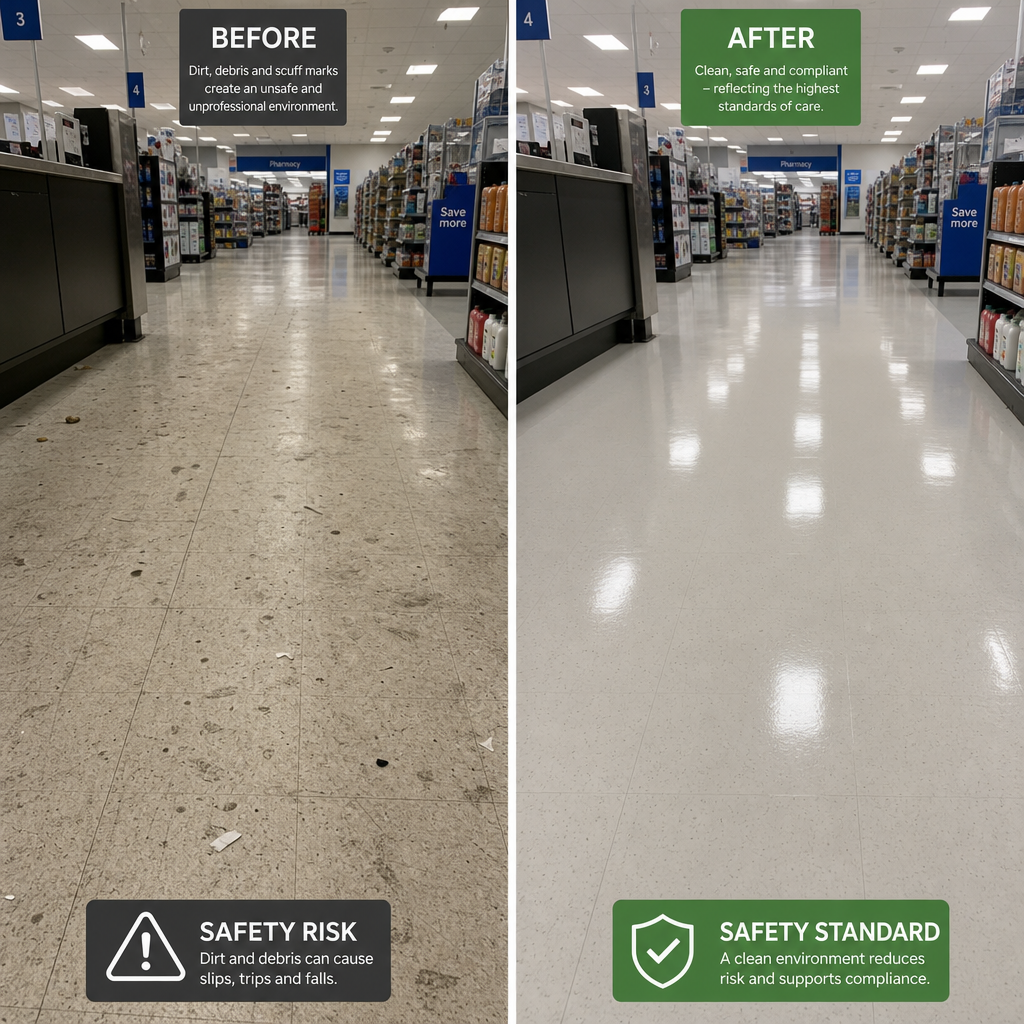
For a Melbourne supermarket with standard trading hours of 7am to 10pm, the minimum effective schedule looks like this: entrance and high-traffic aisles cleaned every 90 minutes during trading, restrooms on a 90-minute documented rotation, produce and refrigeration zones every two hours, and a full end-of-trade deep clean covering floors, fixtures, shelving, and all food contact surfaces.
After-Hours Deep Cleaning Without Disrupting Trade
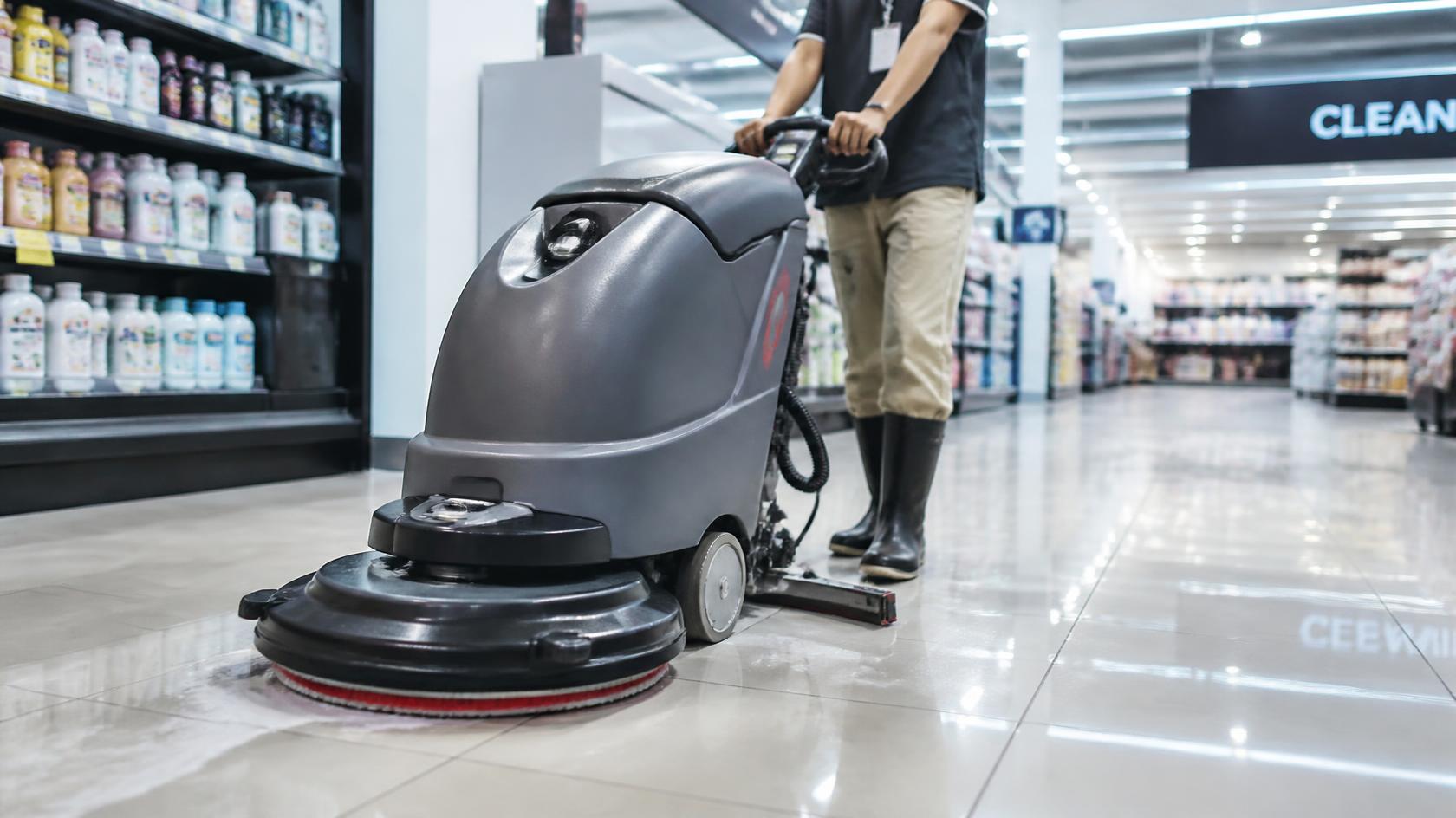
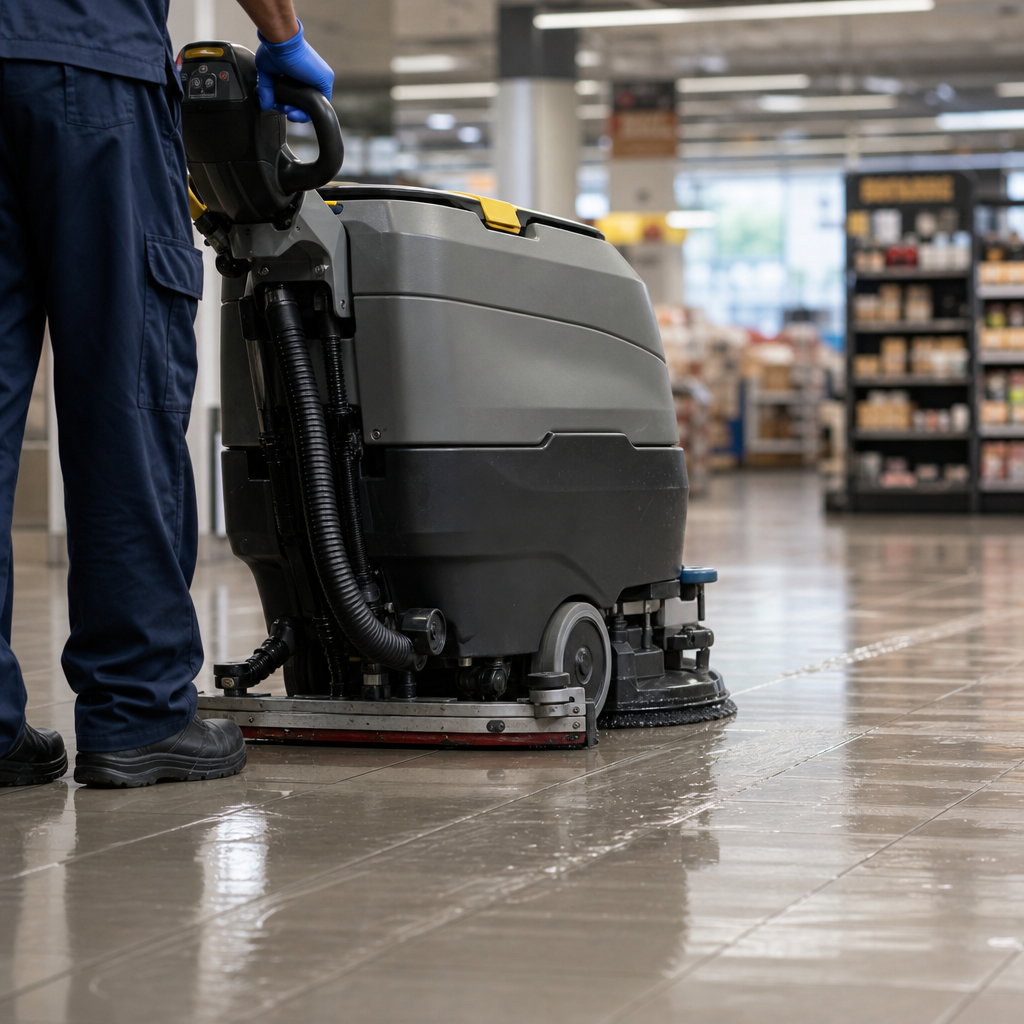
High-traffic commercial cleaning scheduled after trading hours is the standard for supermarkets and large format retailers. Night cleaning allows the use of floor scrubbing machines in aisles without creating hazards for customers, and permits the use of stronger disinfectants that require adequate ventilation time before public re-entry.
Vibrant Property Services structures retail cleaning engagements around trading schedules specifically so that deep cleaning never competes with customer-facing operations. The cleaning team is on-site before the store opens to ensure all surfaces, floors, and restrooms are compliant and ready for the first customer of the day.
Pro tip: Request a cleaning schedule log that timestamps each completed task. This document is your first line of defence in any WorkSafe investigation or public liability claim. A cleaning company that cannot provide this is not operating at the standard required for commercial retail environments in Victoria.
Compliance and Safety Standards for Melbourne Retailers
Melbourne retailers operate under a layered compliance framework. The Occupational Health and Safety Act 2004 (Victoria) places a duty of care on employers to maintain safe premises. The Food Act 1984 (Victoria) applies to any retailer selling food, including supermarkets, delis, and specialty food stores. Local council regulations add a third layer, particularly around food handling area hygiene and waste management.
In practice, compliance requires documented evidence. A clean-looking store is not enough. Health inspectors and WorkSafe investigators ask for cleaning logs, product specifications for chemicals used, and evidence of staff training or contractor qualifications. A professional retail cleaning provider must be able to supply all of this on request.
Chemical Selection and Food Safety Compliance
Not all cleaning products are appropriate for food retail environments. Chemicals used in food contact surface areas must be listed on the Australian Pesticides and Veterinary Medicines Authority (APVMA) register or hold TGA approval for surface disinfection. Using non-approved products in a food retail environment is a compliance breach, regardless of how effective the product appears to be.
Vibrant Property Services uses only approved, food-safe chemicals in supermarket and retail environments. Every product used is matched to the specific surface type and zone, with documented dwell times applied as per manufacturer and regulatory specifications.
Wet Floor Signage and Liability Management
Wet floor signage is a legal requirement during any cleaning activity in a publicly accessible area. Placement must be visible from all approach directions, not just in front of the cleaning area. A common mistake is placing a single sign at one end of a mopped aisle while the other end remains unsignposted. This represents a direct public liability exposure for the retailer.
Pro tip: Require your cleaning contractor to provide photo evidence of wet floor sign placement as part of their cleaning log. This costs nothing to implement and provides critical documentation if a slip incident is later disputed.
Comparing Retail Cleaning Approaches: What the Options Actually Deliver
Melbourne retailers typically choose between three approaches: in-house cleaning staff, a budget commercial cleaning contractor, or a specialist high-traffic retail cleaning provider. Each has a different risk and cost profile that is worth understanding before making a decision.
| Cleaning Approach | Strengths | Weaknesses for Retail and Supermarket Environments |
|---|---|---|
| In-House Cleaning Staff | Immediate availability for reactive spill response. Direct management control. No contractor coordination required. | Higher total cost including payroll, superannuation, and training obligations. Often lacks specialist equipment for floor scrubbing, grout restoration, and high-pressure cleaning. Compliance documentation typically inconsistent. |
| Budget Commercial Cleaning Contractor | Lower upfront cost. Flexible contract terms. Sufficient for low-traffic environments like small offices. | Rarely equipped or trained for food-safe chemical compliance. Cleaning frequency and zone protocols are often insufficient for supermarket or high-volume retail. Compliance documentation is typically minimal or absent. |
| Specialist Retail and Supermarket Cleaning Provider (e.g., Vibrant Property Services) | Zone-specific protocols matched to retail environment. Documented compliance logs. TGA-approved chemical specifications. After-hours scheduling. Specialist equipment including floor scrubbers, high-pressure cleaning, and tile and grout restoration. | Higher cost than budget contractors. Requires a clear scope of works to be agreed upfront. Not suitable for businesses that only need reactive or occasional cleaning. |
The comparison above reflects real decisions Melbourne property managers and retail operators face. For any site handling food, managing significant foot traffic, or operating under health and safety compliance obligations, the budget contractor option creates more financial risk than it saves in fees.
What a Professional Retail Cleaning Service Should Include
A professional retail cleaning service for Melbourne supermarkets and high-traffic stores should cover a defined scope that goes well beyond basic floor mopping. If your current provider is not delivering all of the following, you have a compliance and hygiene gap.
Daily and Periodic Cleaning Scope
Daily scope must include all floor surfaces across every zone with zone-specific chemical and method protocols, restroom cleaning on a documented rotation, all high-contact surface disinfection, entrance matting maintenance, waste removal from all internal stations, and end-of-day sanitisation of food preparation and display areas.
Periodic scope covers services that cannot be done daily but are essential to maintain hygiene and safety standards over time. This includes high-pressure cleaning of loading docks and exterior paved areas, window cleaning for both interior and exterior glazing, tile and grout restoration in food preparation and refrigeration zones, and deep cleaning of coolrooms and freezer units.
What Vibrant Property Services Delivers for Melbourne Retailers
Vibrant Property Services has been delivering retail and supermarket cleaning across Melbourne for over 15 years. Their retail cleaning engagements are structured around a documented zone map, a compliant chemical register, a timestamped cleaning log, and a dedicated account manager who can respond to compliance queries or schedule adjustments within the same business day.
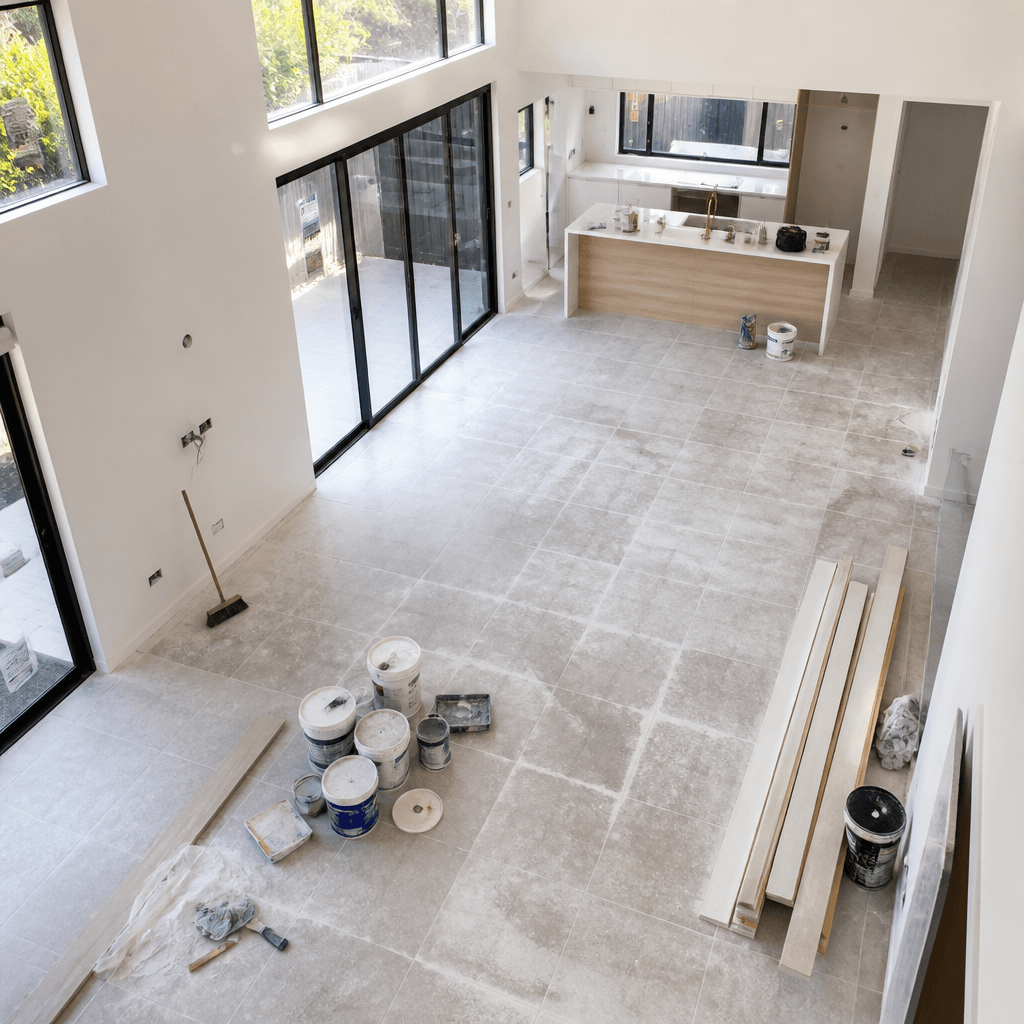
Their service scope for supermarket and retail clients includes general floor cleaning, specialist tile and grout restoration, window cleaning, high-pressure external cleaning, and builder’s cleaning for new or refurbished retail fit-outs. For Melbourne property managers overseeing multiple retail sites, Vibrant also provides consistent cleaning standards across all locations under a single service agreement.
Retailers in Melbourne looking for a cleaning partner that understands the specific demands of high-traffic commercial environments can learn more and request a tailored quote at vibrantproperty.com.au.
Frequently Asked Questions
How often should a Melbourne supermarket be deep cleaned?
A full deep clean covering all floor zones, shelving, refrigeration units, restrooms, and back-of-house areas should occur at minimum once per week. High-contamination zones such as the produce section and checkouts require daily deep treatment after close. Quarterly schedules should include tile and grout restoration and high-pressure cleaning of exterior and loading dock areas.
What is the difference between retail cleaning and standard commercial office cleaning?
Retail cleaning requires zone-specific protocols for food contact surfaces, refrigeration areas, and high-traffic floor zones. It also requires compliance with the Food Act 1984 (Victoria) and documented cleaning logs that can be produced for health inspectors. Standard office cleaning is not designed or equipped to meet these requirements, and using an office cleaning provider in a food retail environment creates direct compliance risk.
Are Melbourne retailers legally required to maintain cleaning records?
Yes. Under the Food Act 1984 (Victoria) and local council food premises regulations, food retailers must maintain documented evidence of cleaning activities. WorkSafe Victoria also expects cleaning records to be available in the event of a workplace injury investigation. A cleaning contractor who does not provide timestamped logs is leaving the retailer exposed.
What chemicals are safe to use in supermarket food zones?
Only TGA-listed disinfectants and APVMA-registered products are appropriate for food contact surface areas in Australian supermarkets. Products must be applied at the correct dilution with adequate dwell time as specified by the manufacturer. Any cleaning provider working in a food retail environment should be able to supply a complete chemical register with product safety data sheets on request.
How does high-pressure cleaning benefit retail and supermarket operators?
High-pressure cleaning removes embedded grease, organic buildup, and contamination from external paved areas, loading docks, and car parks that standard mopping cannot address. These areas are significant sources of pest attraction and slip hazards. In Melbourne’s retail environment, regular high-pressure treatment of external zones is also part of council-compliant waste and hygiene management for food premises.
Can Vibrant Property Services handle multiple retail locations across Melbourne?
Yes. Vibrant Property Services provides multi-site retail cleaning agreements across Melbourne and surrounding suburbs. Property managers overseeing multiple retail or supermarket locations receive consistent cleaning standards, a single point of contact, and coordinated scheduling across all sites. This eliminates the compliance inconsistency that occurs when each site manages its own cleaning contractor independently.
If you manage a retail or supermarket facility in Melbourne, share your biggest cleaning challenge in the comments below. We answer every response and the real-world problems you raise often shape our next practical guide.
References
- Safe Work Australia: occupational slip, trip, and fall prevention resources for Australian workplaces
- Victorian Department of Health: food premises hygiene standards and compliance guidelines for Victorian retailers
- IBISWorld: commercial cleaning industry performance data and market analysis for the Australian market
- Statista: global retail foot traffic data and consumer behaviour statistics relevant to high-traffic commercial environments
- WorkSafe Victoria: employer obligations for maintaining safe commercial premises under Victorian occupational health and safety legislation