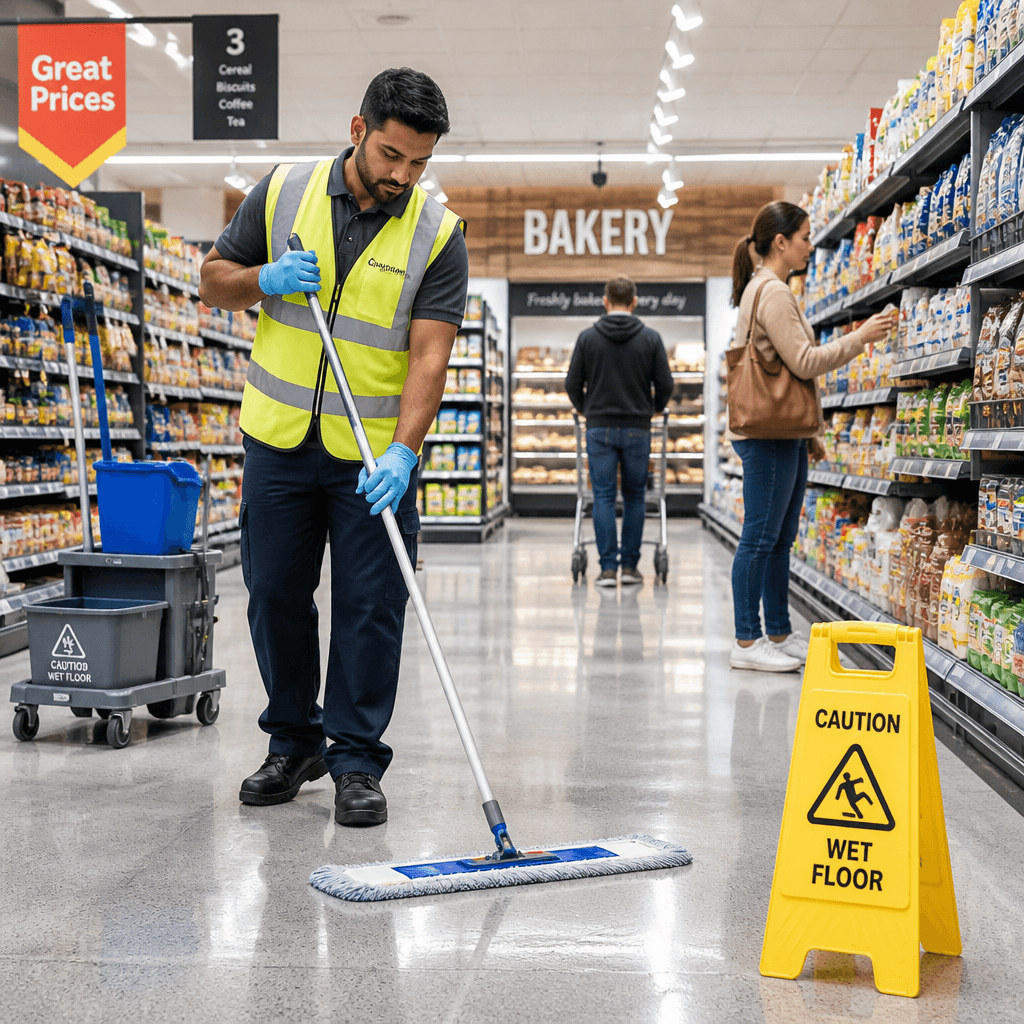

A commercial kitchen in Melbourne can pass a visual inspection and still harbour enough bacteria in its grout lines to trigger a Food Act enforcement notice. That is not a theoretical risk. Safe Food Victoria inspectors regularly cite inadequate surface cleaning as a primary factor in food safety breaches, and grout is almost always the surface that fails first. If you manage a restaurant, hotel kitchen, aged care facility, or school canteen, understanding what proper commercial kitchen cleaning Melbourne actually involves, specifically around tiles and grout, is not optional. It is the difference between a compliant kitchen and a closure.
Table of Contents
- Why Grout Fails First in Commercial Kitchens
- Health and Safety Standards That Apply in Melbourne
- Quick Takeaways
- The Tile and Grout Cleaning Process Explained
- Cleaning Method Comparison
- Common Mistakes Made in Commercial Kitchen Tile Cleaning
- How Often Should You Schedule Professional Tile and Grout Cleaning
- Choosing the Right Commercial Cleaner in Melbourne
- Frequently Asked Questions
- References
Why Grout Fails First in Commercial Kitchens
Ceramic and porcelain tiles are dense and non-porous. Grout is neither. Standard cement-based grout has a porosity rate that allows oils, food particles, cleaning chemical residue, and moisture to penetrate its surface within days of installation. In a commercial kitchen operating six or seven days a week, that process accelerates dramatically.
The high-traffic floor zones near fryers, prep benches, and dishwashing stations experience the worst contamination. Rendered animal fats polymerise inside grout at cooking temperatures, forming a sticky matrix that standard mops cannot dissolve. Once that matrix builds up, it becomes a feeding substrate for bacteria including Salmonella, Listeria monocytogenes, and E. coli, all of which are flagged under Australia’s Food Standards Code.
Wall tiles behind cooking equipment face a different but equally serious problem. Steam, grease aerosols, and splatter build up in the grout lines above benchtop level. These areas are often missed during nightly cleans because they sit outside the obvious floor zone. In practice, wall grout contamination near commercial ranges is typically six to twelve months ahead of what operators estimate when asked.
Health and Safety Standards That Apply in Melbourne
Food businesses in Victoria operate under the Food Act 1984 (Vic) and must comply with the Australia New Zealand Food Standards Code, specifically Standard 3.2.3, which covers food premises and equipment. That standard requires food premises to be maintained in a clean condition and to the extent possible in good repair and condition. Grout that has deteriorated, cracked, or become visibly discoloured does not meet that standard.
WorkSafe Victoria adds another layer. Wet commercial kitchen floors with degraded grout develop uneven surfaces that increase slip risk. Slip and fall injuries are among the most common workplace incidents in hospitality and food service. Maintaining intact, clean grout is therefore both a food safety obligation and an occupational health and safety obligation.
“Premises that are not maintained in a clean and sanitary condition present a real risk of food contamination and illness. Local councils and the Department of Health have the authority to issue improvement notices and prohibition orders where these standards are not met.” – Food Safety Victoria, Guidance for Food Businesses
Melbourne-based operators also answer to their local council environmental health officers, who conduct unannounced inspections. Councils in inner Melbourne, including the City of Melbourne, Yarra, and Port Phillip, have increased inspection frequency for high-volume food businesses since 2022. A dirty or structurally compromised tile surface is one of the first things an EHO photographs during a compliance visit.
Quick Takeaways
| Key Insight | Explanation |
|---|---|
| Grout is the primary contamination point | Porous cement grout absorbs fats, moisture, and bacteria faster than tile surfaces. Standard mopping does not remove embedded contamination. |
| Food Act 1984 (Vic) mandates cleanliness | Standard 3.2.3 of the Food Standards Code specifically covers surface cleanliness on food premises. Discoloured or deteriorated grout is a compliance failure. |
| Professional hot water extraction removes what mops leave behind | Truck-mounted or portable hot water extraction systems reach temperatures above 100 degrees Celsius, breaking down polymerised fats that cold or warm water cannot dissolve. |
| Sealing grout after cleaning extends protection | A penetrating epoxy or silicone-based grout sealer applied post-clean reduces recontamination rates by preventing oil and moisture from re-entering the grout matrix. |
| Frequency depends on kitchen type and volume | A high-volume Melbourne restaurant needs professional tile and grout cleaning every 3 to 4 months. A lower-volume facility such as a school canteen may be able to extend to every 6 months. |
| DIY enzyme cleaners are insufficient alone | Enzyme-based degreasers help with daily maintenance but do not replace periodic professional deep cleaning. They cannot penetrate deeply embedded fat deposits without mechanical agitation. |
| Wall tile grout is as important as floor grout | Grease aerosols from cooking equipment contaminate wall grout behind ranges and fryers. Ignoring wall tiles creates a direct cross-contamination risk to food preparation surfaces. |
The Tile and Grout Cleaning Process Explained
Professional tile grout cleaning commercial kitchen work follows a specific sequence. Understanding that sequence helps you evaluate whether a cleaning contractor is actually doing the job or just making surfaces look clean temporarily.
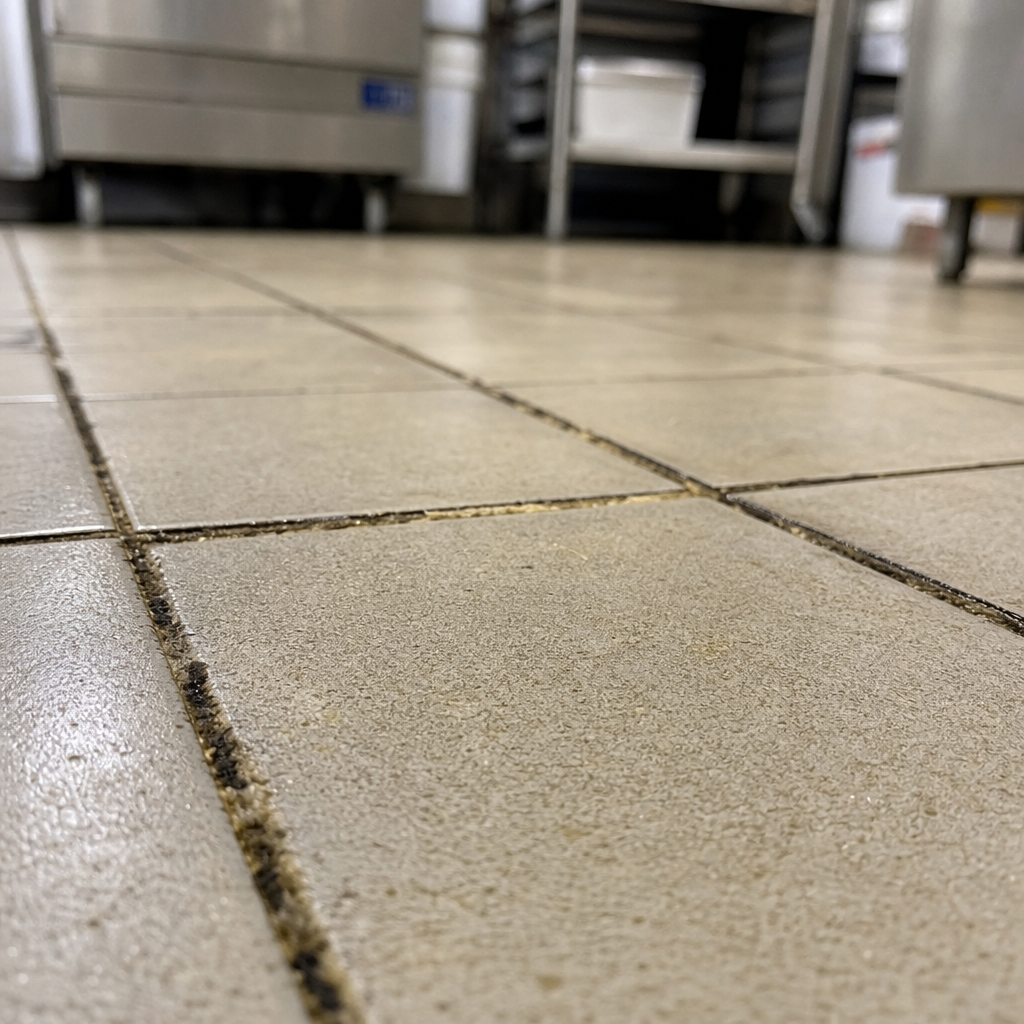
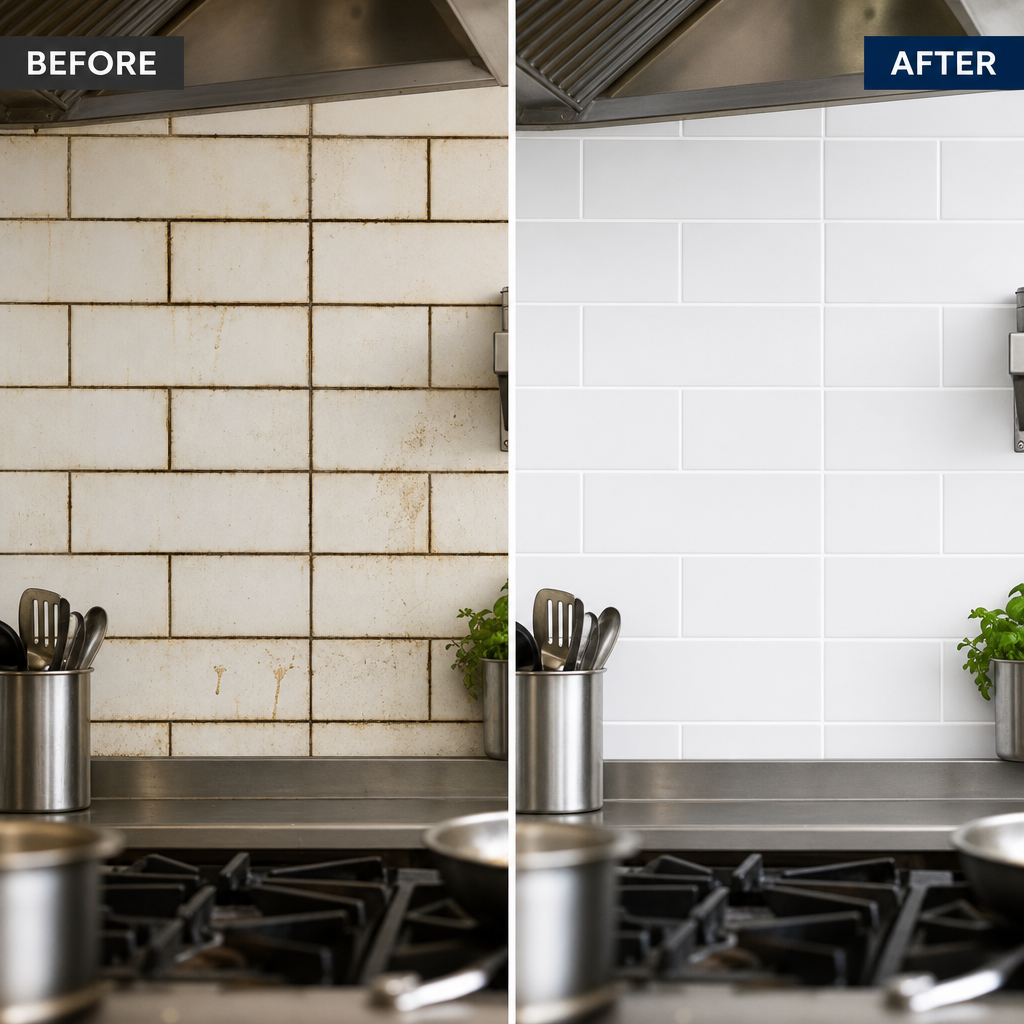
Stage 1: Pre-Treatment with Alkaline Degreaser
The process starts with a high-concentration alkaline degreaser applied directly to tile and grout surfaces. The degreaser needs a dwell time of at least 10 to 15 minutes to begin saponifying, which means chemically converting, the animal and vegetable fats embedded in the grout. Cutting this dwell time short is the most common mistake contractors make when they are rushing a job.
The degreaser concentration matters significantly. Commercial kitchen environments require degreasers at a pH of 11 to 13 for effective fat breakdown. Products formulated for residential use typically sit at pH 9 to 10 and will not penetrate polymerised fat deposits built up over months of heavy cooking.
Stage 2: Mechanical Agitation
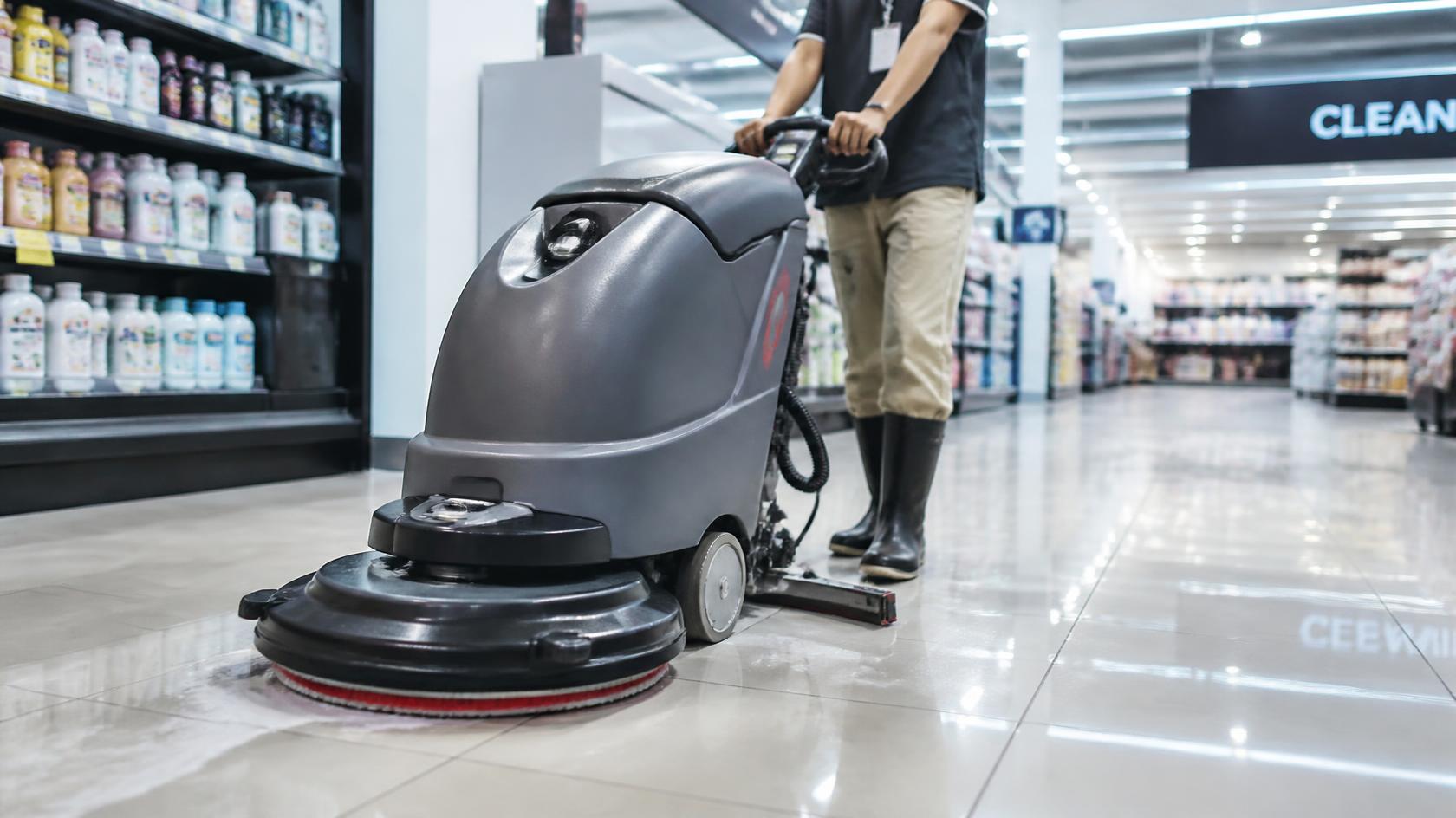
After dwell time, a rotary scrubbing machine with a grout-specific brush head works the loosened contamination out of the grout profile. Manual scrubbing with a grout brush is effective for small areas or targeted spot treatment, but it cannot match the consistent pressure and speed of a machine on large kitchen floors. A professional team cleaning a 40 to 60 square metre kitchen floor will typically spend 20 to 30 minutes on this stage alone.
Stage 3: Hot Water Extraction
This is the stage that separates a genuine deep clean from a surface clean. Hot water extraction uses water heated to between 90 and 130 degrees Celsius injected under high pressure into the grout line, then immediately extracted along with the dissolved contamination into a waste tank. The extraction step is critical because it removes the contamination rather than redistributing it across the floor in dirty mop water.
Pro tip: Ask any commercial cleaning contractor you are evaluating whether they use a truck-mounted or portable extraction system and what water temperature their equipment reaches. A contractor who cannot answer that question specifically has likely never used professional extraction equipment on a commercial kitchen floor.
Stage 4: Grout Sealing
Once the grout is clean and fully dry, applying a food-safe penetrating sealer is the final protective step. Epoxy grout sealers provide the most durable protection in commercial kitchen environments because they cure to a hard, non-porous film inside the grout pores. Silicone-based sealers are also effective and easier to apply, though they require reapplication more frequently under heavy kitchen conditions. The sealer must be food-safe rated and compliant with Australian Standards for food contact surfaces.
Cleaning Method Comparison
Not all approaches to tile and grout cleaning deliver the same outcome in a commercial kitchen setting. The table below compares the three most commonly used methods against the criteria that matter for food safety compliance in Melbourne.
| Method | Effectiveness for Embedded Grease | Food Safety Compliance Suitability |
|---|---|---|
| Standard Mopping with Commercial Degreaser | Low. Removes surface contamination only. Does not penetrate grout pores. Redistributes thin grease film across floor surface. | Suitable for daily maintenance only. Does not meet the standard required for periodic deep cleaning under Food Act obligations. |
| Steam Cleaning with Manual Scrubbing | Moderate. Steam softens fat deposits and manual scrubbing helps extraction. Effectiveness depends heavily on dwell time and operator technique. | Suitable as a supplementary method between professional cleans. Insufficient as a standalone method for heavily contaminated kitchen floors. |
| Professional Hot Water Extraction with Alkaline Pre-Treatment | High. Penetrating alkaline degreaser followed by high-temperature extraction removes embedded fats, bacteria, and residue from the full depth of the grout profile. | Best available method for food safety compliance. Produces a verifiable clean that withstands Environmental Health Officer inspection and supports HACCP documentation. |
Common Mistakes Made in Commercial Kitchen Tile Cleaning
A common mistake is using the same mop bucket and mop head for both the general floor area and the high-grease zones near fryers and ranges. The mop absorbs heavy fat contamination at the fryer and redistributes it across the rest of the floor, leaving a thin grease film everywhere that dries to a slip hazard and a bacterial substrate.
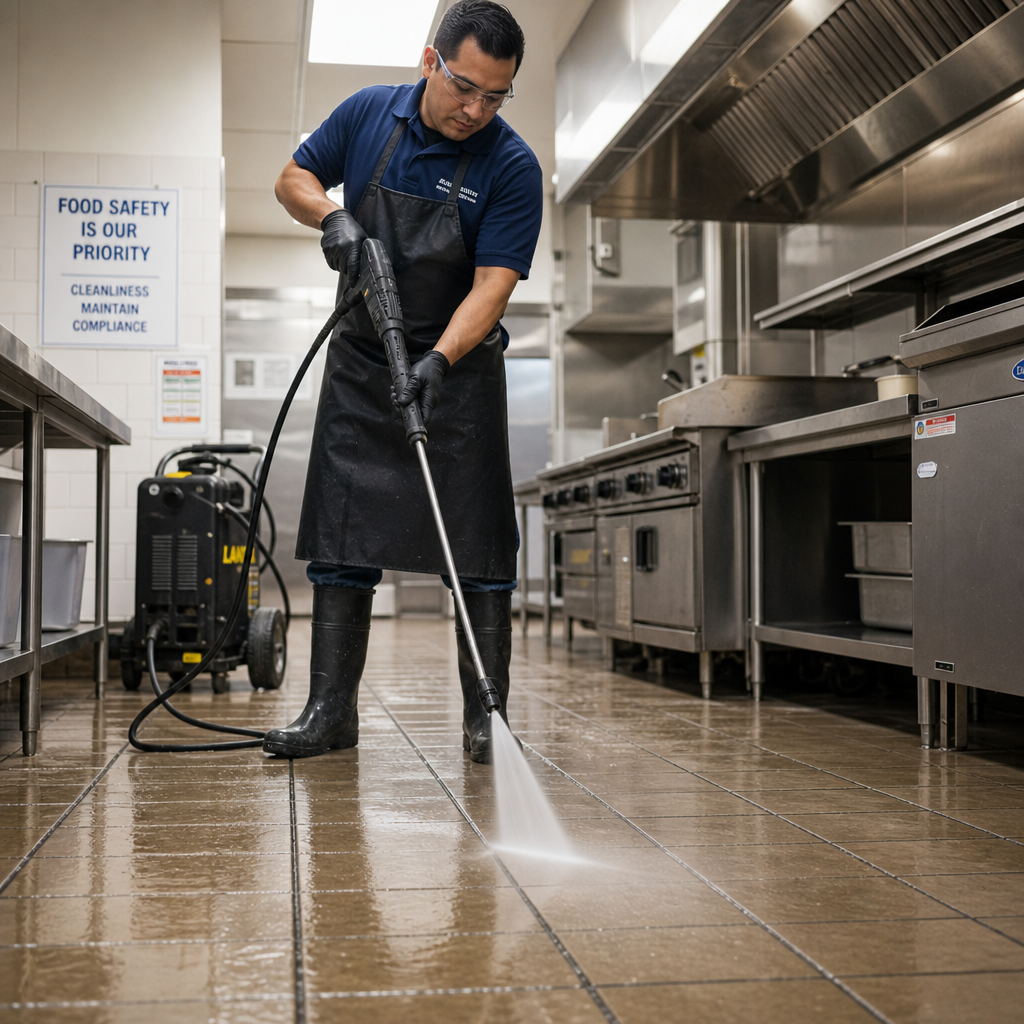
Another mistake is scheduling professional cleaning during trading hours or immediately before service. Tile and grout cleaning requires adequate drying time, particularly if a sealer is being applied. In practice, most Melbourne commercial kitchens should schedule deep tile cleaning during a full shutdown period, typically overnight or during a planned closure day. Attempting to run a service on freshly sealed grout that has not fully cured is a slip risk and compromises the sealer’s performance.
Operators also frequently underestimate the condition of grout under floor mats and equipment feet. Anti-fatigue mats in commercial kitchens trap moisture and food debris against the tile surface. When those mats are lifted for the first time in three or four months, the grout underneath is almost always in significantly worse condition than the surrounding open floor. Any credible deep clean must include lifting and cleaning beneath all floor mats and moveable equipment.
Pro tip: Schedule tile and grout cleaning at the same time as your routine equipment deep clean. This allows moveable appliances to be shifted for cleaning underneath, and it means you are not disrupting kitchen operations twice for what should be a coordinated process.
How Often Should You Schedule Professional Tile and Grout Cleaning
The data consistently shows that operators who schedule professional deep cleaning reactively, meaning only when surfaces look visibly dirty, are already well past the point where bacteria colonies have established in the grout. By the time grout looks dark and discoloured, contamination levels are significant. Scheduling should be proactive and tied to kitchen volume and type, not visual appearance alone.
For high-volume Melbourne commercial kitchens operating six to seven days a week, including restaurant kitchens, hotel food and beverage operations, and aged care facility kitchens, a professional deep clean every three to four months is the appropriate baseline. For lower-volume operations such as school canteens, office kitchen facilities, and medical centre kitchenettes, every five to six months is a defensible schedule provided daily maintenance cleaning is rigorous.
Any food safety incident, EHO improvement notice, or change in kitchen use should trigger an immediate unscheduled deep clean rather than waiting for the next scheduled appointment. The same applies after significant building or renovation work, where dust and debris can contaminate grout lines throughout the kitchen.
Choosing the Right Commercial Cleaner in Melbourne
The Melbourne commercial cleaning market includes many operators who offer tile and grout cleaning as a line item without having the equipment or training to deliver a food-safe result. There are specific questions that separate credible specialists from generalists who will apply a surface clean and call it done.
Ask whether the contractor carries public liability insurance specific to food premises cleaning. Ask whether they have experience cleaning under food safety frameworks and whether they can provide documentation of their cleaning process for your HACCP records. A contractor who hesitates on either question is not the right fit for a food-regulated environment.
Vibrant Property Services operates across Melbourne and surrounding suburbs with direct experience in food safety cleaning Melbourne environments including aged care facility kitchens, hotel food service areas, and school canteen facilities. Their tile and grout restoration service uses commercial-grade hot water extraction and food-safe sealing products designed specifically for high-traffic food preparation environments. You can review their full scope of services at vibrantproperty.com.au.
When comparing providers, also check whether they carry TGA-listed or food-safe rated cleaning products. Using industrial degreasers that are not food-safe rated in a kitchen environment is itself a compliance risk, separate from the cleaning outcome. Any contractor working in your kitchen should be able to produce Safety Data Sheets for every product they use.
Frequently Asked Questions
How long does professional tile and grout cleaning take in a commercial kitchen?
A typical commercial kitchen floor of 40 to 80 square metres takes between two and four hours for a full professional deep clean including pre-treatment, mechanical agitation, hot water extraction, and grout sealing. Larger or more heavily contaminated kitchens take longer. Drying time for the grout sealer adds a further two to four hours before the floor should be in full operation, so most jobs are best scheduled for overnight completion.
Can tile and grout cleaning be done while the kitchen is still operating?
No. The cleaning process requires chemical dwell time, wet floors during extraction, and curing time for sealers. Operating a kitchen during or immediately after a professional tile and grout clean creates slip hazards, contamination risk from kitchen activity, and compromises the sealer cure. Schedule all deep tile cleaning during a full kitchen shutdown.
What is the difference between tile cleaning and grout restoration?
Tile cleaning removes surface contamination from the tile face. Grout restoration is a more intensive process that addresses grout which has darkened, cracked, or deteriorated beyond the point where cleaning alone restores it. Grout restoration may involve re-colouring with a grout dye or, in severe cases, grinding out and re-grouting damaged sections. In commercial kitchens, the distinction matters because damaged grout cannot be sealed effectively and must be restored before a cleaning program can maintain compliance.
Does professional grout sealing make daily cleaning easier?
Yes, measurably so. A freshly sealed grout line resists fat absorption and moisture penetration, which means daily degreaser mopping removes contamination more effectively rather than pushing it into the grout pores. Operators who maintain a sealed grout surface with regular professional deep cleans typically see longer intervals between restorations compared to unsealed grout that is cleaned more frequently but without sealing.
Are there food-safe grout sealers approved for use in Melbourne commercial kitchens?
Yes. Penetrating epoxy and silicone-based grout sealers that are certified food-safe are available and appropriate for commercial kitchen use in Victoria. The product must be non-toxic once cured and should comply with AS/NZS standards for food contact surfaces. Your cleaning contractor should specify the product by name and provide its Safety Data Sheet for your records. Never accept a grout sealer application without knowing exactly what product was used.
How does tile and grout cleaning connect to HACCP compliance?
Under a Hazard Analysis Critical Control Point framework, food premises must identify and control biological hazards. Grout contaminated with bacteria or mould represents a direct biological hazard source in the food preparation environment. Professional deep cleaning with documented processes and products provides evidence that the hazard is being actively controlled. Cleaning records, product data sheets, and contractor certifications all form part of the HACCP documentation that a Victorian EHO may request during an inspection.
Have you recently had your commercial kitchen tiles and grout professionally deep cleaned, and did it change how your team approaches daily maintenance? We would like to hear what worked and what did not.
References
- Food Standards Australia New Zealand, the national authority for Australia’s food safety standards including requirements for food premises cleanliness
- Victorian Department of Health, guidance and regulatory information for food businesses operating in Victoria under the Food Act
- WorkSafe Victoria, occupational health and safety obligations for commercial kitchen operators including slip hazard management
- Statista, data and statistics on the commercial cleaning industry including market size, frequency benchmarks, and sector breakdowns
- Forbes, business and operational insights relevant to facilities management and commercial property maintenance standards