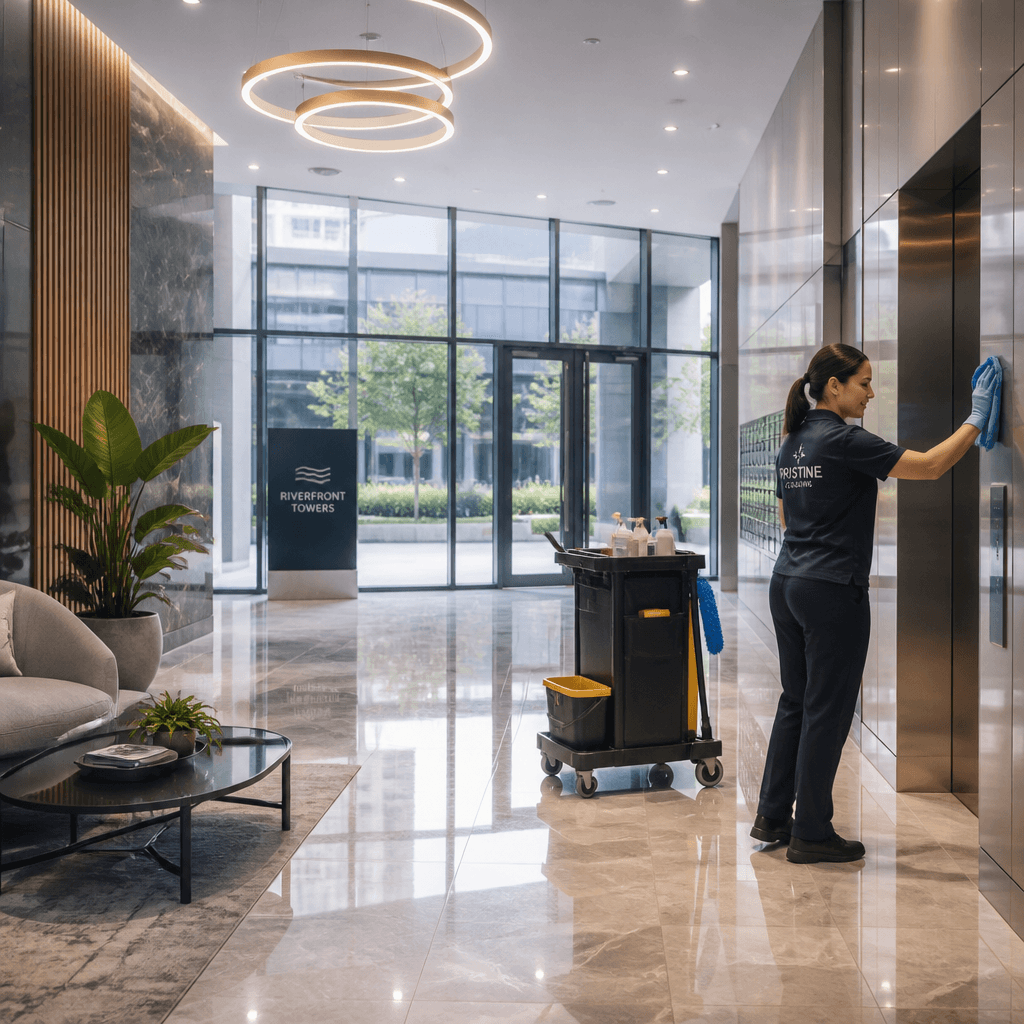

Your carpets see everything. Foot traffic from staff and clients, spills in break rooms, mud tracked in from Melbourne’s unpredictable weather, and allergens that build up invisibly over months. When it’s finally time to clean them properly, most property managers and homeowners face the same question: should you go with carpet steam cleaning in Melbourne, or is dry cleaning the smarter call for your situation? The answer is not the same for every property, and choosing the wrong method wastes money and can even damage your carpet. This guide cuts through the noise so you can make the right call the first time.
Table of Contents
- Quick Takeaways
- What Is Carpet Steam Cleaning?
- What Is Dry Carpet Cleaning?
- Steam vs. Dry: Pros and Cons Side by Side
- Which Method Suits Your Property Type?
- Carpet Types and Method Compatibility
- Melbourne’s Climate and Drying Time
- Cost and Frequency: What to Expect
- Frequently Asked Questions
- References
Quick Takeaways
| Key Insight | Explanation |
|---|---|
| Steam cleaning reaches deeper | Hot water extraction pushes cleaning solution into the base of carpet fibers, not just the surface, making it the superior choice for deep-seated dirt, pet accidents, and allergen removal. |
| Dry cleaning is faster to use afterward | Because dry cleaning uses minimal moisture, carpets are typically ready for foot traffic within an hour. Steam-cleaned carpets can take several hours to dry fully. |
| Melbourne’s humidity affects drying time | On overcast or high-humidity Melbourne days, steam-cleaned carpets can take longer to dry. Ventilation planning is essential, especially in enclosed commercial spaces. |
| High-traffic commercial areas benefit most from steam | Offices, childcare centers, aged care facilities, and medical environments accumulate bacteria and allergens that only high-temperature extraction reliably removes. |
| Dry cleaning is best for maintenance cleans | If carpets are cleaned regularly and not heavily soiled, dry cleaning is an efficient, low-disruption option for ongoing maintenance between deeper steam cleans. |
| Not all carpet types tolerate steam | Natural fiber carpets such as wool can shrink or warp with excessive moisture. Always confirm carpet type before booking a steam clean. |
| Professional equipment beats rental machines | Consumer hire machines lack the extraction power of commercial-grade units. Under-extraction leaves carpets wet for too long, encouraging mold growth. |
What Is Carpet Steam Cleaning?
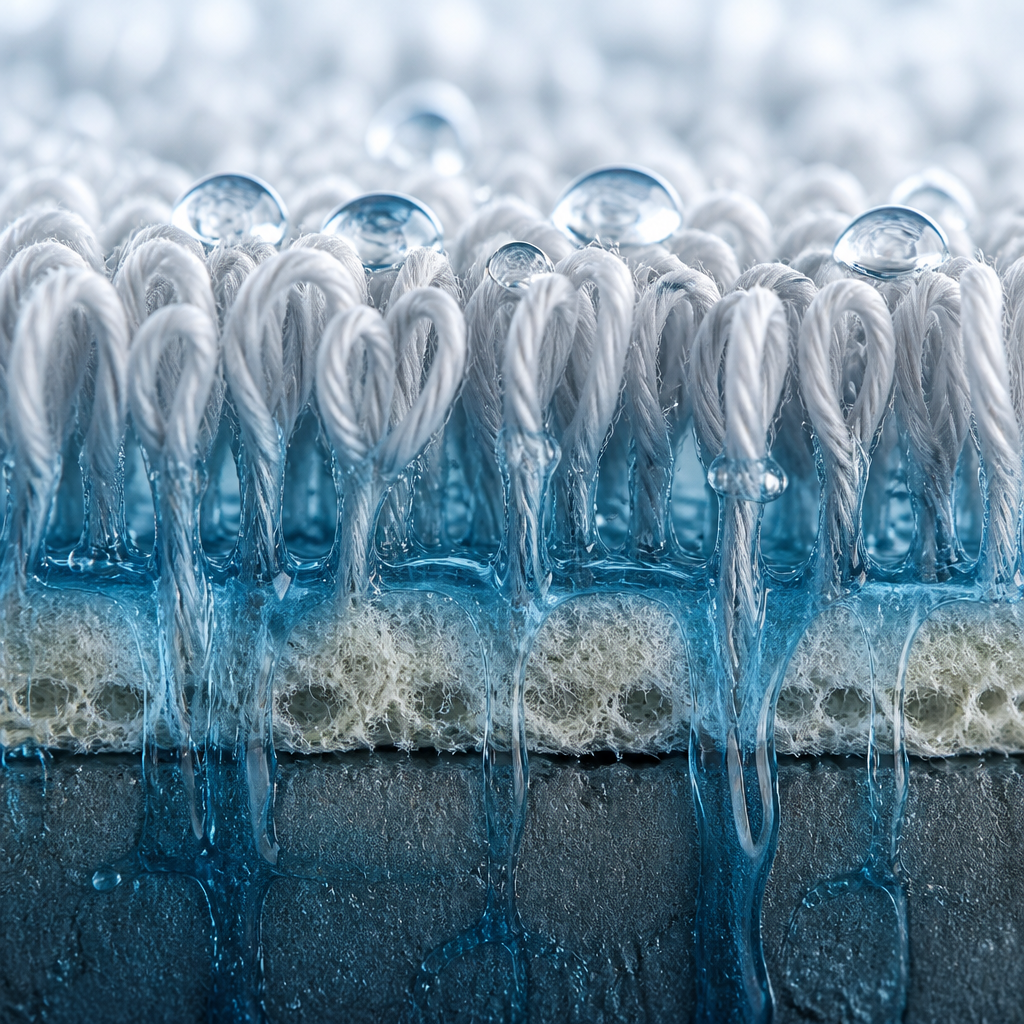
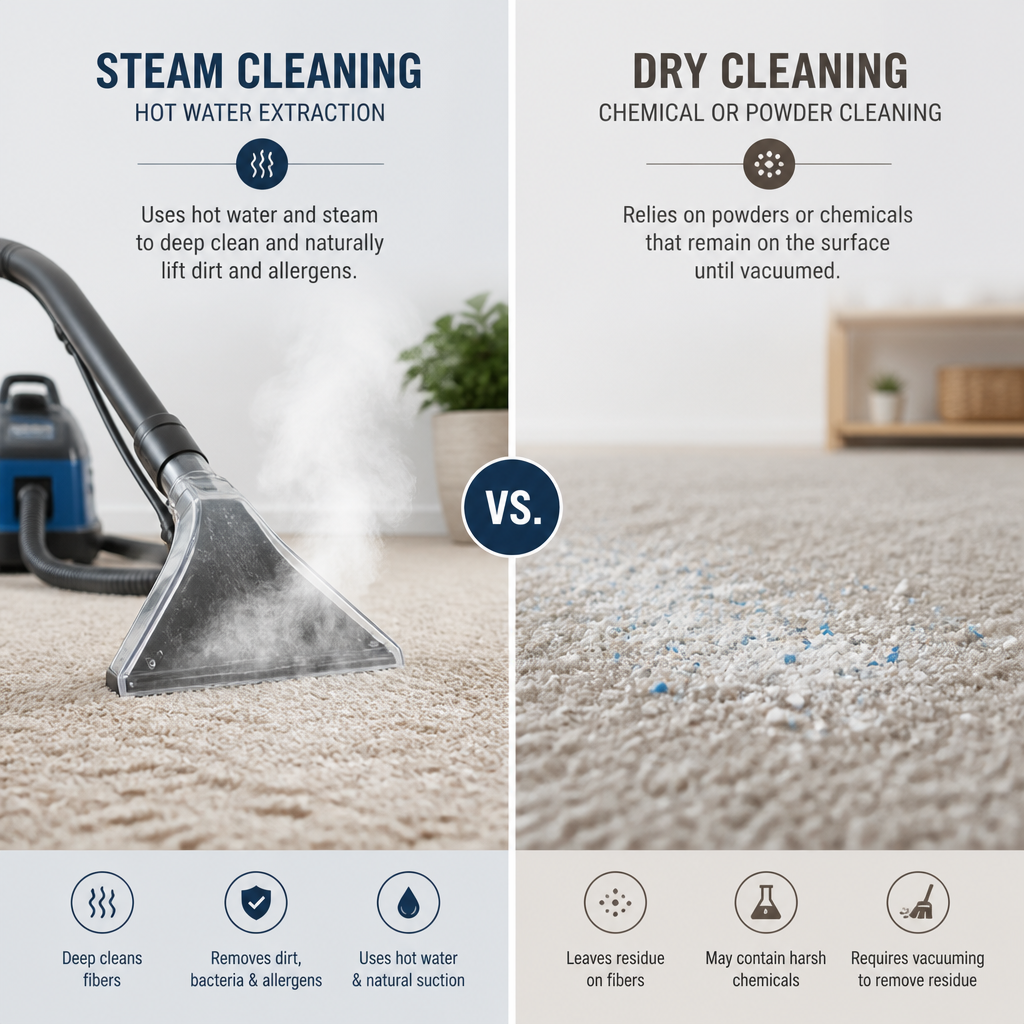
Despite what the name suggests, carpet steam cleaning does not use pure steam. The correct technical term is hot water extraction. A cleaning solution is mixed with heated water, injected deep into the carpet fibers under pressure, and then extracted immediately using a powerful vacuum system.
The process starts with a pre-treatment of stains and heavily soiled zones, followed by the hot water injection, and finishes with high-powered extraction that pulls out the water along with dissolved dirt, dust mites, bacteria, and cleaning residue. The result is a carpet that is cleaned from the base of the pile upward, not just across the surface.
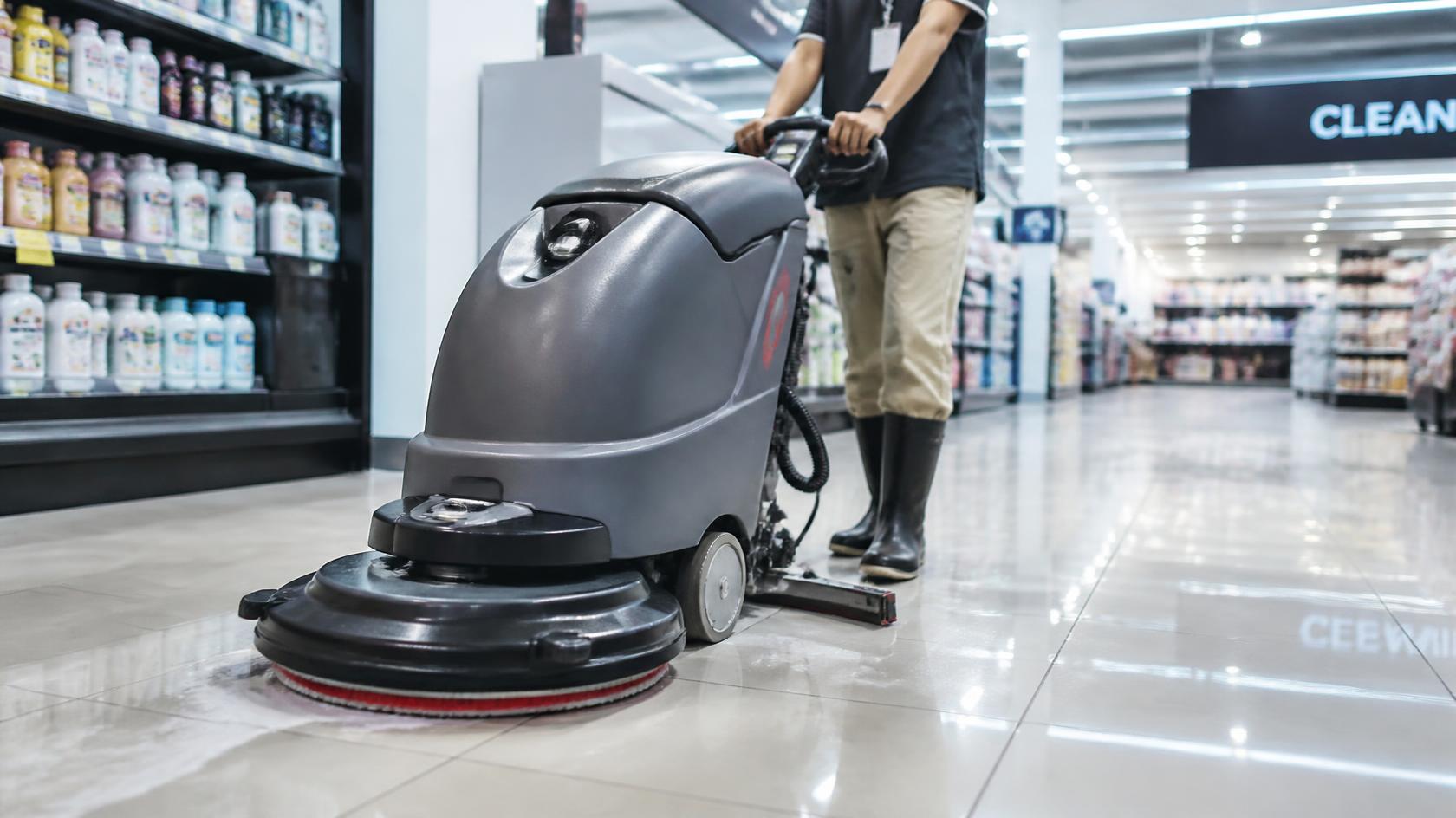
For properties like childcare centers, aged care facilities, and medical environments, where hygiene standards are non-negotiable, this depth of cleaning is not optional. It is the baseline expectation. Vibrant Property Services uses commercial-grade hot water extraction equipment that outperforms the underpowered hire machines available at supermarkets, which often leave carpets saturated and slow to dry.
How the Hot Water Extraction Process Works
A technician pre-treats any visible staining or high-soil zones before the main clean begins. Hot water mixed with a cleaning agent is then injected deep into the carpet pile. Immediately after injection, a powerful vacuum draws the water back out, taking dissolved grime, allergens, and bacteria with it.
The key difference between professional and DIY attempts is extraction power. Consumer machines often leave too much water behind, which extends drying time and creates conditions for mold and mildew. Professional units extract far more moisture, which shortens drying time to roughly two to four hours under normal Melbourne conditions, or faster with good ventilation.
Pro tip: After a professional steam clean, open windows and run ceiling fans or air conditioning to accelerate drying. In Melbourne’s cooler months, a split-system running on fan mode works better than leaving carpets to dry in still, cool air.
What Is Dry Carpet Cleaning?
Dry carpet cleaning uses very little moisture. The most common version involves applying a specialized cleaning compound or powder to the carpet. This compound is designed to absorb oils, dirt, and grime from the fibers. A counter-rotating brush machine works the compound into the pile, and then vacuuming lifts the compound along with the trapped debris.
The practical appeal is obvious: carpets can typically be used again within an hour. For a busy hotel lobby, a supermarket, or a school corridor that cannot be closed for half a day, that turnaround time matters enormously.
However, dry cleaning has a hard ceiling on what it can achieve. It cleans the surface and upper portion of the carpet pile effectively, but it does not penetrate to the base of the fibers. Allergens, bacteria, and deep-set stains that have worked their way down to the carpet backing are largely untouched by a dry clean.
When Dry Cleaning Is the Right Tool
Dry cleaning earns its place as a maintenance clean between periodic deep steam cleans. If carpets are serviced regularly on a scheduled program, a dry clean every few weeks can keep surface soiling under control and extend the period between full hot water extractions.
It is also the correct choice for delicate natural fiber carpets where excessive moisture poses a real risk of shrinkage or distortion. In those situations, a low-moisture or encapsulation method is the professional default.
Choosing a carpet cleaning method based purely on price or convenience, rather than on what the carpet actually needs, is one of the most reliable ways to shorten its lifespan and spend more money over time.
Steam vs Dry carpet cleaning : Pros and Cons Side by Side
The comparison below is built for Melbourne property managers and homeowners who need a practical reference, not a textbook overview. Real cleaning decisions come down to the factors in this table.
| Factor | Carpet Steam Cleaning (Hot Water Extraction) | Dry Carpet Cleaning |
|---|---|---|
| Cleaning depth | Deep, reaches carpet backing and removes embedded soil | Surface and upper pile only |
| Allergen and bacteria removal | Highly effective due to heat and extraction | Limited, does not reliably remove deep allergens |
| Drying time | 2 to 6 hours depending on ventilation and humidity | Under 1 hour, often immediate |
| Suitability for heavy staining | Excellent, especially with pre-treatment | Poor to moderate for heavy or old stains |
| Risk to delicate carpet types | Moderate risk for natural fibers if not managed carefully | Lower risk for moisture-sensitive carpets |
| Best use case | Periodic deep clean, post-event, high-hygiene environments | Routine maintenance, low-disruption scheduling |
| Recommended frequency | Every 6 to 12 months for commercial, annually for low-traffic residential | Monthly to quarterly as part of a maintenance program |
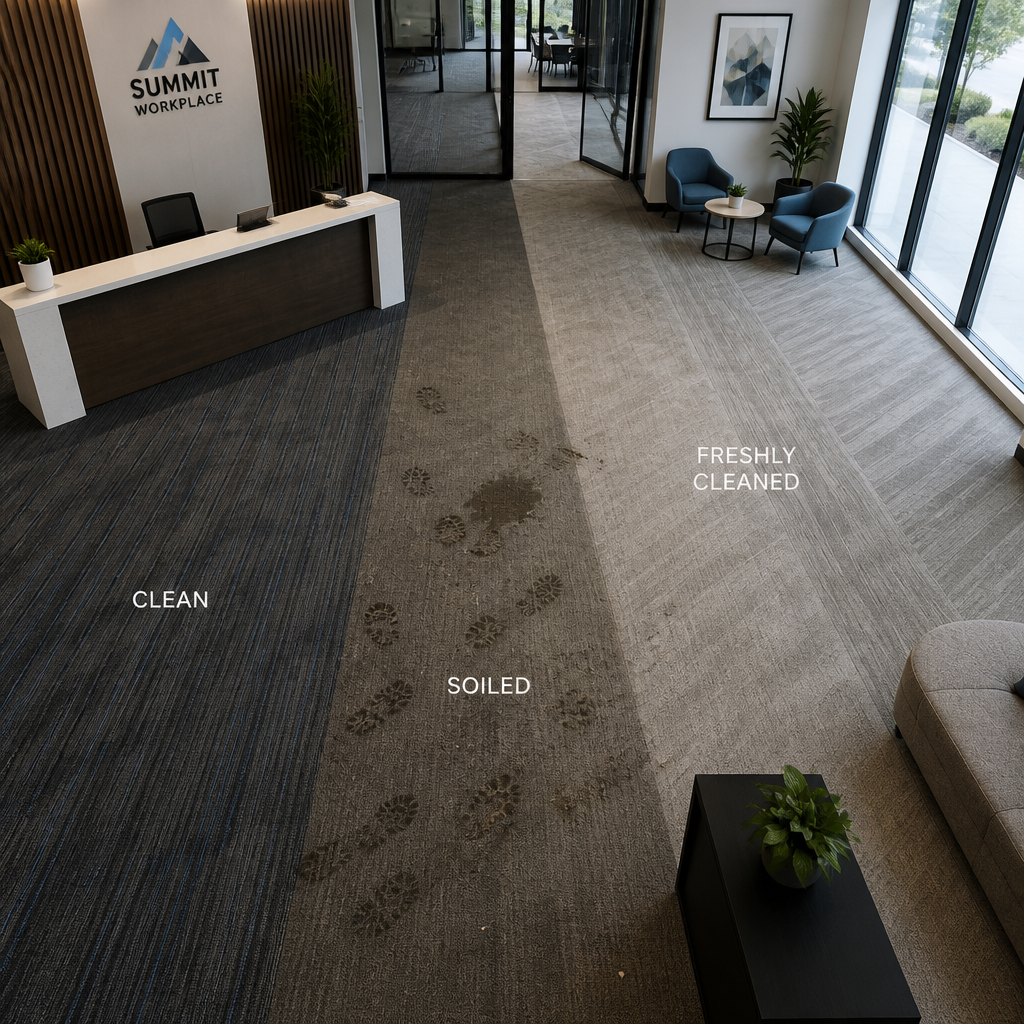
The clearest takeaway: these two methods are not competitors. They are different tools for different jobs. A property that uses only dry cleaning is likely under-servicing its carpets. A property that uses only steam cleaning and skips routine maintenance between deep cleans is doing the same.
Which Method Suits Your Property Type?
The right cleaning method depends heavily on how a space is used, who uses it, and what standards it is held to. Generic advice falls apart here. Below is a breakdown by property type that reflects the real environments Vibrant Property Services works in across Melbourne.
Childcare Centers and Schools
These environments carry a genuine hygiene obligation. Children spend time on the floor, and carpets in play areas accumulate bacteria, allergens, and biological material at a rate that surface cleaning simply cannot address. Hot water extraction is the only method that meets the hygiene standard these facilities require. Dry cleaning can be used between deep cleans to manage surface soiling, but it cannot substitute for periodic steam cleaning.
Scheduling is the practical challenge. Steam cleaning in a childcare center needs to happen after hours or on weekends to allow sufficient drying time before children return. This is exactly where a professional service with flexible scheduling earns its value.
Aged Care and Medical Facilities
The same logic applies with even higher stakes. Residents and patients in aged care and medical environments have elevated sensitivity to dust mites, mold, and airborne allergens. The heat used in hot water extraction is a genuine advantage here because it targets biological contaminants that chemical compounds alone may not eliminate.
A common mistake in aged care cleaning programs is treating carpets as a lower priority because residents may not directly handle them. In reality, floor-level allergens directly affect air quality in enclosed, climate-controlled spaces.
Hotels and Commercial Offices
Hotels face a specific challenge: guest rooms and corridors cannot be out of service for extended periods. This is a case where a hybrid approach is often the most practical. High-traffic areas like corridors and lobbies benefit from regular dry cleaning or encapsulation to manage surface soiling, with full hot water extraction scheduled seasonally or during lower-occupancy periods.
Office environments with predominantly synthetic carpet tiles and moderate traffic can follow a similar hybrid program. Carpet tiles have the added advantage that individual tiles can be replaced if a stain or damage is beyond recovery, which shifts some of the maintenance calculation.
Residential Homes
For most Melbourne homeowners, a full residential carpet cleaning with hot water extraction once or twice a year is the right baseline. Homes with pets, young children, or allergy sufferers should lean toward the higher frequency. Between professional cleans, regular vacuuming and prompt attention to spills are more effective than a budget dry clean that leaves deep-set grime in place.
Pro tip: If you are preparing a property for lease or sale in Melbourne, always book a professional steam clean rather than a dry clean. Agents and prospective tenants notice the difference, and the fresh, deep-cleaned result is worth the slightly longer dry time.
Carpet Types and Method Compatibility
The carpet itself has a vote in this decision. Using the wrong method on the wrong fiber type can cause irreversible damage, which is an avoidable and expensive mistake.
Synthetic Carpets: Nylon, Polyester, and Polypropylene
Most commercial carpets in Melbourne offices, hotels, and schools are made from synthetic fibers. These handle hot water extraction very well. They resist shrinkage, tolerate the cleaning agents used in the process, and dry at a reasonable rate. Steam cleaning is the default recommendation for synthetic carpets with moderate to heavy soiling.
Natural Fiber Carpets: Wool, Sisal, and Jute
Natural fiber carpets, particularly wool, are moisture-sensitive. Excessive water can cause fibers to shrink, back-to-face separation, or pile distortion. This does not mean steam cleaning is impossible on wool, but it does mean the process needs to be handled carefully, with controlled moisture levels and thorough extraction. In practice, many professional cleaners use a low-moisture or dry cleaning method on pure wool carpets as the safer default.
A common mistake is assuming that because a carpet looks robust, it can handle any cleaning method. Always check the manufacturer’s care label or ask your cleaning provider before booking.
Melbourne’s Climate and Drying Time
Melbourne’s weather deserves a specific mention here because it directly affects one of the most practical considerations in carpet cleaning: drying time after a steam clean.
Melbourne is known for variability. Warm, dry days in summer create ideal conditions for fast drying. Cooler, overcast days in autumn and winter, combined with lower ventilation in sealed buildings, can extend drying times significantly. This is not a reason to avoid steam cleaning in winter. It is a reason to plan ventilation properly and to use a professional service with high-extraction equipment that removes more moisture at the point of cleaning.
Properties with ducted heating can use the system on a low fan setting to assist drying after a steam clean. Properties with no mechanical ventilation on a still winter day should discuss drying strategy with their cleaning provider before the job begins. Getting this wrong leads to damp carpets sitting overnight, which is exactly the condition that promotes mold growth.
Cost and Frequency: What to Expect
Pricing for carpet cleaning in Melbourne varies based on carpet area, soiling level, carpet type, and whether pre-treatment for stains is required. Providing specific price figures here without current market verification would be doing you a disservice. What matters more than any single price point is the cost-per-outcome calculation.
The Real Cost of Under-Cleaning
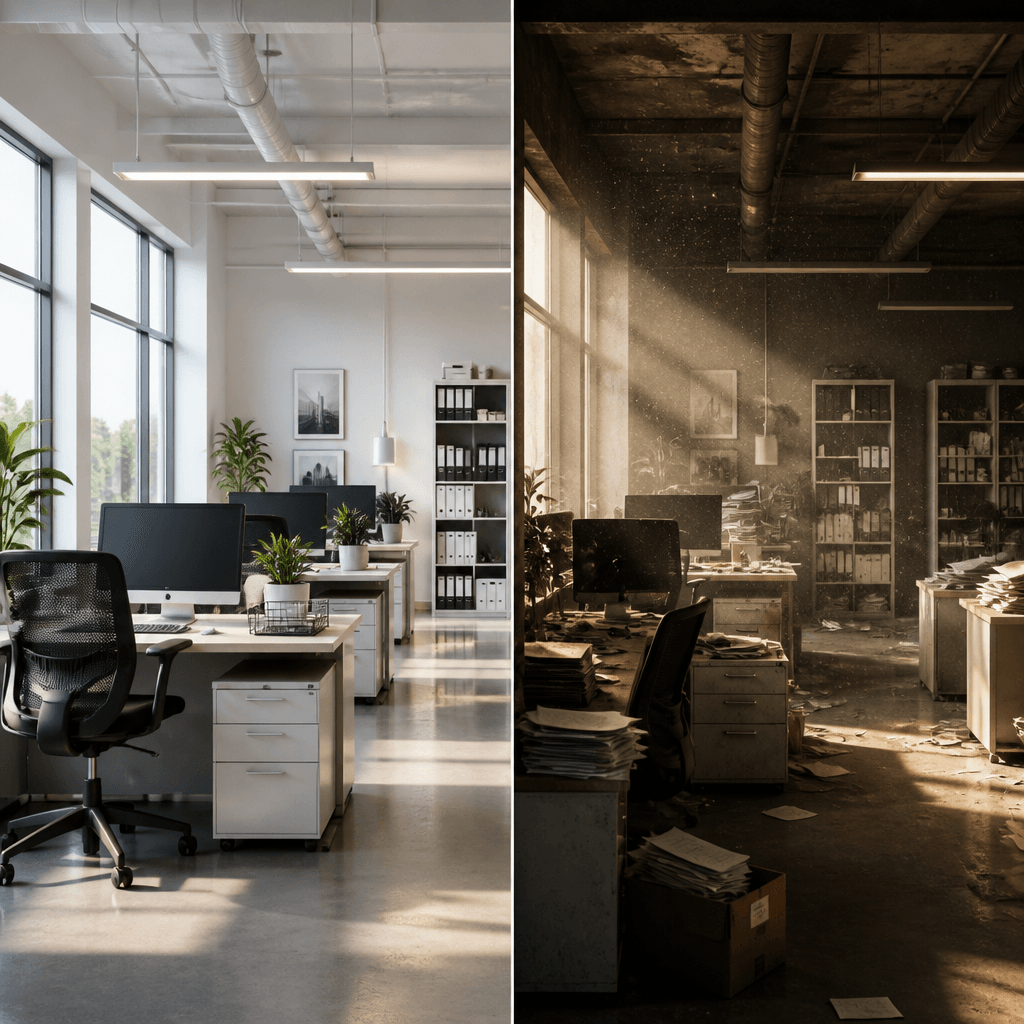
Carpets that are under-serviced do not just look poor. They wear out faster as embedded grit cuts fiber strands with every step. They hold allergens that affect occupant health. And they eventually reach a point where no cleaning method can fully restore them, at which point replacement is the only option.
Commercial carpet replacement in a Melbourne office or childcare center is a significant capital expense. A consistent professional cleaning program, even if it costs more month to month than the bare minimum, almost always costs less over the life of the carpet than reactive, too-little-too-late cleaning.
Recommended Cleaning Schedules by Property Type
For childcare centers and aged care facilities: hot water extraction every three to six months, with routine maintenance cleans in between. For commercial offices and hotels: steam clean every six to twelve months, with dry or encapsulation maintenance on high-traffic zones monthly. For residential properties: steam clean annually as a minimum, or every six months for households with pets, children, or allergy sufferers.
These are starting points, not fixed rules. A property that has been neglected for several years may need an initial deep clean before any maintenance schedule makes sense. Vibrant Property Services can assess current carpet condition and recommend a realistic program rather than a one-size schedule.
Frequently Asked Questions
How long does carpet steam cleaning take to dry in Melbourne?
Under typical Melbourne conditions with good ventilation, professionally steam-cleaned carpets dry in approximately two to four hours. In winter or in poorly ventilated spaces, drying can take up to six hours. Using fans, open windows, or climate control on a fan setting speeds the process significantly. Hire machines from supermarkets extract far less moisture and often leave carpets damp for much longer.
Can steam cleaning damage my carpet?
When done correctly by a professional, hot water extraction does not damage synthetic carpets. The risk arises with natural fiber carpets, particularly pure wool, where excessive moisture can cause shrinkage or distortion. A professional service will assess your carpet type before selecting the appropriate method and moisture level. The greater risk of carpet damage comes from using a hire machine incorrectly or leaving carpets wet for an extended period.
Is dry cleaning good enough for a childcare center or aged care facility?
No. Dry cleaning manages surface soiling and is useful as a maintenance clean between deeper services, but it does not reach the base of carpet fibers where bacteria, dust mites, and allergens accumulate. In environments where hygiene is a regulatory and duty-of-care obligation, hot water extraction is the required standard. Dry cleaning alone does not meet that standard.
How often should commercial carpets in Melbourne be professionally cleaned?
The general recommendation for high-traffic commercial spaces such as offices, hotels, and schools is a full steam clean every six to twelve months, with maintenance cleans in between. Childcare and medical environments typically benefit from a shorter interval of three to six months for deep cleaning. The right frequency depends on foot traffic, soiling rate, and the hygiene standards that apply to your specific environment.
What is the difference between hot water extraction and steam cleaning?
In the carpet cleaning industry, the two terms are often used interchangeably, but there is a technical distinction. True steam cleaning uses steam vapor at very high temperatures with minimal water. Hot water extraction, the method most professional cleaners use, injects heated water mixed with a cleaning solution into the carpet and extracts it immediately. Hot water extraction is the more common and generally more effective of the two for residential and commercial carpet cleaning in Melbourne.
Should I vacuum before a professional carpet cleaning?
Yes. A thorough vacuum before the cleaner arrives removes loose surface debris and allows the cleaning method, whether steam or dry, to focus on embedded grime rather than surface material. Most professional services will vacuum as part of their process, but doing it yourself beforehand improves the overall outcome and is a straightforward way to get more from a professional clean.
Have you had experience with carpet steam cleaning or dry cleaning at your Melbourne property? Share what worked or what you would do differently next time.