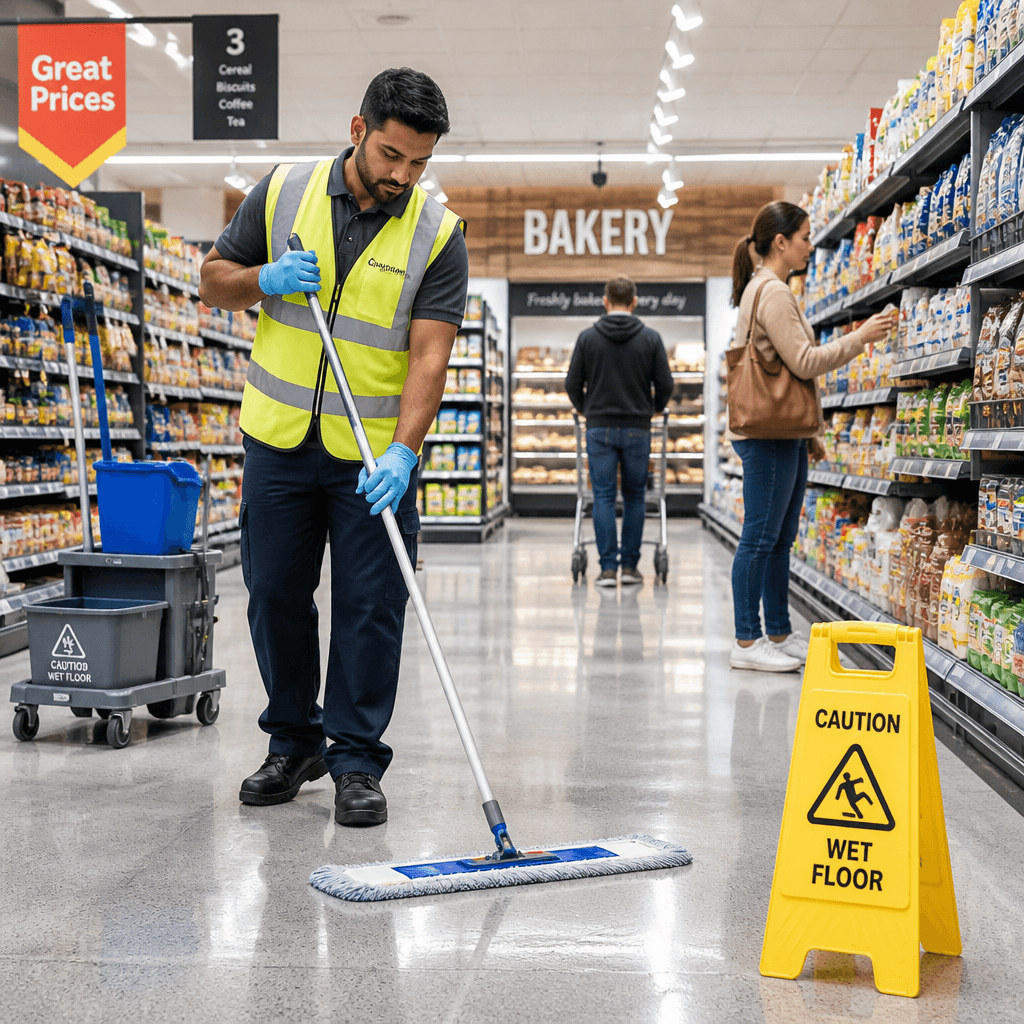

Aged care facilities in Melbourne such as Berwick, Clyde, Pakenham and Glen Waverly operate under some of the strictest hygiene and infection control regulations in Australia, and for good reason.
Residents are among the most immunocompromised members of the community, where a single lapse in cleaning protocol can trigger an outbreak with serious, sometimes fatal, consequences. According to the Australian Institute of Health and Welfare, healthcare-associated infections remain one of the leading preventable causes of harm in residential aged care settings. This is not a space where ‘good enough’ cleaning applies. This article breaks down exactly what compliant aged care cleaning Melbourne looks like, what the regulations demand, and what to look for in a provider.
Table of Contents
- Quick Takeaways
- Why Aged Care Cleaning Is Categorically Different
- The Regulatory Framework Governing Aged Care Hygiene in Australia
- What Nursing Home Cleaning in Melbourne Must Include
- Infection Control Zones and Colour-Coding Systems
- Comparing Cleaning Approaches for Aged Care Environments
- Common Compliance Failures and How to Avoid Them
- Choosing the Right Aged Care Cleaning Provider in Melbourne
- Frequently Asked Questions
- References
Quick Takeaways
| Key Insight | Explanation |
|---|---|
| Compliance is not optional | Aged care providers in Melbourne must meet the Aged Care Quality Standards, which include specific obligations for infection prevention and environmental cleaning. |
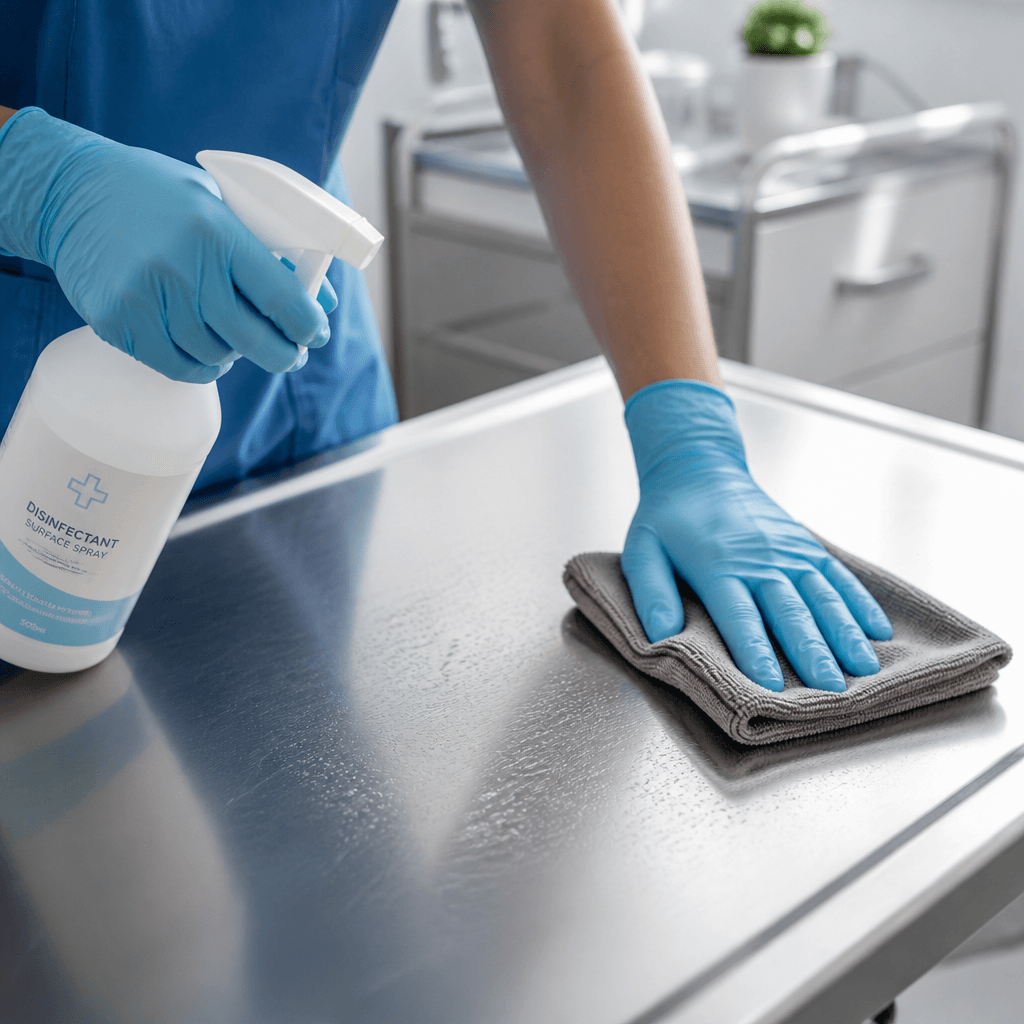
| TGA-approved disinfectants are mandatory | Only disinfectants listed on the Australian Register of Therapeutic Goods (ARTG) should be used in aged care environments. Household-grade products are not sufficient. |
| Colour-coded equipment prevents cross-contamination | Cloths, mop heads, and buckets must be colour-coded by zone. Using a bathroom cloth in a kitchen or dining area is a direct infection control breach. |
| Staff training is a regulatory requirement | Cleaning staff working in aged care must be trained in infection control, not just general cleaning. This is assessed during ACQSC audits. |
| Documentation and audit trails matter | Cleaning schedules, checklists, and incident logs must be maintained and available for inspection by the Aged Care Quality and Safety Commission. |
| High-touch surfaces need more frequent attention | Door handles, call buttons, handrails, and toilet flush plates require disinfection multiple times per day, not just during scheduled cleans. |
| Outbreak protocols must be pre-planned | During COVID-19, influenza, or gastroenteritis outbreaks, facilities must escalate to terminal cleaning procedures immediately. Ad hoc responses are not acceptable. |
Why Aged Care Cleaning Is Categorically Different
Cleaning an aged care facility is not the same as cleaning an office, a warehouse, or even a medical clinic. The residents living in these spaces are often over 75, dealing with multiple chronic conditions, and frequently on immunosuppressive medications. Their ability to fight off a pathogen like Clostridioides difficile, norovirus, or MRSA is significantly reduced compared to the general population.
In practice, this means that cleaning in aged care is a clinical function, not a domestic one. The standard of cleanliness required goes well beyond visual tidiness. Surfaces can look spotless and still harbour dangerous microbial loads if the wrong products, methods, or dwell times were used.
The data consistently shows that environments with weak hygiene practices see significantly higher rates of healthcare-associated infections. A 2022 report from the Australian Commission on Safety and Quality in Health Care noted that residential aged care facilities account for a disproportionate share of infection outbreaks compared to their population size. That is a systems failure, and cleaning is a core part of those systems.
The Regulatory Framework Governing Aged Care Hygiene in Australia
Any provider offering aged care cleaning Melbourne must understand the specific regulatory environment they are operating within. The primary framework is the Aged Care Quality Standards, administered by the Aged Care Quality and Safety Commission (ACQSC). Standard 3 deals directly with personal care and clinical care, and Standard 7 covers the physical environment, which includes cleanliness and infection control.
Separately, the Australian Guidelines for the Prevention and Control of Infection in Healthcare (published by the National Health and Medical Research Council) set the clinical baseline for infection control practices. These guidelines cover hand hygiene, personal protective equipment, standard and transmission-based precautions, and environmental cleaning requirements.
What the ACQSC Actually Assesses
During site assessments, ACQSC reviewers do not just look at whether a facility appears clean. They review cleaning schedules, ask staff about protocols, check that products are correctly labelled and stored, and assess whether outbreak management procedures are documented and practised.
A common mistake is treating cleaning compliance as a documentation exercise. Facilities that keep good records but have poor on-the-ground practices will still fail assessments when auditors observe cleaning being done incorrectly in real time. Documentation supports compliance. It does not substitute for it.
State-Level Obligations in Victoria
In Victoria, facilities must also comply with the Public Health and Wellbeing Act 2008, which gives the Department of Health authority to investigate and respond to infectious disease outbreaks. This adds a second layer of accountability that goes beyond Commonwealth aged care legislation. A Melbourne facility that mismanages an outbreak can face action from both the ACQSC and the Victorian Department of Health simultaneously.
What Nursing Home Cleaning in Melbourne Must Include
A compliant nursing home cleaning Melbourne program must address several distinct categories of spaces and tasks. Collapsing everything into a single generic schedule is a compliance failure waiting to happen.
Resident Rooms and Ensuite Bathrooms
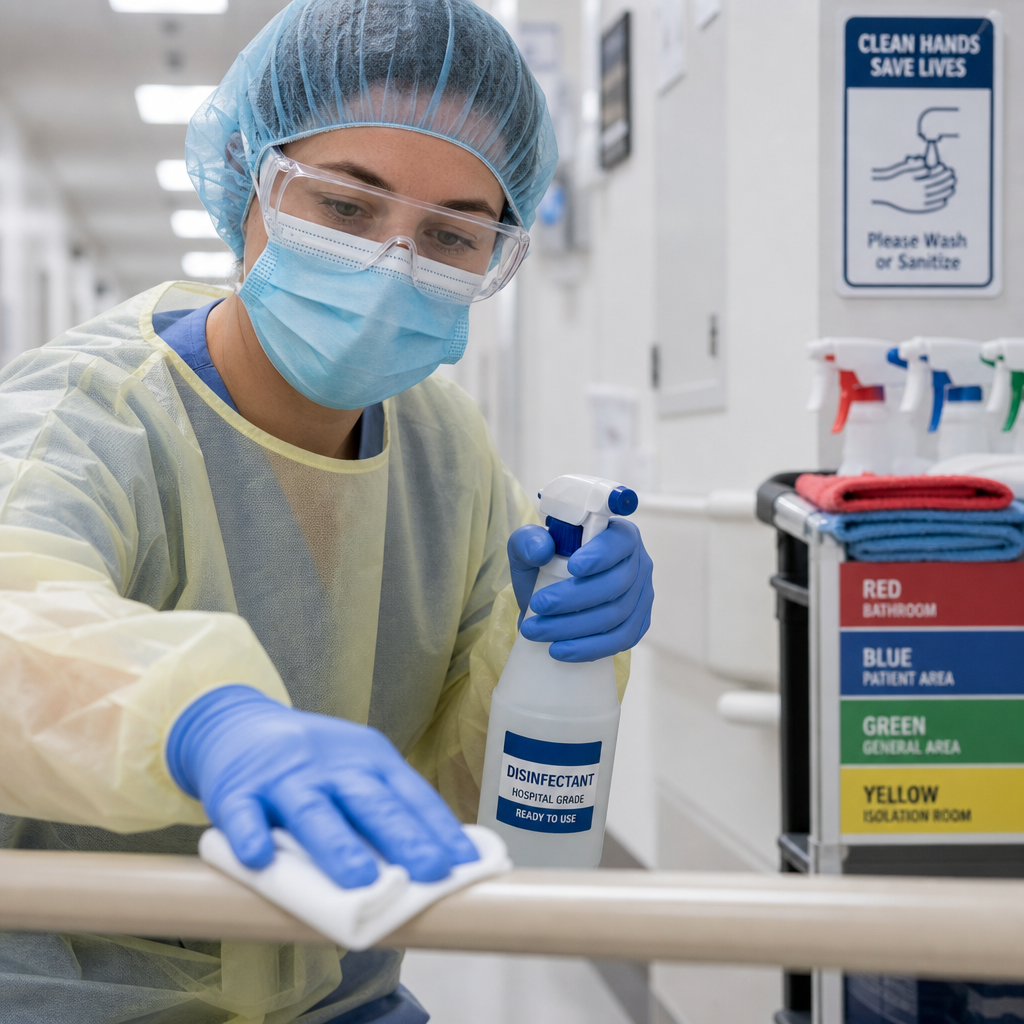
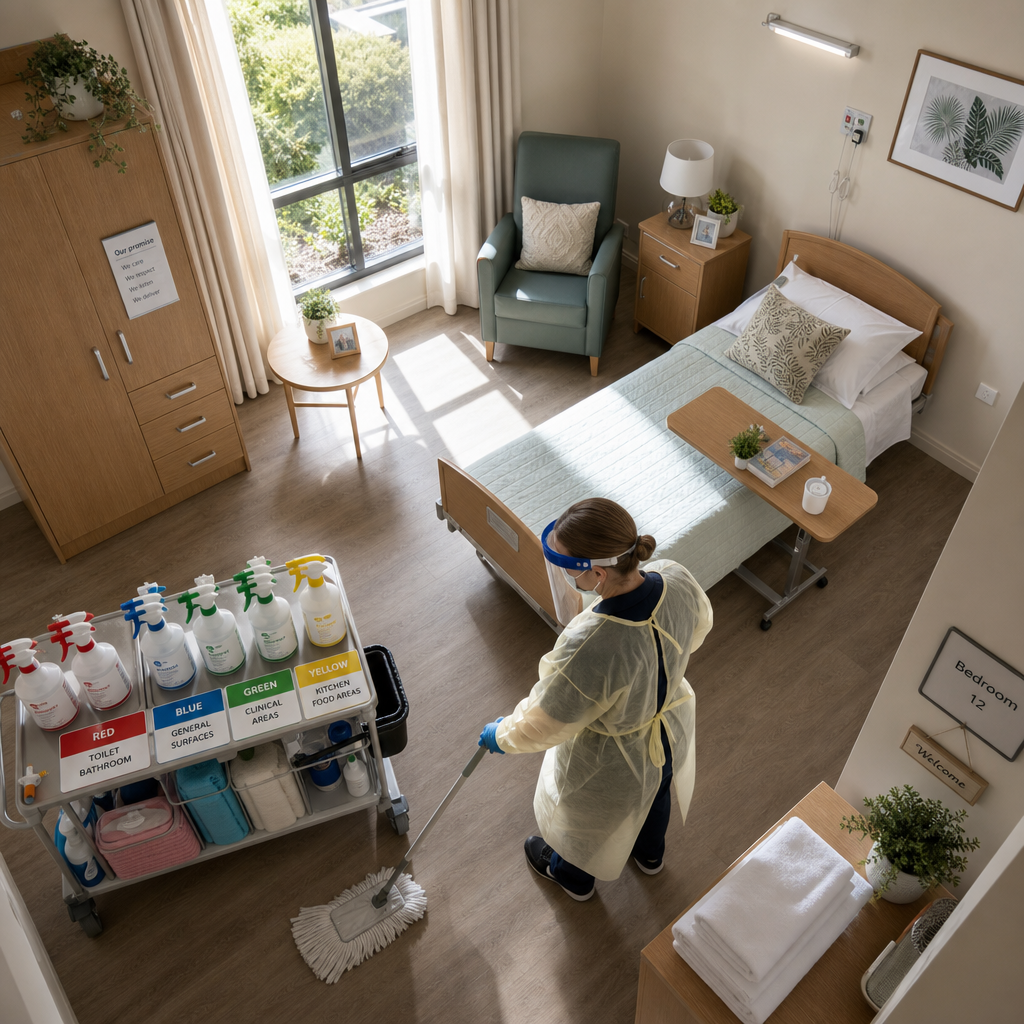
These are the highest-priority zones. Resident rooms must be cleaned daily, with ensuite bathrooms receiving disinfection of all contact surfaces at every clean. During isolation periods, rooms require terminal cleaning with TGA-listed hospital-grade disinfectants. Mop heads and cloths used in these spaces must not be reused in other zones without laundering at the correct temperature (typically above 60 degrees Celsius).
Communal Dining and Living Areas
Tables, chairs, and shared surfaces in dining rooms need disinfection before and after meals. High-traffic common areas like lounges and TV rooms require at minimum twice-daily cleaning of high-touch surfaces, with a full clean at the end of each day.
Clinical and Medication Areas
Clinical spaces within aged care facilities, including medication rooms and treatment areas, must follow the same infection control standards as medical facilities. This means using clinical-grade disinfectants, maintaining a documented cleaning log, and ensuring cleaners working in these areas have received relevant infection control training.
Pro tip: When reviewing a cleaning contract for an aged care facility, ask specifically which TGA-registered products will be used and at what dilution ratios. A provider who cannot answer this question precisely is not qualified to work in this environment.
Infection Control Zones and Colour-Coding Systems
Colour-coded cleaning equipment is a non-negotiable element of aged care hygiene standards in Australian facilities. The system exists to prevent microorganisms from being transferred between high-risk and low-risk areas via contaminated cleaning equipment.
The most widely adopted system in Australian healthcare and aged care settings uses the following colour assignments: red for toilet and bathroom areas, yellow for isolation rooms, blue for general areas including bedrooms and offices, and green for food preparation and kitchen surfaces. Some facilities add additional colours for specific zones based on their layout and risk assessment.
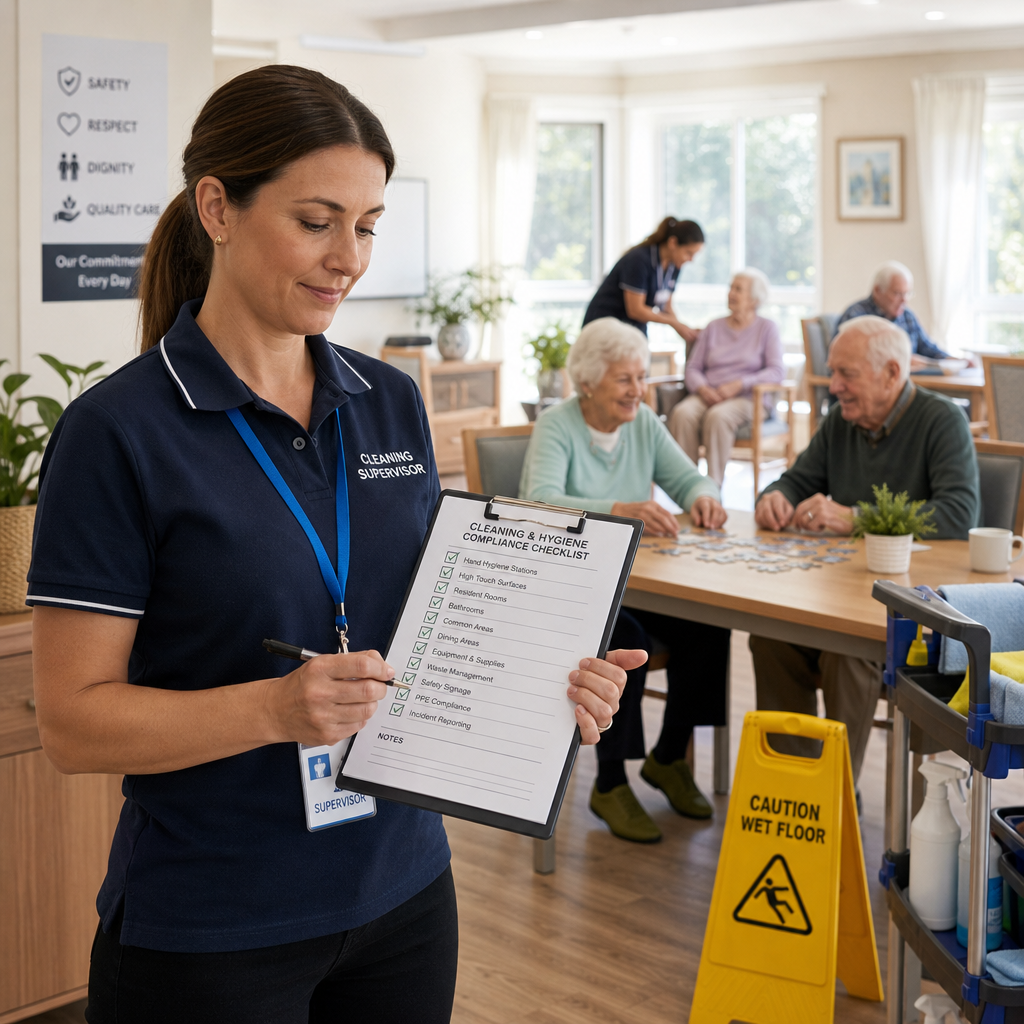
In practice, the colour-coding system only works if it is consistently enforced and if every cleaner, including casual and agency staff, understands it and applies it without exception. This is a training and supervision issue as much as it is an equipment issue. Facilities should verify that any external cleaning provider conducts site-specific induction training that covers the facility’s colour-coding map before any cleaner sets foot on the floor.
“Environmental cleaning is one of the most important and most often underestimated elements of infection prevention in healthcare settings. It is a system, not a task.” – Australian Commission on Safety and Quality in Health Care, National Safety and Quality Health Service Standards.
Comparing Cleaning Approaches for Aged Care Environments
Not all cleaning approaches deliver the same level of protection. The table below compares three commonly used approaches to cleaning management in aged care facilities across Melbourne.
| Approach | Compliance Suitability | Key Limitations |
|---|---|---|
| In-house cleaning team (untrained) | Low. Rarely meets ACQSC documentation and training requirements without significant investment in upskilling and supervision. | High turnover, inconsistent protocols, no outbreak escalation capacity, liability sits entirely with the facility. |
| Generic commercial cleaning contractor | Moderate at best. Products and methods designed for offices or retail will not meet clinical-grade requirements for aged care. | No infection control training, wrong product category, no understanding of ACQSC audit requirements, no isolation or outbreak protocols. |
| Specialist aged care cleaning provider (e.g., Vibrant Property Services) | High. Providers with specific aged care experience use TGA-listed products, maintain compliance documentation, train staff in infection control, and can implement outbreak protocols immediately. | Higher cost than generic providers, but the risk-adjusted cost comparison strongly favours specialist engagement. |
The comparison above is not close. Facilities that use generic commercial cleaners in aged care environments are accepting regulatory and reputational risk that is simply not justified. The cost difference between a generic provider and a specialist provider is a fraction of the cost of a single reportable incident, a failed ACQSC audit, or a media-reported outbreak.
Common Compliance Failures and How to Avoid Them
After more than 15 years working in commercial and specialist cleaning across Melbourne, the compliance failures seen in aged care settings follow recognisable patterns. They are almost never the result of one catastrophic decision. They accumulate through small, repeated compromises.
Using Consumer-Grade or Unregistered Disinfectants
This is the most common and most serious product-related failure. Supermarket disinfectants, even those marketed as antibacterial, are not TGA-listed for use in healthcare settings. They lack the validated efficacy data required against the specific pathogens of concern in aged care, including C. diff spores, which require a sporicidal agent, not just a general disinfectant.
Inadequate Dwell Time
Even when the correct product is used, it must be left on the surface for the contact time specified on its TGA registration. Spray-and-immediately-wipe is not disinfection. It is surface wetting. A common mistake is training staff on product selection without training them on application technique and dwell time requirements.
Skipping Isolation Room Procedures
When a resident is placed in isolation due to a respiratory or gastrointestinal illness, the cleaning protocol for that room must immediately escalate. Continuing with standard room cleaning procedures during an isolation period is a direct breach of infection control policy. Facilities should have a written escalation protocol that cleaners can activate without waiting for management approval.
Pro tip: Request a copy of any prospective cleaning provider’s outbreak management procedure before signing a contract. If they cannot produce one, move on. This document should specify which products are used during outbreak terminal cleans, the order of room cleaning, PPE requirements, and how contaminated materials are disposed of.
Failing to Maintain Cleaning Records
ACQSC auditors will ask to see cleaning logs. If the logs are incomplete, inconsistent, or clearly back-filled, that is a compliance finding in itself, regardless of how clean the facility appears. Cleaning records should be completed in real time, signed by the cleaner and reviewed by a supervisor, and retained for a minimum of 12 months.
Choosing the Right Aged Care Cleaning Provider in Melbourne
Melbourne has no shortage of commercial cleaning companies, but very few have genuine competence in aged care hygiene standards. The gap between a company that says it does aged care cleaning and one that actually understands what that requires is significant.
Vibrant Property Services has built its aged care cleaning service around the specific compliance requirements of this environment. That means using only TGA-registered hospital-grade disinfectants at validated dilutions, maintaining colour-coded equipment systems by zone, providing infection control induction for every team member working on site, producing and maintaining full cleaning documentation, and having outbreak escalation procedures ready to deploy.
Questions to Ask Before Engaging Any Provider
When evaluating aged care cleaning Melbourne providers, ask the following: Can you provide a product list with ARTG numbers for all disinfectants you propose to use? What infection control training have your staff completed and can you provide evidence? Do you have a written outbreak management protocol specific to aged care? How do you handle staff absences to ensure service continuity without sending undertrained replacements? Can you provide a sample cleaning schedule and documentation template?
A provider who answers these questions clearly and specifically, with documentation to back their claims, is demonstrably more capable than one who responds with general assurances about quality and professionalism.
The Accountability Structure Matters
Aged care facilities need a cleaning provider who understands they are accountable to a third-party regulator, not just to the facility manager. The ACQSC does not care who was responsible for a cleaning failure. The facility is responsible. That means the cleaning provider must operate as if they share that accountability, because operationally, they do.
Frequently Asked Questions
What are the minimum cleaning frequencies required in aged care facilities in Melbourne?
The Aged Care Quality Standards do not prescribe specific frequencies for every task, but the expectation is that high-touch surfaces are cleaned and disinfected at least twice daily, resident bathrooms are cleaned daily, and communal areas receive a full clean at least once per day. During outbreaks, all frequencies must increase immediately. Facilities should develop a written cleaning schedule that is risk-stratified by zone and reviewed at least annually.
Are there specific disinfectants that must be used in aged care environments?
Yes. Disinfectants used in aged care facilities must be registered on the Australian Register of Therapeutic Goods (ARTG) maintained by the Therapeutic Goods Administration (TGA). Products should be selected based on their efficacy against the specific pathogens relevant to the facility, including sporicidal coverage for areas where C. diff is a concern. Consumer disinfectants are not appropriate, even if they carry antibacterial claims on the label.
How does the Aged Care Quality and Safety Commission assess cleaning practices during audits?
ACQSC assessors review documentary evidence including cleaning schedules, product logs, and staff training records. They also conduct direct observation of cleaning practices and interview staff. A facility can have excellent documentation and still receive a finding if observed practices do not align with written procedures. The audit process is designed to assess actual practice, not just paperwork compliance.
Can a general commercial cleaning company handle aged care facility cleaning in Melbourne?
Technically, there is no legal prohibition, but practically, most general commercial cleaning companies are not equipped to meet aged care hygiene standards. They typically lack TGA-registered product ranges, infection control training, outbreak protocols, and the documentation systems required for ACQSC compliance. Engaging a non-specialist provider exposes the facility to significant regulatory and reputational risk.
What happens during an outbreak in terms of cleaning escalation?
When an infectious disease outbreak is confirmed or suspected at a Melbourne aged care facility, cleaning must immediately escalate to terminal cleaning procedures. This includes using sporicidal disinfectants where appropriate, increasing cleaning frequencies, implementing full PPE for all cleaning staff, isolating contaminated waste, and documenting every cleaning event with time stamps. The facility’s outbreak management plan should specify these steps in advance so there is no delay once an outbreak is declared.
How should aged care facilities manage cleaning during COVID-19 or influenza seasons?
During respiratory virus seasons, facilities should increase high-touch surface disinfection to a minimum of three times daily, ensure hand sanitiser dispensers are fully stocked and functional at all entry points and throughout the facility, and review ventilation in communal areas. Cleaning staff should wear surgical masks as a minimum during cleaning, with upgraded PPE for any areas where a resident is symptomatic. The facility’s infection control lead should review and approve the heightened cleaning schedule before implementation.
If you manage or operate an aged care facility in Melbourne and have encountered specific compliance challenges around cleaning standards, share your experience in the comments below so others in the sector can learn from real situations.
References
- Aged Care Quality and Safety Commission: official guidance on the Aged Care Quality Standards including environmental cleaning and infection control obligations for Australian facilities
- Australian Commission on Safety and Quality in Health Care: national standards and guidelines for infection prevention and environmental cleaning in healthcare and aged care settings
- Therapeutic Goods Administration: Australian Register of Therapeutic Goods search tool for verifying disinfectant registrations required in aged care and healthcare environments
- Australian Institute of Health and Welfare: data and reports on healthcare-associated infections and health outcomes in residential aged care facilities across Australia
- Australian Government Department of Health and Aged Care: infection control guidelines and aged care regulatory resources for facility operators and cleaning service providers