
Grout lines in a commercial kitchen or bathroom do not stay clean on their own. Within weeks of installation, they begin absorbing grease, moisture, food residue, and bacteria. Most standard mop-and-bucket routines push dirty water directly into those porous grout lines rather than extracting the contamination. The result is surfaces that look perpetually dingy no matter how often they are mopped, and health risks that a surface wipe will never resolve. Kitchen Tile and grout cleaning in Melbourne commercial environments demands a structured restoration approach, not just a harder scrub. This guide walks you through exactly what that looks like.
Table of Contents
- Why Grout Deteriorates Faster in Commercial Kitchens and Bathrooms
- The Real Cost of Neglected Tile and Grout
- Professional Tile and Grout Cleaning vs. DIY Methods
- Step-by-Step Commercial Tile and Grout Restoration
- Grout Cleaning Services for Specific Commercial Environments
- How Often Should Commercial Tile and Grout Be Professionally Cleaned?
- Frequently Asked Questions
- References
Why Grout Deteriorates Faster in Commercial Kitchens and Bathrooms
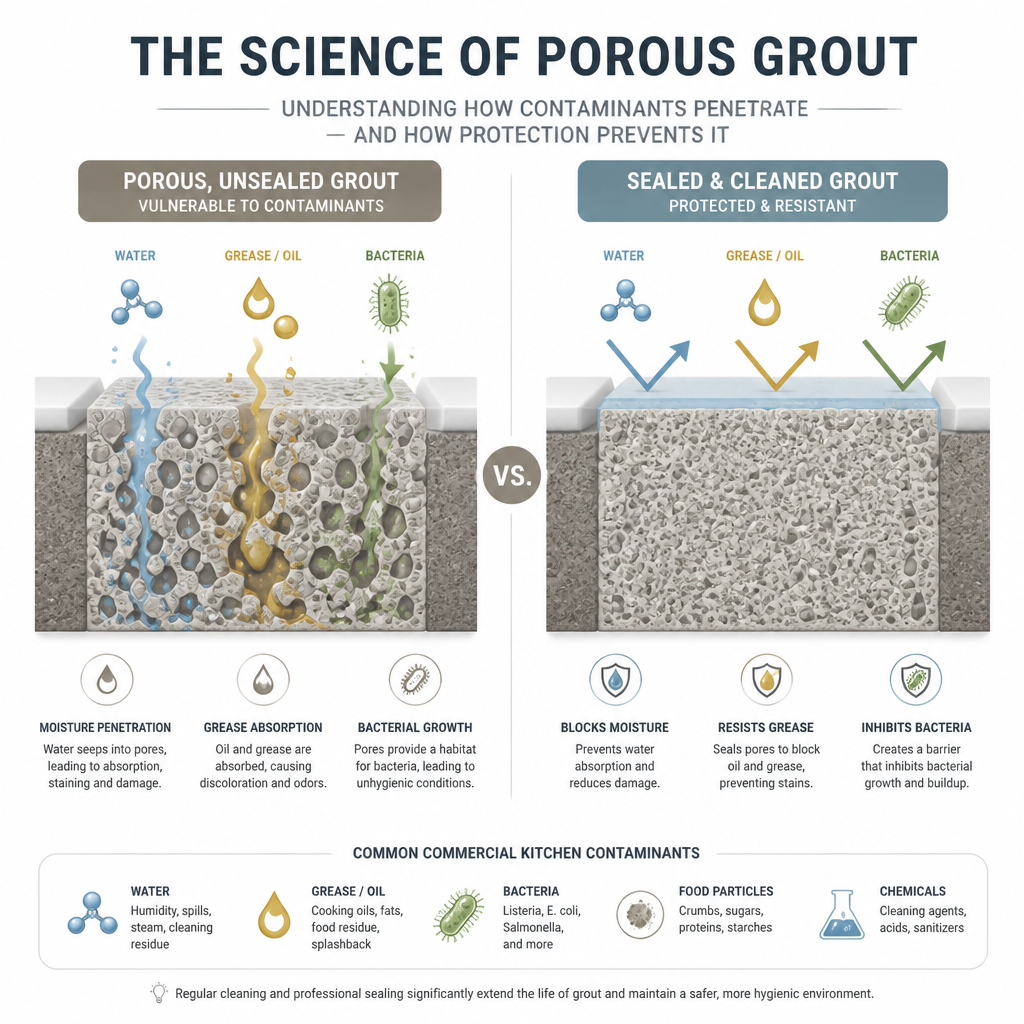
Standard cement-based grout is porous by nature. In a residential setting, that porosity is manageable. In a commercial kitchen or bathroom, it is a serious ongoing maintenance problem. The combination of heat, steam, cooking oils, cleaning chemicals, and constant foot traffic accelerates the breakdown of grout far faster than most facility managers expect.
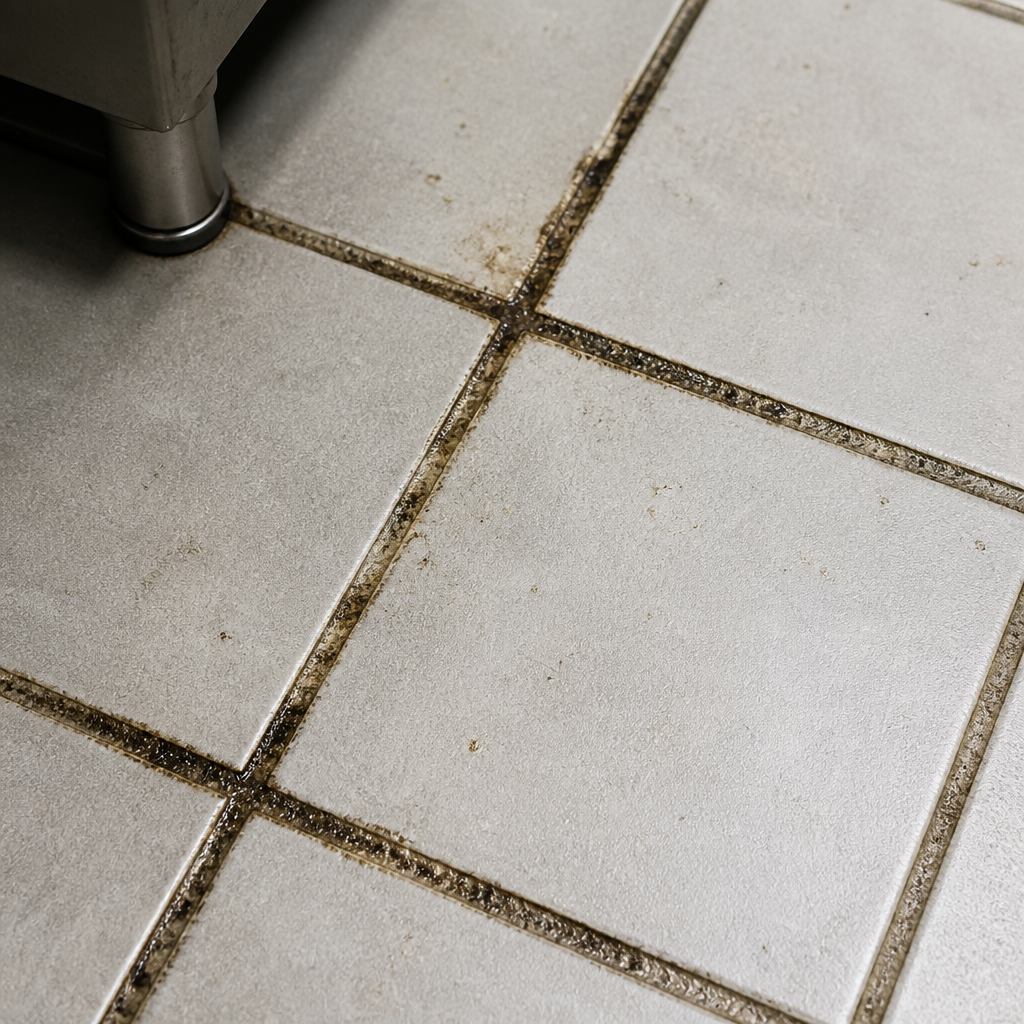
Grease splatter from cooking equipment settles into grout lines and polymerizes when exposed to repeated heat cycles. This creates a hardened, almost tar-like layer that standard mopping cannot touch. Steam from dishwashers and cooking equipment keeps the grout perpetually damp, which encourages mold and mildew colonization in the pores. In bathrooms, soap scum and body oils compound the same problem.
A common mistake is treating the tiles and the grout as the same surface. Tiles are non-porous and respond well to standard cleaning agents. Grout is fundamentally different. It needs agitation, appropriate pH-matched chemistry, and extraction to be genuinely clean rather than superficially wiped.
The first thing the public looks at is your floor. A neglected grout line signals the same level of care given to everything else in the facility, including the food and services being delivered.
In Melbourne’s commercial hospitality and food service sectors, this matters for compliance as well as appearance. Food safety inspectors assess floor hygiene as part of their standard review, and grout lines that harbor bacteria or mold are a documented risk point.
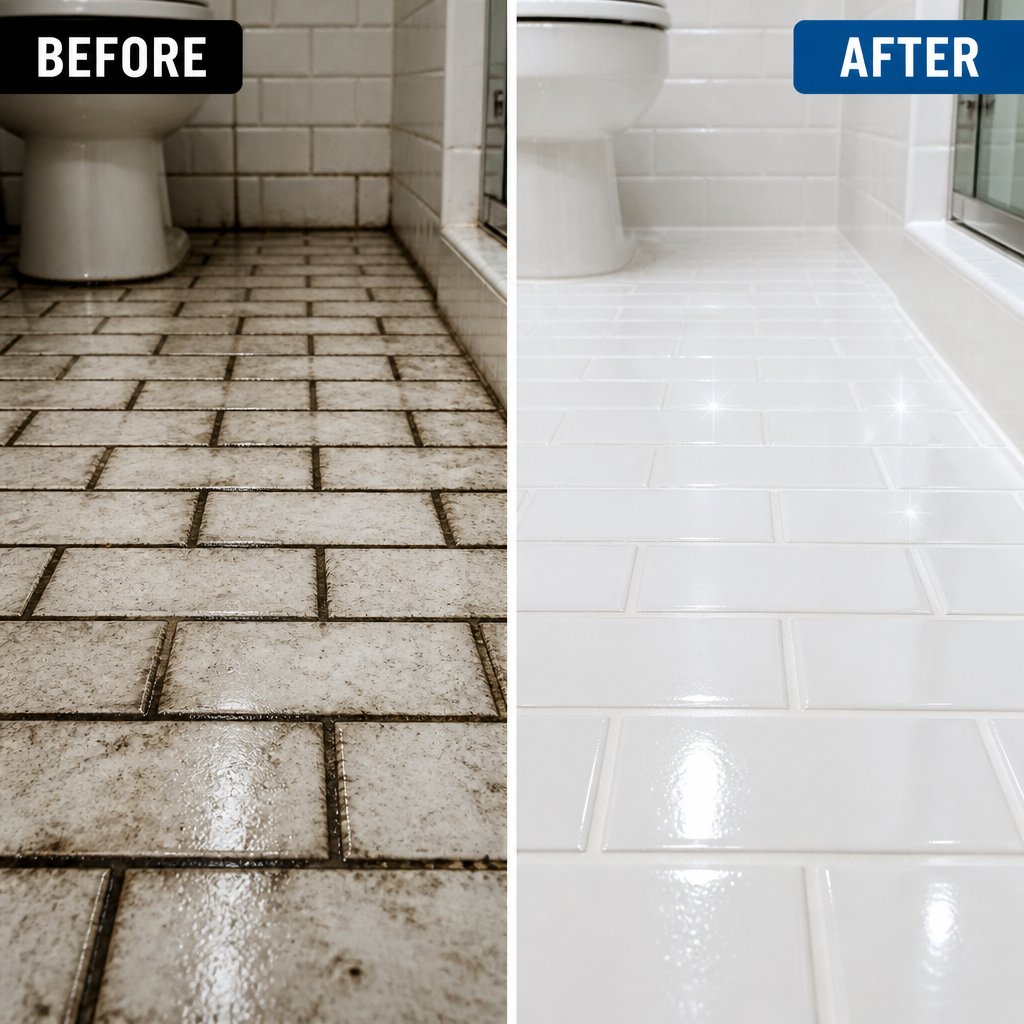
The Real Cost of Neglected Tile and Grout
Many property managers and business owners underestimate what deferred grout maintenance actually costs. The visible issue is aesthetics. The real issue is structural and financial.
When grime accumulates in grout crevices over time, the material begins to loosen and crumble. Fine dirt particles act like sandpaper between the tile edge and the grout, causing micro-abrasion with every footstep. This accelerates material weathering in a way that is invisible until the damage is already significant. At that point, the only fix is re-grouting, which is substantially more expensive than preventative cleaning.
Health and Safety Risks That Carry Real Liability
Floors with deteriorated or contaminated grout present slip risks, particularly in wet areas like commercial kitchen prep zones and bathroom floors. Mold growth in grout also contributes to poor indoor air quality, releasing spores that affect staff and visitors. In aged care facilities, childcare centers, and medical environments, this is not an abstract concern. It is a direct compliance and duty-of-care issue.
Regular tile and grout cleaning removes allergens, bacteria, and mold spores that accumulate over time. It also creates a safer walking surface by eliminating the biofilm layer that develops on poorly maintained floors and contributes to slip-and-fall incidents.
The Productivity Argument for Maintenance
Staff behavior is affected by the condition of their work environment. A visibly neglected kitchen or bathroom floor signals that hygiene standards are flexible, which can subtly lower overall care and attention in a facility. Conversely, a clean, well-maintained floor communicates that standards matter. This is not a soft benefit. It has a practical effect on absenteeism, morale, and the rigor with which staff apply other hygiene protocols.
Pro tip: If your commercial kitchen floor smells musty within hours of mopping, the problem is almost certainly mold colonized in the grout, not the mop technique. A professional hot-water extraction treatment followed by a grout sealant is the only lasting solution.
Professional Kitchen Tile and Grout Cleaning vs. DIY Methods
The comparison between professional grout cleaning services and in-house DIY approaches is not close in a commercial context. DIY methods have a legitimate role in daily maintenance between professional treatments. They do not replace a proper restoration cycle.
| Approach | What It Does Well | Where It Fails in Commercial Settings |
|---|---|---|
| Standard Mopping (In-House Daily) | Removes loose surface debris and fresh spills quickly | Pushes dirty water into grout lines, spreads bacteria rather than extracting it, leaves chemical residue that attracts more dirt |
| Consumer Grout Cleaners and Scrubbing (In-House Periodic) | Improves surface appearance for light soiling, accessible without outsourcing | Cannot penetrate deep contamination, may use incorrect pH chemistry that damages grout over time, no extraction means contaminants remain |
| Professional Hot-Water Extraction and Rotary Cleaning (Specialist Service) | Extracts embedded contaminants from grout pores, uses industry-grade chemistry matched to soil type, restores appearance and hygiene simultaneously | Requires scheduling and budget allocation, not suitable as a daily method |
In practice, professional treatment and in-house daily maintenance are not alternatives. They work as a system. The professional restoration sets a clean baseline. Daily in-house cleaning maintains that baseline between treatment cycles.
For facilities in Melbourne like commercial kitchens, hotel bathrooms, or aged care amenities, the recommended model is professional grout cleaning on a scheduled cycle with a documented daily maintenance protocol in between. Without the professional cycle, daily mopping is effectively moving contamination around rather than removing it.
Step-by-Step Commercial Tile and Grout Restoration
Understanding what a professional restoration actually involves helps facility managers ask the right questions when evaluating grout cleaning services. A credible service provider follows a structured process, not just a spray-and-scrub routine.
Step 1: Pre-Inspection and Soil Assessment
Before any chemical is applied, the technician should assess the type of soiling, the grout material, and the tile surface. Cement grout and epoxy grout respond differently to cleaning chemistry. Ceramic tiles behave differently from natural stone. Applying the wrong chemistry, particularly highly alkaline degreasers on natural stone, causes permanent surface damage.
Step 2: Pre-Treatment with pH-Appropriate Chemistry
In commercial kitchens, the dominant soil type is grease and protein-based residue, which requires an alkaline degreaser applied as a pre-treatment and allowed to dwell for several minutes. In bathrooms, mineral deposits and soap scum respond to acidic treatments. Using the right chemistry for the soil type is what separates a professional result from a mediocre one.
Step 3: Mechanical Agitation
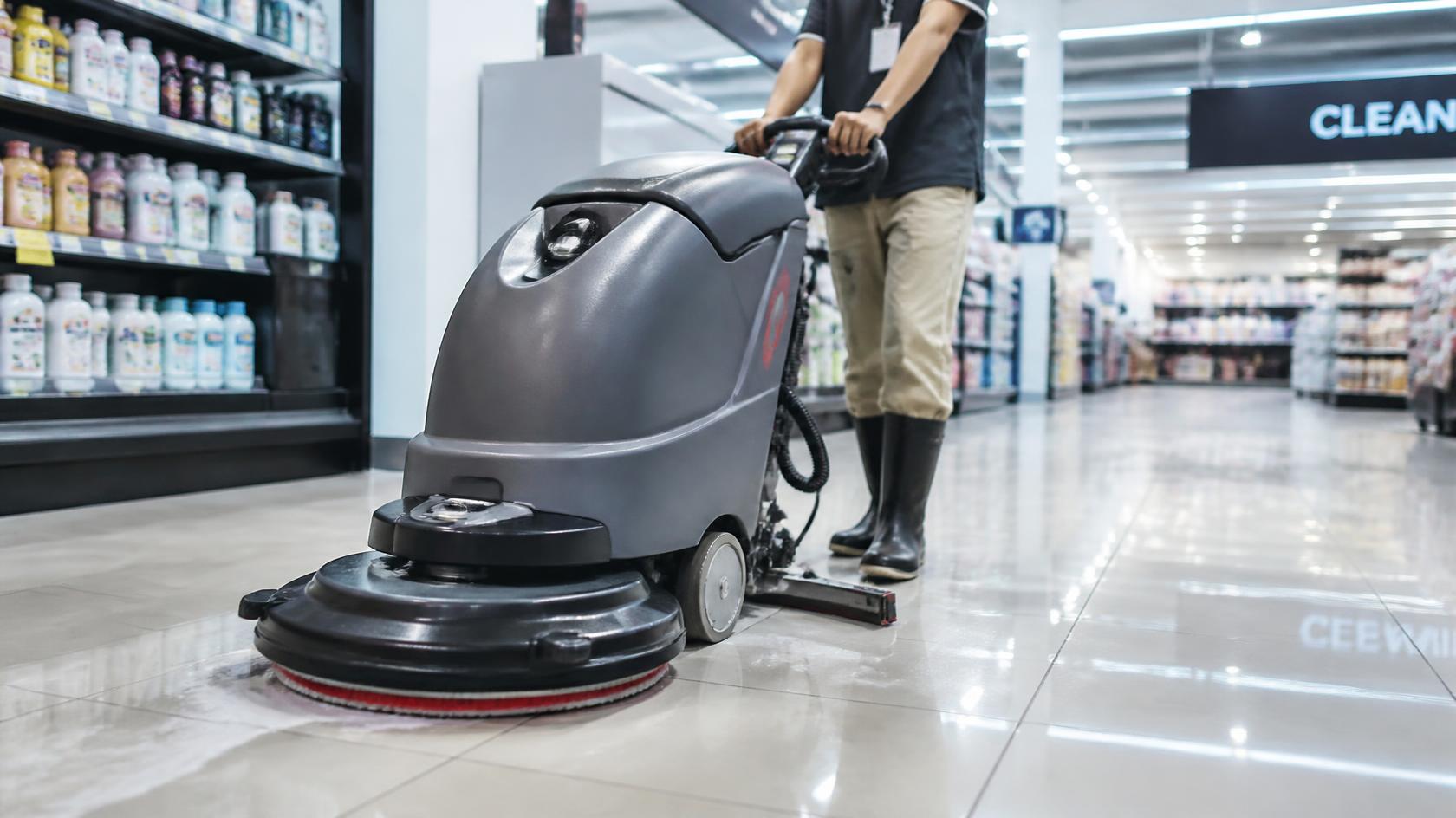
A rotary scrubbing machine with appropriate brush attachments works the chemistry into the grout pores and breaks up the compacted contamination. Hand scrubbing at this stage is not sufficient for a commercial environment. The mechanical action also reaches the full depth of the grout line, not just the surface.
Step 4: Hot-Water Extraction
This is the critical step that most DIY methods skip entirely. Hot-water extraction flushes the loosened contamination out of the grout and off the tile surface, and simultaneously extracts it into a waste tank. The result is that contaminants are removed from the surface rather than redistributed across it. Skipping this step means the cleaning chemistry, along with the dissolved grime, dries back into the grout.
Step 5: Sealing
Once the grout is clean and fully dry, applying a penetrating grout sealer is the step that protects the work done. Sealer fills the pores of the grout, dramatically slowing the rate at which new contamination penetrates. In a commercial kitchen, an unsealed grout line will return to its pre-cleaning state of contamination within weeks. A sealed grout line can remain in good condition for months between professional treatments.
Pro tip: Ask any grout cleaning service provider whether they include sealing as part of their commercial kitchen restoration process. If sealing is not included or offered, the restoration is incomplete, and you will need the service again far sooner than necessary.
Grout Cleaning Services for Specific Commercial Environments
Not all commercial tile and grout restoration is the same. The approach varies significantly depending on the environment, and a provider claiming to use one method for all surfaces is a red flag.
Commercial Kitchens
The dominant challenges are polymerized grease, protein residue, and heat-set staining. Floor grouts near cooking equipment and floor drains are the highest-risk zones. The cleaning process here must use a heavy-duty alkaline degreaser pre-treatment followed by mechanical agitation and hot-water extraction. Commercial kitchen cleaning in Melbourne under food safety frameworks requires that cleaning agents are food-safe or that surfaces are thoroughly rinsed before food preparation resumes.
Commercial Bathrooms and Amenities
Mineral scale, soap scum, and mold are the primary challenges. Wall tiles above shower areas and floor tiles around drain points accumulate the heaviest soiling. An acid-based pre-treatment is typically required for mineral deposits, followed by a mold-specific treatment for any colonized grout lines. In high-traffic facilities like hotels, shopping centers, and offices, bathroom tile and grout restoration is often part of a broader scheduled maintenance contract.
Childcare Centers and Aged Care Facilities
These environments require particular care around chemical selection. The cleaning agents used must be effective against bacteria and mold without leaving residues that pose risks to vulnerable occupants. Any provider working in these environments should be able to confirm that their chemistry is appropriate for the setting and that all surfaces are adequately rinsed and dried before the space is returned to use.
Medical and Healthcare Facilities
In medical environments, grout lines in patient bathrooms, treatment rooms, and wet areas must meet hygiene standards well above standard commercial settings. The focus here is on bacterial and viral contamination rather than aesthetic restoration. Disinfectant-grade treatments are required alongside the mechanical cleaning process.
Vibrant Property Services works across all of these environments in Melbourne, with tailored approaches for each. Their tile and grout restoration service is structured around the specific demands of each facility type rather than a one-size-fits-all method.
How Often Should Commercial Tile and Grout Be Professionally Cleaned?
The honest answer depends on foot traffic volume, the type of soiling produced in the space, and the quality of daily maintenance in between. But vague answers do not help facility managers make scheduling decisions, so here are practical starting points.
Commercial kitchens with high daily throughput should schedule professional tile and grout restoration every three to six months. The combination of grease, heat, and constant moisture means contamination accumulates quickly, and waiting for visible deterioration means the grout has already sustained structural damage.
Commercial bathrooms in hotels, offices, and retail environments generally require professional treatment every six to twelve months, depending on usage intensity. Facilities with very high daily visitor numbers, such as shopping centers or transport hubs, may require more frequent cycles.
Aged care facilities, childcare centers, and medical environments should align their tile and grout cleaning schedule with their infection control protocols. In practice, this often means professional treatment every three to six months, with daily in-house maintenance using appropriate disinfectant chemistry between cycles.
One reliable indicator that a professional treatment is overdue: if the grout appears a different color from its original installation shade, or if the floor smells despite regular mopping, contamination has penetrated beyond what daily cleaning can address. At that point, restoration is required, not just maintenance.
Vibrant Property Services offers scheduled maintenance contracts for Melbourne commercial properties, which removes the guesswork from this decision. Their commercial cleaning services can be structured to include tile and grout restoration as part of a broader facility maintenance plan.
Frequently Asked Questions
What is the difference between tile cleaning and grout cleaning?
Tile surfaces are non-porous and respond well to standard cleaning agents applied to the surface. Grout is porous and absorbs contaminants into its structure. Effective grout cleaning requires chemistry that penetrates the pores, mechanical agitation to break up embedded soiling, and extraction to remove it. Wiping the tile surface does not clean the grout.
Can professional grout cleaning remove black mold from bathroom grout lines?
Yes, in most cases. Professional treatment using appropriate mold-specific chemistry combined with mechanical agitation and hot-water extraction can eliminate mold from grout lines. In severe cases where mold has caused structural damage to the grout, the affected sections may need to be re-grouted after cleaning. A good service provider will identify this during the pre-inspection stage and advise accordingly.
How long does commercial tile and grout restoration take?
For a standard commercial kitchen or bathroom, a professional restoration typically takes between two and four hours depending on the size of the area and the severity of soiling. Heavily contaminated surfaces may require a longer dwell time for pre-treatment chemistry, which extends the process. The area generally needs two to four hours of drying time after treatment before it can be returned to normal use.
Is tile and grout sealing necessary after professional cleaning?
In a commercial environment, yes. Unsealed grout returns to a contaminated state quickly because the open pores immediately begin absorbing new grease, moisture, and bacteria. Sealing after a professional clean extends the period between treatments and protects the restoration investment. It is not optional in a commercial kitchen or high-traffic bathroom setting.
How do I know if a tile and grout cleaning service in Melbourne is using the right method?
Ask whether they conduct a pre-inspection to identify grout type and soil type before selecting chemistry. Ask whether their process includes hot-water extraction or if they use a spray-and-wipe method. Ask whether grout sealing is included. A professional service will be able to answer all three questions clearly. If the response is vague or the price quote comes without any site assessment, treat that as a warning sign.
Does high-pressure cleaning work for commercial tile and grout?
High-pressure cleaning can be effective for outdoor commercial surfaces such as paving, car parks, and building exteriors, but it is generally not the right approach for indoor commercial kitchen or bathroom tile and grout. The pressure can damage grout and force contaminants deeper into pores rather than extracting them. For indoor surfaces, hot-water extraction with rotary agitation is the correct method. Vibrant Property Services provides high-pressure cleaning for appropriate outdoor and hard-surface applications, separately from their interior tile and grout restoration service.
If you manage a commercial kitchen or bathroom in Melbourne and have questions about what a proper tile and grout restoration involves for your specific facility, share your experience or questions below and we will give you a direct answer.
We would love your feedback and any insights you would share with others. What perspective would you add?
References
- Health, durability, and productivity benefits of regular tile and grout cleaning in commercial facilities
- How to clean commercial restroom tile and grout floors using professional methods
- Why tile and grout cleaning matters: a complete guide to professional restoration