
Your driveway and car park surface take more punishment than almost any other part of your property. In Melbourne’s variable climate, with wet winters encouraging mould and algae growth, hot summers baking in oil and tyre residue, and autumn leaf stains clogging pavers, surfaces deteriorate fast. High Pressure Cleaning Driveways in Melbourne is not a luxury maintenance item. It is a practical measure that prevents surface damage, removes slip hazards, and restores the kind of kerb appeal that affects how clients, tenants, and visitors perceive your property from the moment they arrive. This guide covers everything property managers and owners need to know, from surface compatibility and realistic pricing to commercial car park protocols and how to choose a provider worth trusting.
Table of Contents
- Why Melbourne Driveways Need Pressure Cleaning
- Surface Types and What They Actually Need
- Car Park Cleaning in Melbourne: What Commercial Sites Require
- The Real Cost of Pressure Washing Services in Melbourne
- How Often Should You Schedule Pressure Cleaning
- DIY vs. Professional Pressure Cleaning: An Honest Comparison
- What to Expect from a Professional Service
- Choosing the Right Provider in Melbourne
- Frequently Asked Questions
- References
Why Melbourne Driveways Need Pressure Cleaning
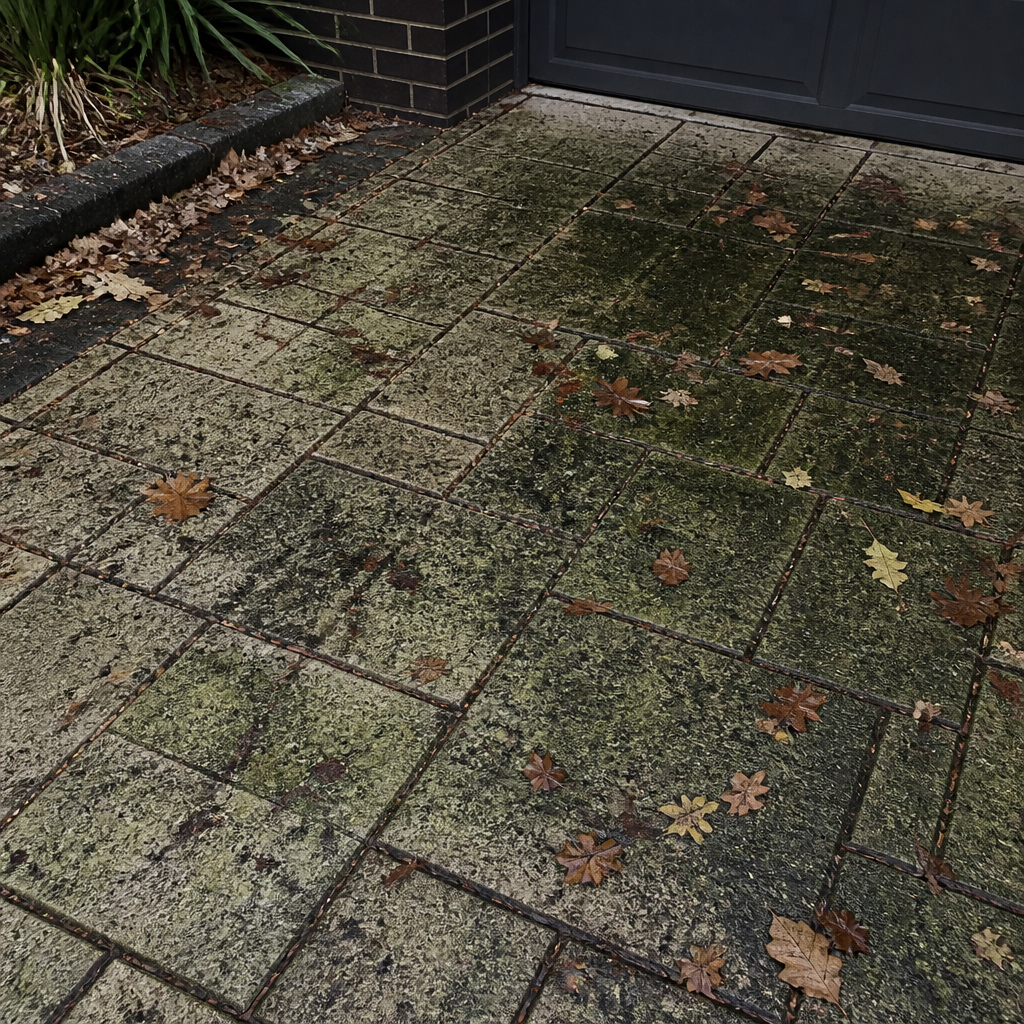
Melbourne’s weather creates the ideal conditions for surface contamination. The combination of shaded driveways, damp winters, and leaf fall from established trees means mould, algae, and moss establish quickly and hold firm in textured surfaces like exposed aggregate. Add regular vehicle use, leaking oil sumps, and rubber tyre deposits, and a driveway that looked clean eighteen months ago can look genuinely neglected today.
The cosmetic problem is obvious. The structural problem is less visible but more serious. Mould and algae retain moisture against the surface, accelerating surface spalling in concrete and loosening joint sand in paved areas. Oil, if left long enough, penetrates concrete at a pore level and becomes far harder to shift. Slip hazards from algae growth on wet surfaces are a liability issue for commercial operators and a genuine safety risk for residential properties with elderly or young occupants.
High pressure cleaning removes all of this efficiently when it is done correctly, matching the pressure and chemical pre-treatment to the specific surface rather than applying maximum force to everything.
Surface Types and What They Actually Need
This is the area where most DIY attempts and underprepared operators cause damage. Melbourne driveways are not uniform. A single residential street might have plain broom-finish concrete at one property, exposed aggregate at the next, clay pavers at a third, and bluestone at a fourth. Each requires a different approach.
Concrete Driveways (Plain and Broom-Finish)
Plain concrete is the most forgiving surface for pressure cleaning. Higher pressure is appropriate here because the surface is dense and continuous. A chemical pre-treatment, usually an alkaline degreaser for oil-contaminated areas, should be applied and allowed to dwell before the pressure wash begins. Skipping this step and relying on pressure alone leaves oil stains partially embedded.
Pro tip: Fresh oil stains can often be fully removed with the right chemical pre-treatment combined with high pressure. Older or deeply set marks may only fade significantly rather than disappear entirely. Do not let a provider guarantee complete removal of a stain that has been sitting for years without first assessing it on-site.
Exposed Aggregate and Decorative Concrete
Exposed aggregate requires a more controlled approach. Too much pressure strips the fine aggregate from the surface matrix, creating a rough, pitted appearance that is difficult to reverse. Different nozzle types and reduced pressure are needed compared to plain concrete. Pre-treating with appropriate detergents reduces the pressure required to achieve a clean result.
Pavers (Concrete, Clay, and Natural Stone)
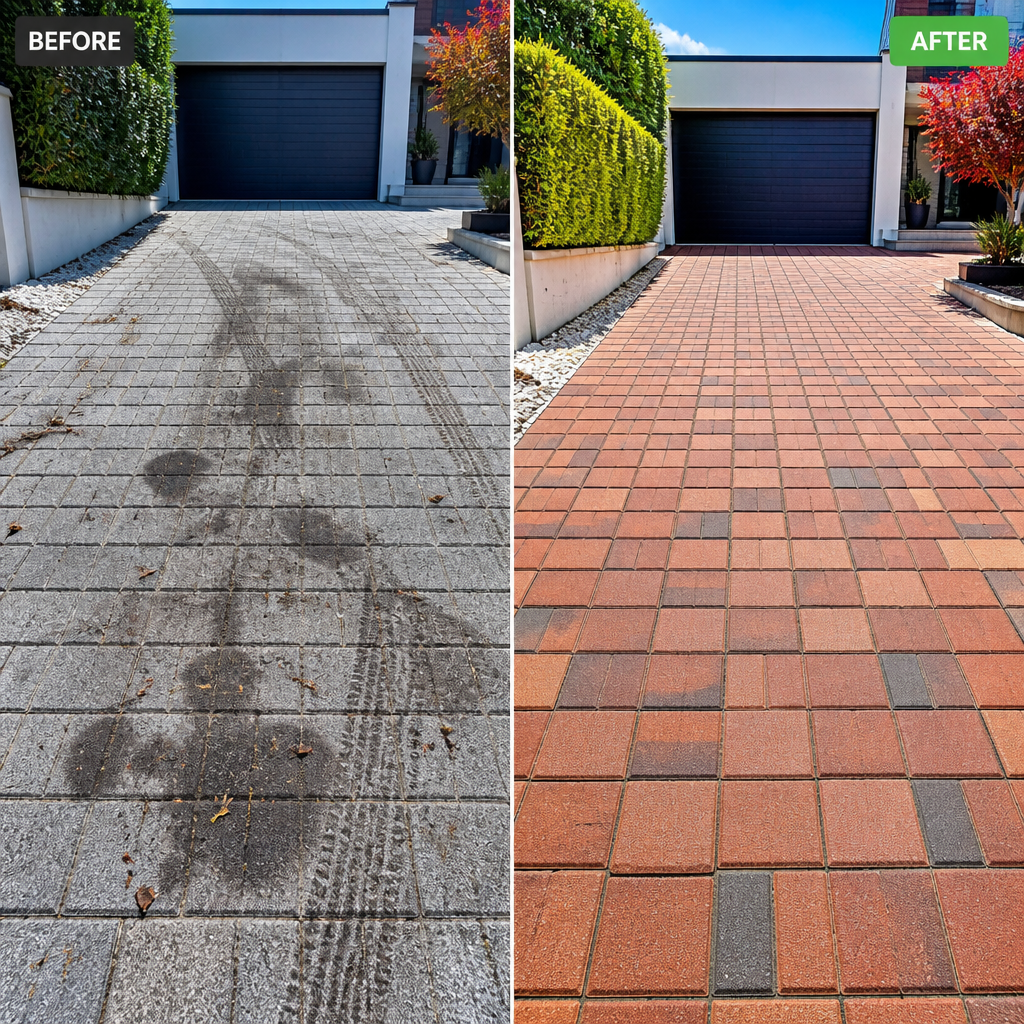
Pavers are the most demanding surface to clean correctly. The joints between pavers are filled with polymeric or kiln-dried sand, and aggressive pressure washing washes this material out, leaving the surface unstable and more prone to weed growth. Joint sand must be replenished after cleaning if it has been disturbed. Natural stone pavers like sandstone require the lowest pressure of all common driveway materials and a pH-neutral cleaner to prevent etching.
Surfaces That Should Not Be High-Pressure Cleaned
Rendered walls, painted surfaces, and roof tiles are not appropriate candidates for high-pressure washing. These surfaces require low-pressure treatment with a chemical wash that kills organic growth. Applying high pressure to render strips the coating. If a quote includes high-pressure treatment on render or painted masonry, that is a red flag, not a value-add.
Car Park Cleaning in Melbourne: What Commercial Sites Require
Car park cleaning is a different discipline from residential driveway work, and it is one that many general cleaning operators underestimate. The contamination profile is heavier, the surface area is larger, operational timing constraints are strict, and environmental compliance adds a layer of complexity that residential jobs do not carry.
The primary contaminants in a Melbourne commercial car park are engine oil and transmission fluid, rubber tyre deposits, fuel spills, mud and debris tracked from adjacent roads, and, in covered parks, mould from poor ventilation. These bond into the concrete at different depths. An effective clean addresses them in sequence rather than trying to blast everything off with pressure alone.
Underground and Multi-Level Car Parks
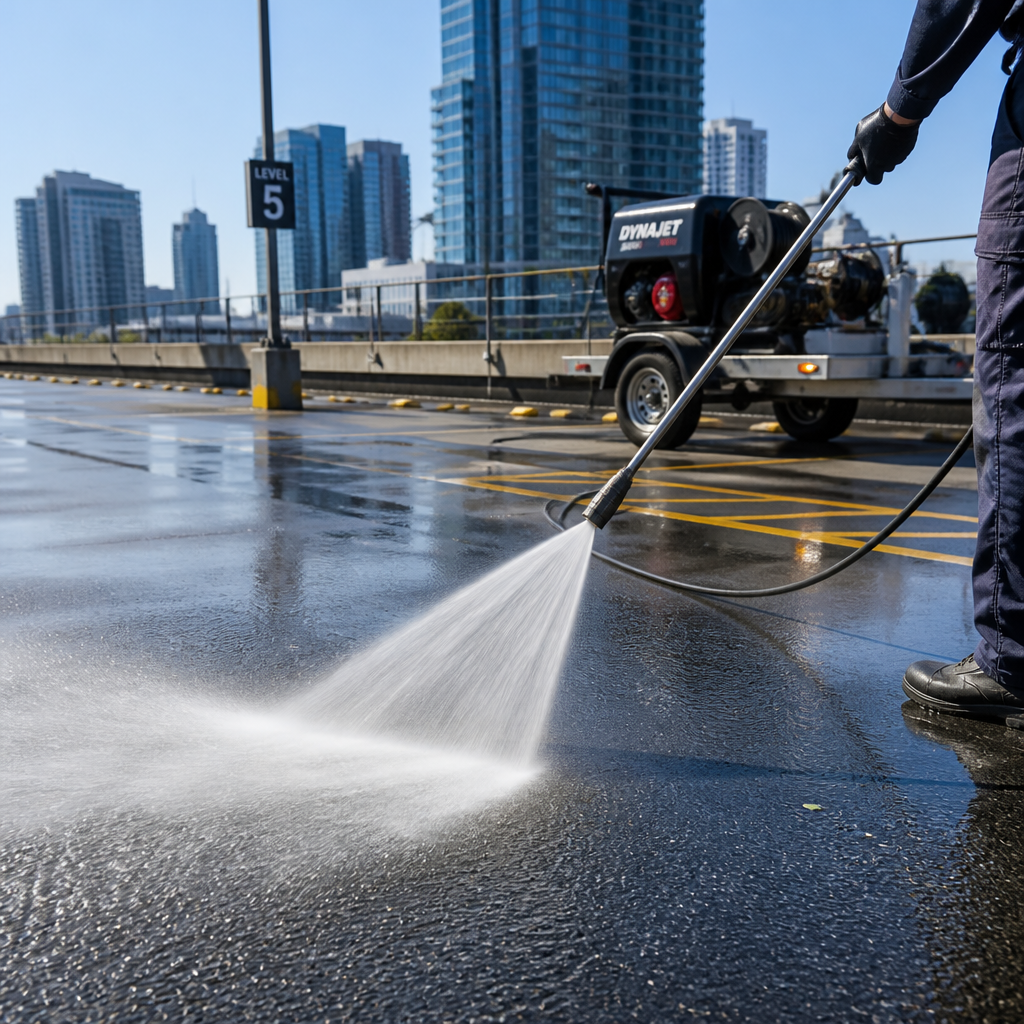
Underground and multi-level car parks present access and drainage challenges that above-ground surfaces do not. Water management is a genuine concern. Runoff containing oil and chemical residue must be contained and disposed of in line with EPA requirements rather than allowed to drain freely into stormwater. Professional operators use vacuum recovery equipment and bunding to contain this runoff. Any provider quoting on an enclosed or semi-enclosed car park without mentioning water reclamation and EPA compliance is skipping a step that matters legally and environmentally.
Pro tip: If your commercial car park has painted line markings, discuss this with your provider before the job begins. High pressure cleaning can accelerate line mark degradation on older painted surfaces. A well-planned clean accounts for this, and in many cases a line marking refresh can be scheduled alongside the cleaning service to restore clarity and compliance.
Scheduling Car Park Cleaning Around Operations
For retail centres, office buildings, hotels, and warehouses, car park cleaning cannot happen during peak hours. It is a service that needs to be scheduled around operational realities. Early morning starts, overnight work, or staged cleaning of sections during off-peak periods are all practical options. The provider needs to be able to work within these constraints reliably, not just quote cheaply and create operational disruption.
The Real Cost of Pressure Washing Services in Melbourne
Pricing for pressure washing services in Melbourne is typically quoted per square metre or as a flat rate for standard residential jobs. Understanding what drives cost helps you evaluate quotes accurately rather than just picking the lowest number.
Most high-pressure cleaning services in Melbourne charge between $2 and $10 per square metre, with simple driveway cleans on the lower end and heavily soiled or complex surfaces on the upper end. Concrete driveways commonly fall in the $150 to $300 range as a flat rate, though this varies based on size, contamination level, and whether chemical pre-treatment is included.
Larger areas attract a better per-square-metre rate. A large commercial car park is proportionally less expensive per square metre than a small residential courtyard. Bundling services, such as combining a driveway clean with window cleaning or building exterior washing, typically reduces the overall cost per service.
The price of pressure cleaning is not just about water and pressure. It depends on surface type, size, and condition. Stubborn stains or delicate surfaces often need extra care, and that affects the final cost.
What distinguishes a fair quote from a cheap one is transparency about what is included. Chemical pre-treatment, joint sand replacement for pavers, and EPA-compliant water disposal for commercial sites are all cost components that cheap operators leave out of their base price and then either skip entirely or charge as extras after the fact.
How Often Should You Schedule Pressure Cleaning
Frequency depends on the surface type, the level of use, the surrounding environment, and the purpose of the site. There is no single answer that applies to every Melbourne property, but there are clear benchmarks.
For most residential driveways, once every twelve months is the practical minimum. Properties that are heavily shaded, in areas with significant tree canopy, or with high vehicle use benefit from cleaning every six months. Leaving it longer than eighteen months typically means the organic growth and staining has had time to set more deeply, making the job harder and the result less complete.
Commercial surfaces should typically be pressure cleaned every three to twelve months, depending on foot and vehicle traffic, weather exposure, surface material, and the type of contamination. Car parks, loading bays, bin areas, and shopfront entries tend to accumulate oil, grease, mud, and organic growth faster than low-use exterior areas and often warrant more frequent attention.
High-use commercial sites like supermarkets, hotels, and warehouse facilities often benefit from a quarterly schedule to maintain the appearance and safety standards expected by staff, customers, and regulators. For aged care facilities and medical environments, surface hygiene standards add another reason to maintain a consistent schedule rather than cleaning reactively.
DIY vs. Professional Pressure Cleaning: An Honest Comparison
The comparison below reflects the real-world difference between hiring a professional and using consumer-grade equipment yourself. This matters because the wrong choice for the wrong surface can cause damage that costs more to repair than the clean would have cost in the first place.
| Factor | DIY (Consumer Hire or Owned Equipment) | Professional Service (Commercial-Grade Equipment) |
|---|---|---|
| Pressure Output | Typically limited; rarely sufficient for embedded stains or commercial surfaces | Adjustable commercial-grade output matched to surface requirements |
| Surface Risk | High risk of aggregate stripping, joint sand loss, or surface etching on delicate materials | Low risk when provider assesses surface type and adjusts technique accordingly |
| Chemical Pre-Treatment | Usually skipped or applied incorrectly, leaving oil and organic growth partially untreated | Correct degreasers and biocides applied with appropriate dwell time before washing |
| Oil Stain Removal | Pressure alone rarely removes embedded oil; surface grime only | Combination of degreaser, agitation, and high pressure removes most oil staining |
| Water and Environmental Management | No containment; runoff enters stormwater regardless of contamination | EPA-compliant operators contain and dispose of contaminated runoff correctly |
| Time and Effort | Significant time investment, physically demanding, and result is often inconsistent | Completed efficiently with consistent, even results across the whole surface |
| Cost | Hire costs plus time, with risk of surface damage repair costs | Fixed quote with predictable outcome; cheaper long-term if damage is avoided |
For plain concrete driveways that are lightly soiled, a capable DIY operator with the right equipment can get a reasonable result. For anything more complex, including exposed aggregate, pavers, commercial car parks, or surfaces with significant oil contamination, professional treatment is the smarter investment.
What to Expect from a Professional Service
A well-run pressure cleaning job is not just someone pointing a lance at your driveway. The sequence matters, and a professional service follows it consistently regardless of the size of the job.
The job starts with a surface inspection. The technician assesses the surface type, identifies problem areas such as oil staining or loose pavers, checks joint condition, and selects the appropriate pressure settings, nozzles, and chemicals before any water is applied. Skipping this step is the most common cause of surface damage in cheaper operations.
Pre-treatment follows. Degreasers are applied to oil-contaminated zones and allowed to dwell. Biocidal or alkaline treatments are applied to mould and algae-affected areas. The dwell time for these products is not a pause for convenience. It is a functional step that breaks down contamination before pressure is applied, reducing the pressure required and improving the result.
The pressure wash itself works systematically across the surface, using overlapping passes to avoid banding. Post-clean rinse removes residue and cleaning chemicals. For paved surfaces, joint sand is assessed and topped up if washing has displaced it. The site is left in a safe condition with water directed away from garden beds and boundaries.
Choosing the Right Provider in Melbourne
The Melbourne cleaning market has a significant range in quality. Providers with genuine commercial experience bring a different level of site management, scheduling capability, and technical knowledge than operators who primarily do residential work and occasionally quote on commercial jobs.
When evaluating providers, prioritise documented experience with your specific surface type. A provider who cannot explain why exposed aggregate requires different treatment than plain concrete has not done enough of this work to be trusted with a premium surface. Ask specifically about their chemical pre-treatment process, their approach to water management, and whether they carry public liability insurance appropriate to commercial work.
Vibrant Property Services brings over 15 years of experience delivering high-pressure cleaning across Melbourne and surrounding suburbs, covering both residential driveways and large-scale commercial sites including car parks, warehouse forecourts, retail entries, and specialised environments such as medical facilities and childcare centres. Their team understands the operational constraints that commercial property managers face, including tight scheduling windows, EPA compliance requirements, and the need for consistent results across large surface areas. For Melbourne property managers who need a provider that works to a professional standard without creating operational disruption, Vibrant Property Services is a natural starting point.
For ongoing commercial work, a provider who can integrate pressure cleaning into a broader maintenance schedule, alongside window cleaning, tile and grout restoration, or builder’s cleaning where relevant, delivers better value and fewer coordination headaches than managing multiple single-service contractors.
Frequently Asked Questions
How much does high pressure cleaning cost for a driveway in Melbourne?
Most Melbourne providers charge between $2 and $10 per square metre depending on the surface type, size, and level of contamination. A standard residential concrete driveway typically falls in the $150 to $300 range as a flat rate. Heavily soiled surfaces, complex materials like exposed aggregate or natural stone pavers, and jobs requiring chemical pre-treatment for oil stains will sit at the higher end. Always confirm whether the quote includes chemical pre-treatment and post-clean joint sand replacement for paved surfaces, as these are sometimes charged as extras.
How often should a commercial car park in Melbourne be pressure cleaned?
Commercial surfaces generally benefit from pressure cleaning every three to twelve months. Car parks, loading areas, and entry points accumulate oil, tyre deposits, and organic growth faster than low-traffic areas. High-use sites such as supermarkets, retail centres, hotels, and warehouses often schedule quarterly cleans to maintain safety standards and appearance. A provider with commercial experience should be able to recommend an appropriate frequency based on your site’s traffic patterns and surface type.
Can pressure cleaning remove oil stains from concrete driveways?
Fresh oil stains can often be fully removed when the right alkaline degreaser is applied as a pre-treatment and allowed sufficient dwell time before pressure washing. Older or deeply embedded stains may fade significantly but not disappear entirely. No reputable provider should guarantee complete removal of a stain that has been setting for months or years without first assessing it on-site. Regular cleaning intervals are the most effective way to prevent oil from penetrating deeply enough to become permanent.
Is high pressure cleaning safe for all driveway surface types?
No. Plain concrete and brick are appropriate candidates for genuine high pressure. Exposed aggregate and decorative concrete require reduced pressure and specific nozzle types to avoid stripping the surface matrix. Paved surfaces need careful pressure management to preserve joint sand integrity. Natural stone pavers require low pressure and pH-neutral cleaners. Rendered walls, painted surfaces, and roof tiles should not be high-pressure cleaned at all. They require low-pressure chemical washing instead. If a provider applies the same pressure to every surface, they are not operating correctly.
Do Melbourne pressure cleaning operators need to manage water runoff?
Yes, particularly for commercial sites. Runoff from car parks and industrial surfaces contains oil, grease, chemical residues, and other contaminants that must not enter the stormwater system. Professional operators working on enclosed or semi-enclosed commercial sites should use vacuum recovery equipment and bunding to contain contaminated runoff and dispose of it in line with EPA requirements. For standard residential driveways the risk profile is lower, but responsible operators still direct water away from stormwater inlets when contamination is present.
What is the difference between pressure washing and soft washing?
Pressure washing uses high-force water to physically remove contamination from hard, dense surfaces like concrete and brick. Soft washing uses low pressure combined with chemical treatments, typically biocides and surfactants, to kill and lift organic growth from more delicate surfaces such as render, painted masonry, wood, and roof tiles. Choosing the wrong method for the surface causes damage. A professional provider assesses the surface before deciding which method, or combination of methods, is appropriate for the job.
Have you had a pressure cleaning job done on your Melbourne property recently? We would love to hear what your experience was like and whether the results matched your expectations.
References
- High pressure cleaning cost breakdown by surface type and size in Melbourne
- Australian pressure washing cost guide covering surface suitability and pricing factors
- Commercial high pressure cleaning services and frequency guidance for Melbourne properties
- Melbourne driveway cleaning guide covering concrete, aggregate, and paver surface techniques
- Ultimate guide to driveway pressure washing in Melbourne including surface types and cleaning steps