
Most facility managers in Melbourne treat childcare and medical centre cleaning as a variation of standard commercial cleaning. It is not. The regulatory frameworks are different, the consequences of failure are different, and the cleaning protocols required are genuinely more demanding. A single missed disinfection step in a childcare room can spread gastroenteritis to dozens of children within 48 hours. In a medical centre, an improperly cleaned treatment room can contribute to healthcare-associated infections in already-vulnerable patients. This guide breaks down exactly what childcare cleaning Melbourne and medical centre cleaning actually require, why generic commercial cleaners fall short, and what compliant, high-quality service looks like in practice.
Table of Contents
- Why Compliance Cleaning Is Different From Regular Commercial Cleaning
- Childcare Cleaning Standards: What Melbourne Centres Must Meet
- Medical Centre Cleaning Melbourne: Infection Control That Cannot Be Compromised
- Aged Care Cleaning Melbourne: The Highest-Stakes Environment of All
- Comparison: Cleaning Approaches for High-Compliance Environments
- What Good Sanitisation Standards Look Like in Practice
- Choosing the Right High-Compliance Cleaning Provider in Melbourne
- Frequently Asked Questions
- References
Why Compliance Cleaning Is Different From Regular Commercial Cleaning
Standard office cleaning is about presentation. Compliance cleaning is about infection control. These are not the same activity with a different name. In high-compliance environments, the chemical choice matters, the order of cleaning tasks matters, the direction of wipe strokes matters, and the segregation of equipment between zones matters.
The moment you enter a childcare centre, a medical consulting room, or an aged care facility, you are operating in an environment governed by specific national and state-level standards. Failing to meet those standards is not just a quality issue. It can result in regulatory non-compliance, loss of accreditation, or direct harm to the people in that space.
Melbourne-based facility managers need providers who understand these frameworks before they walk through the door, not providers who learn on the job at the expense of your compliance standing.
Childcare Cleaning Standards: What Melbourne Centres Must Meet
Childcare centres in Victoria operate under the National Quality Standard (NQS), which sits alongside the Education and Care Services National Regulations. Element 3.1.2 of the NQS requires that childcare premises, furniture, and equipment are safe, clean, and well maintained. That is the regulatory floor, not the ceiling.
The NHMRC Staying Healthy Guidelines
The National Health and Medical Research Council’s Staying Healthy guidelines set out the specific infection control requirements for early childhood education and care services. These guidelines specify that cleaning with appropriate products must occur after any spills of body fluids, including urine, faeces, mucus, saliva, vomit, blood, and breastmilk. Every education and care service must have strategies in place to prevent or minimise exposure to infectious diseases, safely store and minimise exposure to chemicals, and ensure infection control practices are implemented and maintained.
In practice, this translates to a structured cleaning schedule with clearly defined daily, weekly, and periodic tasks. Early Learning Victoria’s guidance is explicit: centres should have cleaning contracts and service plans that outline daily, weekly, quarterly, and annual cleaning and sanitising requirements, with those contracts reviewed annually.
What a Compliant Childcare Cleaning Schedule Covers
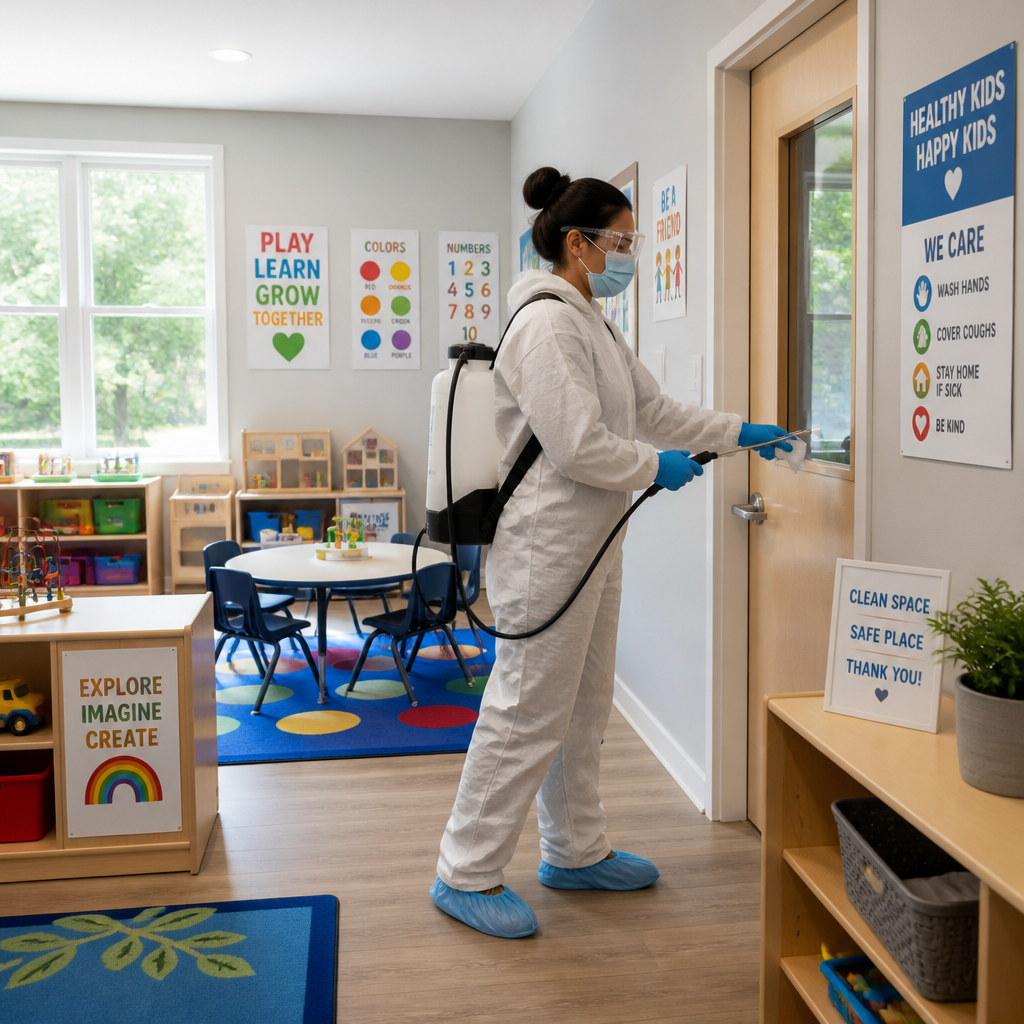
A compliant daily schedule covers morning preparation of food-contact surfaces using detergent and hot water, afternoon sanitisation of all high-touch areas including door handles, tap fittings, toilet seats, nappy change surfaces, and shared play equipment. Sandpits, water play areas, and sensory materials require separate protocols because of the speed at which microbial contamination spreads through shared wet or particulate materials.
Colour-coded cleaning equipment is not optional in this environment. Using the same mop or cloth in a nappy change area and a food preparation area is a cross-contamination pathway that would immediately concern an auditor. Reputable Melbourne childcare cleaning providers, including Vibrant Property Services, use colour-coded systems as a baseline practice, not as a premium add-on.
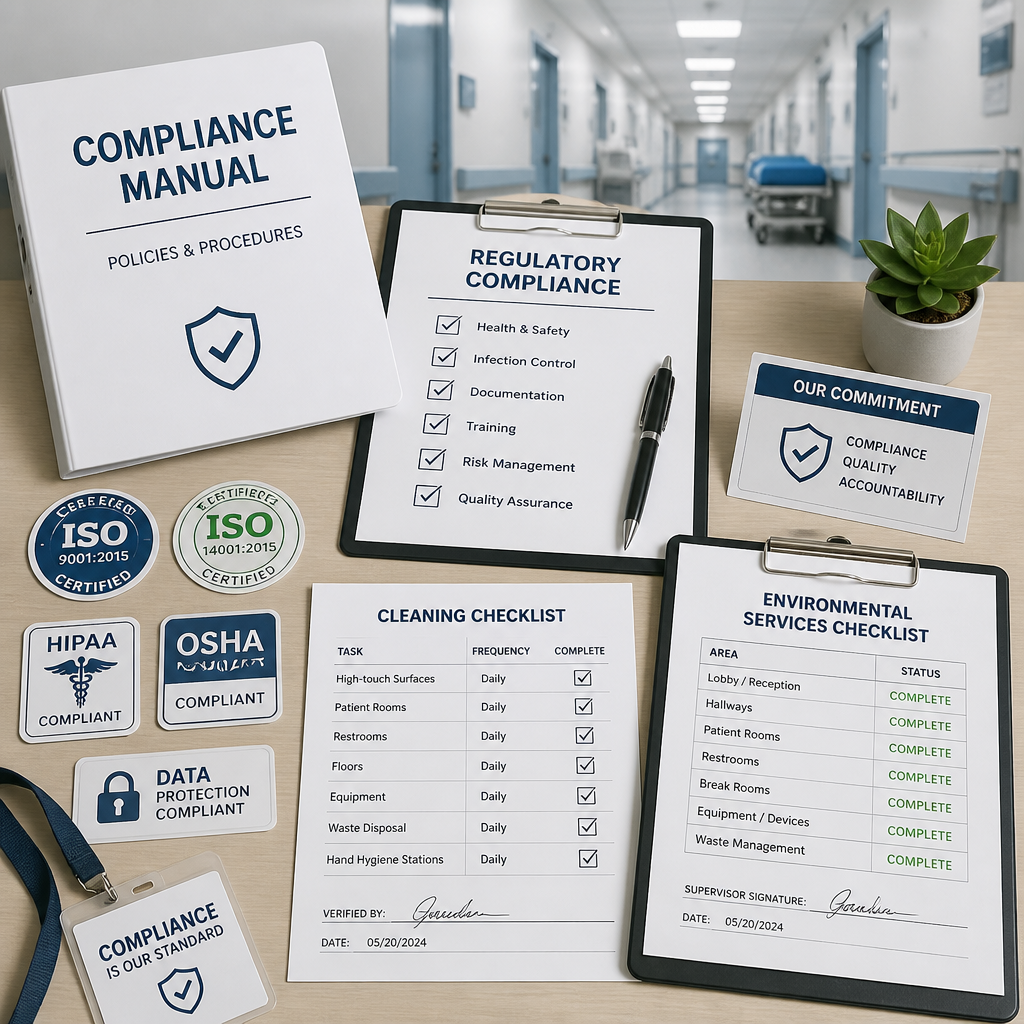
Pro tip: Ask any prospective childcare cleaning provider to show you their cleaning checklist and log system before signing a contract. Detailed, auditable records are a non-negotiable requirement under NQS compliance. If a provider cannot produce a sample log, that tells you everything you need to know about their compliance capability.
The three most effective methods of infection control in early childhood settings, as identified by the NHMRC, are hand hygiene, exclusion of unwell children and staff, and environmental cleaning. Environmental cleaning is the one that a professional service directly controls.
Medical Centre Cleaning Melbourne: Infection Control That Cannot Be Compromised
Medical centre cleaning operates under a different but equally demanding set of requirements. The Royal Australian College of General Practitioners (RACGP) publishes infection prevention and control guidelines that set the standard for GP clinics, specialist practices, and allied health facilities across Australia. These guidelines cover environmental cleaning as a core component of infection prevention, not an afterthought.
Zoning and Risk Classification
Medical facilities are cleaned according to risk zones. Waiting areas and administrative spaces are lower-risk but still require regular disinfection of high-touch surfaces. Treatment rooms, consulting rooms, and procedure areas are higher-risk and require hospital-grade disinfectants applied using correct contact times. Sterilisation and instrument reprocessing areas carry the highest risk and require strict protocols around chemical selection and cleaning sequence.
The Australian Commission on Safety and Quality in Health Care has produced environmental cleaning resources aligned with the Australian Guidelines for the Prevention and Control of Infection in Healthcare. These guidelines specify that health service organisations must have processes in place to maintain a clean and hygienic environment. For smaller medical centres, this framework still applies and still requires documented processes.
Why TGA-Listed Products Matter
In a medical environment, not any disinfectant will do. Products must be TGA-listed (listed with the Therapeutic Goods Administration) to make legitimate claims about their efficacy against specific pathogens. Using a product that is not TGA-listed in a medical setting creates both a clinical risk and a liability risk. A credible medical centre cleaning Melbourne provider will be able to name the specific products they use and confirm their TGA listing without hesitation.
Pro tip: Request your cleaning provider’s Safety Data Sheets (SDS) and product TGA registration numbers for all disinfectants used in clinical areas. If they cannot produce these on request, they are not operating to medical-grade standards regardless of what their marketing materials claim.
Aged Care Cleaning Melbourne: The Highest-Stakes Environment of All
Aged care facilities face the most demanding cleaning environment of any sector in Melbourne. Residents are typically elderly, immunocompromised, and living in shared spaces, which creates near-constant infection transmission risk. Point prevalence studies in Australian residential aged care facilities have reported infection rates among residents ranging between 2.7 and 3.1 percent at any given time, meaning a proportion of residents in a typical Melbourne facility are actively dealing with an infection on any given day.
That reality means the margin for error is effectively zero. A forgotten handrail, an improperly diluted disinfectant, or a mop bucket used across zones can escalate a single resident’s illness into a facility-wide outbreak. This is not a theoretical risk. It is a documented pattern in Australian aged care incidents.
The Regulatory Framework: Aged Care Act 2024
Australia’s aged care sector now operates under the Aged Care Act 2024 and the Aged Care Rules 2025, which replaced earlier arrangements and raised the compliance bar significantly. Aged care cleaning Melbourne providers must align their service delivery with the Aged Care Quality Standards, which include requirements for safe and hygienic environments as a core element of quality care.
At minimum, high-touch surfaces such as door handles, handrails, nurse call buttons, and tapware should be disinfected at least once daily. During any outbreak situation, whether gastroenteritis, influenza, or a respiratory illness, the facility should move from standard maintenance cleaning to an intensified outbreak protocol using TGA-listed virucidal products and additional PPE for cleaning staff.
Staff Screening and Vaccination Requirements
In aged care, cleaning staff credentials matter as much as cleaning technique. Reputable providers ensure all staff assigned to aged care hold a valid National Police Check and, where required, an NDIS Worker Screening Check. Mandatory vaccination requirements also apply in many facilities. When evaluating providers for high-compliance cleaning services in aged care, these screening requirements are not negotiable.
Comparison: Cleaning Approaches for High-Compliance Environments
Not all cleaning service models are built the same way. Below is a direct comparison of the three main approaches Melbourne facility managers encounter when sourcing compliance cleaning.
| Approach | What It Covers | Compliance Suitability |
|---|---|---|
| General Commercial Cleaning | Surface-level cleaning of offices, retail, and warehouses. Focuses on presentation. Uses standard detergents. No zone-specific protocols. | Not suitable for childcare, medical, or aged care. Fails to meet NQS, RACGP, or Aged Care Quality Standards. |
| Compliance-Trained Specialist Cleaning (e.g., Vibrant Property Services) | Sector-specific protocols, TGA-listed disinfectants, colour-coded equipment, documented checklists, trained and screened staff. Covers childcare, medical, and aged care environments. | Fully suitable. Meets NQS Element 3.1.2, NHMRC Staying Healthy guidelines, RACGP infection control requirements, and Aged Care Quality Standards. |
| In-House Cleaning Staff | Facility-employed cleaners managing day-to-day tasks. Variable training quality. Often lacks access to commercial-grade equipment and auditable documentation systems. | Partially suitable, depending on training investment. High management overhead. Difficult to scale during outbreaks or staff absences. |
What Good Sanitisation Standards Look Like in Practice
The word “sanitisation” gets used loosely. In high-compliance cleaning, it has a precise meaning: reducing microbial contamination on a surface to a level that is safe for its intended use. That requires the right product, applied at the correct concentration, with the correct contact (or dwell) time. Wiping a surface with a diluted disinfectant and moving on immediately does not sanitise it. The product needs time to work.
Contact Time: The Most Commonly Missed Step
Contact time is the single most frequently missed element in cleaning practice across all Melbourne compliance sectors. Most TGA-listed disinfectants require a dwell time of between 30 seconds and 10 minutes depending on the target pathogen. Cleaning staff who wipe and move immediately are providing the appearance of sanitisation without the reality. A competent cleaning provider will train staff on product-specific contact times and supervise compliance with those standards.
Cleaning vs. Disinfecting: Understanding the Two-Step Process
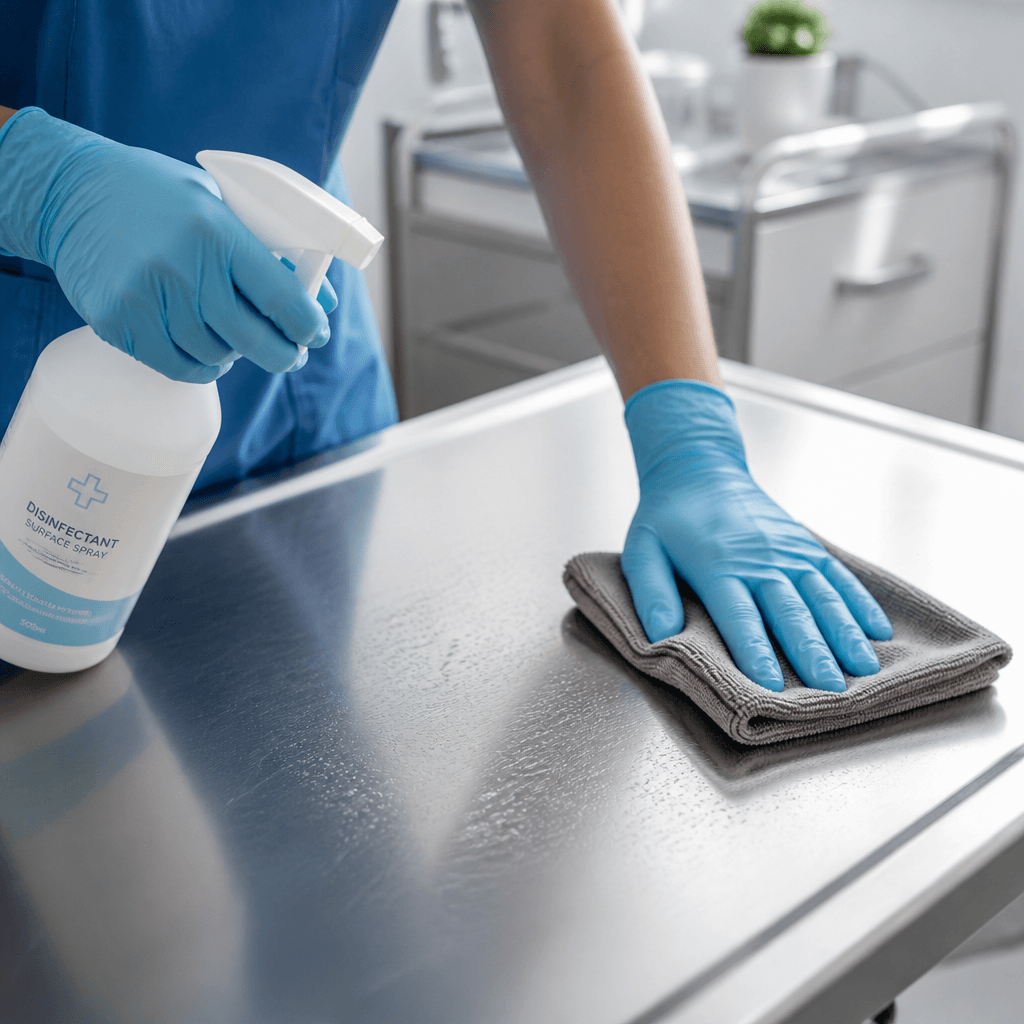
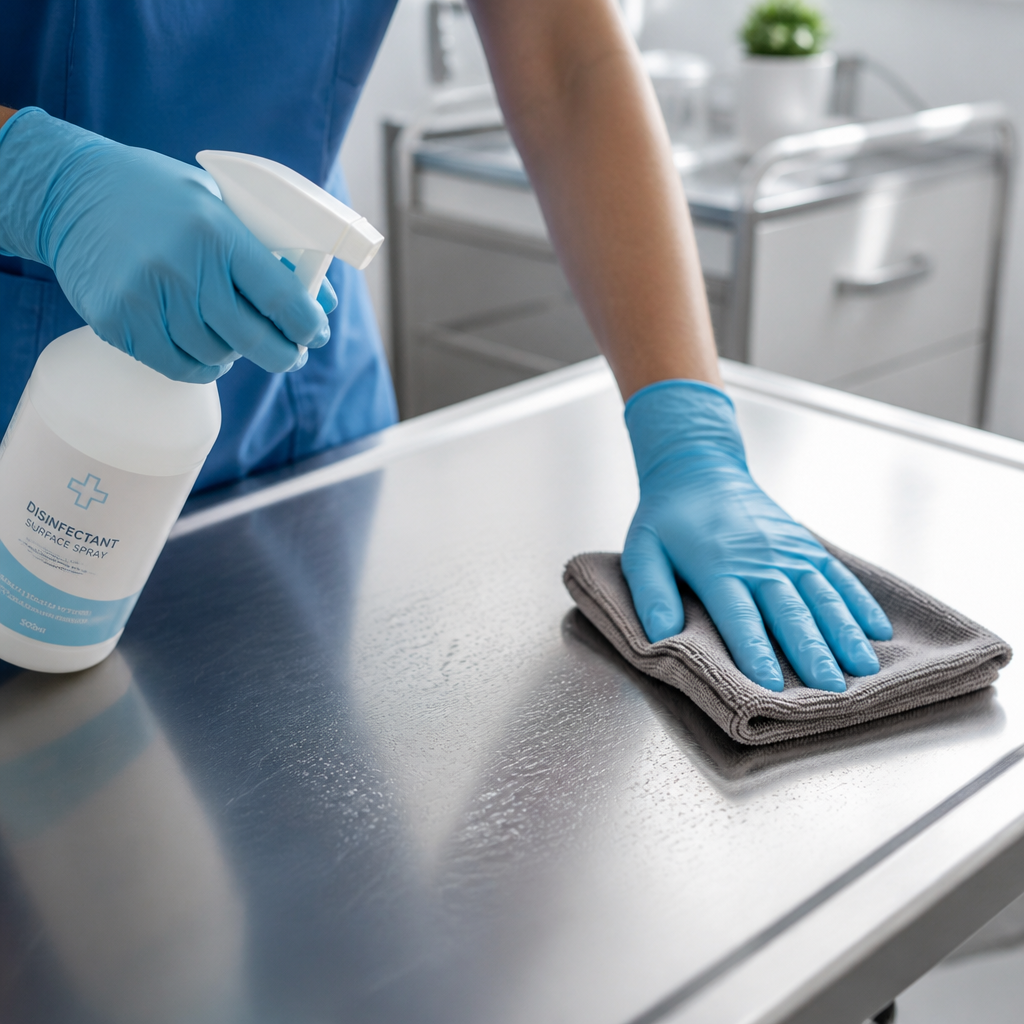
Organic matter, dirt, and grease physically block disinfectants from reaching surface pathogens. This means that cleaning must precede disinfection in any high-compliance environment. Spraying disinfectant on an uncleaned surface in a childcare room or medical treatment area is a common but serious shortcut. A two-step process, clean first with detergent and water, then disinfect with an appropriate TGA-listed product, is the correct approach in both childcare and medical contexts.
Frequency Schedules by Zone
Different zones within the same facility require different cleaning frequencies. Nappy change areas in childcare centres need to be cleaned and sanitised between every single use. Treatment rooms in medical centres need to be cleaned between patients. Waiting areas require at minimum daily disinfection of high-touch points, with additional cleans during high-traffic periods. Any cleaning provider that applies a single blanket frequency schedule to an entire childcare or medical facility does not understand the risk hierarchy of these environments.
Choosing the Right High-Compliance Cleaning Provider in Melbourne
Melbourne has no shortage of cleaning companies, and many present themselves as capable of servicing childcare centres and medical facilities. Most are not equipped to do so to the required standard. Here is how to separate genuine compliance capability from marketing claims.
Questions That Reveal Real Capability
Ask the provider to walk you through their specific protocol for a nappy change table in a childcare centre, or for a GP consulting room between patients. A competent provider will answer without hesitation, referencing specific products, contact times, and equipment colour codes. A provider who responds with generalities about “using the best products” and “following all guidelines” without specifics is telling you something important.
Ask to see their cleaning checklist and log templates. Ask for the TGA registration numbers of their disinfectants. Ask about their staff training program and how they handle outbreak situations. Ask whether their staff hold current police checks. These questions take five minutes to ask and immediately reveal the difference between a compliant provider and a well-marketed generalist.
Why Local Melbourne Knowledge Matters
A cleaning provider operating across Melbourne and the surrounding suburbs, including the Mornington Peninsula and South Eastern suburbs, understands the operational reality of Melbourne facilities. Vibrant Property Services, based in Clyde and servicing Greater Melbourne, brings this local operational knowledge to every site, combined with over 15 years of sector-specific experience across childcare, medical, aged care, and commercial environments.
The combination of regulatory knowledge, local service capability, and documented cleaning systems is what separates a provider worth engaging from one that will create compliance headaches within the first audit cycle.
Frequently Asked Questions
What regulations govern childcare cleaning in Melbourne?
Childcare cleaning in Melbourne is primarily governed by the National Quality Standard (NQS), specifically Element 3.1.2, and the National Health and Medical Research Council’s Staying Healthy guidelines. These require safe, clean, and well-maintained premises, with structured cleaning and sanitisation protocols, documented schedules, and infection control strategies. The Education and Care Services National Regulations also apply to licensed early childhood services across Victoria.
What is the difference between cleaning and sanitising in a medical centre?
Cleaning removes visible dirt and organic matter from surfaces using detergent and water. Sanitising reduces microbial contamination using a TGA-listed disinfectant applied at the correct concentration and left for the required contact or dwell time. In a medical centre, both steps are required in sequence. Disinfecting without first cleaning is ineffective because organic matter blocks disinfectants from reaching surface pathogens.
How often should high-touch surfaces be cleaned in an aged care facility?
At minimum, high-touch surfaces such as door handles, handrails, nurse call buttons, and tapware should be disinfected at least once daily under standard conditions. During any outbreak of gastroenteritis, influenza, or respiratory illness, the frequency should increase substantially and the cleaning team should switch to TGA-listed virucidal products with full PPE protocols in affected zones.
Do cleaning staff working in childcare or aged care facilities need police checks?
Yes. Cleaning staff working in childcare centres are required to meet Working With Children Check requirements in Victoria. Cleaning staff in aged care settings are typically required to hold a valid National Police Check and, in many cases, an NDIS Worker Screening Check. Any professional compliance cleaning provider operating in these sectors should be able to confirm these credentials for every staff member deployed to your facility.
What should I look for in a childcare or medical centre cleaning provider in Melbourne?
Look for providers who can demonstrate specific protocol knowledge for your environment, use TGA-listed disinfectants with verified contact times, operate colour-coded equipment systems to prevent cross-contamination, provide auditable cleaning checklists and logs, and ensure all staff hold relevant background checks. Avoid providers who respond to compliance questions with generalities rather than specifics. Request sample documentation before signing any contract.
How does sanitisation standards compliance affect childcare accreditation?
Childcare centres in Victoria are assessed against the National Quality Standard during rating and assessment visits. Inadequate cleaning and sanitisation practices can directly impact a centre’s NQS rating, particularly under Quality Area 3, which covers the physical environment. A low rating in this area creates reputational damage and may trigger mandatory improvement conditions. Engaging a cleaning provider with documented, NQS-aligned protocols protects both children’s health and the centre’s accreditation standing.
If you manage a childcare centre, medical practice, or aged care facility in Melbourne, we would like to hear about the compliance challenges you face most often in keeping your cleaning standards audit-ready.
We would love your feedback and any insights you would share with others. What perspective would you add?
References
- NHMRC Staying Healthy Guidelines: Infection prevention requirements for early childhood education and care services in Australia
- Early Learning Victoria Hygiene and Cleaning Policy: Victorian requirements for childcare centre cleaning contracts and schedules
- Australian Commission on Safety and Quality in Health Care: Environmental cleaning resources for health service organisations
- RACGP Infection Prevention and Control Guidelines: Cleaning and hygiene standards for Australian general practice settings
- Vibrant Property Services: Why aged care cleaning in Melbourne must meet zero-margin infection control standards