
When an elderly resident contracts a preventable infection inside an aged care facility, the consequences reach far beyond a cleaning checklist. Frailty, compromised immunity, and close communal living make aged care environments some of the most unforgiving places to cut corners on hygiene. Yet across Melbourne, facility managers routinely discover that their cleaning contractor was hired on price, not on capability. Aged care cleaning in Melbourne is not a variation of general commercial cleaning with a few extra wipes. It is a specialised discipline governed by national quality standards, infection control science, and a duty of care that carries real legal weight. Get it wrong, and you are not dealing with a dirty office. You are dealing with resident harm.
Table of Contents
- Why Aged Care Cleaning Is Different from Standard Commercial Cleaning
- The Regulatory Framework Every Melbourne Facility Must Understand
- High-Risk Zones Inside a Residential Aged Care Facility
- Cleaning Protocols That Actually Prevent Infection
- Comparing Cleaning Approaches: What Works and What Falls Short
- What to Look for When Choosing an Aged Care Cleaning Provider in Melbourne
- Frequently Asked Questions
- References
Why Aged Care Cleaning Is Different from Standard Commercial Cleaning
The single biggest mistake facility managers make is treating aged care cleaning as a subset of commercial office cleaning. The residents are not office workers. Their immune systems are compromised by age, chronic illness, and medication. Many live with conditions such as diabetes, heart disease, or respiratory problems that make an ordinary infection potentially fatal. Close contact during care provision, shared dining areas, and communal bathrooms create constant opportunities for pathogen transmission.
Research published in peer-reviewed literature confirms that residents of residential aged care facilities (RACFs) are at elevated risk of healthcare-associated infections (HAIs) including influenza, norovirus, and respiratory viruses. Point prevalence studies in Australian RACFs have reported infection rates among residents ranging between 2.7 and 3.1 percent at any given time, meaning a proportion of residents in a typical Melbourne facility are actively dealing with an infection on any given day.
In practice, this means the margin for error in cleaning is almost zero. A forgotten handrail, an improperly diluted disinfectant, or a mop bucket used across zones can turn a single resident’s illness into a facility-wide outbreak. That is a level of consequence that a general commercial cleaner, however diligent in a hotel or office, is simply not trained to manage.
The Regulatory Framework Every Melbourne Facility Must Understand
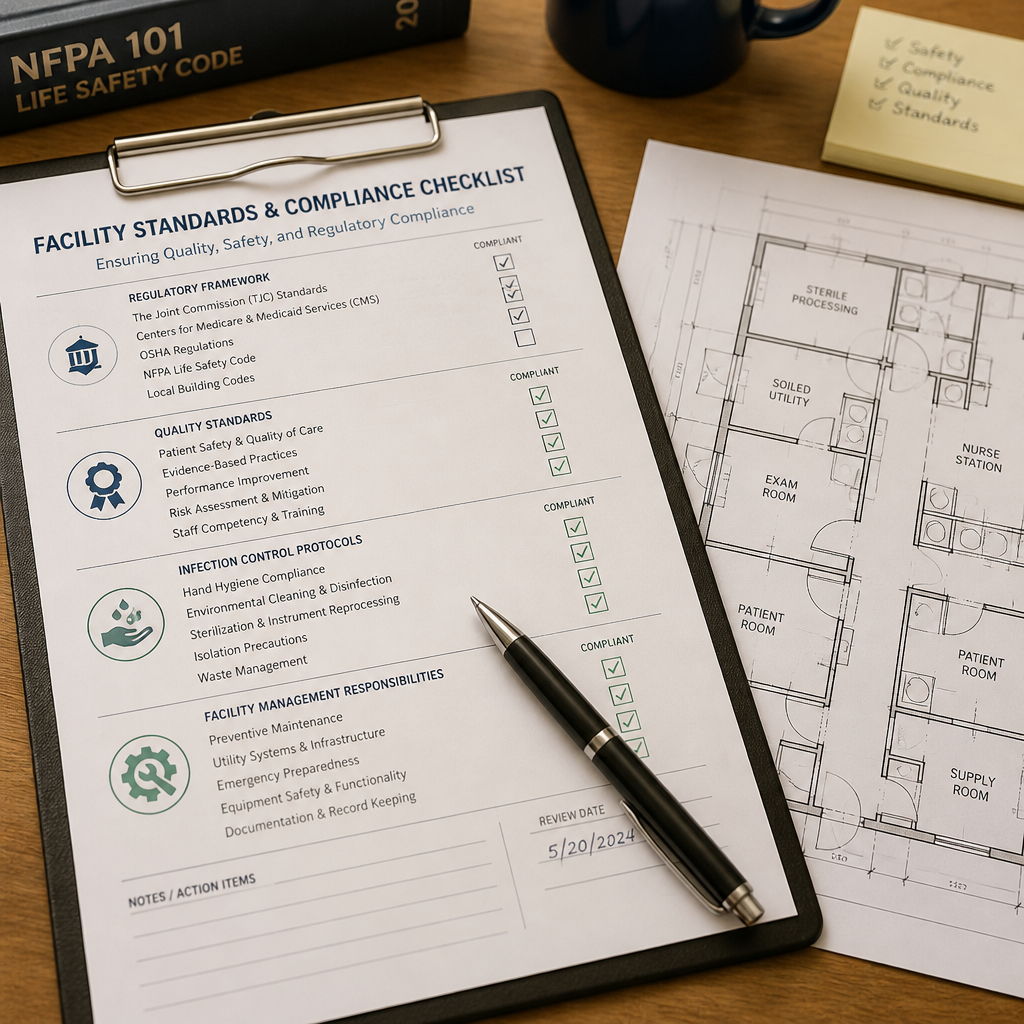
Australia’s aged care sector operates under a strengthened national regulatory structure. The Aged Care Act 2024 and the Aged Care Rules 2025 now govern providers’ obligations, replacing earlier arrangements and raising the bar on what compliance looks like in practice. The Aged Care Quality and Safety Commission (ACQSC) oversees adherence to these standards, and environmental cleaning sits at the centre of infection prevention requirements.
The Australian Commission on Safety and Quality in Health Care (ACSQHC) has published a dedicated Aged Care Infection Prevention and Control (IPC) Guide that sets out the expectations for environmental cleaning programs in residential aged care homes. That guide makes clear that environmental cleaning is a fundamental part of standard precautions, not an optional add-on. Aged care organisations must maintain a structured cleaning program as part of their broader IPC system, and all workers involved in cleaning must be equipped to deliver services effectively.
For Melbourne facility managers, this translates into concrete obligations. Your cleaning provider must operate within a documented cleaning program. Schedules must be risk-based, not arbitrary. High-touch surfaces must be addressed at a frequency that reflects actual transmission risk, not whatever fits a budget. And the cleaning records must be audit-ready, because the ACQSC does inspect.
Pro tip: When reviewing a cleaning contractor’s proposal, ask specifically whether their cleaning program is designed to align with the ACSQHC Aged Care IPC Guide and the strengthened Quality Standards. If they look blank, move on.
Effective infection prevention and control is central to providing high-quality aged care for all older people and a safe working environment for those who work in aged care settings. Environmental cleaning is a fundamental part of standard precautions and an essential part of any IPC system.
Australian Commission on Safety and Quality in Health Care, Aged Care IPC Guide, 2024
High-Risk Zones Inside a Residential Aged Care Facility
Not all areas of an aged care facility carry the same infection risk. Understanding which zones demand the most rigorous cleaning attention is what separates a competent aged care cleaning program from a generic one.
Bathrooms and Ensuites
These are the highest-risk zones in any RACF. Residents with incontinence, catheter use, or bowel conditions shed pathogens at a rate that demands more than a daily wipe-down. Toilets, grab rails, tapware, and floor surfaces around the toilet base must be disinfected using a hospital-grade product at scheduled intervals throughout the day, not just during a morning clean.
High-Touch Surface Areas
Door handles, nurse call buttons, lift panels, dining table surfaces, remote controls, and handrails in corridors accumulate microbial load rapidly in a communal living environment. These surfaces require disinfection multiple times daily during any outbreak situation, and at least once daily as standard practice. A common mistake is treating these surfaces as part of a general room clean rather than as a separate, documented high-touch protocol.
Clinical and Treatment Rooms
Any space where wound dressings are changed, medications are administered, or clinical equipment is used carries a risk profile closer to a medical facility than a residential building. Cross-contamination from these rooms to residential areas is a documented transmission pathway. Cleaning staff working in treatment rooms must use appropriate PPE, and the room must be cleaned in a defined sequence that moves from clean areas to dirty areas, never the reverse.
Communal Dining and Kitchen Areas
Shared mealtimes create concentrated opportunities for cross-contamination. Dining table surfaces, chair armrests, serving equipment, and high-chairs (in co-located facilities) must be cleaned and sanitised before and after each mealtime. The cleaning sequence matters: tables before floors, and always with a product that is both a detergent and a disinfectant, or with a two-step process where surfaces are cleaned and then disinfected.
Cleaning Protocols That Actually Prevent Infection
The science behind effective aged care cleaning is not complicated, but it requires consistency. The protocols that actually prevent infection transmission come down to four non-negotiable practices.
Colour-Coded Equipment Systems
Cross-contamination between zones is one of the most preventable yet most commonly observed failures in aged care cleaning. A colour-coded cloth and mop system, where specific colours are assigned to specific zones (for example, red for toilets, blue for general surfaces, green for kitchens), prevents a cloth used on a toilet from being used on a dining table. Every cleaning provider servicing a Melbourne aged care facility should be using a fully documented colour-coded system. If they are using single-colour cloths across zones, that is a compliance risk.
Correct Dilution and Contact Time for Disinfectants
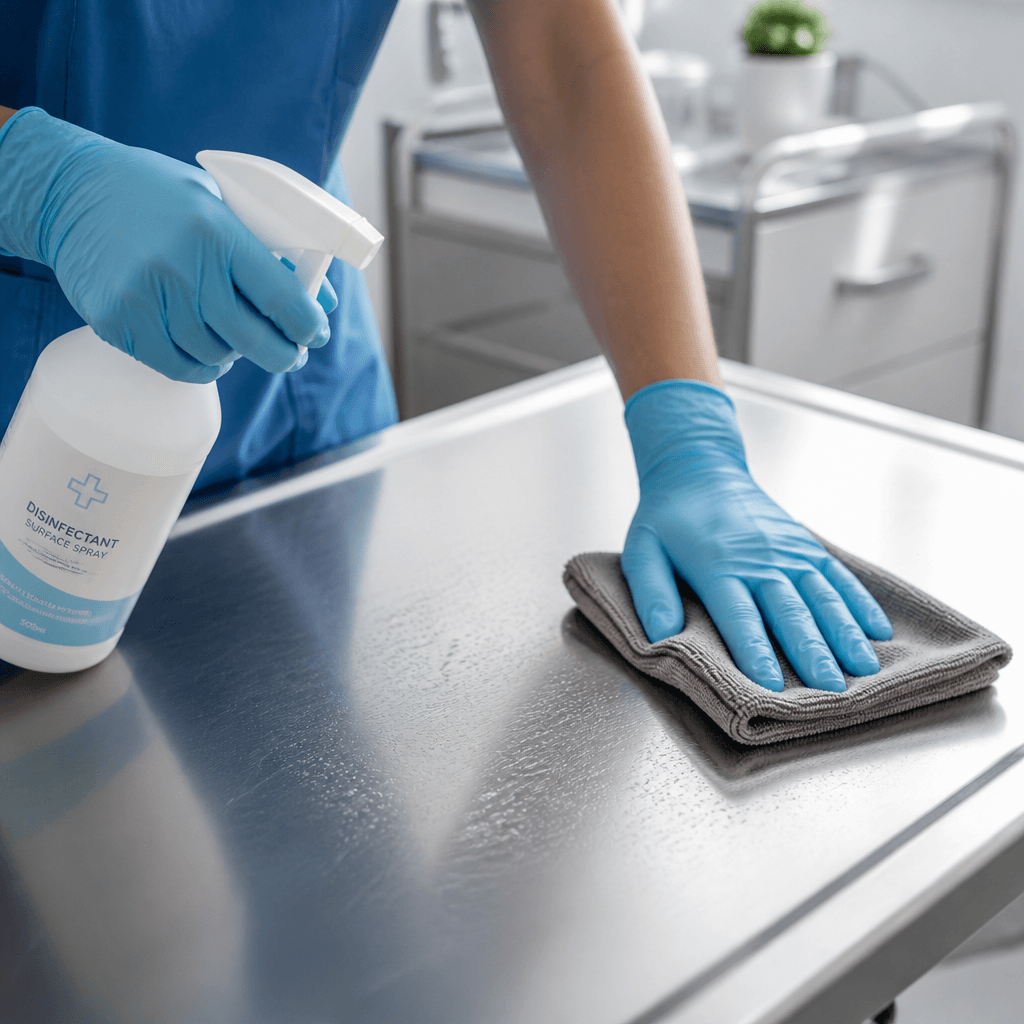
A disinfectant that is not diluted to the manufacturer’s specification, or that is not left on a surface for the required contact time, is not disinfecting anything. It is just a wet surface. In practice, many cleaning staff spray and immediately wipe, which defeats the purpose of the product. Hospital-grade disinfectants typically require a minimum contact time of several minutes to be effective against the pathogens of concern in aged care settings. Training on this point is not optional.
Documented Cleaning Schedules and Audit Trails
A cleaning schedule that exists only in someone’s head is not a cleaning schedule. Every task, every frequency, every responsible person, and every sign-off must be documented. The ACQSC expects to see evidence of a structured cleaning program during assessments. Vibrant Property Services builds client-specific cleaning schedules that are documented, reviewed at regular intervals, and adapted when the facility’s needs change. That kind of structured approach is not just good practice; it is what compliance requires.
Outbreak Response Protocols
When a gastroenteritis or respiratory outbreak is declared in a facility, the standard cleaning schedule is not adequate. Outbreak cleaning requires increased frequency of high-touch surface disinfection, the use of products with specific efficacy against the causative pathogen, enhanced PPE for cleaning staff, and a documented escalation process. A cleaning provider that does not have a written outbreak response protocol is not suitable for an aged care contract, regardless of how competitive their pricing is.
Pro tip: Before signing any aged care cleaning contract, ask the provider to walk you through their outbreak cleaning protocol in writing. The quality of that document tells you more about their competence than any testimonial.
Comparing Cleaning Approaches: What Works and What Falls Short
Not all cleaning approaches are equal in an aged care context. The table below compares three approaches facility managers commonly encounter, based on how they perform against the actual demands of residential aged care hygiene.
| Cleaning Approach | What It Looks Like in Practice | Suitability for Aged Care |
|---|---|---|
| Generic Commercial Cleaning | Standard schedules designed for offices or retail. No zone-specific protocols, no hospital-grade disinfectants, no outbreak response capability. Often the cheapest option. | Not suitable. Creates compliance risk and real infection risk. The cost saving is not worth the liability. |
| Specialised Aged Care Cleaning Program | Risk-based schedules, colour-coded equipment, hospital-grade disinfectants, documented audit trails, staff trained in aged care IPC requirements, and a written outbreak protocol. Aligned with ACSQHC IPC Guide. | Appropriate. Meets regulatory expectations and reduces HAI risk. This is the standard that Melbourne RACFs should be demanding from contractors. |
| In-House Cleaning Staff (Untrained) | Facility employs its own cleaners but provides minimal formal training in infection control. Schedules may be thorough in some areas and weak in others depending on individual staff. | Variable and high-risk unless supported by a formal IPC training program and documented protocols. Many facilities underestimate what proper training requires. |
The comparison above is not a close call. For any residential aged care facility in Melbourne, a specialised, documented cleaning program delivered by a provider with genuine aged care experience is the only defensible choice.
What to Look for When Choosing an Aged Care Cleaning Provider in Melbourne
Melbourne has no shortage of cleaning companies, but most of them should not be inside an aged care facility. Choosing the wrong provider is not just an operational inconvenience. It is a compliance failure waiting to happen, and potentially a resident safety incident. Here is how to separate the capable providers from the ones who will cost you more than their invoice.
Documented Experience in Aged Care Specifically
General commercial experience does not transfer automatically. Ask for references from other residential aged care clients specifically, not just “healthcare” or “hospitality” clients. Aged care has unique regulatory requirements and a unique resident population. A provider who has only cleaned offices and hotels is not starting from a useful baseline.
Staff Training and Vetting
Everyone who enters an aged care facility must be appropriately vetted. In Victoria, this means police checks and, depending on the role, Working with Vulnerable People checks. Beyond vetting, the cleaning staff must receive facility-specific induction training and ongoing IPC training. Ask any prospective provider to describe exactly what training their staff receive before being placed in an aged care facility. The answer should be specific, not vague reassurances about their “thorough onboarding process.”
Cleaning Products and Equipment
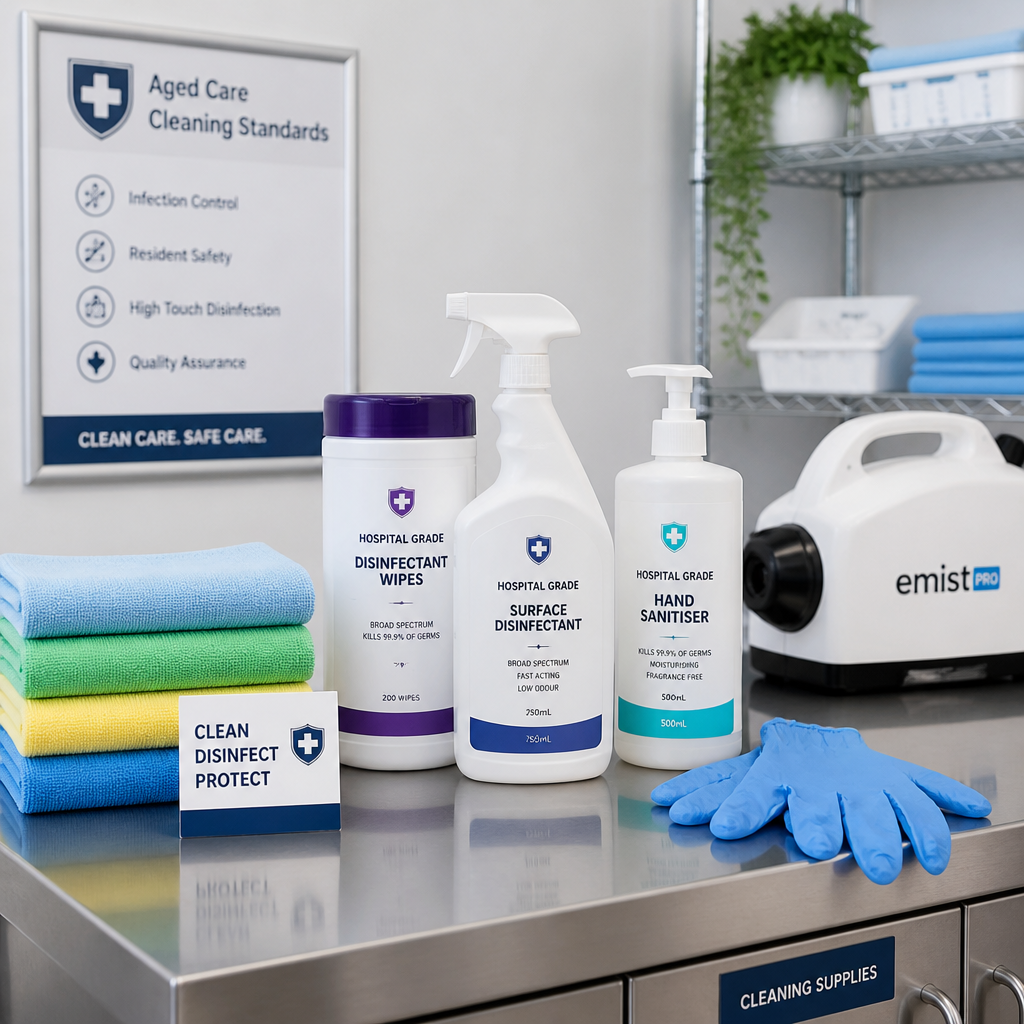
The products used must be appropriate for the setting. Hospital-grade disinfectants, TGA-listed where required, are not the same as the products used in a retail or office environment. Equipment must be maintained and fit for purpose. Mops that are not laundered between uses, or microfibre cloths that are reused without washing, can actively spread pathogens rather than remove them.
Flexibility and Communication
Aged care facilities are dynamic environments. Outbreaks occur, residents’ needs change, and facility layouts evolve. A cleaning provider that can only operate on a rigid fixed schedule and takes days to respond to urgent requests is not appropriate for this setting. The ability to respond rapidly, communicate clearly with facility management, and adjust protocols when needed is a core requirement, not a bonus feature.
Vibrant Property Services has been working in Melbourne’s aged care sector as part of a broader portfolio that includes medical facility cleaning and childcare centre cleaning, giving the team practical experience across the full spectrum of high-compliance, vulnerable-population environments. The approach to commercial cleaning in aged care draws directly from that cross-sector experience, not from a generic playbook.
For facility managers who want to understand what a structured, tailored cleaning program looks like before committing, Vibrant’s approach to cleaning schedules demonstrates exactly how site-specific programs are built, reviewed, and adapted over time.
Frequently Asked Questions
What does aged care cleaning in Melbourne need to comply with?
Melbourne aged care facilities must comply with the Aged Care Act 2024 and Aged Care Rules 2025, overseen by the Aged Care Quality and Safety Commission. Environmental cleaning must align with infection prevention and control requirements, and the Australian Commission on Safety and Quality in Health Care’s Aged Care IPC Guide provides detailed practical guidance for cleaning programs in residential aged care homes.
How often should high-touch surfaces be cleaned in an aged care facility?
At minimum, high-touch surfaces such as door handles, handrails, nurse call buttons, and tapware should be disinfected at least once daily as standard practice. During any outbreak situation, whether gastroenteritis, influenza, or respiratory illness, frequency should increase to multiple times daily using a product with confirmed efficacy against the relevant pathogen. This should be a documented part of the facility’s outbreak response protocol.
What is the difference between cleaning and disinfecting in aged care?
Cleaning physically removes visible dirt, dust, and organic matter from a surface. Disinfecting uses a chemical agent to kill or inactivate pathogens remaining on the surface after cleaning. In aged care, both steps are required in sequence for high-risk surfaces. Applying a disinfectant to a visibly soiled surface without cleaning first significantly reduces the product’s effectiveness, because organic matter interferes with disinfectant activity.
Can a general commercial cleaning company service an aged care facility?
Technically yes, but it is not appropriate and it creates real compliance and safety risk. Aged care cleaning requires specific training in infection prevention and control, use of appropriate hospital-grade products, colour-coded equipment systems to prevent cross-contamination, and documented outbreak protocols. A general commercial cleaner without aged care-specific training and systems does not meet the standard required under the strengthened Quality Standards.
What should a nursing home cleaning schedule include?
A compliant nursing home cleaning schedule should specify each area by risk zone, list every cleaning and disinfection task with required frequency, name the products and dilutions to be used, document the colour-coded equipment allocation, include sign-off fields for completed tasks, and include a separate outbreak protocol with escalated frequencies and enhanced PPE requirements. The schedule should be reviewed regularly and updated to reflect any changes in the facility’s layout, occupancy, or infection risk profile.
How do I evaluate whether my current aged care cleaning provider is meeting the standard?
Request a copy of their documented cleaning program and compare it against the ACSQHC Aged Care IPC Guide. Ask to see their colour-coded equipment policy and their outbreak response protocol. Review the cleaning records from the past 30 days to check whether sign-offs are consistent. Conduct an unannounced walkthrough focusing on high-touch surfaces and bathrooms. If the records are incomplete, the protocols are vague, or the physical results do not match what is on paper, those are clear indicators that a provider change is warranted.
If you manage a residential aged care facility in Melbourne and are reassessing your cleaning arrangements, we would be glad to hear about the specific challenges you are navigating. What aspects of aged care cleaning compliance have been hardest to get right in your facility?
References
- Aged Care Quality and Safety Commission: Environmental Cleaning and Infection Prevention Resources
- Australian Commission on Safety and Quality in Health Care: Aged Care Infection Prevention and Control Guide (2024)
- Aged Care Quality and Safety Commission: Infection Prevention and Control under the Strengthened Quality Standards
- Peer-Reviewed Research: Infection Prevention and Control Practices in Residential Aged Care Facilities