
Schools in Melbourne face a cleaning challenge that most commercial facilities do not. Hundreds of children share confined spaces, touch the same surfaces repeatedly, and bring pathogens from home every single day. Research from the Australian Institute of Health and Welfare confirms that respiratory and gastrointestinal infections spread faster in educational settings than in almost any other environment. If your school’s cleaning program is not specifically designed for this context, it is failing your students. This article breaks down exactly what professional school cleaning Melbourne requires, what cutting corners costs, and how to build a cleaning protocol that genuinely protects learners.
Table of Contents
- Quick Takeaways
- Why School Cleaning Is Different from Standard Commercial Cleaning
- What a Compliant School Cleaning Program Actually Covers
- Classroom Hygiene: The Areas Most Cleaning Teams Miss
- Cleaning Schedules That Work for School Operations
- Comparing School Cleaning Approaches
- How Vibrant Property Services Approaches Educational Facility Cleaning
- Frequently Asked Questions
- References
Quick Takeaways
| Key Insight | Explanation |
|---|---|
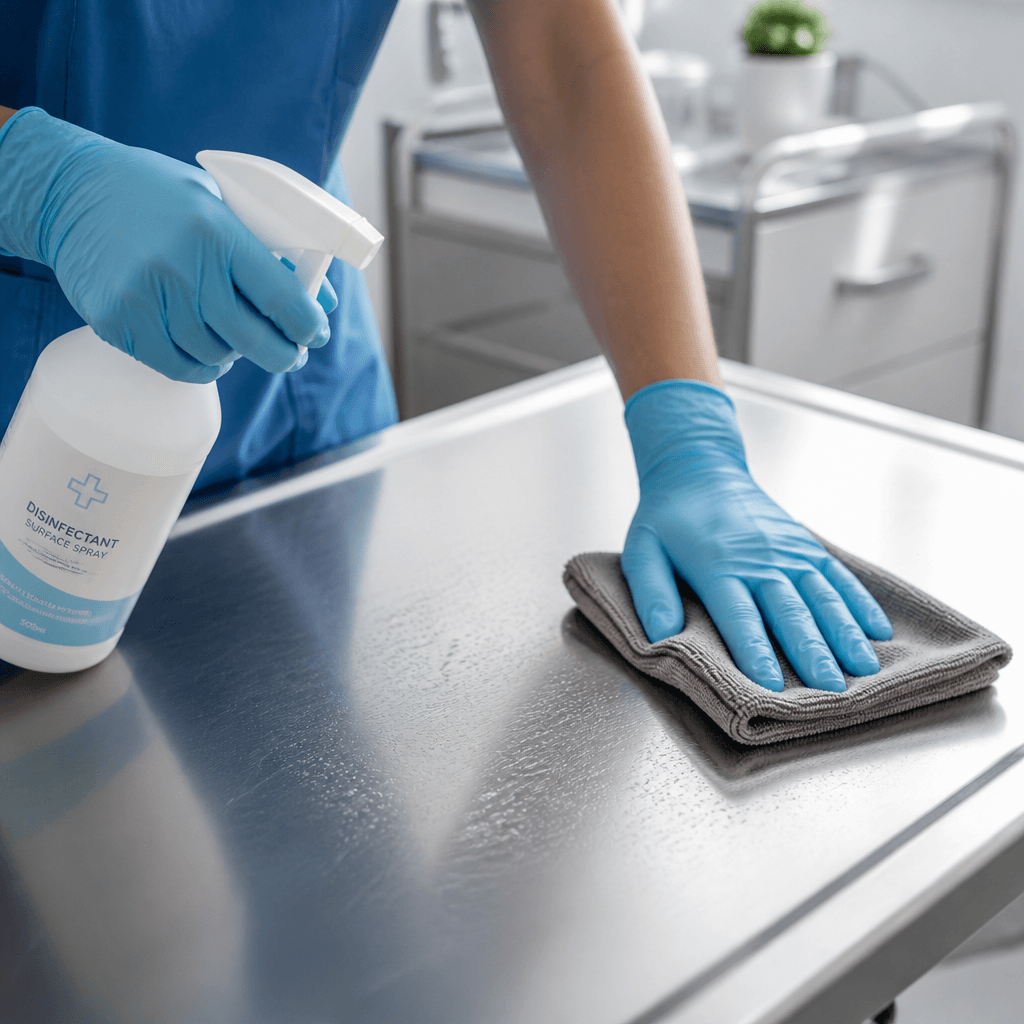
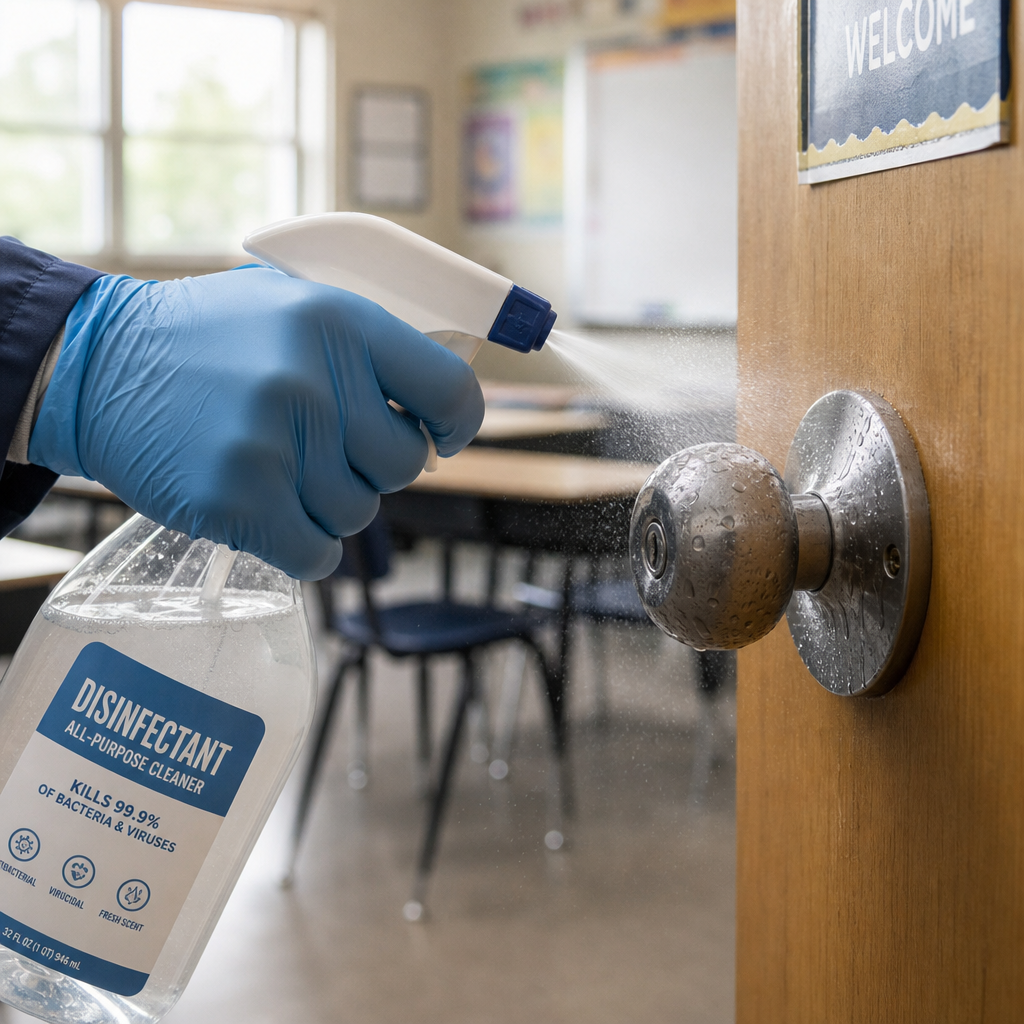
| High-touch surfaces need daily disinfection | Door handles, light switches, desks, and shared stationery carry the highest bacterial loads in classrooms and must be sanitised every school day, not weekly. |
| TGA-approved products matter in educational settings | Not all disinfectants are safe for children. Melbourne schools should require cleaning companies to use Therapeutic Goods Administration-listed disinfectants with documented dwell times. |
| After-hours cleaning is the gold standard | Cleaning performed while students are present compromises both safety and effectiveness. Scheduling cleaning after 3:30 pm or before 8 am produces measurably better outcomes. |
| Restroom cleaning frequency drives absenteeism rates | Studies link poor toilet hygiene in schools directly to higher student absenteeism. Restrooms in active schools require at minimum two cleans per school day. |
| Specialist training separates real educational cleaners from generalists | Cleaners working in schools must understand colour-coded cloth systems, cross-contamination prevention, and child-safe chemical handling. General commercial experience is not sufficient. |
| Documented cleaning logs protect schools legally | If a student becomes ill and parents or regulators investigate, a school without signed cleaning logs has no evidence of due diligence. Logs are not optional in professional contracts. |
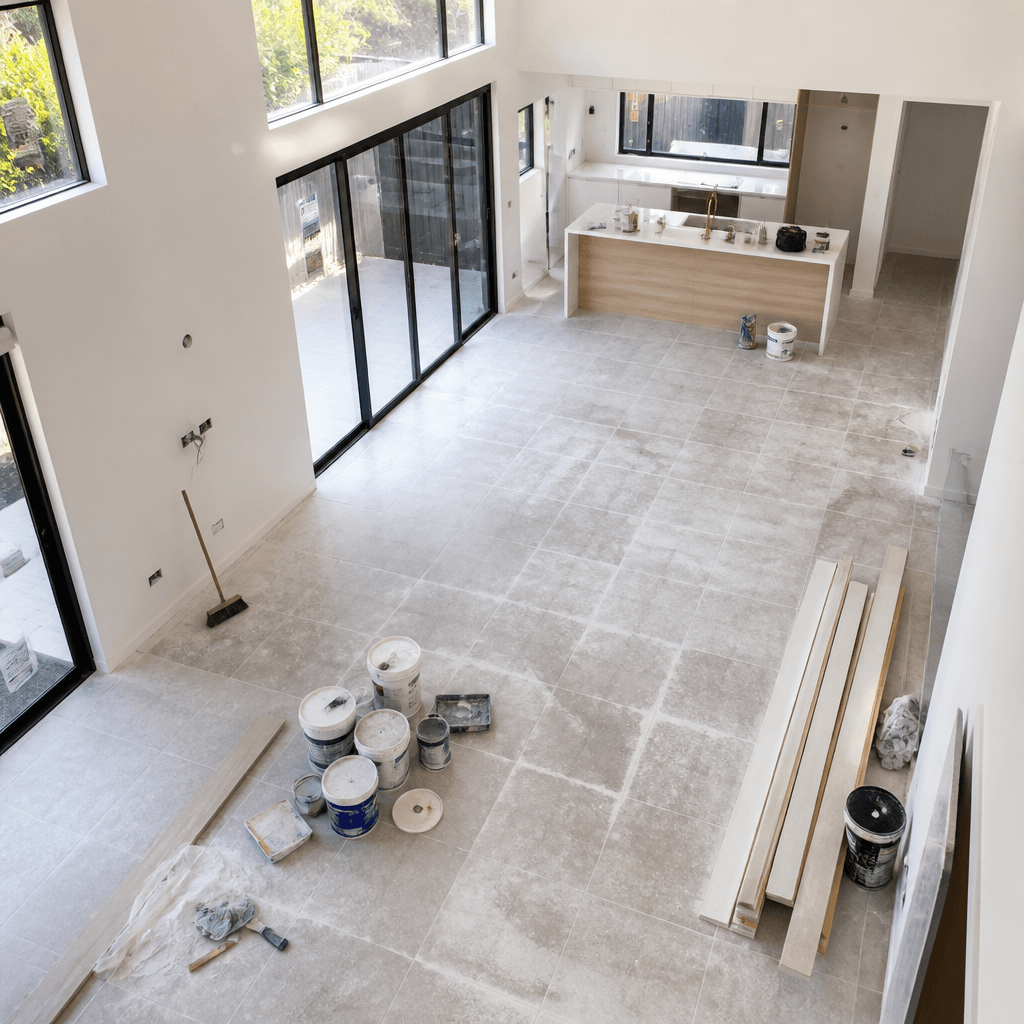
| Builder’s cleaning is required after any school renovation | Construction dust contains silica and other hazardous particles. Specialist post-construction cleaning must occur before students re-enter any renovated area. |
Why School Cleaning Is Different from Standard Commercial Cleaning
The assumption that any competent office cleaning company can walk into a Melbourne school and deliver adequate results is one of the most persistent and damaging mistakes facility managers make. Schools are not offices. The density of occupants, the vulnerability of the people in them, and the regulatory expectations are categorically different.
A typical Melbourne primary school might have 400 to 600 students cycling through 20 to 30 classrooms, multiple shared bathrooms, a library, a canteen, and outdoor areas. Every one of those spaces has specific cleaning requirements. A standard office cleaning rotation, built around weekly vacuuming and nightly desk wipes, does not translate to this environment.
Children are also significantly more susceptible to chemical residues than adults. Their respiratory systems are still developing, and they spend time on floors that adults never touch. This means the product selection for educational facility cleaning Melbourne must account for chemical safety in a way that office cleaning simply does not need to.
In practice, the schools that consistently maintain clean, low-infection environments are the ones that treat cleaning as a health service, not a maintenance task. That distinction shapes every decision, from product selection to staff training to inspection frequency.
Pro tip: When evaluating a cleaning provider for your Melbourne school, ask specifically whether their staff have completed any training aligned with Australian school or childcare cleaning standards. A provider who cannot answer this question clearly is not the right fit for an educational facility.
What a Compliant School Cleaning Program Actually Covers
A cleaning program that meets the expectations of Melbourne school principals, Department of Education guidelines, and Occupational Health and Safety obligations is not simply a list of rooms to clean. It is a structured system with defined frequencies, product specifications, and accountability mechanisms.
Daily Non-Negotiables
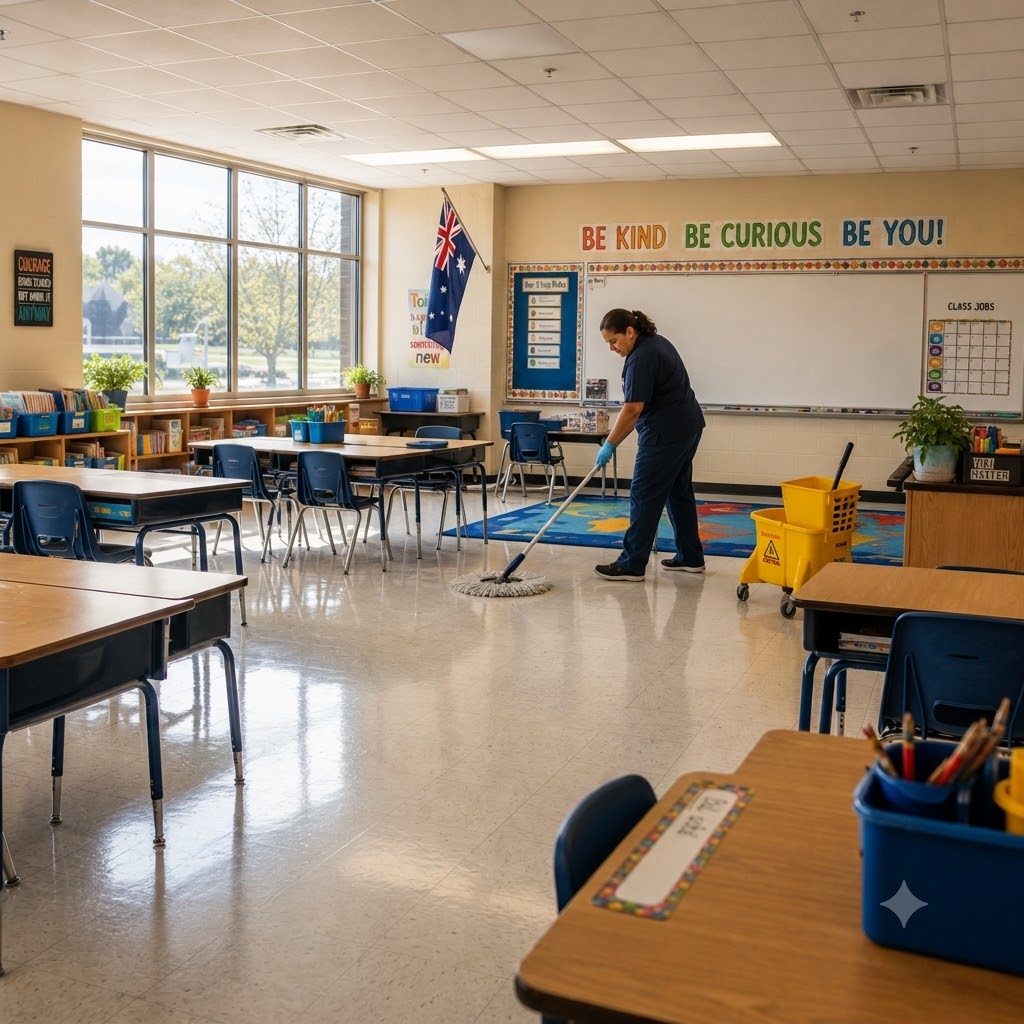
Every school day, the following must be completed without exception: disinfection of all high-touch surfaces in every classroom, full restroom cleaning and restocking, vacuuming or mopping of all hard floors in teaching areas, and removal of all waste. These are not aspirational targets. They are the baseline for a safe learning environment.
Canteen and food preparation areas carry additional requirements, including food-safe sanitiser application and grease trap maintenance where applicable. A common mistake is treating the canteen as an afterthought in the cleaning schedule. Food safety incidents traced back to school canteens have resulted in significant legal and reputational consequences for Melbourne schools.
Weekly and Periodic Cleaning Tasks
Weekly tasks typically include deep cleaning of restroom tiles and grout, sanitisation of shared equipment such as computers and printers, thorough cleaning of staff areas and administration offices, and external area maintenance including bin surrounds and entry pathways.
Periodic tasks, usually performed during school holidays, include high-pressure cleaning of external paved surfaces, window cleaning, carpet extraction cleaning, and tile and grout restoration in restrooms and food prep areas. These periodic tasks are where many schools fall behind. Skipping them for one term is manageable. Skipping them for two or three creates a hygiene deficit that is difficult and expensive to reverse.
Classroom Hygiene: The Areas Most Cleaning Teams Miss
Classroom hygiene sounds straightforward until you look at what actually happens inside a classroom during a school day. Students sneeze on surfaces, share pencils and scissors, and pile bags and lunch boxes on the floor. The cleaning priorities inside a classroom are not obvious to someone without specific experience in this environment.
The data consistently shows that the dirtiest surfaces in classrooms are not the floors. They are the shared contact points: pencil containers, scissors handles, the edges of tablets and laptops, chair backs, and the borders of student desks. These surfaces are cleaned last, or not at all, in programs that prioritise visible cleanliness over microbial safety.
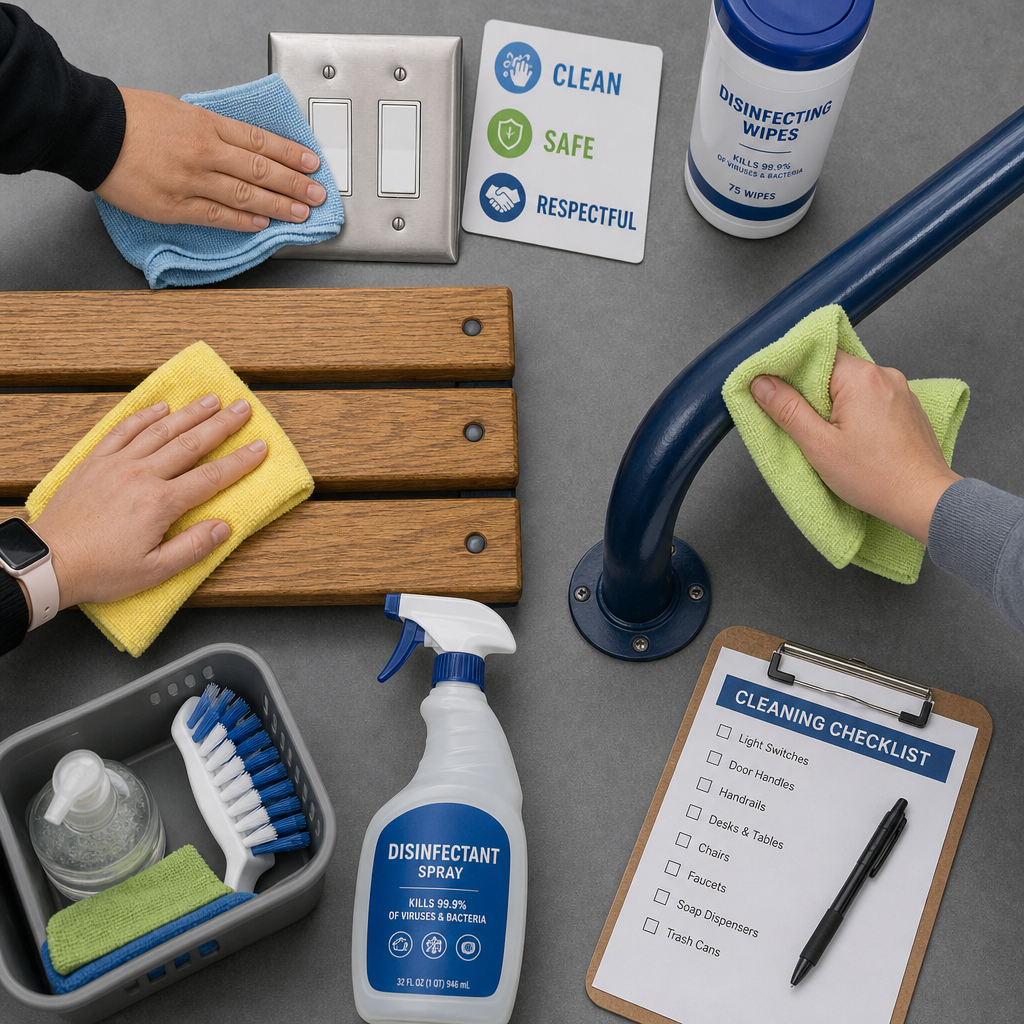
Colour-Coded Cloth Systems in Classrooms
Professional classroom hygiene programs use colour-coded microfibre cloth systems to prevent cross-contamination between zones. In practice, this means a different cloth colour is used for toilets, classrooms, food areas, and general surfaces. A cleaner who uses the same cloth from the bathroom to the classroom creates a hygiene risk that defeats the entire purpose of the cleaning exercise.
This sounds basic, but a large proportion of school cleaning contracts in Melbourne do not specify or enforce this requirement. When Vibrant Property Services audits a new school site, the absence of a colour-coded system is one of the most common gaps identified.
Air Quality and Ventilation Cleaning
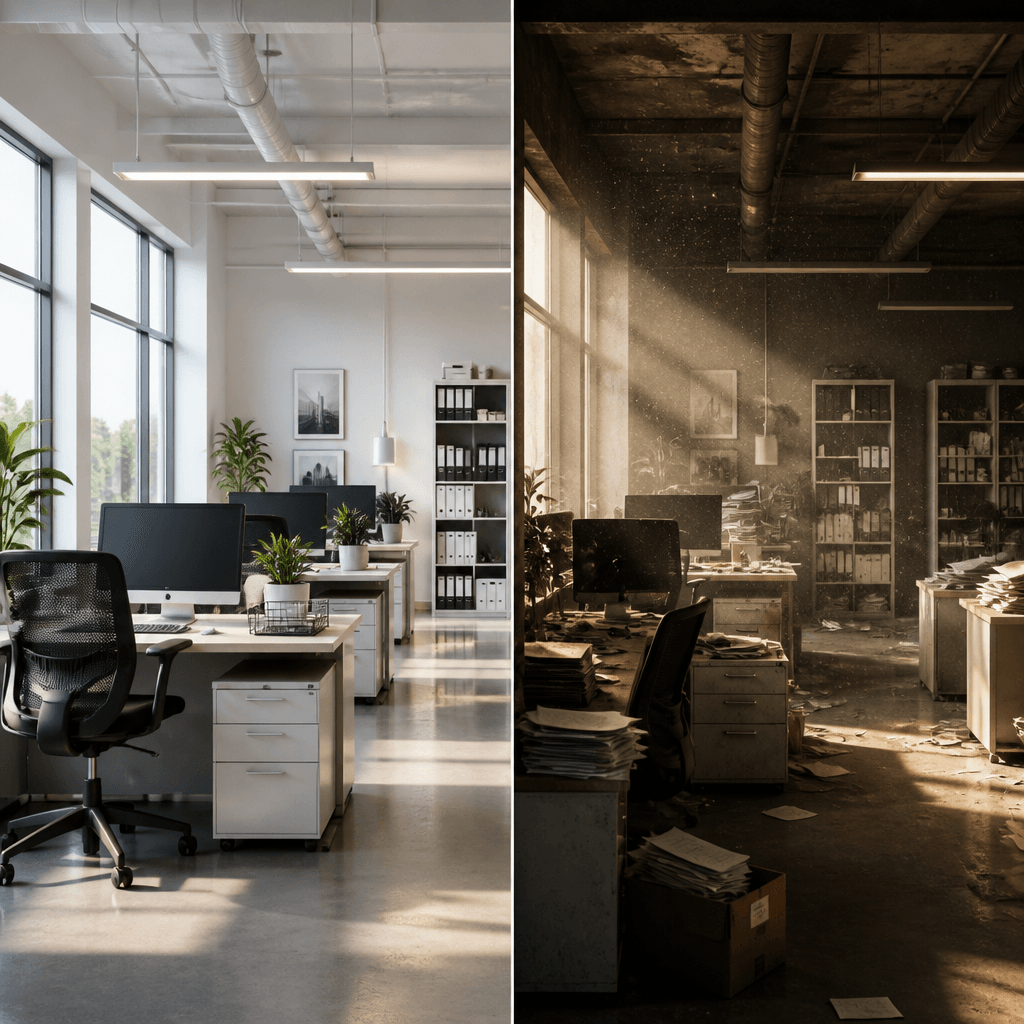
Dust accumulated in air conditioning vents and ceiling fans circulates through classrooms constantly. This is a significant issue for students with asthma or allergies, both of which affect a substantial portion of the Melbourne school-age population. A complete educational facility cleaning program includes periodic cleaning of vents, fans, and ducted system grilles, not just the surfaces students touch directly.
“Poor indoor air quality in schools has been linked to increased absenteeism, reduced concentration, and higher rates of respiratory illness in children.” – Australian Institute of Health and Welfare, Environmental Health Report
Pro tip: Ask your cleaning provider to include air vent and ceiling fan cleaning in the term-break schedule. This single addition meaningfully improves classroom air quality and reduces dust-related complaints from teaching staff.
Cleaning Schedules That Work for School Operations
One of the practical realities of school cleaning in Melbourne is that the building is occupied for most of the day, five days a week during term, and largely empty during school holidays. A cleaning schedule that does not account for this rhythm will either disrupt education or miss critical cleaning windows.
The most effective model, and the one Vibrant Property Services recommends for Melbourne schools, is a split schedule. A small team attends during the day to manage reactive cleaning, restroom restocking, and canteen sanitation. The primary cleaning team arrives after school hours to complete the full daily program without students present.
Holiday Period Cleaning: Where the Real Work Happens
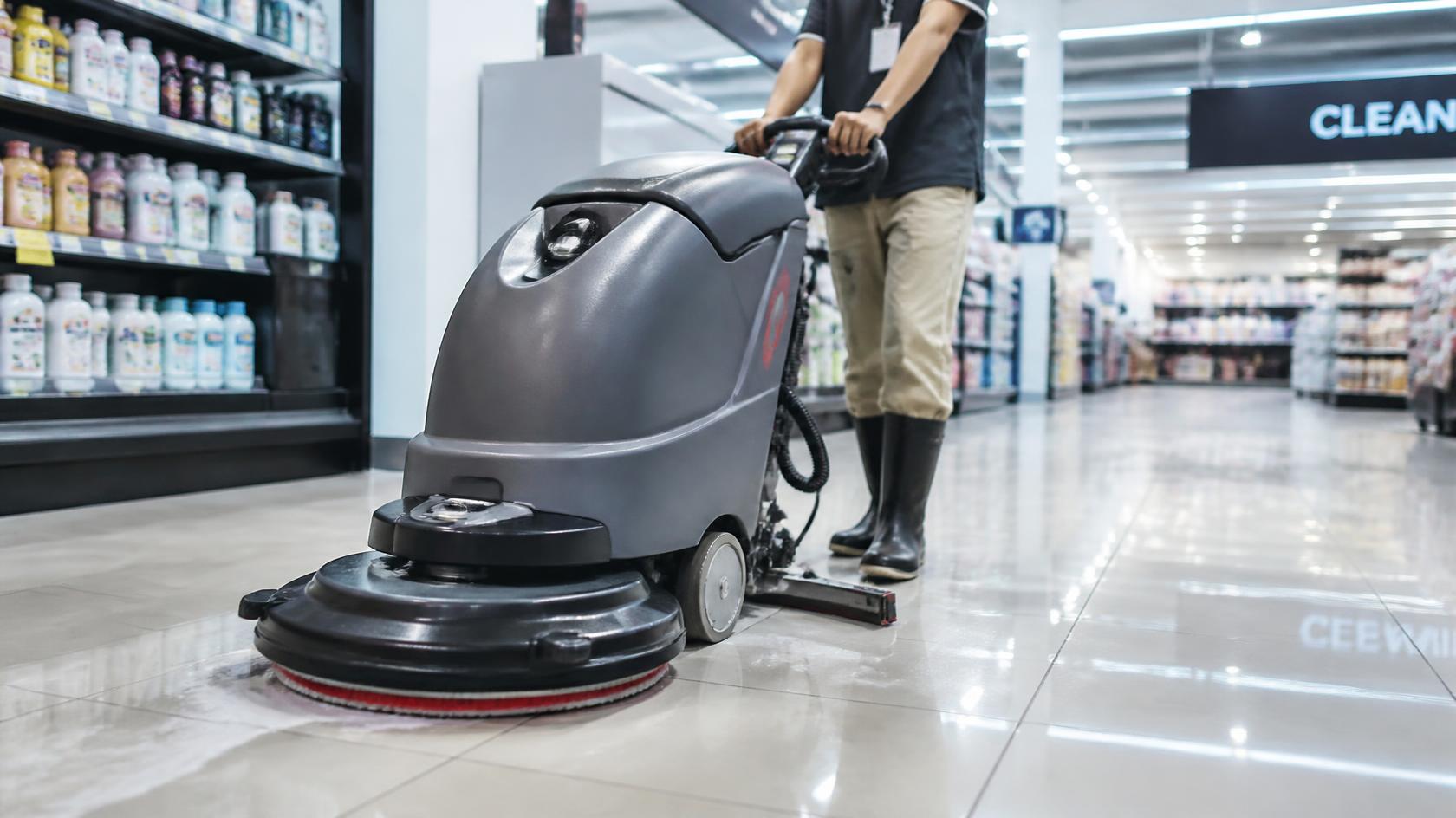
School holidays are the window for deep cleaning tasks that cannot be done while students are present. This includes carpet steam cleaning, high-pressure cleaning of courts and pathways, window cleaning at height, and builder’s cleaning if any construction work occurred during term. Schools that do not build a comprehensive holiday cleaning plan into their annual contract consistently find themselves managing deteriorating facilities.
Melbourne’s four-term school year creates four natural opportunities for deep cleaning. The summer holiday period, typically six to seven weeks, allows for the most intensive work including tile and grout restoration, full window cleaning programs, and external area rehabilitation.
Infection Event Response Protocols
When a gastrointestinal outbreak or a confirmed case of a communicable disease occurs in a Melbourne school, the standard cleaning schedule is not sufficient. A professional cleaning provider should have a documented outbreak response protocol that includes enhanced disinfection of all affected areas, use of higher-strength TGA-approved disinfectants, and a clear communication process with school administration. Schools without this protocol in their contract are managing infection events reactively rather than systematically.
Comparing School Cleaning Approaches
Not all school cleaning arrangements deliver equivalent results. The three most common approaches used in Melbourne schools are in-house cleaning staff, large national contract cleaners, and specialist local commercial cleaners. Each has genuine trade-offs.
| Approach | Key Strengths | Significant Limitations |
|---|---|---|
| In-House Cleaning Staff | High familiarity with the site, direct accountability to principal, flexible to school-specific needs | High HR overhead, limited access to specialist equipment, training gaps in infection control, cover gaps during illness or holidays |
| Large National Contract Cleaners | Standardised systems, insurance coverage, capacity for multi-site contracts | High staff turnover, generic protocols not adapted to school environments, slow response to issues, often subcontract work reducing quality control |
| Specialist Local Commercial Cleaners (e.g. Vibrant Property Services) | Educational facility-specific protocols, consistent staff, rapid response, tailored schedules, specialist equipment for periodic tasks | May not suit very large multi-campus school networks without a formal multi-site agreement |
The data consistently shows that large national contract cleaners produce the most variable results in school environments. Their business model depends on efficiency at scale, which works well for office towers but poorly for the complex, relationship-dependent environment of a school. Facility managers who have switched from large national providers to specialist local providers consistently report improved audit outcomes and fewer parent complaints.
How Vibrant Property Services Approaches Educational Facility Cleaning
Vibrant Property Services has been delivering cleaning services across Melbourne for over 15 years, with specific experience in educational and childcare environments. That experience is not incidental. It has shaped a cleaning methodology that is substantially different from what a generalist commercial cleaner brings to a school site.
Every school cleaning program delivered by Vibrant Property Services begins with a site audit. This is not a sales walk-through. It is a structured assessment of current hygiene standards, identification of high-risk zones, review of existing cleaning documentation, and a meeting with the facility manager or principal to understand the school’s specific priorities. The cleaning scope is then built from that audit, not from a generic template.
Child-Safe Chemical Protocols
All products used in Melbourne school environments by Vibrant Property Services are selected with explicit attention to child safety. This means TGA-listed disinfectants with verified efficacy against the pathogens most common in school settings, low-VOC surface cleaners to protect air quality, and no use of products containing known irritants or endocrine-disrupting compounds in areas where children are present.
This is not a marketing claim. It is a documented requirement in every educational facility cleaning contract, and it is auditable by school administration at any time.
Consistent Staff Allocation
A common failure mode in school cleaning contracts is high staff turnover. When a different cleaner arrives each week, site knowledge is lost, subtle issues go unnoticed, and the relationship with school staff breaks down. Vibrant Property Services allocates consistent, named staff to each school site. This means the cleaners know where the asthmatic student’s classroom is, which teacher prefers their desk untouched, and which corridor floods when it rains. That level of site knowledge produces better outcomes than any standardised checklist.
Schools across Melbourne’s northern, southern, and eastern suburbs have engaged Vibrant Property Services for both term-time cleaning and holiday deep clean programs. The combination of daily classroom hygiene, periodic specialist services such as high-pressure cleaning and tile restoration, and a documented compliance framework meets the expectations of school councils, Department of Education auditors, and parents alike.
Frequently Asked Questions
How often should Melbourne schools schedule professional deep cleaning?
At minimum, a full deep clean should occur at each of the four school holiday periods. Schools with high enrolment numbers or older facilities benefit from an additional mid-term inspection and targeted deep clean of high-use areas such as restrooms, canteens, and entry zones. Waiting until problems are visible means the hygiene standard has already failed.
What cleaning standards apply to Victorian government schools?
Victorian government schools are expected to comply with Department of Education guidelines on facility maintenance and hygiene, as well as relevant WorkSafe Victoria requirements for hazardous substances used in cleaning. Schools must also meet obligations under the Education and Training Reform Act. Independent and Catholic schools follow their sector’s governance frameworks, but the practical cleaning standards are comparable across all school types in Melbourne.
Are the cleaning products used in schools safe for children with asthma or allergies?
They should be, but this depends entirely on the cleaning provider. Professional educational facility cleaning Melbourne programs specify low-VOC, fragrance-free, and non-irritant products for use in occupied or recently occupied spaces. Any cleaning provider that cannot provide a product safety data sheet for every chemical used in your school should not be operating in that environment.
What is the difference between daily cleaning and periodic cleaning for Melbourne schools?
Daily cleaning covers the routine tasks needed to maintain baseline hygiene during term: restroom sanitation, classroom surface disinfection, floor cleaning, and waste removal. Periodic cleaning, typically scheduled during holidays, covers tasks that require unoccupied spaces or specialist equipment, including carpet extraction, high-pressure cleaning of external areas, full window cleaning, and tile and grout restoration. Both categories are essential. Treating periodic cleaning as optional is a false economy.
How do I assess whether my school’s current cleaning program is adequate?
Request a copy of the cleaning provider’s site-specific scope of works and compare it against the areas and frequencies described in this article. Ask to see the last three months of signed cleaning logs. Check whether the provider uses a colour-coded cloth system and can name the disinfectants used in classrooms. If you cannot get clear answers to any of these questions, the program is not adequate. An independent site audit from a specialist provider like Vibrant Property Services will give you a factual baseline within a single visit.
Can the same company handle both term-time cleaning and holiday deep cleaning for a Melbourne school?
Yes, and this is actually the preferred arrangement. A provider that handles both develops a comprehensive understanding of the site, can plan holiday deep cleans around identified problem areas from term-time observations, and delivers continuity of accountability. Splitting the contract between two providers creates gaps in site knowledge and removes clear accountability when issues arise.
If you manage a Melbourne school and you are weighing up your current cleaning arrangement, we would genuinely like to hear what has worked and what has not in your experience.
References
- Australian Institute of Health and Welfare: research and data on infection rates and environmental health in Australian educational settings
- Victorian Department of Education: official guidelines and policies governing school facility maintenance and hygiene standards in Victoria
- WorkSafe Victoria: regulatory requirements for hazardous substances and occupational health and safety in Victorian workplaces including schools
- World Health Organization: evidence-based guidance on infection prevention and environmental cleaning in public and educational facilities
- Statista: data and statistics on cleaning industry standards, school absenteeism, and hygiene compliance benchmarks