
Most Melbourne businesses and homeowners make the same mistake when hiring cleaning company Melbourne services: they call three companies, pick the cheapest quote, and hope for the best. That approach works until a cleaner damages a surface, skips half the checklist, or disappears after the first month. With hundreds of cleaning companies operating across Melbourne, the quality gap between the best and the rest is enormous. The ten questions below are designed to expose that gap before you sign anything, not after you have already paid for a service that underdelivered.
Table of Contents
- Quick Takeaways
- Why These Questions Matter Before You Sign
- Comparing Cleaning Company Types in Melbourne
- Frequently Asked Questions
- References
Quick Takeaways
| Key Insight | Explanation |
|---|---|
| Insurance is non-negotiable | Any cleaning company operating in Melbourne without public liability insurance (minimum $10 million) puts your property and business at legal risk if an incident occurs on-site. |
| Industry experience matters more than years in business | A company with 15 years of experience cleaning offices may be completely unprepared for a childcare centre or medical facility, which requires specialised protocols and product knowledge. |
| Staff screening protects your assets | Police checks and formal induction training are standard practice among reputable Melbourne cleaning companies. If a company cannot confirm these, treat it as a red flag. |
| A written checklist is your enforcement tool | Without a documented, site-specific checklist, there is no baseline to measure performance against. Verbal agreements about cleaning scope are unenforceable. |
| Contract exit terms reveal confidence levels | Cleaning companies that insist on 12-month lock-in contracts with heavy exit penalties often do so because they know their service quality does not retain clients organically. |
| A dedicated point of contact reduces service drift | Service quality degrades when issues go unreported or get lost in a generic inbox. A named account manager is a structural quality control mechanism, not just a nice-to-have. |
| Compliance documentation is mandatory in regulated environments | Sites such as aged care facilities, childcare centres, and medical environments in Victoria have specific hygiene and safety obligations. Your cleaning company must show evidence of compliance, not just claim it. |
Why These Questions Matter Before You Sign
The cleaning industry in Australia is largely unregulated at the entry level. Anyone can register a business name, buy a mop, and start quoting. That does not mean all providers are equal. What separates professional commercial cleaning operations from fly-by-night operators is their ability to answer specific, detailed questions with documented evidence, not marketing language.
Property managers and business owners who skip this vetting process often discover the problems three months in, when a floor surface is damaged by the wrong chemical, when a staff member fails a background check review, or when the scope of work quietly shrinks without a corresponding reduction in invoice. Asking these questions upfront is not about being difficult. It is about running due diligence that protects your facility, your people, and your budget.
Companies like Vibrant Property Services operate across a wide range of Melbourne environments including schools, warehouses, medical facilities, and supermarkets. The questions below reflect the standards that genuinely qualified providers will be able to answer confidently and specifically.
Are You Fully Insured and Do You Hold Relevant Licences?
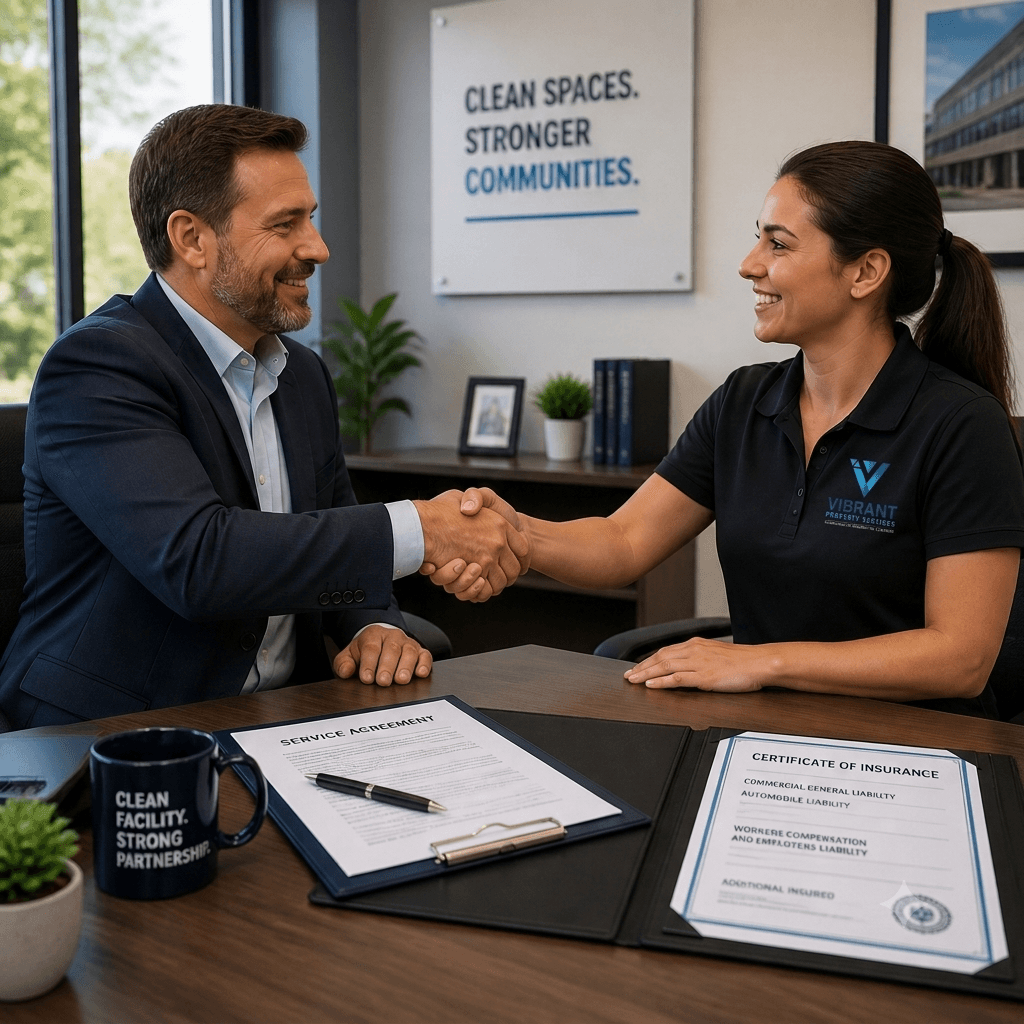
This is the first question to ask, and the answer must include specifics, not a vague “yes, we are insured.” Ask to see a current Certificate of Currency for public liability insurance. In commercial cleaning contexts across Melbourne, the industry standard is a minimum of $10 million in public liability cover. For high-risk environments such as construction sites or medical facilities, some contracts require $20 million.
Workers’ compensation insurance is equally important. If a cleaner is injured on your premises and the company does not hold valid workers’ compensation, the liability can fall back on the property owner or business operator depending on the circumstances. This is not a theoretical risk. It is a scenario that Victorian courts have dealt with repeatedly.
What Good Looks Like
A credible cleaning company should be able to email you the Certificate of Currency within 24 hours. If there is hesitation, if the document is expired, or if coverage amounts are significantly below $10 million, walk away. Vibrant Property Services, for example, operates across regulated environments where insurance documentation is routinely requested by facility managers, so having it readily available is simply part of professional operations.
Pro tip: Always verify insurance certificates directly with the insurer if the contract is high-value or covers a sensitive environment like aged care or medical facilities. A certificate can be forged. A phone call to the insurer cannot.
How Much Experience Do You Have in My Specific Industry?
General cleaning experience and specialised industry experience are not the same thing. A company that excels at cleaning corporate offices may lack the protocols required for a childcare centre, where infection control, toy sanitisation, and surface-safe chemical use are critical. The same applies to medical environments, aged care facilities, and food-handling premises, all of which have specific hygiene obligations under Victorian and Commonwealth regulations.
When you ask this question, listen for concrete answers. How many years have they serviced facilities in your sector? Can they name specific sites or client types? Do they know the relevant compliance frameworks? A cleaning company that genuinely operates in your sector will answer with specifics. One that is overstating its experience will give you generalities.
Industry-Specific Red Flags
A common mistake is assuming that “commercial cleaning” experience covers all commercial environments equally. It does not. If a company cannot explain the difference between a disinfection protocol for a childcare bathroom versus a corporate bathroom, they are not equipped to clean your childcare centre. Ask the question, then listen carefully to whether the answer is specific or scripted.
How Do You Screen and Train Your Staff?
Your cleaning team will often have unsupervised access to your building, your equipment, and potentially sensitive areas. The screening process a cleaning company uses directly determines the risk level you are accepting. At minimum, look for National Police Check (or Working With Children Check where applicable), formal reference verification, and a documented onboarding process.
Training matters just as much as screening. A well-intentioned but untrained cleaner can damage surfaces, cross-contaminate areas, or use products incorrectly. Ask whether training is formal and documented, whether it covers your specific site type, and whether refresher training is part of the ongoing employment process.
“The cost of a thorough screening process is minimal compared to the cost of a single theft, data breach, or property damage incident caused by an unvetted worker.” Safe Work Australia, guidance on contractor management in high-access environments.
What Cleaning Products and Equipment Do You Use?
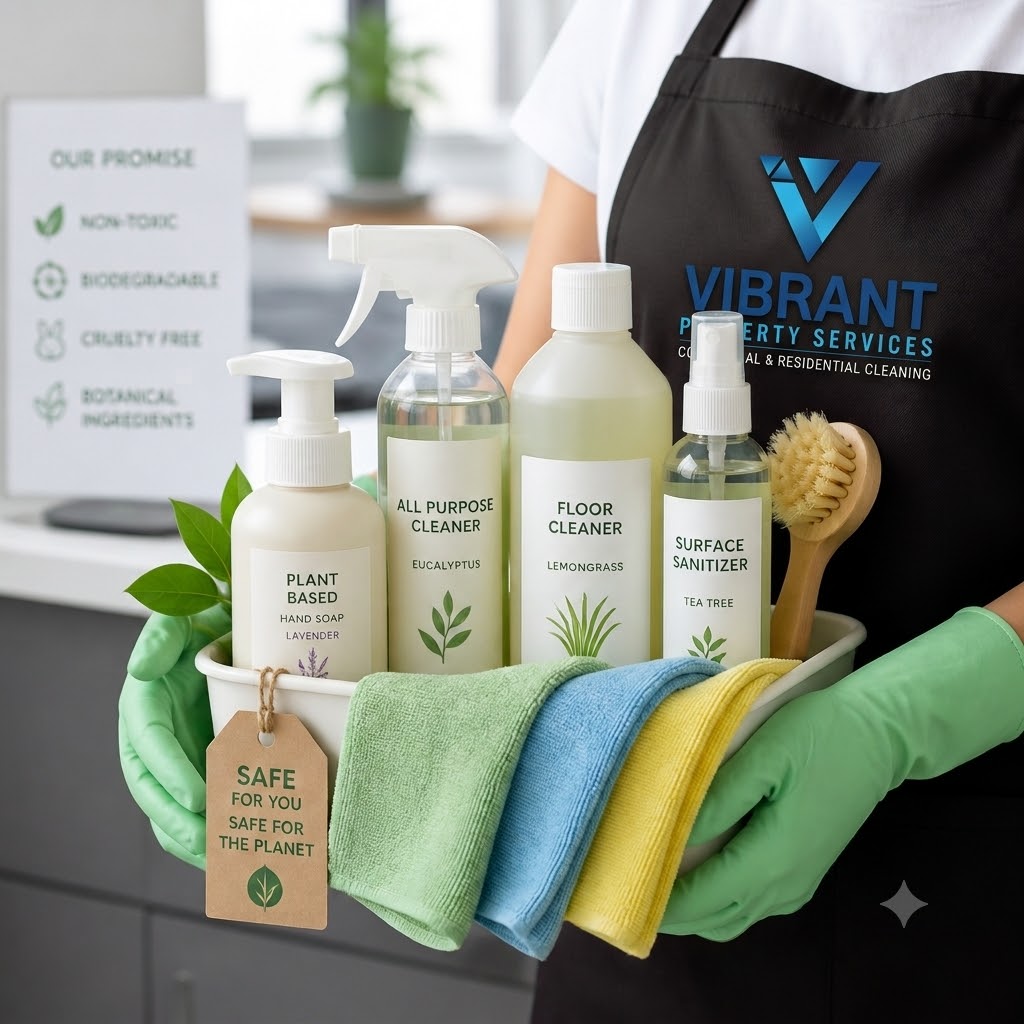
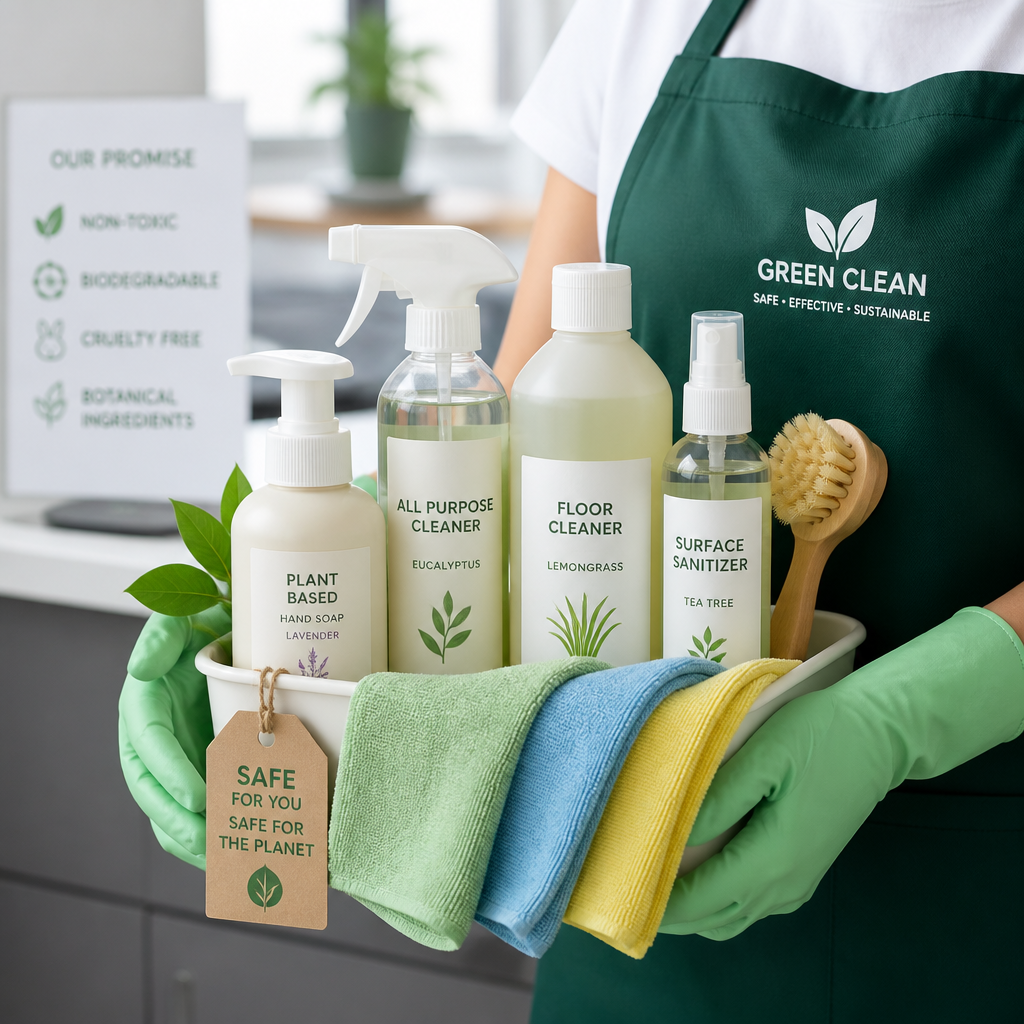
This question matters for three reasons: safety, surface compatibility, and environmental compliance. In Victoria, some commercial cleaning chemicals are subject to Safe Work Australia hazardous materials guidelines. In medical and childcare environments, TGA-listed disinfectants may be required. Using the wrong product on the wrong surface causes damage that can cost thousands to repair.
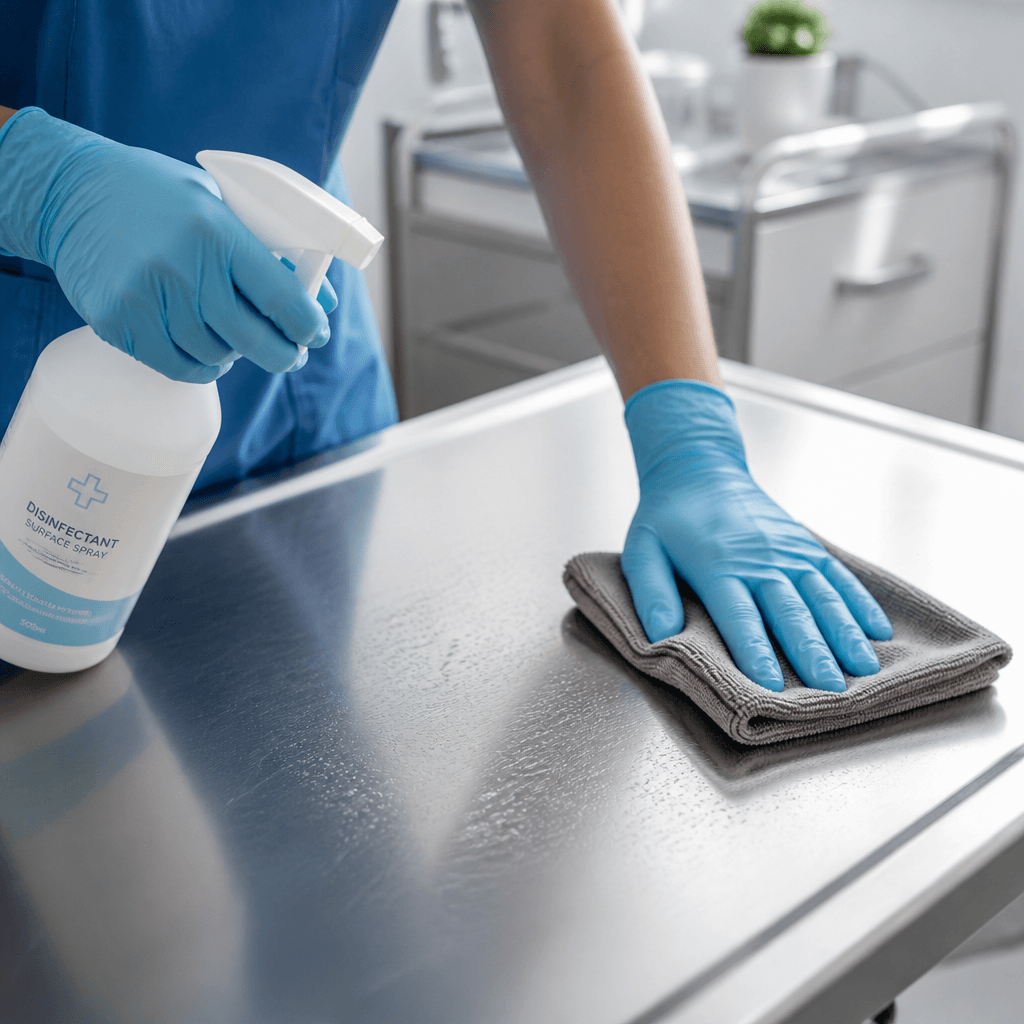
Ask whether the company uses hospital-grade disinfectants where required, whether their products are compliant with relevant Australian standards, and whether they have Safety Data Sheets (SDS) available for every chemical they use on your site. If they cannot produce SDS documentation, they are not operating to a professional standard.
Equipment Quality Indicates Operational Standards
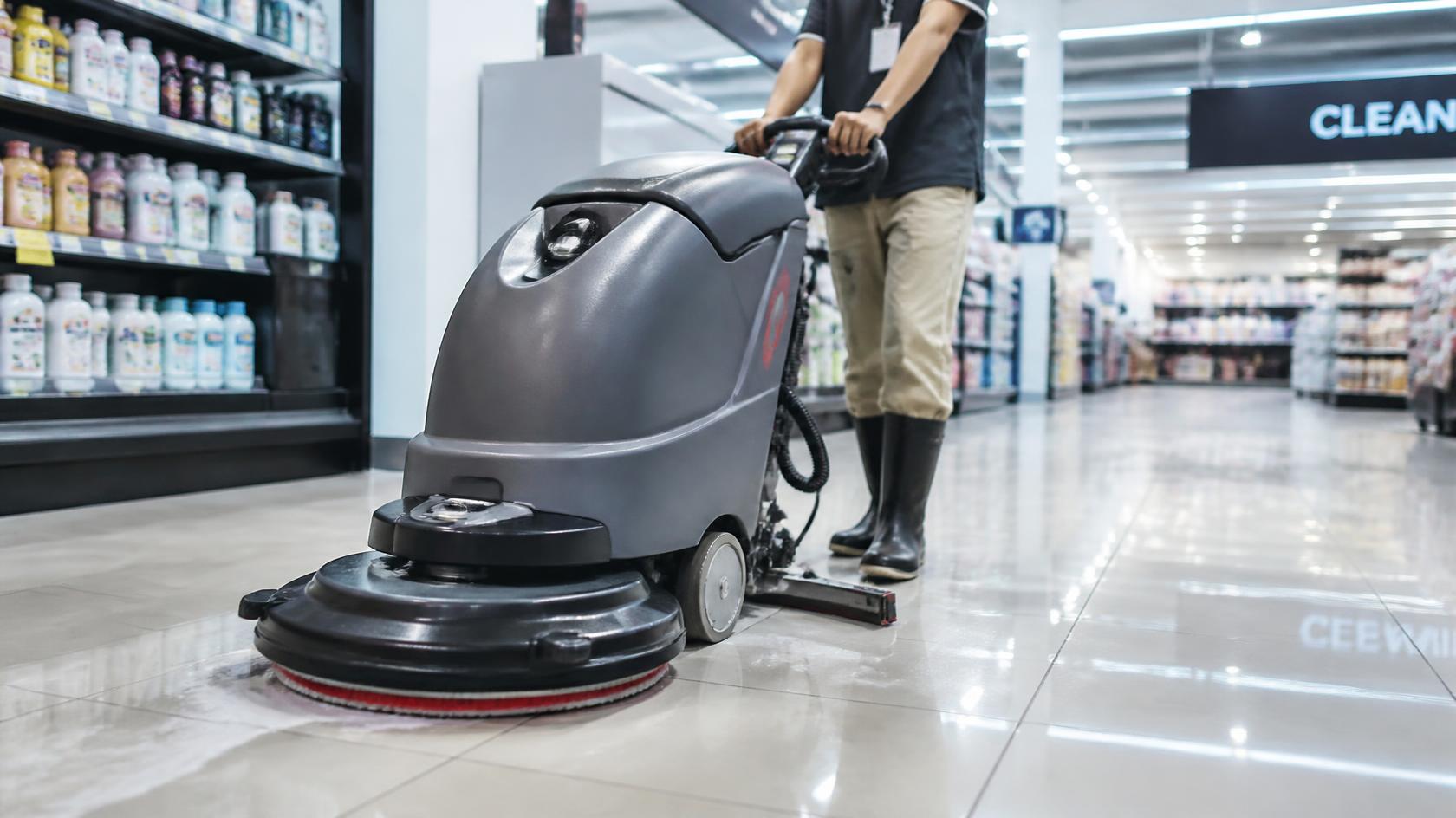
The equipment a company invests in reflects how seriously they take results. Commercial-grade equipment, such as HEPA-filter vacuums, industrial pressure washers, and tile grout restoration machines, produces measurably better outcomes than consumer-grade alternatives. Vibrant Property Services, for instance, provides high-pressure cleaning and tile and grout restoration as dedicated services, which requires investment in proper commercial equipment that most generalist cleaners do not carry.
Pro tip: Ask to see the equipment in person or request photos before the first service. A company proud of its equipment will show you without hesitation. One that deflects this request is likely using substandard tools.
Will You Provide a Customised Cleaning Checklist?
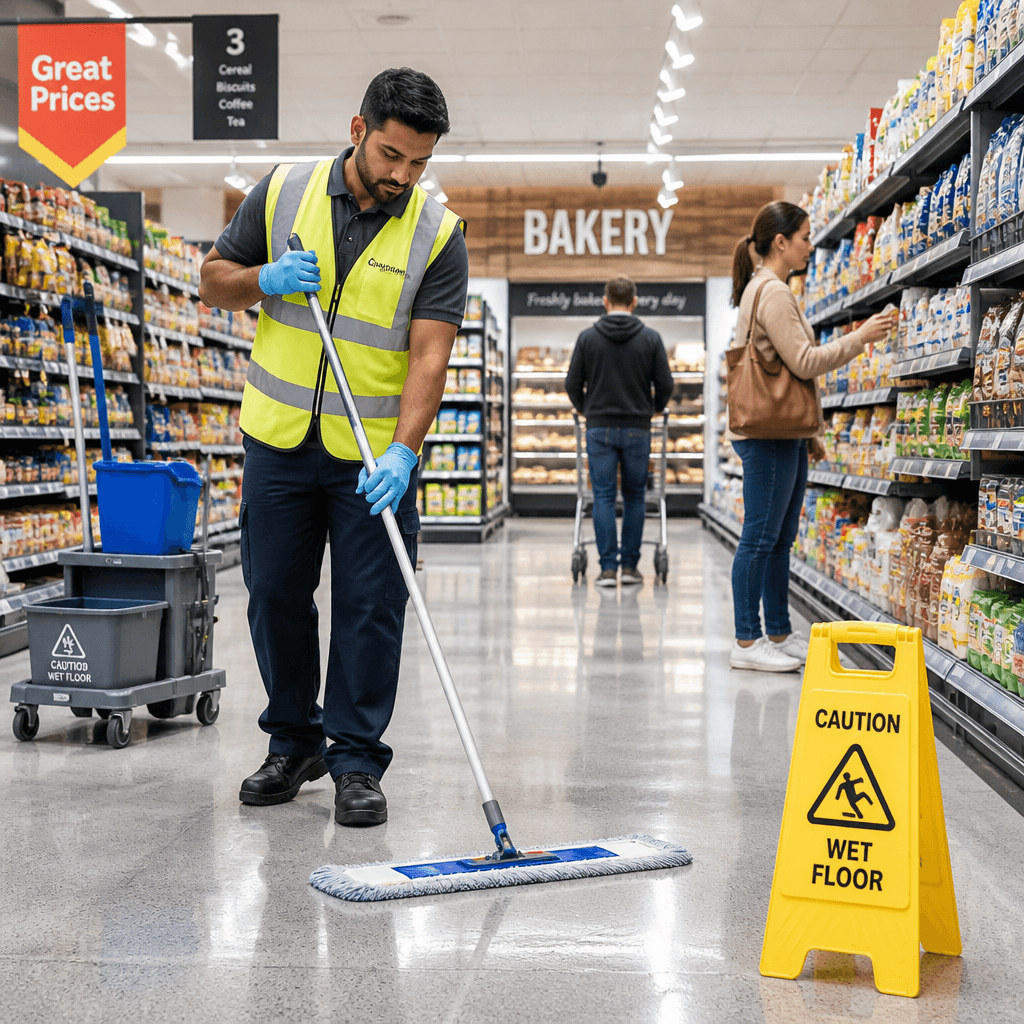
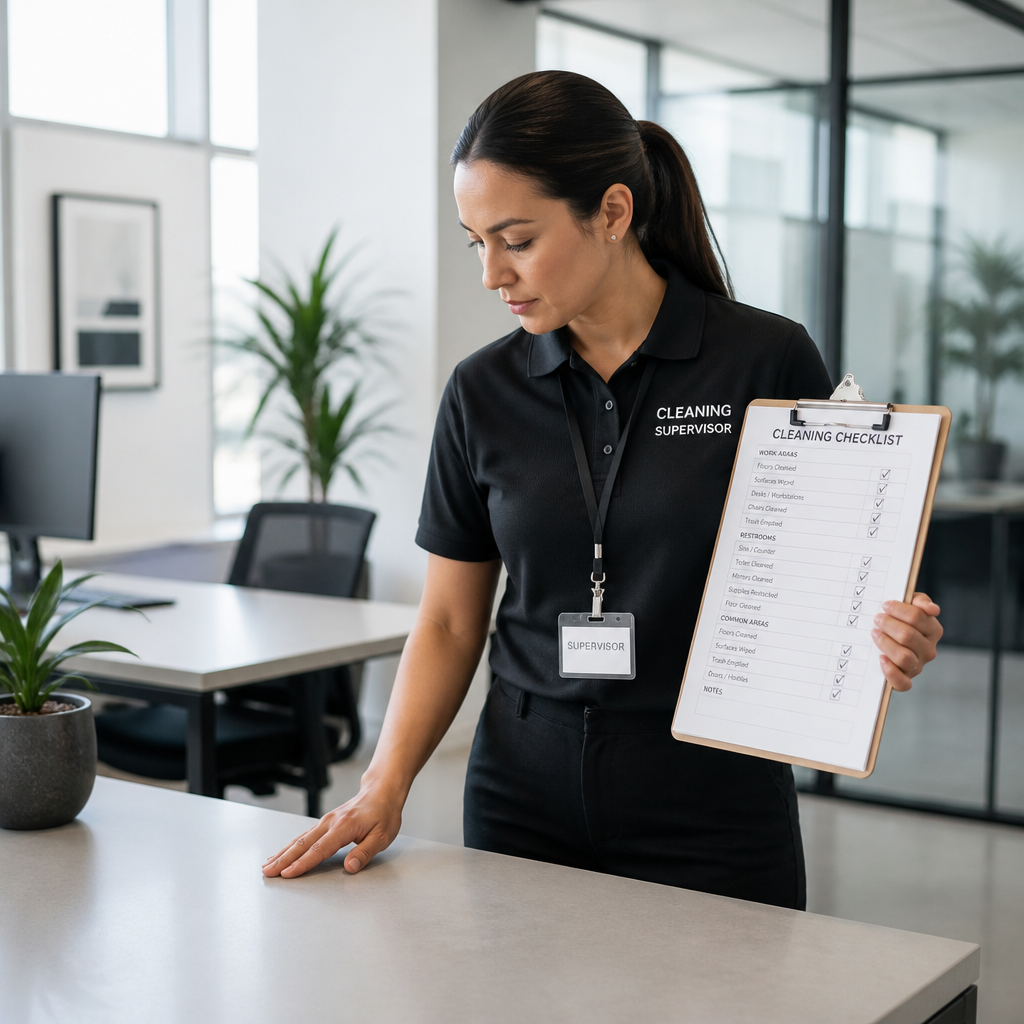
A generic checklist is better than no checklist, but it is rarely sufficient for anything beyond a basic office clean. Every site has specific requirements. A supermarket has different high-traffic zones, hygiene priorities, and surface types compared to a school or a warehouse. A professional cleaning company will conduct a site assessment and produce a checklist that reflects the actual layout and requirements of your facility.
The checklist serves two purposes. First, it tells the cleaning team exactly what is expected at every visit. Second, it gives you a written benchmark to evaluate performance against. Without it, complaints about missed tasks become subjective arguments. With it, you have documented scope that is easy to enforce.
What to Insist On
The checklist should specify frequency (daily, weekly, monthly), location (kitchen, bathrooms, entry points, high-touch surfaces), and method where relevant. It should be signed off by both parties before the first clean. Any changes to the scope should be made in writing, not verbally.
What Does Your Quality Control Process Look Like?
Asking a cleaning company if they do quality control and asking how they do it are two completely different questions. Every company will say yes. Very few have a documented, systematic process. The distinction matters because quality without a control mechanism degrades quickly, especially when staff turn over, when supervisors change, or when the client relationship becomes routine.
Look for companies that conduct regular site inspections by a supervisor who is not the cleaner, use digital reporting or client sign-off systems, and have a formal complaints and remediation process. The best commercial cleaning operations in Melbourne treat quality control as a scheduled activity, not a reactive one.
Can You Provide References or Case Studies from Similar Sites?
References are standard practice in any service procurement, and cleaning is no exception. A reference from a similar site type carries far more weight than a generic testimonial. If you manage a school, a reference from another school principal or facilities manager tells you something directly relevant. A reference from an unrelated corporate office does not.
Ask for two to three references from sites comparable to yours in size, sector, and complexity. Then actually call them. Ask specifically whether the company delivers consistently, how they handle issues, and whether they would renew the contract. The answer to the last question is the most revealing.
What Are the Contract Terms and Exit Conditions?
Contract terms tell you a great deal about how a cleaning company views its own service quality. A company confident in its performance will offer reasonable notice periods and fair exit conditions. A company that insists on 12-month lock-in contracts with heavy financial penalties for early termination is often compensating for a high churn rate driven by client dissatisfaction.
Standard commercial cleaning contracts in Melbourne typically involve a 30 to 90-day notice period for termination. Read the fine print around what constitutes a breach, who owns the cleaning equipment on-site, and what happens if staff are reassigned or subcontracted without your knowledge. Subcontracting without disclosure is more common than clients realise, and it directly affects the consistency of the team cleaning your building.
How Do You Manage Workplace Health and Safety Compliance?
Under the Work Health and Safety Act 2011 (Victoria) and relevant Safe Work Australia guidelines, both the cleaning company and the host business share obligations when cleaning staff work on a commercial site. A professional cleaning company will have a documented WHS management plan, conduct site-specific risk assessments, and ensure their staff are trained in hazard identification relevant to your environment.
This is especially important in environments like warehouses, where forklift traffic and heavy equipment create real physical hazards, or medical and aged care facilities, where infection control is tied directly to resident health outcomes. Ask to see the company’s WHS policy and their process for conducting a site induction before staff begin work on your premises.
Who Is My Point of Contact and How Are Issues Escalated?
Service quality issues are inevitable in any cleaning relationship. The question is not whether they will happen, but how quickly and effectively they are resolved. Companies that route all client contact through a generic email address or a call centre with no direct account ownership consistently deliver worse client outcomes than those with a dedicated point of contact per account.
Before signing, confirm the name of your account manager, the direct contact method, the expected response time for complaints, and the escalation path if the issue is not resolved at the first level. This structure is what separates responsive service providers from ones that are attentive during the sales process and absent during delivery.
Comparing Cleaning Company Types in Melbourne
Not all cleaning companies are structured the same way. Understanding the differences between provider types helps you match the right model to your specific needs, whether you are a commercial property manager overseeing multiple sites or a homeowner looking for consistent residential cleaning.
| Provider Type | Best Suited For | Key Limitations |
|---|---|---|
| Large National Franchise | High-volume, standardised office cleaning across multiple CBD locations | Less flexibility for customised scopes, subcontracting common, account management often impersonal |
| Local Independent Operator | Small residential or single-site commercial jobs with straightforward requirements | Limited insurance cover, inconsistent training standards, no backup staff if cleaner is unavailable |
| Established Local Commercial Specialist | Multi-environment commercial clients including schools, medical facilities, aged care, and retail, who need tailored protocols and reliable account management | May not operate in all Melbourne suburbs, higher baseline cost than independent operators |
Vibrant Property Services sits in the third category. With over 15 years of experience across diverse Melbourne sectors, they offer the specialisation and accountability that large franchises often lack, while maintaining the operational scale needed to service complex commercial environments. For property managers comparing options against providers like specialist multi-service cleaning companies, this distinction is worth examining carefully.
Frequently Asked Questions
How do I know if a cleaning company is legitimate in Melbourne?
Check that the company holds current public liability insurance (minimum $10 million), can provide a valid ABN, and has verifiable references from clients in comparable environments. Legitimate operators will not hesitate to provide documentation. If a company is reluctant to produce insurance certificates or client references, that reluctance is itself the answer.
What is a fair notice period in a commercial cleaning contract in Melbourne?
Thirty to ninety days is the standard range for commercial cleaning contracts in Melbourne. Anything beyond 90 days is atypical and warrants scrutiny. If a company requires six months or more notice to exit, or attaches significant financial penalties for early termination, treat it as a sign the company relies on contract lock-in rather than service quality to retain clients.
Do I need a different cleaning company for my childcare centre versus my office?
Not necessarily, but you do need a company with demonstrated experience in childcare-specific protocols. Childcare environments in Victoria are subject to the National Quality Framework and require infection control measures, surface-safe chemical use, and cleaning schedules that align with child safety obligations. Ask any prospective provider specifically what their childcare cleaning protocols involve and whether staff hold Working With Children Checks.
Is the cheapest quote always the worst option for cleaning company Melbourne services?
Not always, but the cheapest quote almost always reflects a compromise somewhere. Common areas where low-cost operators cut corners include staff screening, insurance coverage levels, chemical quality, and time allocated per visit. In practice, a quote that is significantly below market rate for Melbourne commercial cleaning almost certainly means either the scope has been silently reduced or the overheads associated with proper compliance have been skipped entirely.
How often should a commercial cleaning company conduct quality inspections?
For most commercial sites, a formal quality inspection by a supervisor, separate from the cleaning team, should occur at minimum monthly. For high-frequency environments such as medical facilities, schools, or food retail, fortnightly inspections are the professional standard. If a company cannot confirm a regular inspection schedule with documented reporting, their quality control process exists in name only.
What should I do if the cleaning company does not meet the agreed standard?
Start by raising the issue formally in writing against the site-specific checklist agreed at the start of the contract. A professional cleaning company will acknowledge the issue, remediate within an agreed timeframe, and review the process that allowed it to occur. If the same issue recurs after a formal complaint, review the exit conditions in your contract. Persistent underperformance with no corrective action is a valid basis for termination.
If you have recently gone through the process of hiring a cleaning company in Melbourne, share what questions you found most useful or what you wish you had asked before signing.
References
- Safe Work Australia: national guidance on contractor management, WHS obligations, and hazardous chemicals in the workplace
- Fair Work Ombudsman: employment standards, contractor classification, and award rates relevant to the cleaning industry in Australia
- IBISWorld: industry research and market size data for the commercial cleaning sector in Australia
- Australian Competition and Consumer Commission: consumer rights and contract fairness standards relevant to service agreements
- Forbes: business operations and vendor vetting frameworks for facility and property managers