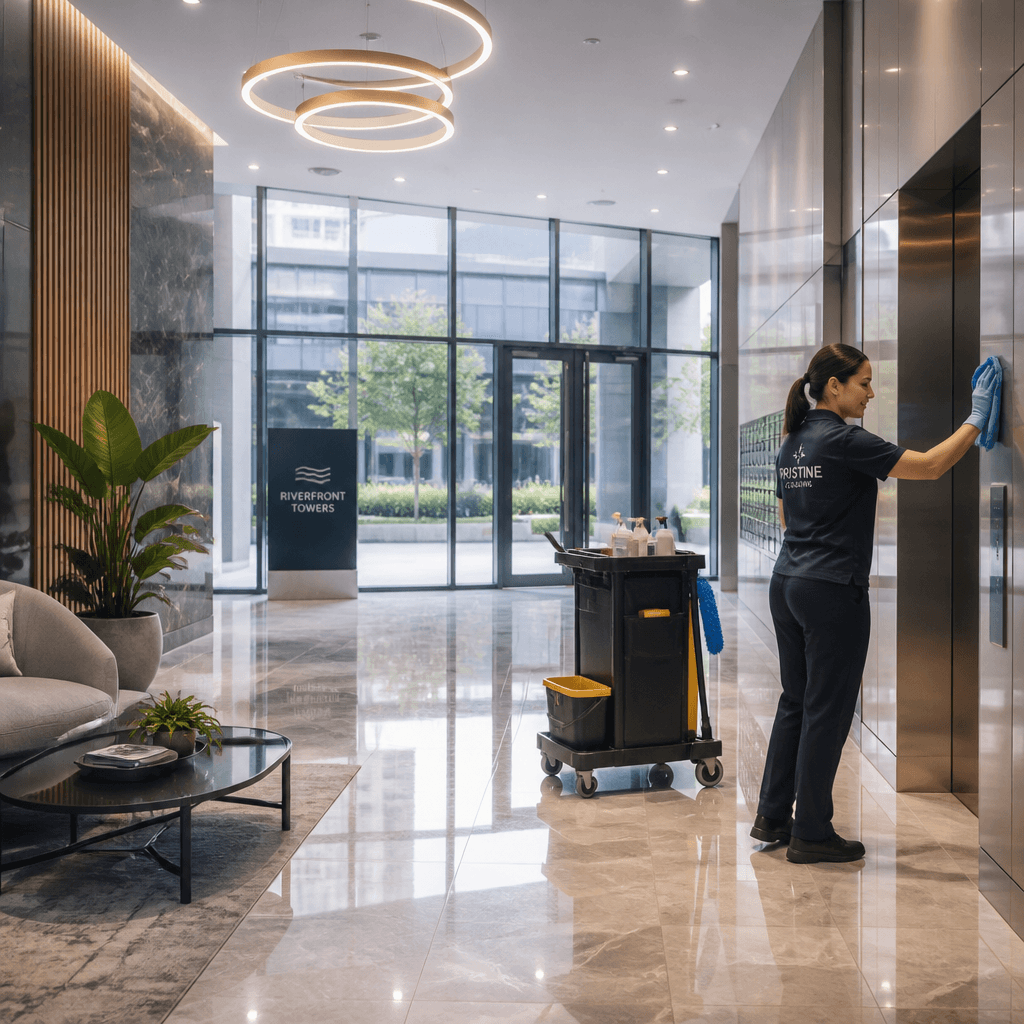

Most Melbourne businesses set their commercial cleaning schedule once and forget it. Then six months later, someone complains about the bathrooms, a client notices the carpet, or a staff member takes yet another sick day. The question of commercial cleaning frequency in Melbourne is not a one-size answer, and getting it wrong costs more than just aesthetics. It costs staff productivity, client trust, and in regulated industries like childcare or aged care, it can cost you compliance. This guide gives you a sector-by-sector breakdown so you can make a decision that actually fits your operation, not just the cheapest package a cleaning company was happy to sell you.
Table of Contents
- Why Frequency Matters More Than Most Managers Think
- Office Cleaning Schedule: What Melbourne Businesses Actually Need
- Sector-by-Sector Cleaning Frequency Guide
- Cleaning Frequency Comparison Table
- Five Signs Your Current Schedule Is Not Enough
- How to Build a Cleaning Schedule That Holds Up
- Frequently Asked Questions
- References
Why Frequency Matters More Than Most Managers Think
Cleaning frequency is a facilities decision that most property managers treat as a budget line. That instinct is understandable, but it leads to under-serviced sites. The real framework for deciding how often your premises should be professionally cleaned is built around three variables: the number of people using the space daily, the type of surfaces and shared amenities present, and the regulatory environment your sector operates in.
In practice, cleaning frequency should be driven by usage intensity, not floor area. A 200-square-metre medical waiting room needs more frequent attention than a 1,000-square-metre low-traffic warehouse. That distinction matters enormously when you are negotiating a service agreement and trying to avoid paying for visits that add no value, or cutting visits that were actually doing essential work.
A consistent cleaning plan establishes a baseline of hygiene that protects your workforce and minimises long-term repair costs. Reactive cleaning, by contrast, means you are always behind.
Melbourne’s variable climate adds another layer. Dusty northerly winds in summer, damp winters across the inner and bayside suburbs, and wet foot traffic from rain all shift your premises from manageable to grimy faster than a fixed schedule can account for. Seasonal adjustment is not optional for sites with high foot traffic. It should be built into the agreement.
Office Cleaning Schedule: What Melbourne Businesses Actually Need
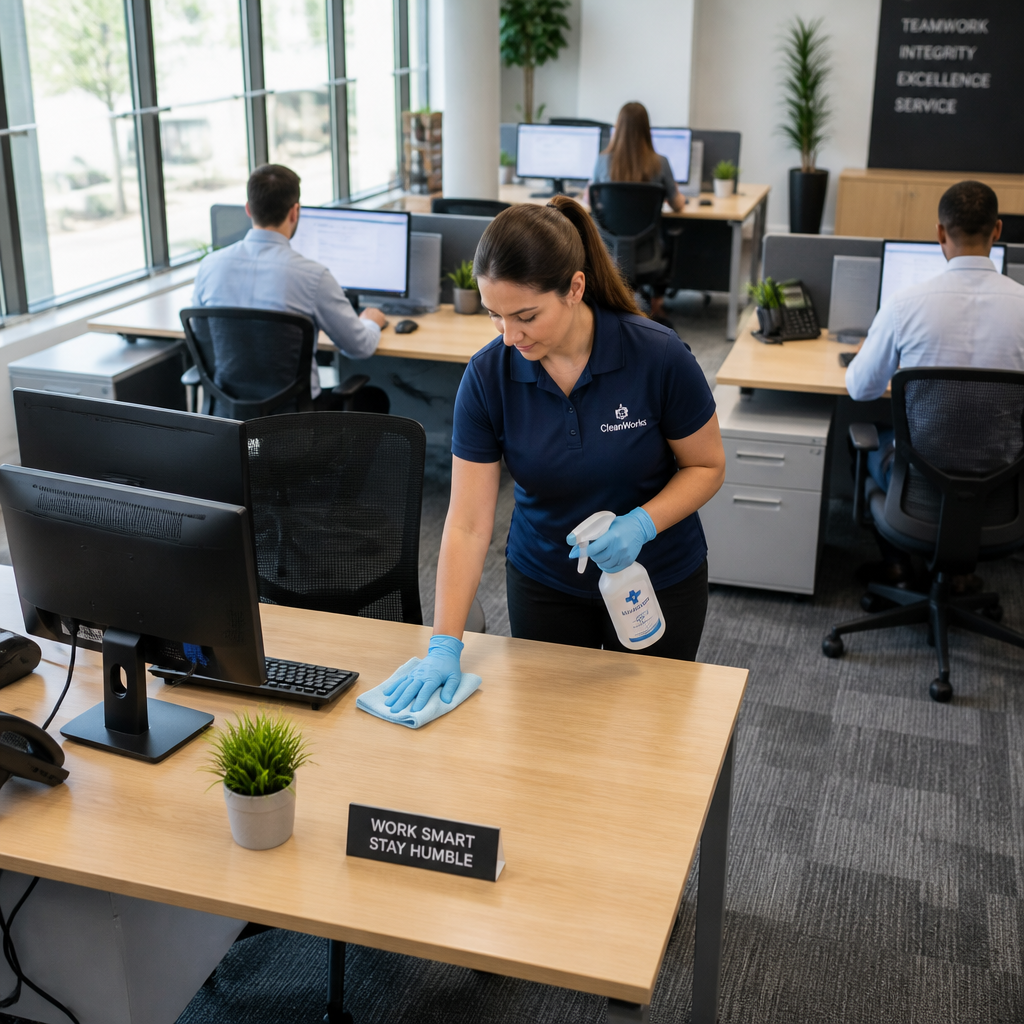
The general guidance for office cleaning in Melbourne is straightforward: small teams of under 10 people can often get by with two to three professional cleans per week. Offices with 10 to 20 staff should move to three to five visits per week. Once you exceed 20 people, or once your office includes a shared kitchen, shared bathrooms used by more than one floor of tenants, or a high ratio of hot desks, daily professional cleaning becomes the standard, not a luxury.
Hot Desks and Shared Workstations
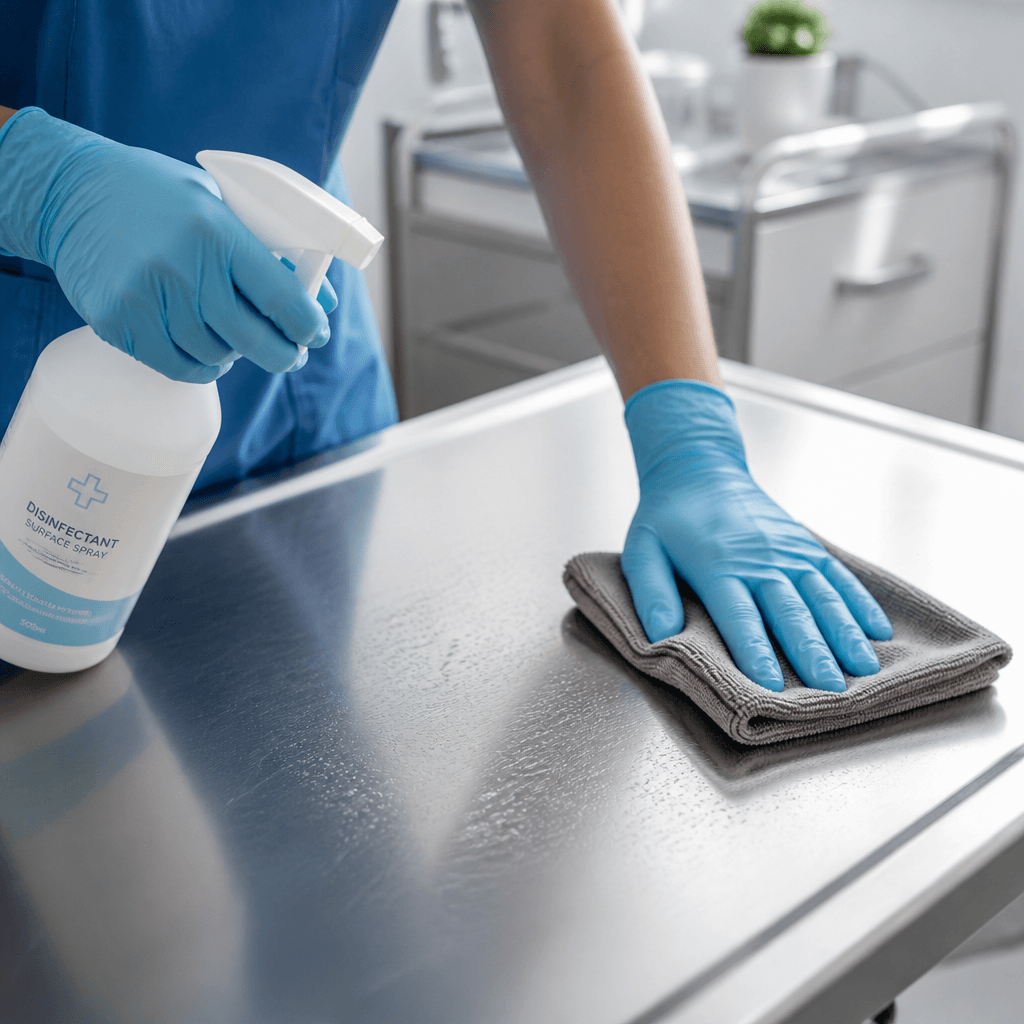
Hot desks are one of the most under-cleaned surfaces in Melbourne commercial offices. Multiple people sharing the same keyboard, mouse, and desk surface across a single day creates a cross-contamination risk that a weekly clean simply cannot address. If your office operates a hot-desk or agile working model, daily sanitisation of those surfaces needs to be written explicitly into your cleaning brief. Assuming it is covered under a general “weekly office clean” is a common and costly mistake.
Kitchens and Bathrooms
Shared kitchens and bathrooms need attention on every single visit regardless of overall cleaning frequency. These two areas drive most workplace hygiene complaints, and they deteriorate faster than any other part of a commercial space. If your general office is on a three-day-per-week schedule, the cleaning brief should still mandate that benches, sinks, and appliance surfaces in the kitchen are addressed fully at each visit, not rotated in and out of the task list.
Pro tip: When reviewing your cleaning agreement, ask your provider to list kitchen and bathroom tasks explicitly in the scope of work. “General office cleaning” as a line item gives a contractor too much discretion over what actually gets done on each visit.
Sector-by-Sector Cleaning Frequency Guide
Different sectors have fundamentally different requirements, and treating them uniformly is where most generic cleaning contracts fall apart. Below is a practical breakdown of the most common commercial environments Vibrant Property Services covers across Melbourne and surrounding suburbs.
Childcare Centres
Childcare centres require daily professional cleaning as a minimum, with deep cleaning scheduled at least once per week. During high-risk periods, particularly winter months when respiratory and gastrointestinal illness rates peak, the frequency of disinfection visits and high-touch surface cleaning should increase. The key distinction for childcare is that surface disinfection requires correct product selection and adequate contact time. A quick wipe-down with an inappropriate product creates a false sense of security without actually reducing pathogen load. Childcare cleaning in Melbourne must also work around regulatory requirements and operating hours, which means scheduling precision is non-negotiable.
Aged Care Facilities
Aged care environments demand structured daily cleaning with multiple disinfection rounds for high-touch areas such as door handles, handrails, nurse call buttons, and shared bathroom fixtures. High-touch surfaces in aged care settings should be disinfected multiple times a day, while lower-traffic areas can follow weekly or monthly deep-clean cycles. The vulnerability of residents to infection means that even a brief lapse in schedule creates genuine health risk, not just an aesthetic problem. Compliance records logging date, time, completed tasks, and supervising team members are standard practice in well-run aged care cleaning contracts.
Medical Facilities and Clinics
Medical environments, including GP clinics, specialist suites, and allied health practices, require daily cleaning as the floor-level baseline. High-risk areas and high-touch surfaces should be disinfected multiple times per day depending on patient volume. The person cleaning a medical facility should be trained specifically for that environment. Applying the same procedures used for a general office or warehouse to a clinical setting is an industry mistake with real infection control consequences.
Warehouses and Industrial Sites
Warehouses operate on a different logic. The driver here is shift timing, not daily hygiene rituals. Many warehouses run 24-hour operations with narrow maintenance windows between shift rotations. Cleaning schedules for warehouses need to be built around shift change times and delivery schedules rather than fixed day-of-week visits. A warehouse on a continuous operation cycle typically needs professional cleaning two to three times per week, with additional attention to amenities, lunchrooms, and high-traffic loading areas at higher frequency.
Supermarkets and Retail
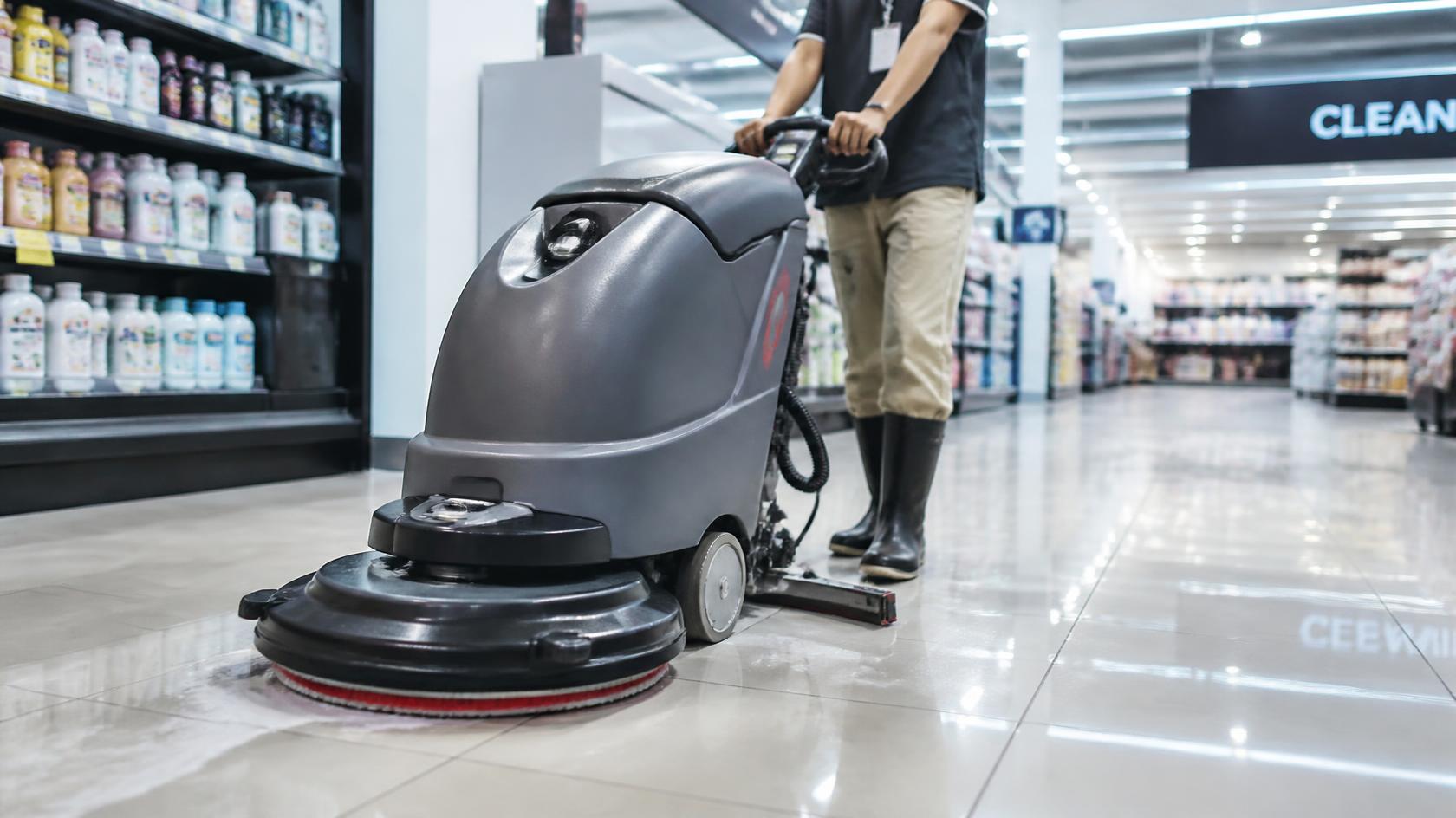
Supermarkets and busy retail environments require daily floor maintenance, restroom cleaning, and surface sanitisation during trading periods, with extended deep cleans scheduled outside business hours on a weekly basis. Retail environments are judged by customers in the first moments of entry. A dusty display, a stained floor, or a poorly maintained restroom directly affects customer dwell time and purchasing behaviour. In Melbourne’s competitive retail precincts, cleanliness is a visible competitive differentiator.
Hotels
Hotels require daily housekeeping for guest-facing areas, with scheduled deep cleans for common areas, lobbies, and high-traffic corridors on a regular cadence. Back-of-house areas including kitchens, laundries, and staff amenities follow their own frequency requirements based on volume. Cleaning for a hotel must account for housekeeping overlaps with guest check-out times, which makes scheduling coordination with hotel operations staff essential.
Schools
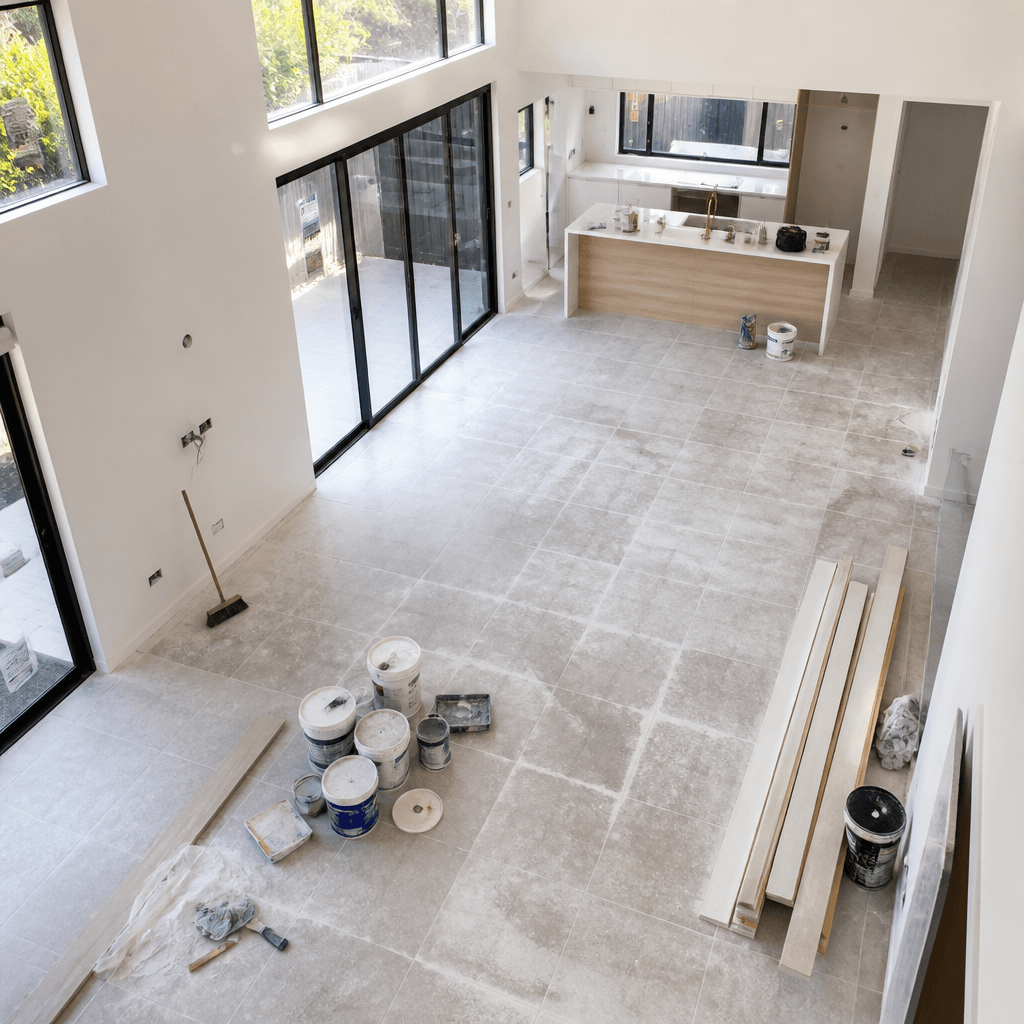
Schools require daily cleaning during term, with specific attention to classrooms, corridors, toilets, and high-touch surfaces. Deep cleaning of the full facility is typically scheduled during school holidays, making term-break planning an essential part of a school cleaning agreement. Builder’s cleaning after any capital works or renovation is also a standalone requirement, separate from the ongoing maintenance schedule.
Cleaning Frequency Comparison Table
The table below compares three broad cleaning schedule approaches and where each one is appropriate for Melbourne commercial sites. Understanding the difference helps you push back on a provider who is recommending a schedule that does not match your actual operation.
| Schedule Type | Best Suited For | Key Limitations |
|---|---|---|
| Weekly or Fortnightly Clean | Low-traffic offices with fewer than 10 staff, businesses operating only a few days per week, minimal shared amenities | Insufficient for shared kitchens, bathrooms, or any client-facing reception area. Creates visible dirt accumulation between visits. Not suitable for any regulated sector. |
| Three to Five Times Per Week | Small to mid-size offices (10-30 staff), co-working spaces, professional services firms, schools during term | May need supplementary daily sanitisation for high-touch surfaces. Kitchen and bathroom visits must be specified per clean, not assumed. Review required if headcount grows. |
| Daily or Multiple Times Per Day | Medical clinics, childcare centres, aged care facilities, supermarkets, hotels, large corporate offices (20+ staff, hot desks) | Higher ongoing cost. Requires scheduling coordination with site operations. Must include defined scope per visit to avoid overlap or gaps between cleaning rounds. |
Five Signs Your Current Schedule Is Not Enough
Most businesses do not reduce their cleaning schedule because they made a rational decision. They reduce it because a previous provider offered a cheaper rate, or because the budget was cut and cleaning was the easiest line to trim. The problem surfaces gradually. Here are the clearest indicators that your current commercial cleaning frequency in Melbourne is falling short.
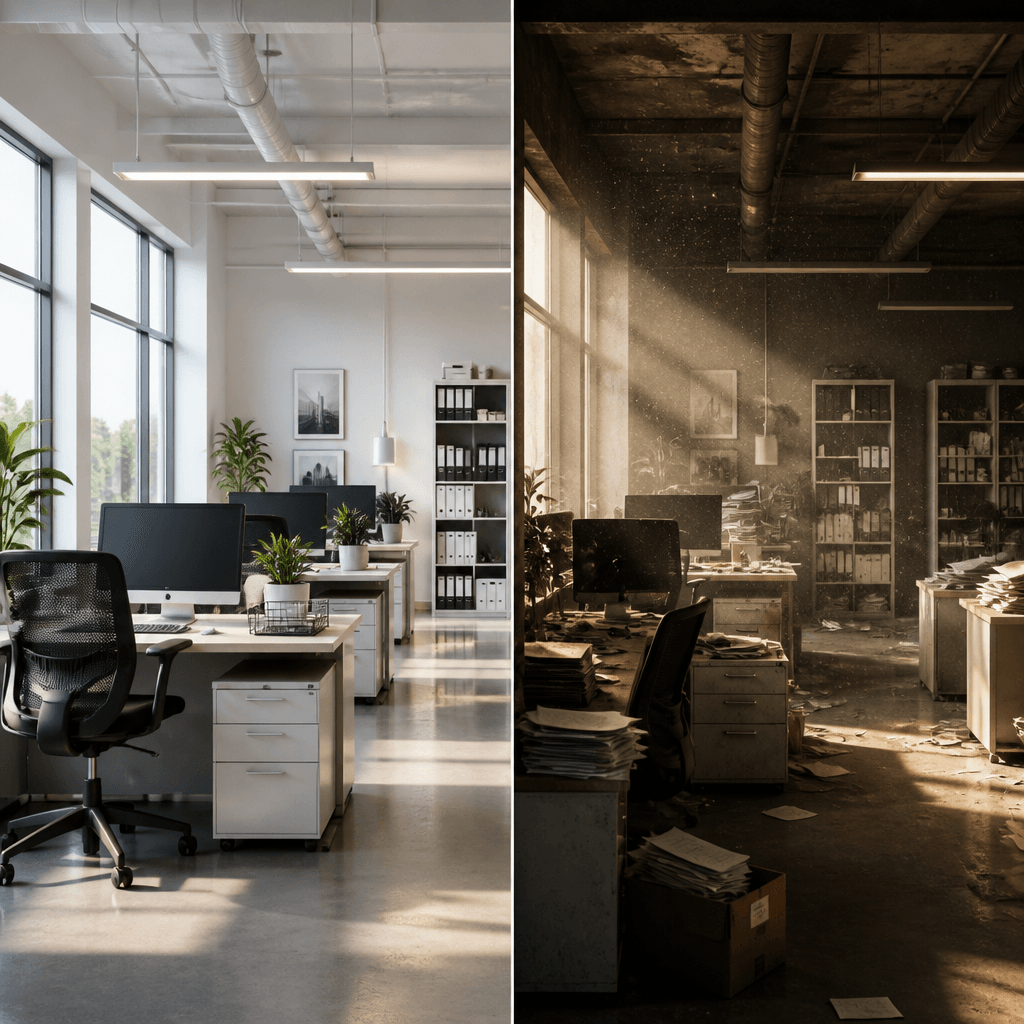
Dust buildup on desks and equipment between visits. If surfaces are visibly dusty within one or two days of a scheduled clean, the interval is too long for your traffic volume.
Lingering odours in shared spaces. Persistent odours in kitchens, bathrooms, or meeting rooms that reappear quickly after cleaning indicate that the source is not being adequately addressed at the current frequency.
Bins reaching capacity before the next scheduled visit. Overflowing bins are a direct signal that visit frequency does not match operational throughput, and they create secondary hygiene problems as they sit.
Increased employee sick days, particularly during winter. While illness has many causes, a workplace where high-touch surfaces are not sanitised regularly enough contributes measurably to the spread of respiratory and gastrointestinal illness through shared teams.
Client or visitor comments about the space. If a client mentions the state of the bathroom, the reception area, or the meeting room even once, the schedule has already failed. By the time someone says something, the problem has been visible for a while.
Pro tip: Walk your own premises at the end of a business day, specifically the kitchen, bathrooms, and any client-facing areas, before the cleaner is due. If you would be embarrassed to have a client see it in that state, your cleaning frequency needs to increase.
How to Build a Cleaning Schedule That Holds Up
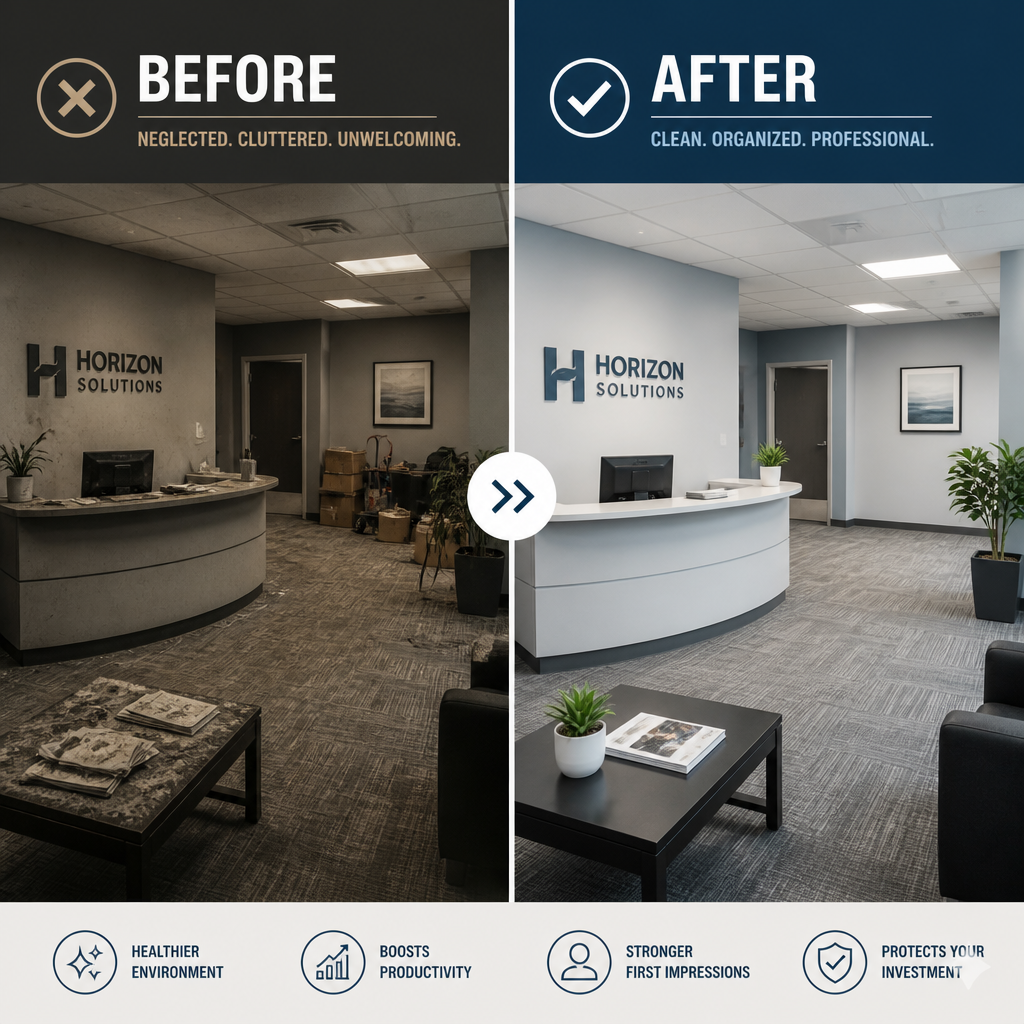
A cleaning schedule should never be a static document. A good agreement includes a formal review point, typically every 90 days, where frequency, task scope, and visit timing are assessed against actual usage data. If your headcount grows, if you move to a hybrid working model that changes daily occupancy patterns, or if a seasonal trading shift increases foot traffic, the schedule should update to reflect that reality, not stay fixed because it was convenient to set up once and forget.
Start With a Proper Site Assessment
Before any cleaning schedule is proposed, a professional provider should conduct a structured on-site assessment. This is not a sales walk-through. It is an audit that maps traffic flow, identifies high-touch surface clusters, flags compliance-sensitive zones, and documents access constraints. For any provider who quotes you a price without visiting your site first, treat that quote with scepticism. Generic quotes produce generic schedules that serve the cleaner’s convenience more than your operational needs.
Match Task Lists to Visit Frequency
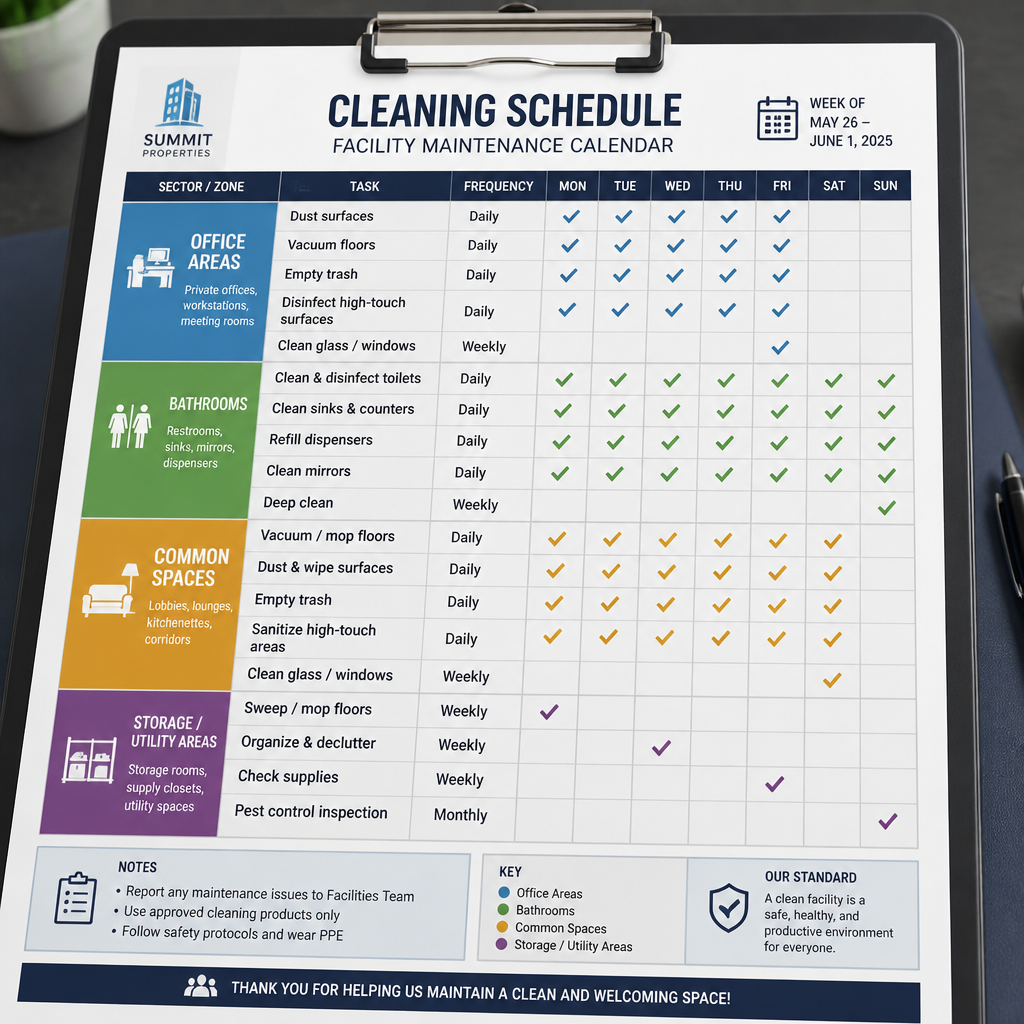
One of the most common failures in commercial cleaning agreements is a mismatch between the visit frequency and the task list per visit. A site on a three-day schedule that has the same task list as a daily service creates a scenario where critical areas are under-serviced. Every visit should have a defined scope, and that scope should be proportionate to the interval. For regulated environments like childcare, aged care, and medical facilities, job completion records logging date, time, tasks completed, and the supervising team member are standard practice and support compliance documentation.
Vibrant Property Services offers commercial cleaning services across Melbourne with schedules built around site-specific assessments, not generic packages. For businesses in regulated sectors, childcare cleaning and aged care cleaning programs include compliance documentation as part of the standard service. For post-construction or renovation sites, builder’s cleaning in Melbourne is a standalone service designed for handover-ready results.
Frequently Asked Questions
How often should a small Melbourne office be professionally cleaned?
A small office with fewer than 10 staff can generally be maintained with two to three professional cleans per week. If the office includes a shared kitchen or bathroom used by multiple teams, those areas need attention at every visit regardless of the overall schedule. Once staff numbers grow past 10 to 15 people, moving to a minimum of three to five visits per week is the practical standard.
Do childcare centres in Melbourne need daily cleaning?
Yes. Childcare centres require daily professional cleaning as a baseline. Deep cleaning should be scheduled at least once per week, and during winter months or periods of illness, the frequency of disinfection visits and high-touch surface cleaning should increase. The regulatory environment for childcare in Victoria requires that hygiene standards are maintained consistently, not just when a routine inspection is approaching.
Is there a different cleaning frequency for medical clinics versus general offices?
Significantly different. A general office can operate on a schedule of three to five visits per week. A medical clinic requires daily professional cleaning at minimum, with high-risk areas and high-touch surfaces disinfected multiple times per day depending on patient volume. Medical cleaning also requires staff trained specifically for clinical environments, not general commercial cleaners applying office cleaning methods to a healthcare setting.
What happens if I under-schedule commercial cleaning?
The consequences build gradually and then become obvious all at once. Under-scheduled cleaning leads to visible dirt accumulation, persistent odours, higher rates of staff illness circulating through shared surfaces, and, in regulated sectors, the real risk of compliance failures. The financial cost of under-cleaning, including staff sick days and the eventual need for intensive remedial cleaning, almost always exceeds the cost of maintaining a properly frequented schedule from the start.
Should a cleaning schedule change with the seasons in Melbourne?
Yes, and most static schedules do not account for this. Melbourne winters bring increased foot traffic of wet shoes and higher rates of respiratory illness passing through shared spaces. Summer brings dusty conditions, particularly for sites in northern and western suburbs. For high-traffic sites, building a seasonal review into the service agreement, specifically increasing high-touch surface disinfection frequency from approximately May through September, is standard practice for professional commercial cleaning providers.
How often should warehouses and industrial sites be cleaned?
Warehouses typically require professional cleaning two to three times per week for general maintenance, with higher frequency for amenities, lunchrooms, and high-traffic loading areas. The key factor for industrial sites is scheduling cleans around shift rotations rather than fixed time blocks. A site running 24-hour shifts needs a cleaning schedule built around operational windows, not a standard Monday-Wednesday-Friday pattern that may conflict with shift handovers or delivery periods.
What does your current cleaning schedule look like, and has it kept pace with how your business has changed? Share your experience below, or reach out to the Vibrant Property Services team for a site assessment tailored to your premises.
References
- Guidance on how often commercial cleaning is needed for Melbourne businesses, including office and corporate sector frequency recommendations
- Office cleaning frequency guide for Melbourne, covering flexible schedules, regulated industries, and signs a schedule needs adjustment
- Structured cleaning and disinfection schedule guidance for aged care facilities, including high-touch surface protocols
- Childcare centre cleaning frequency standards, including seasonal adjustment and daily versus weekly deep cleaning requirements
- Office cleaning frequency guide for Australian businesses, covering task-by-task scheduling and when to review your cleaning plan