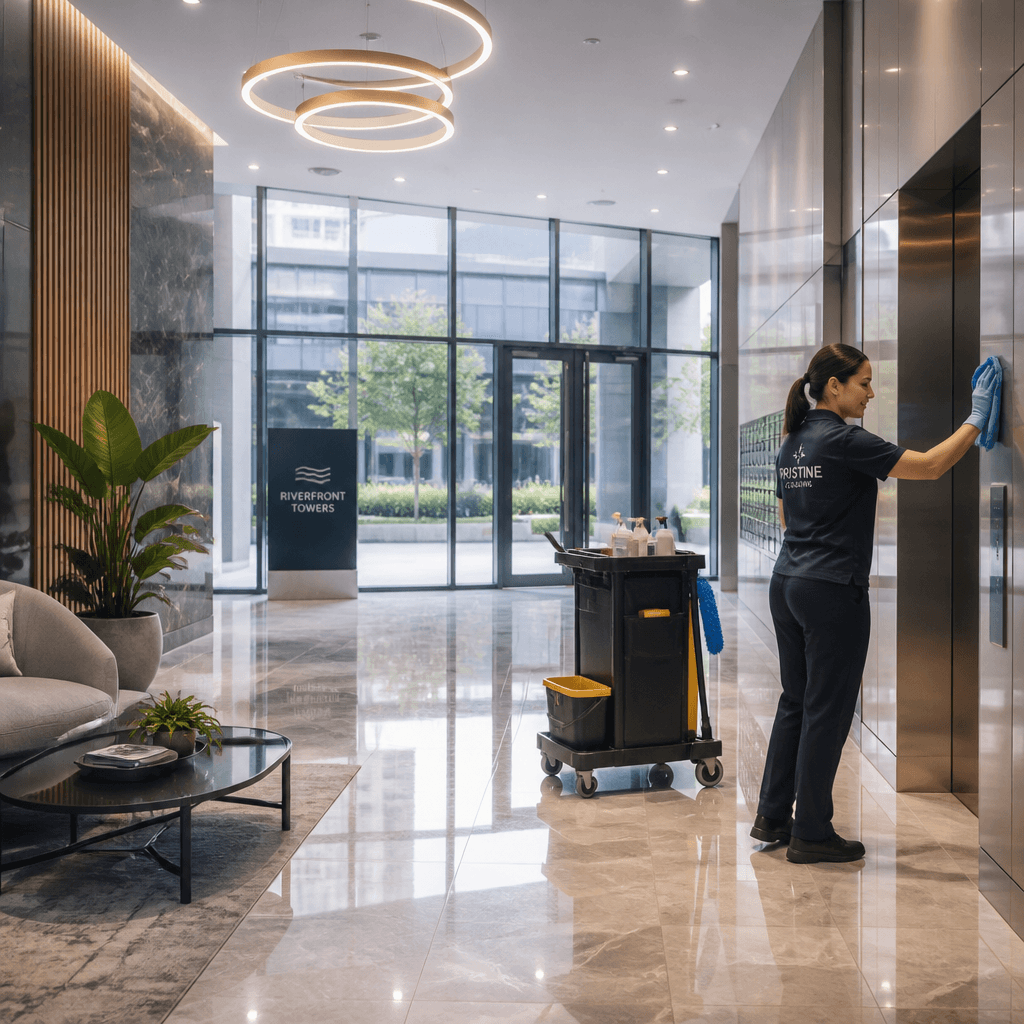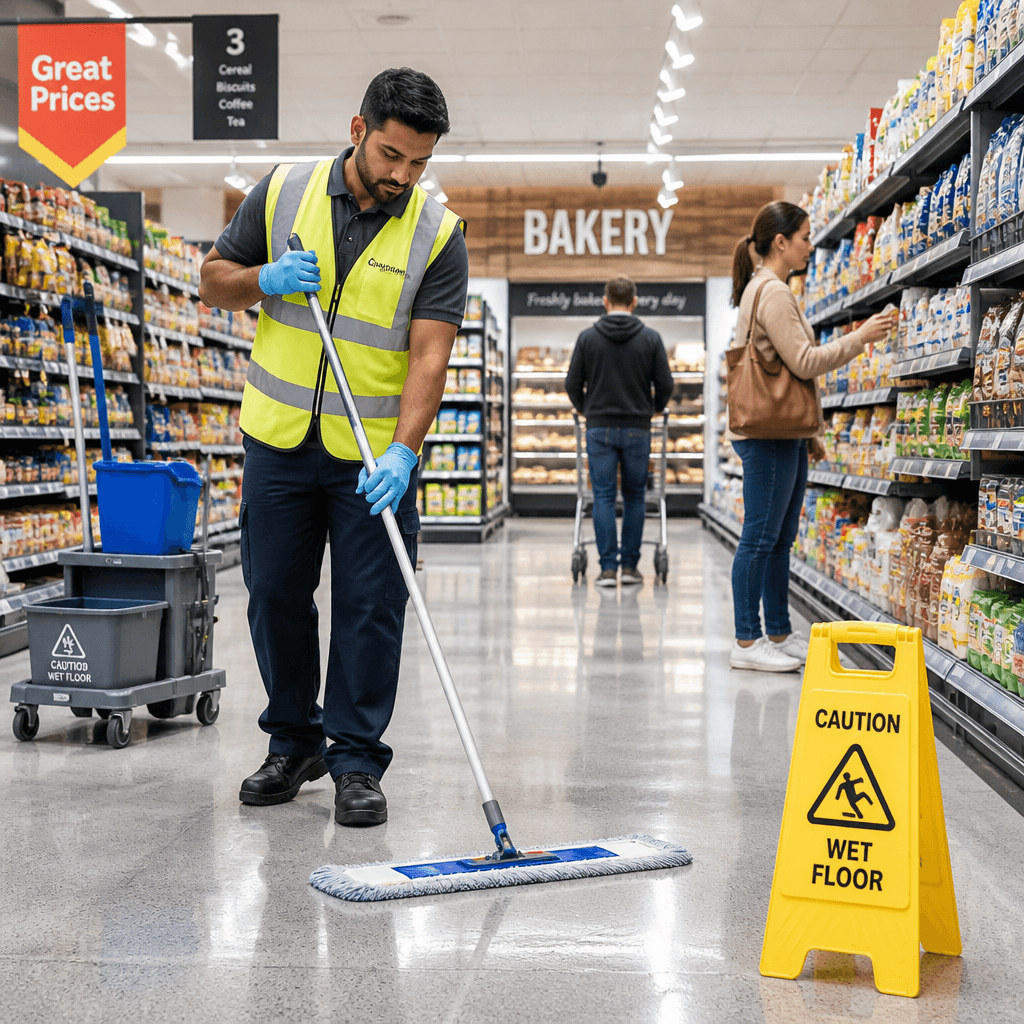

Most Melbourne businesses assume eco-friendly cleaning means weaker results, higher costs, or swapping one set of problems for another. That assumption is wrong, and it is costing them. The real issue is that conventional commercial cleaning products often contain Volatile Organic Compounds (VOCs), ammonia, and bleach that linger in indoor air long after the cleaning crew leaves. For property managers running childcare centres, medical facilities, aged care homes, or office buildings, that chemical exposure is a direct liability. Eco-friendly cleaning in Melbourne is not a branding exercise. Done properly, it is a measurable improvement in hygiene, staff health, and regulatory compliance.
Table of Contents
- Quick Takeaways
- Why Green Cleaning Matters for Melbourne Businesses
- Understanding Green Cleaning Certifications in Australia
- Practical Green Cleaning Methods That Actually Work
- Green Cleaning by Facility Type
- Comparing Green Cleaning Approaches
- How to Choose a Sustainable Cleaning Service in Melbourne
- Frequently Asked Questions
- References
Quick Takeaways
| Key Insight | Explanation |
|---|---|
| The word “green” has no legal definition in Australia | A product labelled eco-friendly or natural may not meet any independently verified environmental standard. Always ask for GECA certification or documented VOC data. |
| VOCs in conventional cleaners harm indoor air quality | Volatile Organic Compounds found in standard cleaning products cause respiratory irritation, increase employee absenteeism, and reduce productivity in offices and facilities. |
| GECA, Green Star, and NABERS are the primary Australian standards | These three certification systems cover different aspects of environmental performance, from individual product formulation through to whole-building management practices. |
| Microfibre cloths can eliminate 99.99% of microbes using water alone | The polyester-polyamide structure physically removes bacteria without relying on heavy chemical disinfectants, making them ideal for childcare, aged care, and medical settings. |
| Green cleaning is especially critical for sensitive environments | Childcare centres, aged care facilities, and medical environments face the greatest risk from chemical residues. Biodegradable, low-toxicity products reduce that risk directly. |
| Certified green cleaning typically costs 10-15% more upfront | That premium is frequently offset by reduced sick days, lower long-term chemical waste disposal costs, and improved building rating scores such as NABERS IEQ. |
| Concentrated products and refillable dispensers cut plastic waste significantly | Single-use cleaning product containers are one of the largest sources of plastic waste in commercial facility management. Concentrate systems with refillable bottles are a simple, measurable fix. |
Why Green Cleaning Matters for Melbourne Businesses
The shift toward green commercial cleaning in Melbourne is being driven by three overlapping pressures: tenant and client expectations around corporate responsibility, the real health consequences of chemical-heavy cleaning on staff and visitors, and tightening Victorian workplace safety standards. These are not abstract concerns.
Traditional commercial cleaners often contain VOCs that can linger long after the cleaning session ends. Harmful VOCs cause respiratory issues, increase employee absenteeism, and reduce productivity. For a building manager responsible for a multi-tenancy office or a 200-bed aged care facility, that is a direct operational problem, not a philosophical one.
The reputational dimension matters too. Businesses that adopt genuinely sustainable cleaning practices signal environmental commitment that resonates with clients, tenants, and stakeholders. This is particularly relevant in Melbourne’s competitive commercial property market, where Green Star ratings and NABERS scores directly influence leasing outcomes.
Pro tip: When evaluating your current cleaning provider, ask them to produce the Safety Data Sheet (SDS) for every product they use on your site. If they cannot provide current SDS documentation, you have no basis for assessing your chemical exposure or regulatory compliance.
Adopting eco-friendly cleaning practices helps businesses stay compliant with regulations, avoid potential fines, and position themselves as leaders in sustainability within their sector.
Melbourne businesses across sectors from hospitality to healthcare are recognising that what goes onto their floors, desks, and shared surfaces has a direct bearing on the health of everyone in that building. The transition to sustainable commercial cleaning services is no longer a niche consideration for sustainability-focused brands. It is becoming a baseline expectation.
Understanding Green Cleaning Certifications in Australia
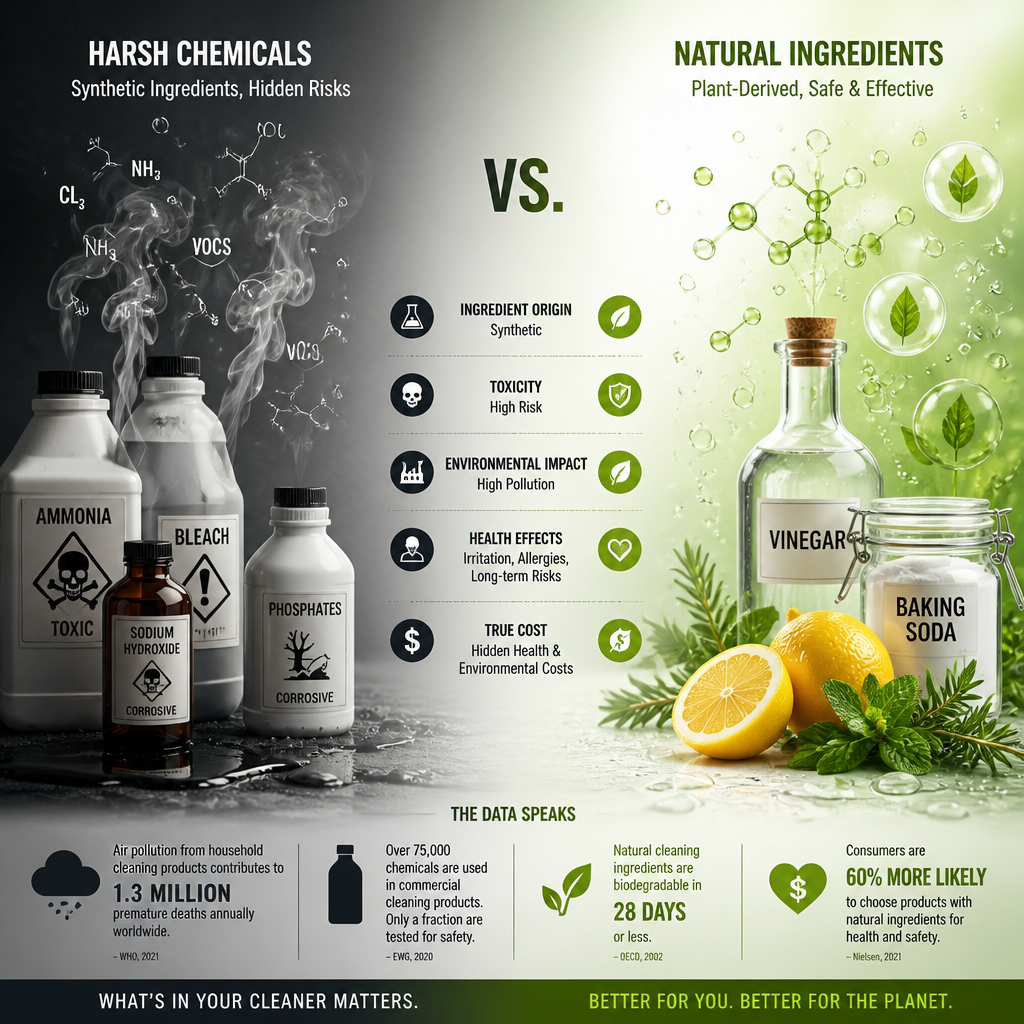
One of the most common mistakes Melbourne businesses make is accepting a cleaning company’s “green” or “eco-friendly” claim without asking what it actually means. In Australia, the word “green” carries no legal definition. A cleaning product can be marketed as natural or environmentally friendly without meeting any independently verified standard.
There are three primary certification systems that genuinely matter for commercial buildings in Australia.
GECA (Good Environmental Choice Australia)
GECA certification is the benchmark for cleaning product sustainability in the Australian market. Genuinely green cleaning products certified under GECA apply VOC concentration limits that reduce occupant exposure, and the active ingredients must break down into non-toxic compounds within a defined timeframe, typically within 28 days under recognised OECD testing protocols. GECA’s standards are recognised by the Green Building Council of Australia (GBCA), ISCA, and can contribute to WELL, NABERS, and LEED certifications.
Green Star and NABERS
The Green Building Council of Australia’s Green Star rating system and the NABERS framework (which measures energy, water, waste, and indoor environment quality) are the two building-level standards most relevant to Melbourne’s commercial property sector. Cleaning products and practices directly influence a building’s ongoing NABERS Indoor Environment Quality score. Over 20% of Australia’s CBD office space has achieved some level of Green Star recognition, which means the demand for verifiably sustainable cleaning products and services is already substantial.
For facilities managers responsible for Green Star-certified buildings in Melbourne, the cleaning contractor is not a back-office supplier. They are a compliance partner. Products meeting these standards often cost slightly more upfront, but they preserve air quality, reduce off-gassing, and support the building’s sustainability credentials over the long term.
Pro tip: Ask your cleaning provider whether their products carry GECA certification or documented low-VOC data. A contractor who claims “green” products but cannot provide actual VOC concentration figures or ingredient disclosure is not meeting the standard, regardless of what their marketing materials say.
Practical Green Cleaning Methods That Actually Work
Switching to sustainable cleaning services in Melbourne is not just about changing which bottle of cleaner sits in the cupboard. It involves a set of integrated practices that, taken together, produce measurable environmental and hygiene outcomes.
Microfibre Systems
Microfibre cloths and mops are one of the highest-impact, lowest-cost changes a commercial facility can make. The combination of polyester and polyamide fibres physically traps and removes bacteria, and microfibre cloths can effectively eliminate 99.99% of microbes using water alone. Quality commercial microfibre can withstand up to 500 washes, which dramatically reduces the waste generated by disposable paper towels and single-use cloths. They also require significantly less cleaning solution, cutting chemical use and the cost that comes with it.
Concentrated and Refillable Products
Single-use cleaning product containers are one of the most avoidable sources of plastic waste in commercial facility management. Concentrated cleaning formulas that are diluted on-site, combined with refillable spray bottles and dispensing systems, cut plastic waste substantially while reducing freight emissions and storage costs. In practice, a well-run commercial cleaning operation using concentrate systems will go through a fraction of the packaging of one using pre-mixed products.
HEPA Filtration Vacuums
Standard vacuum cleaners can release fine particulates and allergens back into the air. HEPA-filter vacuums trap these particles rather than recirculating them, directly improving indoor air quality. For environments like offices, schools, or medical facilities where occupant health is a priority, this is a non-negotiable upgrade rather than a nice-to-have.
Water Conservation Practices
Reducing water consumption is a core component of sustainable commercial cleaning. Microfibre technology contributes here by requiring less water per clean. Beyond equipment choices, professional green cleaning providers also schedule water-intensive tasks such as high-pressure washing and floor scrubbing to minimise waste, using equipment calibrated for the task rather than defaulting to maximum pressure and volume.
Green Cleaning by Facility Type
Green cleaning is not a one-size-fits-all proposition. The specific products, methods, and protocols that work for a warehouse are not appropriate for a childcare centre, and vice versa. Facility type determines the risk profile, and the risk profile should determine the cleaning specification.
Childcare Centres
Childcare environments carry the highest chemical sensitivity risk of any commercial setting. Young children spend time on floors, touch every surface, and have developing respiratory and immune systems. Australian standards for childcare cleaning emphasise the use of biodegradable cleaners that minimise environmental impact and guarantee harmful chemicals do not linger in areas frequented by children. Toxic substances and allergens must be excluded from the product list, and staff must be trained in proper use and storage of any cleaning agents. For childcare centre cleaning in Melbourne, plant-based disinfectants and pH-neutral floor cleaners are the correct starting point, not an optional upgrade.
Aged Care Facilities and Medical Environments
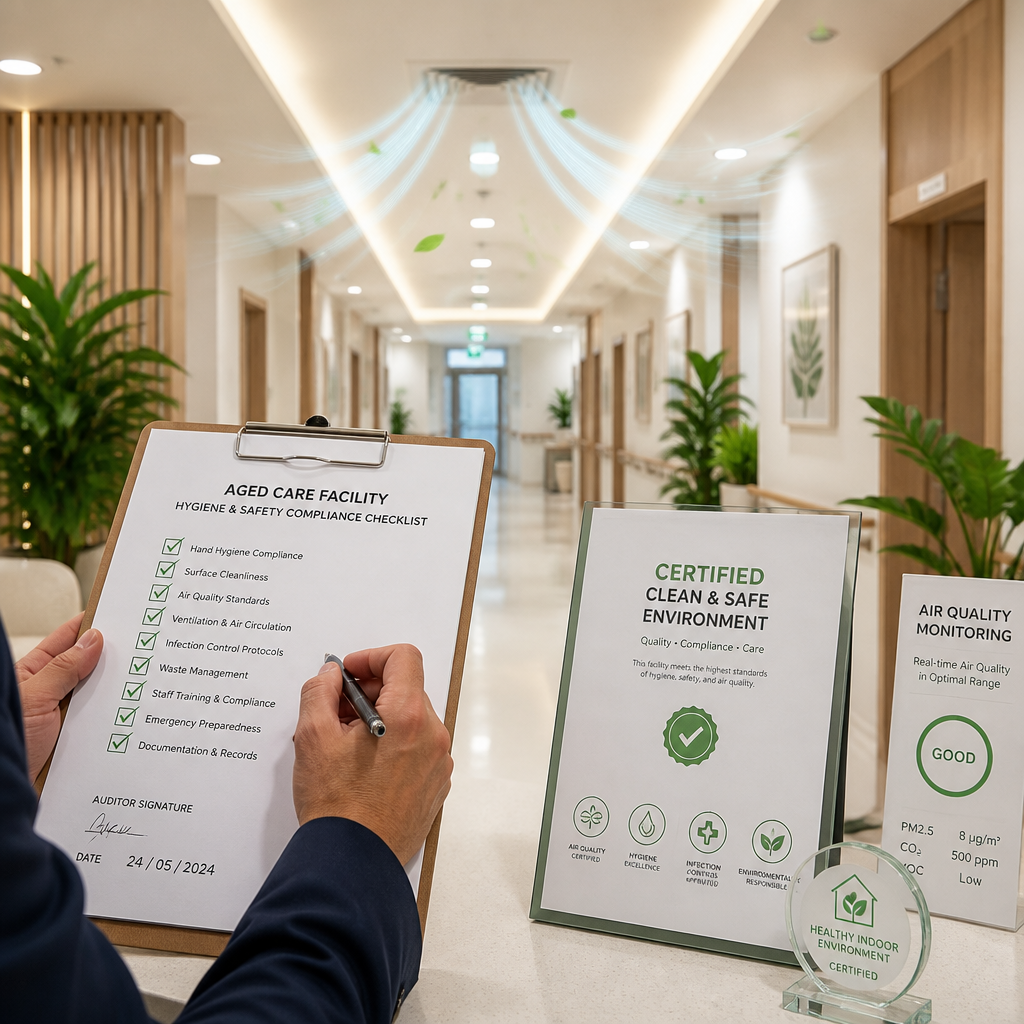
Aged care and medical settings require a careful balance. Infection control standards remain non-negotiable, but the residents and patients in these environments are often more sensitive to chemical irritants than the general population. Green cleaning in aged care means using low-VOC disinfectants that meet regulatory hygiene standards without generating the chemical residue load that standard industrial cleaners leave behind. Microfibre systems are particularly well-suited here because they achieve high microbial removal rates without requiring the volume of chemical product that conventional cleaning methods depend on.
Offices, Warehouses, and Retail
In office, warehouse, and retail environments, the green cleaning priority shifts toward indoor air quality and reducing the chemical burden on staff who spend the majority of their working day in the space. Eliminating high-VOC surface sprays, switching to HEPA-filter vacuum systems, and using concentrated biodegradable cleaners with documented ingredient disclosure are the practical steps that create a measurably healthier environment. For office cleaning in Melbourne, this translates directly to fewer sick days and a workspace that does not carry the chemical smell that most conventional cleaning leaves behind.
Comparing Green Cleaning Approaches
Not every green cleaning approach offers the same outcome. Below is a practical comparison of three distinct methods, their environmental performance, and their suitability for commercial use in Melbourne.
| Approach | Environmental Performance | Best For |
|---|---|---|
| GECA-Certified Chemical Products | High. Verified biodegradability within 28 days, documented low-VOC concentration, ingredient disclosure, and independently audited formulation. | All commercial settings, particularly those with Green Star or NABERS obligations. Suitable for offices, retail, schools, and healthcare. |
| Microfibre-Dominant Systems | Very high for water and chemical reduction. Eliminates need for disinfectants in many routine cleaning tasks. Reduces plastic packaging waste significantly. | Childcare centres, aged care, medical environments, and high-traffic surfaces where chemical minimisation is a priority. |
| Plant-Based, Non-Certified Products | Variable. May be genuinely lower in harmful compounds, but without third-party certification, claims cannot be independently verified. Risk of greenwashing. | Low-risk residential or general commercial settings where Green Star compliance is not required. Not recommended where regulatory accountability is needed. |
The comparison above makes one thing clear. Plant-based or “natural” products without independent certification are the weakest option for any business that needs to demonstrate environmental compliance. They may perform adequately, but they cannot be verified, and in a regulatory context, unverifiable claims offer no protection.
How to Choose a Sustainable Cleaning Service in Melbourne
Selecting the right eco-friendly commercial cleaning provider in Melbourne comes down to documentation, specificity, and experience across the facility types you operate. Generic “we use green products” statements are not sufficient.
What to Ask Before Signing a Contract
A credible sustainable cleaning provider should be able to answer four specific questions without hesitation. First, which specific products do they use, and what certification do those products carry, GECA, EU Ecolabel, or an equivalent? Second, can they provide the current SDS for every product used on your site? Third, what training do their staff receive on correct dilution, dwell time, and surface coverage for eco-certified products? Fourth, how do they handle waste, specifically packaging, chemical containers, and used consumables?
If a provider deflects or gives vague answers to any of these questions, that is informative. Evasion around product documentation is the clearest indicator that their green credentials are marketing rather than practice.
Experience Across Sensitive Environments
Melbourne businesses operating in childcare, aged care, or medical sectors need a cleaning partner with direct experience in those environments, not just a willingness to apply the same product list across every job. The protocols for a medical facility are categorically different from those for a warehouse. A provider who treats both as interchangeable is not operating at the level those environments require.
Vibrant Property Services has over 15 years of experience delivering cleaning across Melbourne’s most demanding environments, including childcare centres, aged care facilities, medical settings, schools, and commercial properties. Their tailored cleaning programs are built around the specific compliance and hygiene requirements of each facility type, not a generic specification applied uniformly. For Melbourne businesses ready to transition to genuinely sustainable cleaning practices, that depth of sector knowledge is the differentiator that matters.
Pro tip: Request a written cleaning specification before any contract begins. A specification that lists the products, frequency, methods, and waste handling procedures for your specific site is the baseline for any accountable green cleaning program. If your current or prospective provider cannot produce one, ask why.
Frequently Asked Questions
Are eco-friendly cleaning products as effective as conventional ones for commercial settings?
Yes, when used correctly. Many eco-certified products eliminate bacteria and viruses at the same rate as conventional industrial cleaners. The key variables are correct dilution, appropriate dwell time, and proper surface coverage. A common failure point is applying green products using the same rushed methods that worked with harsh chemical alternatives. The products are effective. The method needs to match.
How does green cleaning affect a building’s NABERS or Green Star rating?
Directly. The NABERS Indoor Environment Quality score accounts for cleaning practices and product selection. Buildings using cleaners with documented low-VOC levels and GECA or equivalent certification can demonstrate improved indoor air quality, which feeds into both NABERS IEQ ratings and Green Star compliance. For Melbourne buildings already holding or pursuing these certifications, the cleaning contractor is a key part of maintaining that status.
Is sustainable cleaning more expensive for Melbourne businesses?
Certified green cleaning typically costs around 10 to 15 percent more than conventional cleaning services at the product level. In practice, that premium is frequently offset by reduced staff sick days, lower long-term chemical disposal costs, and the operational value of maintaining Green Star or NABERS ratings. For businesses in sensitive sectors like aged care or childcare, the liability reduction from eliminating toxic chemical exposure is itself a measurable financial benefit.
What makes a cleaning product genuinely eco-friendly rather than just marketed that way?
Five verifiable attributes define a genuine green cleaning product: active ingredients that biodegrade into non-toxic compounds within approximately 28 days under OECD test protocols, documented low-VOC concentration, exclusion of commonly restricted substances, ingredient disclosure, and third-party certification such as GECA or EU Ecolabel. A product that meets all five can be verified. A product that only claims to be “natural” or “eco” without documentation cannot.
Which Melbourne facility types benefit most from switching to green commercial cleaning?
Childcare centres, aged care facilities, and medical environments benefit most because the occupants in those settings face the greatest risk from chemical residues and poor indoor air quality. Office buildings with high occupancy density are the next priority, as VOC accumulation in poorly ventilated workspaces directly affects productivity. Warehouses and retail spaces benefit too, but the health risk profile is lower, so the urgency of transition is less acute.
Can green cleaning meet infection control standards in aged care and medical settings?
Yes. This is one of the most persistent misconceptions about sustainable cleaning. Eco-certified disinfectants meet Australian regulatory hygiene standards for healthcare and aged care environments. Microfibre systems have been shown to remove 99.99% of microbes from surfaces using water alone, without the chemical residue load that conventional disinfectants generate. The cleaning method and contact time matter as much as the product formulation.
If you manage a Melbourne commercial property or facility and have switched to green cleaning, or struggled to find a provider that could back up their sustainability claims with documentation, share your experience in the comments below.
References
- Eco-friendly cleaning practices for Melbourne businesses: a practical guide for commercial properties
- How to verify that commercial cleaning products are genuinely green, including VOC and biodegradability standards in Australia
- Green cleaning certifications in Australia: GECA, Green Star, NABERS, and what each one means for commercial buildings
- How microfibre cleaning systems support sustainable practices and water conservation across commercial and healthcare facilities
- What GECA certification means for green cleaning products and how it contributes to NABERS, WELL, and LEED building ratings